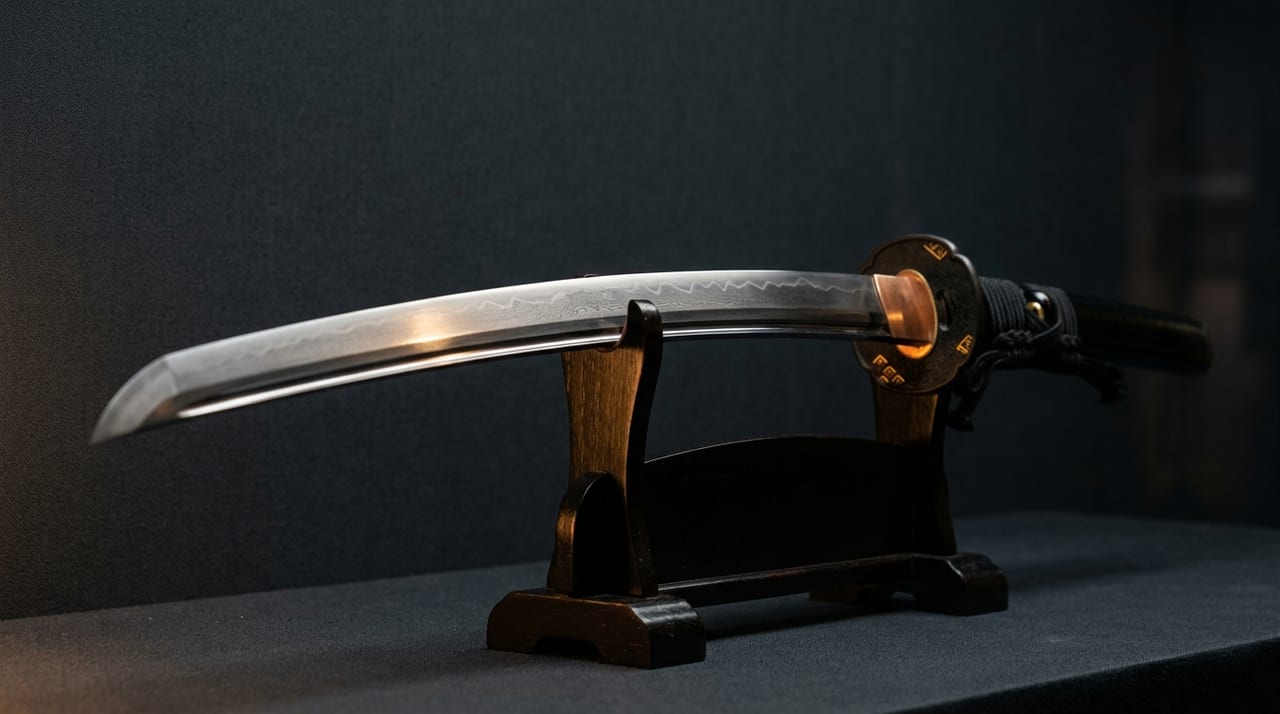
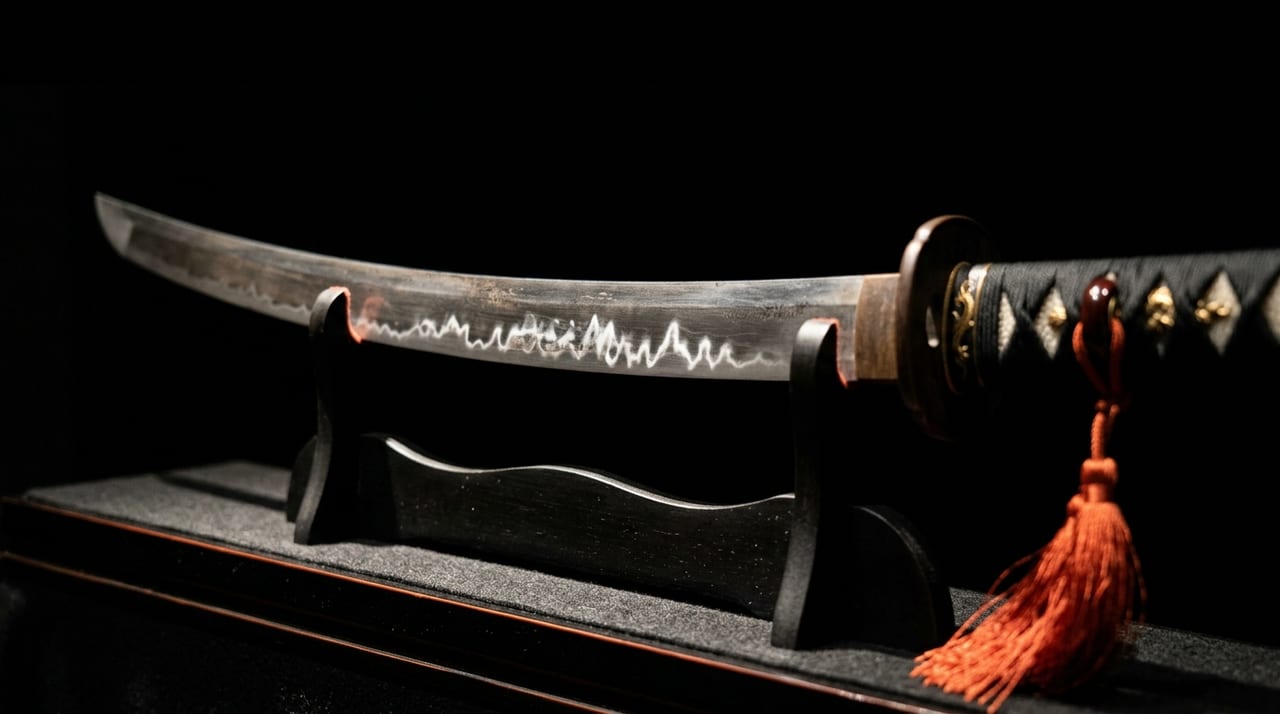
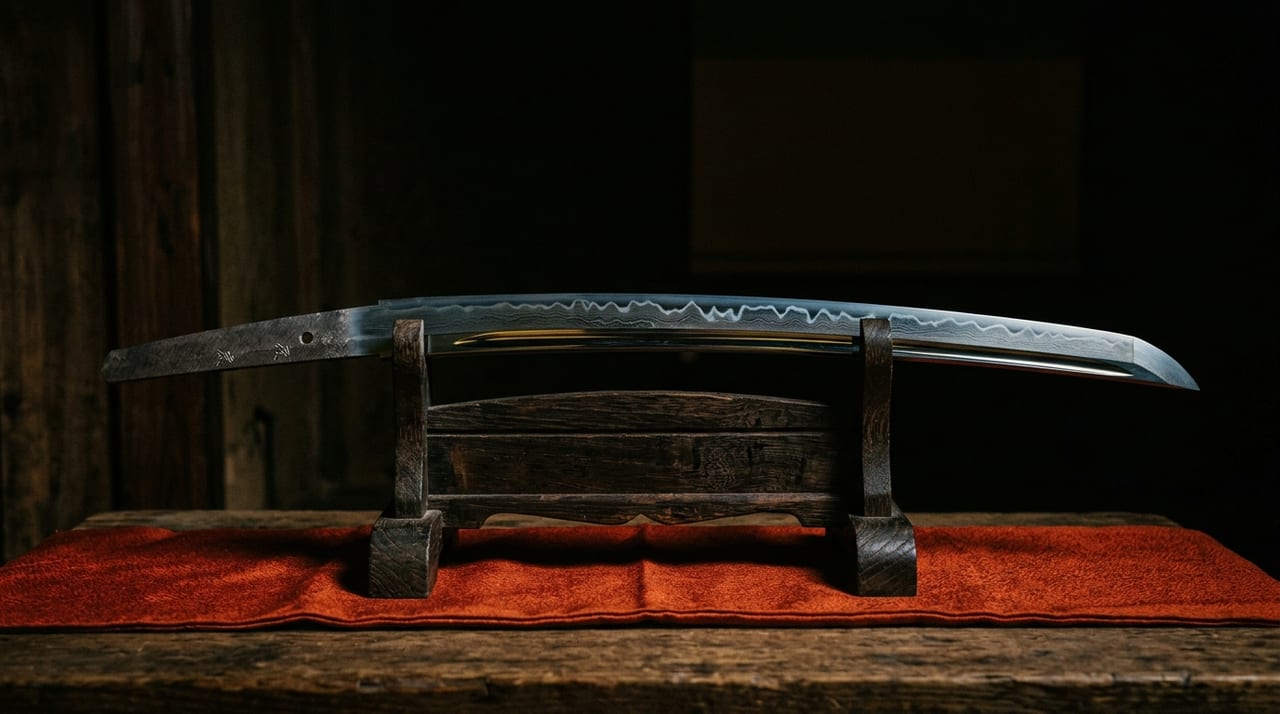
Shirogane-shi — the craftsmen who make habaki and seppa, the final specialists in sword finishing
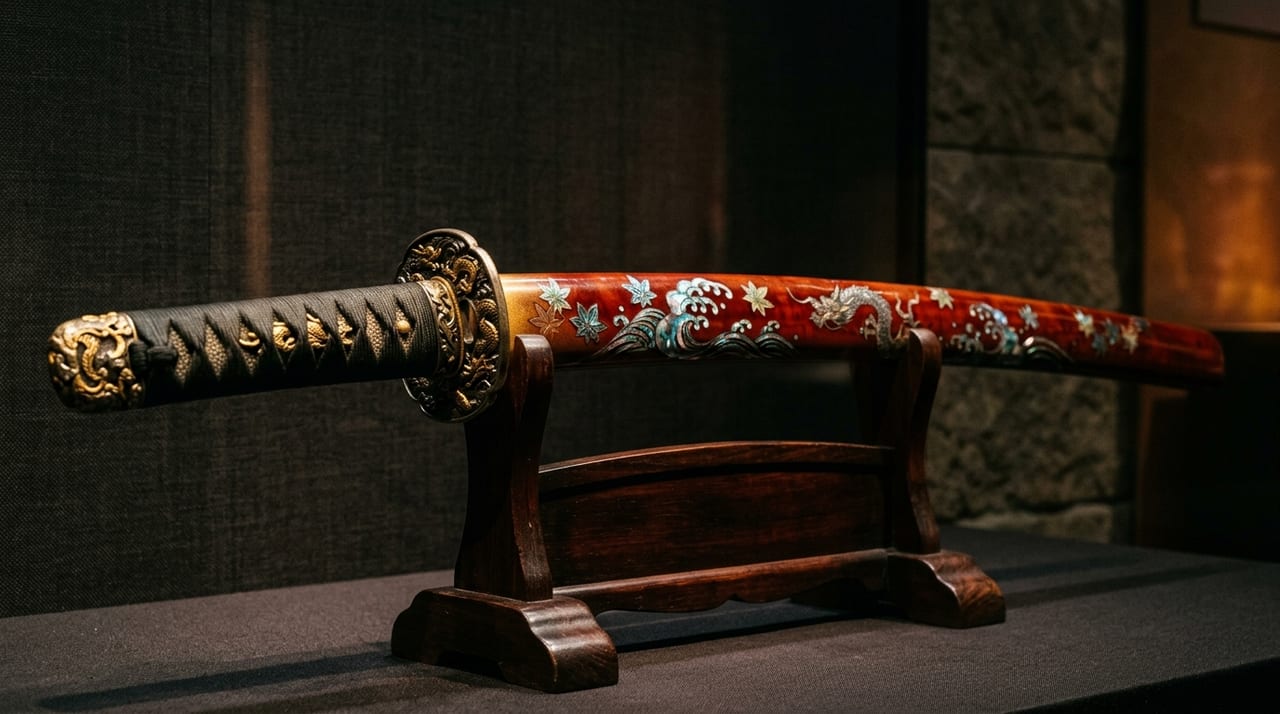 * Image is for illustrative purposes only.
Table of Contents
What is habaki — the component that supports the "keystone" of the sword
When appreciating a nihontō, few people pay attention to the ring-shaped metal component situated between the blade and the tsuba — the habaki. Yet this small component is the unsung hero that supports both the function and the aesthetics of the nihontō.
The habaki fits snugly from the munemachi of the blade to the habaki-moto, and fulfills the following three roles.
- Securing the sword in the saya: The koiguchi of the saya and the habaki mesh together through friction, preventing the sword from falling out naturally. The precision of this fit determines whether "sayanari" occurs. A well-made habaki locks quietly into place with a soft click when the sword is sheathed, does not fall out even when inverted, and separates smoothly from the saya when drawn.
- Securing the tsuba: The habaki meets the edge of the nakago-ana of the tsuba, and together with the seppa stabilizes the tsuba on the nakago. With the tsuba sandwiched between the habaki and the seppa, the entire koshirae functions as a unified structure.
- Protecting the blade: By covering the base portion of the blade, the habaki prevents the grain structure of the steel — produced through orikaeshi tanren — from being directly exposed to external impact and moisture.
The seppa are thin metal washers placed on both sides of the tsuba, serving to adjust the gaps between the tsuba and the habaki and between the tsuba and the tsuka. By precisely adjusting the material, thickness, and shape, all looseness in the entire koshirae is eliminated.
Skills of the Shirogane-shi — the precision art of metalworking
The shirogane-shi are craftsmen who specialize in the small metal components of the koshirae, such as the habaki, seppa, kozuka, and kōgai. "Shirogane" refers to silver and silver alloys, and the name of the profession is said to derive from the historical use of silver as the primary material.
The principal materials used in modern habaki are as follows.
| Material | Characteristics |
|---|---|
| Gold (kin) | The highest-ranking material. Kinmuku (solid gold) habaki were used in daimyo koshirae and dedicatory swords. Highly ductile and easy to work, but expensive, so kinase (coating another metal with gold) is more common today. |
| Silver (gin) | The traditional primary material; the source of the shirogane-shi name. Pure silver is too soft, so alloys with copper (such as Sterling Silver 925) are commonly used. The luster is beautiful, and a polished silver habaki sets off the contrast with the blade's jigane. |
| Shakudō | A copper alloy containing a small amount of gold (approximately 4%), which when blackened displays a deep black-purple color. Often used to achieve color harmony in koshirae assembled from the same material as the tsuba and fuchi-kashira. |
| Shibuichi | A copper alloy containing approximately 25% silver, with a quiet gray tone. Favored for the refined koshirae preferred by the warrior class. |
The habaki manufacturing process proceeds mainly through the following steps.
- First, sheet metal of the chosen material is forged, and the interior is precisely carved out to match the cross-sectional shape of the blade.
- The habaki is then temporarily fitted to the blade, and fine adjustments are repeated while checking the fit, until it is finished into a form that meshes perfectly.
- The exterior is given its design and luster through chōkin, filing, and polishing.
The following are representative surface decoration patterns.
- "Tatehi" — longitudinal grooves — is the simplest and most common design.
- "Ichimonji" — a single horizontal dividing line — is a dignified traditional design.
- Motifs such as dragons, plum blossoms, and bamboo rendered in chōkin are common in bespoke pieces.
Kinase is a technique for bonding gold foil or thin gold sheet to a base metal, producing a high-end appearance approaching that of kinmuku. When browsing swords in the TOUKENZA online catalog, paying attention to the material and design of the habaki will deepen the appreciation.
Historical Development — the position and lineages of habaki craftsmen
In ancient swords, there were periods when no component equivalent to the habaki existed. The ceremonial tachi of the Heian period used elaborate ornamental fittings such as "hyōgogusari," but the habaki is considered to have become standardized as an independent component from the Kamakura period onward.
During the Kamakura and Muromachi periods, tōkō themselves sometimes made habaki, but as the Edo period began, the division of labor in sword mountings advanced and the shirogane-shi emerged as an established specialist trade. Multiple shirogane-shi existed in Edo, Osaka, and Kyoto during the Edo period, supporting the sword industry alongside tōkō, sayashi, and togishi.
Among the notable shirogane-shi lineages, the Hirata family school of Edo handled metalwork across all areas of sword mountings, encompassing the work of shirogane-shi as well. There were also many cases in which craftsmen employed by daimyo continued to make habaki for generations within their domain.
Shirogane-shi Today — succession crisis and the challenge of preservation
Among nihontō-related trades today, the shirogane-shi is one of those facing particularly acute shortages of successors. According to surveys by the Agency for Cultural Affairs, the number of currently active shirogane-shi is smaller than that of tōkō or togishi, and in some regions the situation has arisen where "there being no shirogane-shi, tōkō are compelled to make habaki themselves."
NBTHK has included shirogane-shi in its list of certified "preservation techniques" and provides support for training successors. In practice, however, the length of the apprenticeship required to acquire the skills and the instability of income remain barriers to entry, and the situation in which younger generations struggle to enter the trade continues.
On the other hand, among contemporary shirogane-shi there are efforts to incorporate advanced metalworking technologies (CAD-based mold design, laser yaki-ire, etc.) while fusing them with traditional finishing techniques. The "precise inner fit" of the habaki has many aspects that cannot be achieved without handwork, but streamlining the exterior forming process through modern machining is becoming a realistic option for today's shirogane-shi.
Conclusion — great skill embodied in a small component
The habaki may be the most inconspicuous component among all the parts of a sword. Yet "the precision with which the sword fits in the saya," "the quality that keeps the tsuba and tsuka stable," and "the durability that protects the base of the blade" — all of these depend on the habaki and the skills of the shirogane-shi. Bringing attention to this small metal component that quietly supports the beauty of the nihontō, and to the shirogane-shi who make it, is an indispensable perspective for understanding the full picture of nihontō culture.