The Essence of Shinogi-zukuri — The Formation and Process of the "Shinogi Ridge" That Demands a Swordsmith's Utmost Dedication
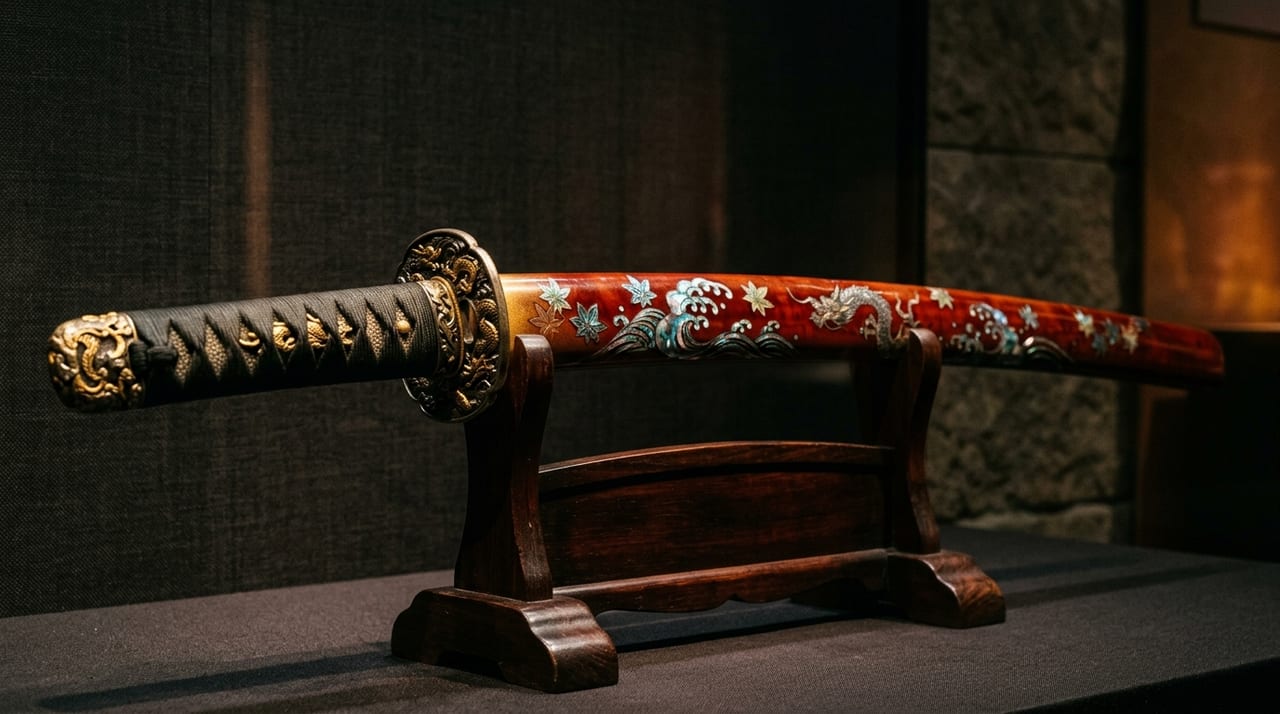 * Image is for illustrative purposes only.
Table of Contents
What Is Shinogi-zukuri — The Reason a Japanese Sword Is a Japanese Sword
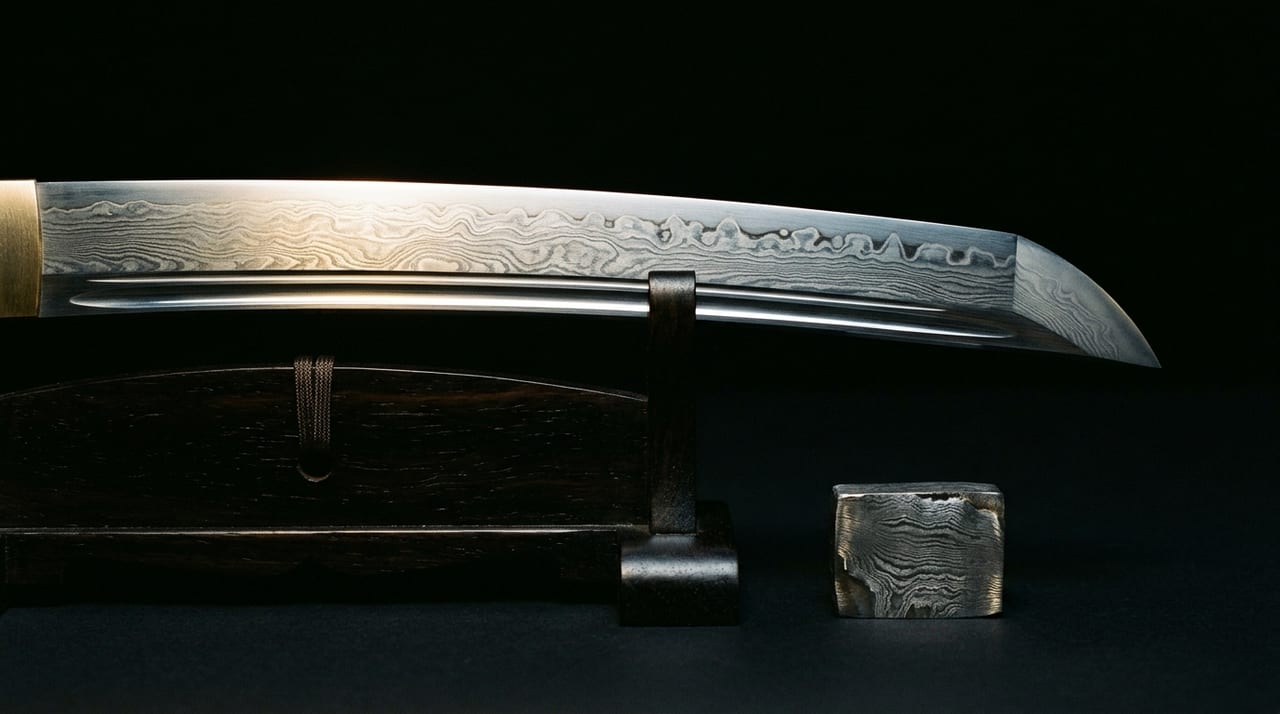
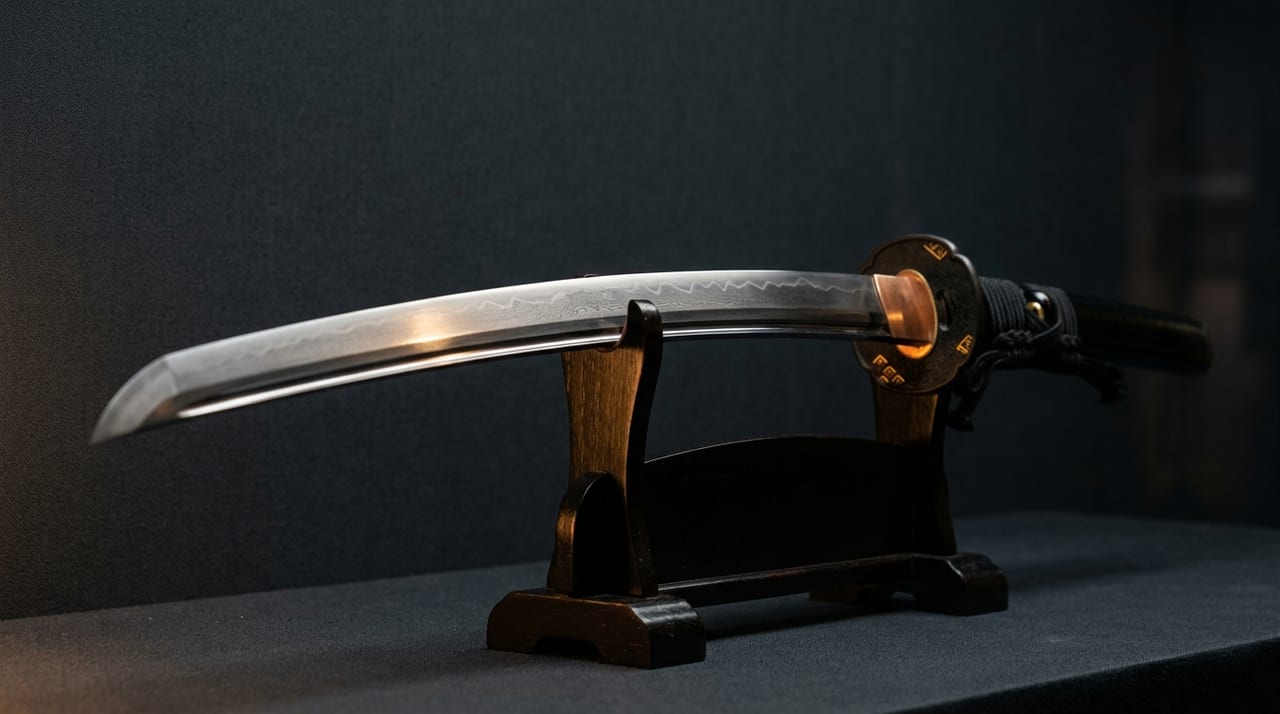
One of the most distinctive external features that sets the Japanese sword apart from swords worldwide is the cross-sectional shape known as shinogi-zukuri. Viewed in cross-section from the side, one can see that the blade consists of multiple planes in order from the cutting-edge side: the kiriba (edge bevel), the shinogi-ji, the shinogi ridge line, and the mune.
This complex polyhedral cross-section is a shape that tōkō refined over long years in order to simultaneously achieve sharpness, strength, balance of weight, and beauty.
This article systematically explains, from the perspective of the tōkō, both the significance of the shinogi-zukuri cross-sectional shape and the specific steps of the forging process that creates it.
The Cross-Sectional Structure of Shinogi-zukuri
Names of the Parts of the Cross-Section
The standard cross-section of a uchigatana consists of roughly the following parts.
- Ha (blade edge): The thinnest and sharpest tip. Consists of hagane (blade steel) hardened by yaki-ire (quenching).
- Hiraji (flat): The flat surface from the cutting edge to the shinogi ridge. In cross-section it forms a sloped plane.
- Shinogi ridge line: The highest ridge line on the side of the blade. The part from which shinogi-zukuri takes its name.
- Shinogi-ji: The flat surface running from the shinogi ridge toward the mune (back).
- Mune (back of the blade): The back of the blade. There are various shape variants, including mitsumune (three-faceted), iorimune (ridged), and marumune (rounded).
Comparison with Other Cross-Sectional Shapes
Shinogi-zukuri is not the only cross-sectional shape found in Japanese swords.
- Hira-zukuri: A flat cross-section with no shinogi. Commonly used for wakizashi and tantō. It is lightweight and excels in sharpness, but tends to be inferior to shinogi-zukuri in strength.
- Kiriba-zukuri: No shinogi; the cross-section forms an isosceles triangle shape from edge to mune. Common in naginata and ken.
- Kanmuriotosu-zukuri: A variant with the shinogi positioned near the mune side. An intermediate shape between kiriba-zukuri and shinogi-zukuri.
Shinogi-zukuri became established as the "standard form" for tachi and uchigatana because the shinogi ridge substantially increases the longitudinal strength of the blade while the kiriba on the edge side secures a sharply angled surface, thereby achieving both sharpness and strength simultaneously.
The Forging Process That Creates Shinogi-zukuri
Step 1: Sunobe (Initial Drawing-Out)
At the sunobe stage, in which the initial shape is formed from a mass of tamahagane, the detailed cross-sectional shape is not yet refined. This step involves hammering the heated steel to extend it, securing the approximate length and width of the blade.
At this stage, the judgments required of the tōkō include the following.
- Temperature management of the steel (maintaining the appropriate heating range of orange to yellow)
- The strike points of the hammer and distribution of force
- The speed and number of drawing-out passes
Because the precision of the sunobe directly determines the "character" (sujo) of the finished sword, experienced apprentices (live-in or day apprentices) often participate in the work as hammer strikers (uchiko), striking under the master's direction.
Step 2: Hizukuri (Rough Shaping)
Hizukuri is the step in which the approximate positions of the mune ridge and the shinogi ridge are established on the blade after sunobe, creating the basic form of the cross-section.
The following operations are performed in this step.
- Oshikata work, in which a dedicated hammer (kozuchi) is used to set the position of the shinogi ridge
- Adjusting the angle of inclination of the shinogi-ji and the kiriba section
- Determining the shape of the mune (mitsumune, iorimune, etc.)
At this stage the tōkō finalizes the position of the shinogi ridge for that sword. The position of the shinogi ridge — how far from the edge side it sits proportionally — greatly affects the feel of the sword in use; whether it is shifted toward the edge or toward the mune changes the characteristics of weight balance and sharpness.
Step 3: Araji (Rough Forming)
Araji is the step of further shaping the blade after hizukuri, creating a more detailed cross-sectional shape.
In araji, the following operations are performed.
- Striking the shinogi ridge line more clearly
- Refining the flatness of the shinogi-ji (from shinogi ridge to mune)
- Bringing the angle of the kiriba close to the target value
- Adjusting the thickness (kasane) of each part of the blade
At this stage the cross-section of the blade approaches the form of shinogi-zukuri. An experienced tōkō can reportedly judge at a glance how much any given part has been reduced.
Step 4: Final Tanren (Finish Forging)
Once the shape of the blade is formed, the final forging finish begins.
Sukitae: The final forging to homogenize the steel structure throughout the blade. Heating and hammering are repeated to eliminate internal irregularities (layer boundaries and voids).
Edge finish: Work to bring the thickness of the edge close to the final target value. Because deformation occurs in the subsequent tsuchioki (clay application) and yaki-ire (quenching) steps, a deliberate calculation is needed to leave the edge somewhat thicker than the target.
Step 5: Tsuchioki (Clay Coating) and Yaki-ire (Quenching)
Tsuchioki — applying yakiba-tsuchi (clay for quenching) to the finished forged blade — is an important step that determines the pattern of the hamon (temper line).
The way the clay is applied determines the hardening pattern (hamon) after quenching. Clay is applied thickly from the shinogi ridge toward the mune side, and thinly (or not at all) on the kiriba side. This difference in clay thickness creates a difference in cooling rate during rapid quenching (yaki-ire), and the hardening by martensitic transformation concentrates on the edge side, appearing as the hamon.
Yaki-ire is performed in water (mizuyaki) or oil (aburayaki). Most present-day tōkō use mizuyaki, though some choose aburayaki. In either method, the tōkō focuses every nerve on the sound and the rise of steam at the moment the blade enters the water or oil.
The Aesthetic Value of the Shinogi Ridge in Shinogi-zukuri
Standards for Evaluating a "Well-Forged Shinogi Ridge"
The shinogi ridge of the finished sword reveals its final appearance through polishing (togi). The qualities required of a beautiful shinogi ridge are as follows.
- Linearity: The shinogi ridge runs in a straight line from base to kissaki.
- Sharpness: The ridge line of the shinogi is clearly defined (expressed as "shinogi ga tatsu," the shinogi "standing").
- Continuity: The shinogi ridge flows without interruption between the mune and the kiriba.
In particular, the state of "shinogi ga tatsu" is emphasized in the appraisal of a sword's value as an indicator of high forging precision.
Relationship with the Jigane
The jigane — the pattern of the kitae-hada — that appears on the shinogi-ji (the flat surface from the shinogi ridge to the mune) is also an important point of appreciation. The jihada known as itame, mokume, masame, ayasugi-hada, and so on are the layered structure of the steel formed during the process of orikaeshi tanren (folding), brought to the surface by polishing.
In a shinogi-zukuri sword, the jihada of the shinogi-ji and that of the edge side may appear different. On the edge side — the hardened zone from yaki-ire — the steel structure changes, and the jihada pattern often becomes difficult to see.
Conclusion — Shinogi-zukuri Is the Tōkō's Philosophy Given Form
The steps embodied in a single shinogi-zukuri sword proceed through sunobe, hizukuri, araji, final tanren, tsuchioki, and yaki-ire, followed by the polishing steps. In the cross-section of the ultimately completed blade — the sharp kiriba, the uniform shinogi-ji, the crisp shinogi ridge — is condensed the accumulated refinement of long years.
When looking at a shinogi-zukuri sword, if one recalls the functional meaning of each surface in that cross-section and the skill of the tōkō who creates it with precision, the way one sees the Japanese sword will likely change somewhat.