History and Production System of Showa Guntō: Differences Between Type 94, Type 95, and Type 98, and the Army and Navy Sword Management System
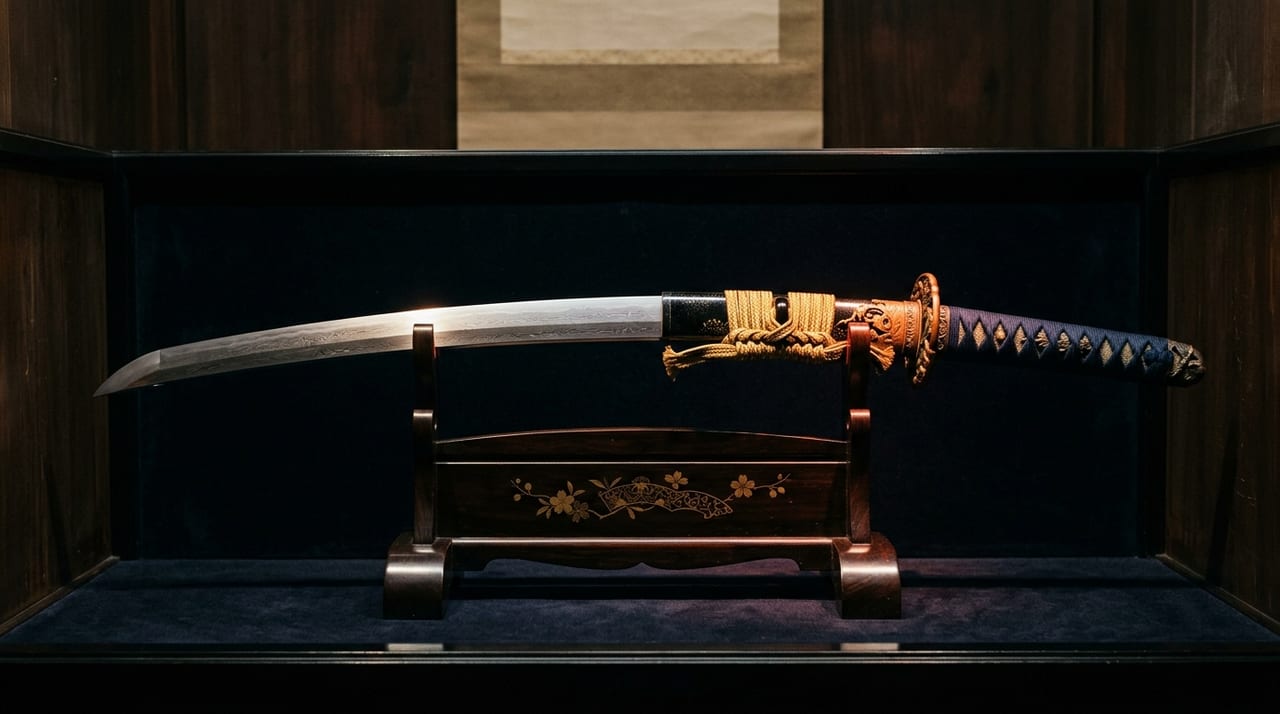 * Image is for illustrative purposes only.
Table of Contents
Classification System of Showa Guntō
Japanese military swords of the Second World War era were classified into multiple specifications according to the rank of the wearer and intended use. The three principal specifications are as follows.
| Model | Year of adoption | Recipients | Blade | Koshirae |
|---|---|---|---|---|
| Type 94 guntō | Shōwa 9 (1934) | Officers and warrant officers | Newly forged blades (Yasukuni-tō or blades by Army-commissioned tōkō) or ancestral kotō and shintō | Traditional Japanese sword style (ray-skin tsuka, crepe-wrapped, iron tsuba), nihaikan (two-ring) suspension |
| Type 98 guntō | Shōwa 13 (1938) | Officers and warrant officers | Newly forged blades by Army-commissioned tōkō (ancestral blades and kotō decreased toward the end of the war, and these increased) | Simplified by changing to ichihaikan (single-ring) suspension, reducing mass-production costs |
| Type 95 guntō | Shōwa 10 (1935) | Non-commissioned officers and soldiers | Machine-produced steel | All-metal construction, tsuka secured with metal screws |
Type 94 Guntō (1934 adoption)
The Type 94 guntō, adopted in Shōwa 9 (1934), was the first standard-issue guntō for officers and warrant officers. It symbolized a return from the Western-style swords of the Meiji era to the "Japanese sword format," with koshirae following the traditional Japanese sword style (ray-skin tsuka, crepe-wrapped, iron tsuba). It was a tachi-type guntō employing nihaikan (two-ring) suspension, equipped with newly forged blades ordered for military use (Yasukuni-tō or blades by Army-commissioned tōkō) or ancestral kotō and shintō.
Type 98 Guntō (1938 adoption)
The Type 98 guntō, adopted in Shōwa 13 (1938), was an improved version of the Type 94 designed to enhance portability and draw speed. The nihaikan suspension of the Type 94 was changed to ichihaikan (single-ring), the koshirae specifications were simplified, and mass-production costs were reduced. For officers and warrant officers. Toward the end of the war, kotō and ancestral blades decreased, and newly forged blades by Army-commissioned tōkō came to be issued in large numbers.
Type 95 Guntō (1935 adoption)
The Type 95 guntō, adopted in Shōwa 10 (1935), was the guntō for non-commissioned officers and soldiers. The blade was machine-produced steel and did not follow traditional Japanese swordmaking methods; the koshirae was likewise an industrial product made entirely of metal. Unlike the Type 94 and Type 98, whose tsuka were made of wood wrapped in silk or cotton, the tsuka was of metal and secured with metal screws. While of low artistic value, it met wartime demand in terms of mass producibility and price.
Zaidan Hōjin Nihontō Tanren-kai and Yasukuni-tō
The Zaidan Hōjin Nihontō Tanren-kai (Yasukuni Tanren-jo), established at the western end of the Yasukuni Shrine precinct (on the site of the former archery range), was founded and opened in Shōwa 8 (1933) as a center for producing officers' guntō by traditional methods. The principal milestones of that year are as follows.
- February 25: groundbreaking ceremony
- June 25: completion of the tanren-jo
- July 8: completion dedication ceremony and kaji opening ceremony
Army Minister Araki Sadao served as advisor and Vice Minister of the Army Yanagawa Heisuke as chairman, with the purpose of preserving traditional techniques and equipping officers with guntō. The swords produced here were called Yasukuni-tō, and approximately 8,100 pieces were created over a period of more than ten years.
Army-commissioned tōkō were civilian tōkō certified by the Ministry of the Army who manufactured guntō blades meeting certain standard specifications. The Yasukuni Tanren-jo and the Army-commissioned tōkō system formed the two pillars of the Showa guntō framework, which placed authentic traditional swords made by tatara smelting and orikaeshi tanren alongside machine-manufactured steel swords.
Distinction Between Tradition-Forged Blades and Zōhei-tō / Shōwa-tō
There are major differences in quality and manufacturing method among Showa-era guntō.
Tradition-forged blades: Swords made by traditional methods using tamahagane from tatara smelting, including orikaeshi tanren and tsuchioki yaki-ire (quenching). Yasukuni-tō and blades by Army-commissioned tōkō fall into this category and are subject to current sword appraisal and evaluation. They can also be submitted to NBTHK examination.
Zōhei-tō / Shōwa-tō: Metal blades mass-produced mechanically by an arsenal, which did not undergo traditional forging or yaki-ire (quenching). The blades of Type 95 guntō are the prime example; their artistic and technical evaluation as swords is treated as a separate matter. Because they are machine-worked products using military steel (arsenal-specification steel), the traditional sword appreciation points of jihada and hamon do not apply.
GHQ Confiscation and Surviving Showa Guntō
GHQ disarmament after the end of the war resulted in the confiscation and destruction of large numbers of guntō. Some of the guntō that remained in Japan became subject to the sword registration system and continue to circulate today. Guntō with high-quality blades made by Yasukuni tōkō and Army-commissioned tōkō have been reappraised among collectors and have also become subject to NBTHK examination. When appreciating or collecting these swords, the manufacturing distinction between tradition-forged blades and zōhei-tō is directly linked to value assessment, so it is important to confirm the specification, maker, and characteristics of the blade accurately.
Naval Sword Management
Alongside the Army, the Navy also maintained its own sword specifications. Naval officers wore the kaigun-tanken (command-sword type) as well as, in some cases, guntō of a style similar to Army guntō, and there were differences in the details of the koshirae between the Army and Navy. The Navy largely entrusted sword management to individual officers as personal equipment, and not a few officers brought ancestral celebrated blades.
Modern Evaluation of Showa Guntō and Points of Note in Transactions
Accurately evaluating Showa guntō currently in circulation requires the following distinctions. First, possession of a registration certificate (Juhō Tōken-rui Tōrokushō) is a prerequisite, as possession of unregistered swords is illegal. Second, while the legal treatment is the same, the artistic value differs greatly between tradition-forged blades such as Yasukuni-tō and Army-commissioned tōkō blades, and machine-made products such as Type 95 guntō.
Showa guntō with traditional forging may in some cases obtain a kanteisho (appraisal certificate) at the Hozon Tōken level or above issued by NBTHK, with the hamon, jihada, mei, and condition of the koshirae serving as evaluation criteria. Machine-made Type 95 guntō, on the other hand, are often handled by sword dealers under the category of "military equipment (military collection)" and are evaluated in a separate category from traditional swords. The world of Showa guntō occupies a complex, interdisciplinary position at the intersection of traditional sword history, military history, and modern industrial history, and it is important to have specialists verify the specification, manufacturer, and provenance of the blade when buying or selling.