Type 95 Military Sword Production: Mass Manufacturing vs. Traditional Forging and the Industry's Quantity Dilemma
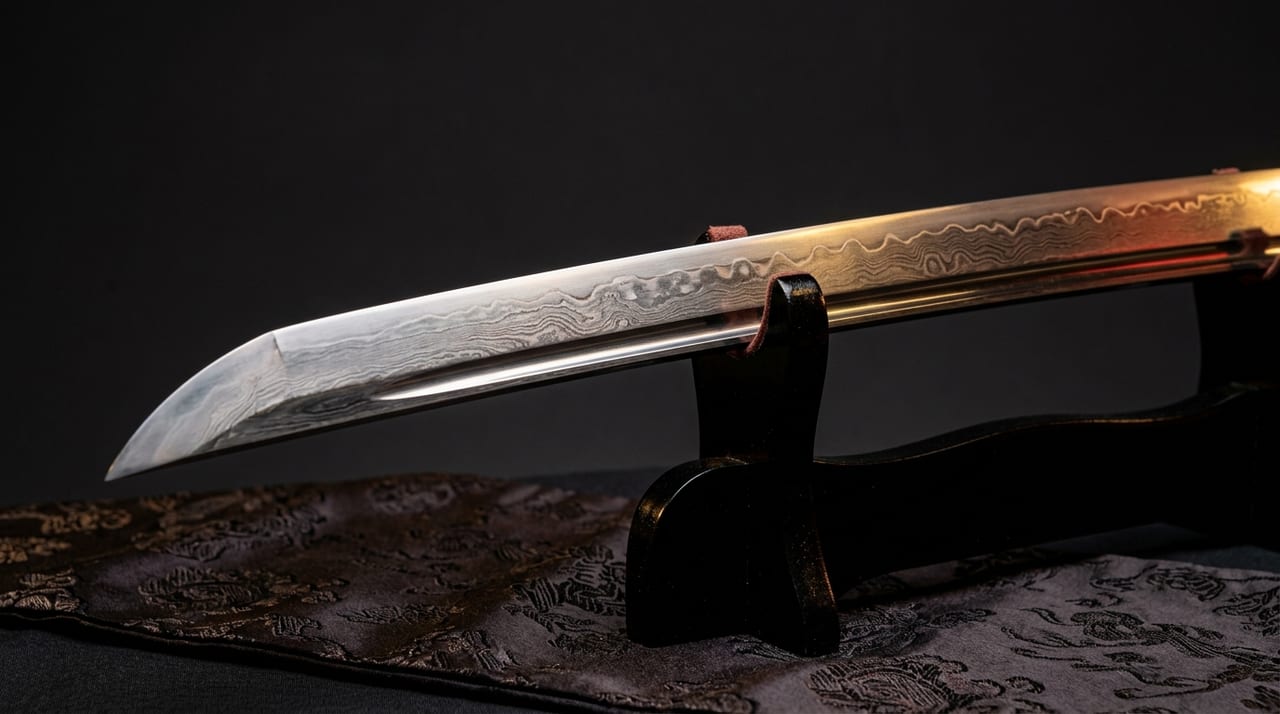 * Image is for illustrative purposes only.
Table of Contents
What is the Type 95 Military Sword?
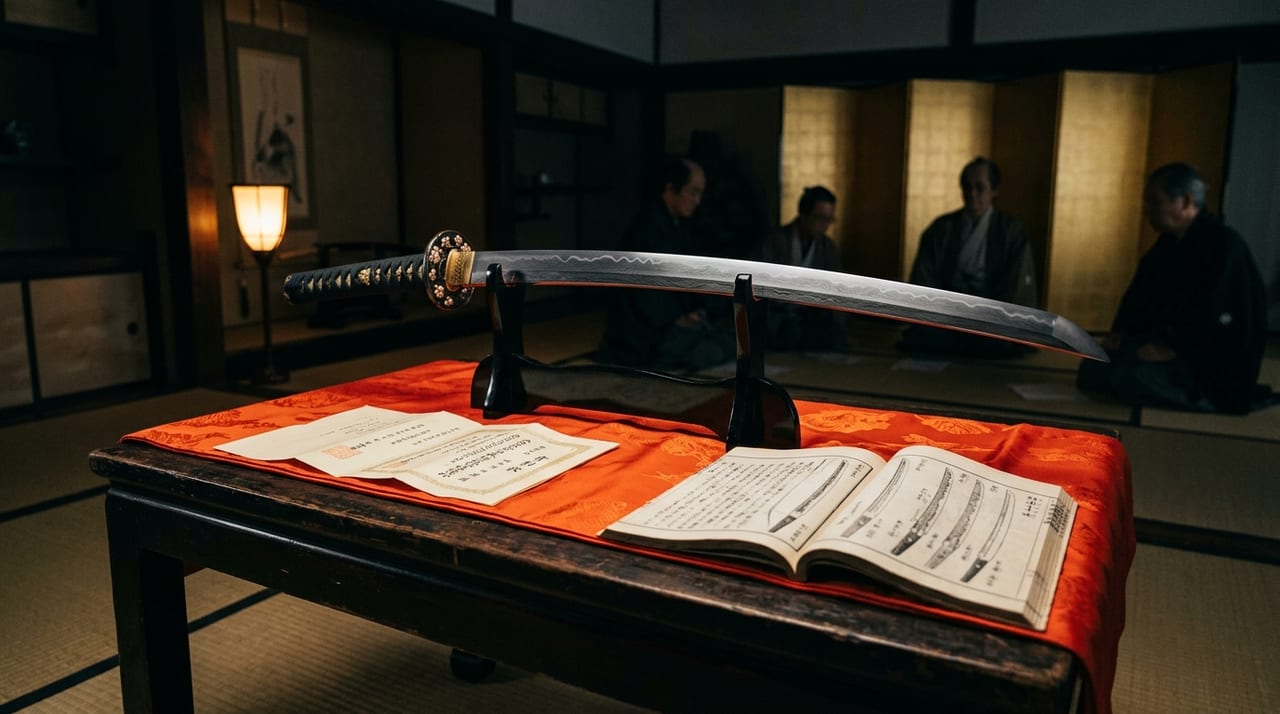
The Type 95 military sword, established in 1935 (Showa 10), was a standard military sword issued to non-commissioned officers (sergeant, corporal, etc.) of the Imperial Japanese Army. In contrast to the Type 94 and Type 98 military swords for officers, which operated on a "self-purchase" principle and procured relatively high-quality blades through civilian swordsmiths and sword dealers, the Type 95 was an officially-supplied item fully funded by the state, making large-scale mass production within a short timeframe an absolute requirement. For details on the Type 98 military sword, the representative officer-grade model, see Type 98 Military Sword Complete Explanation.
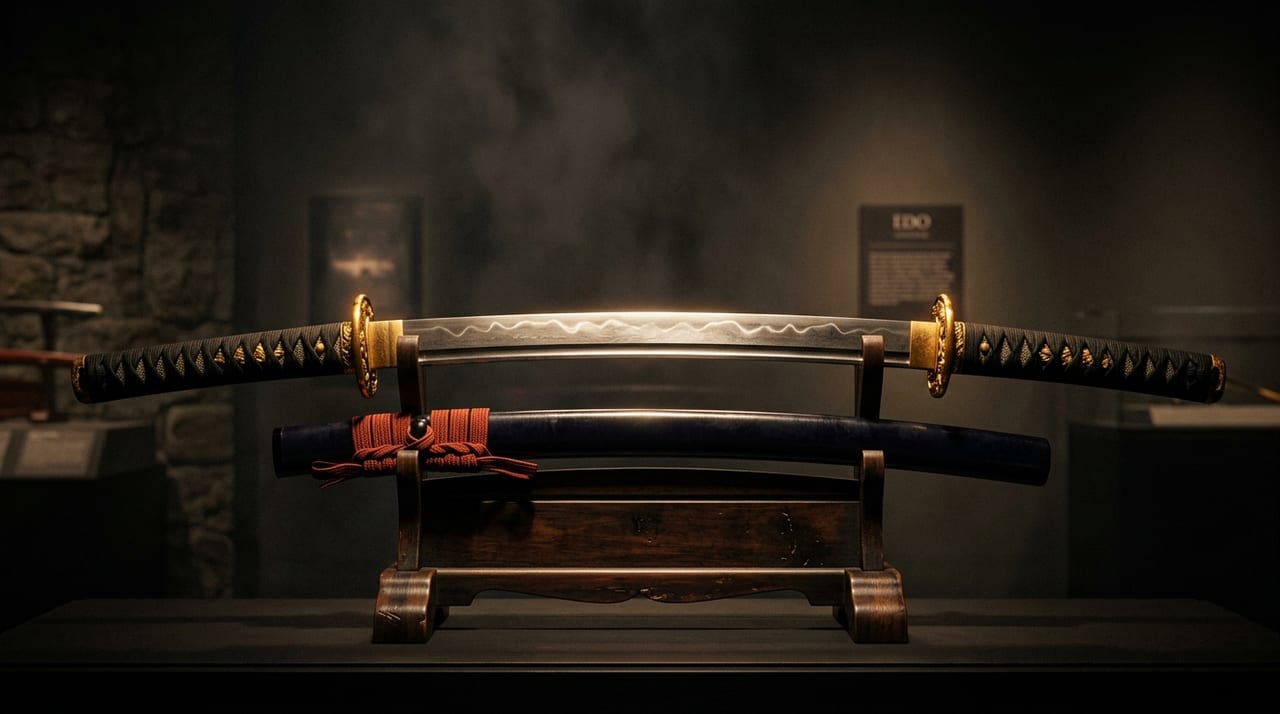
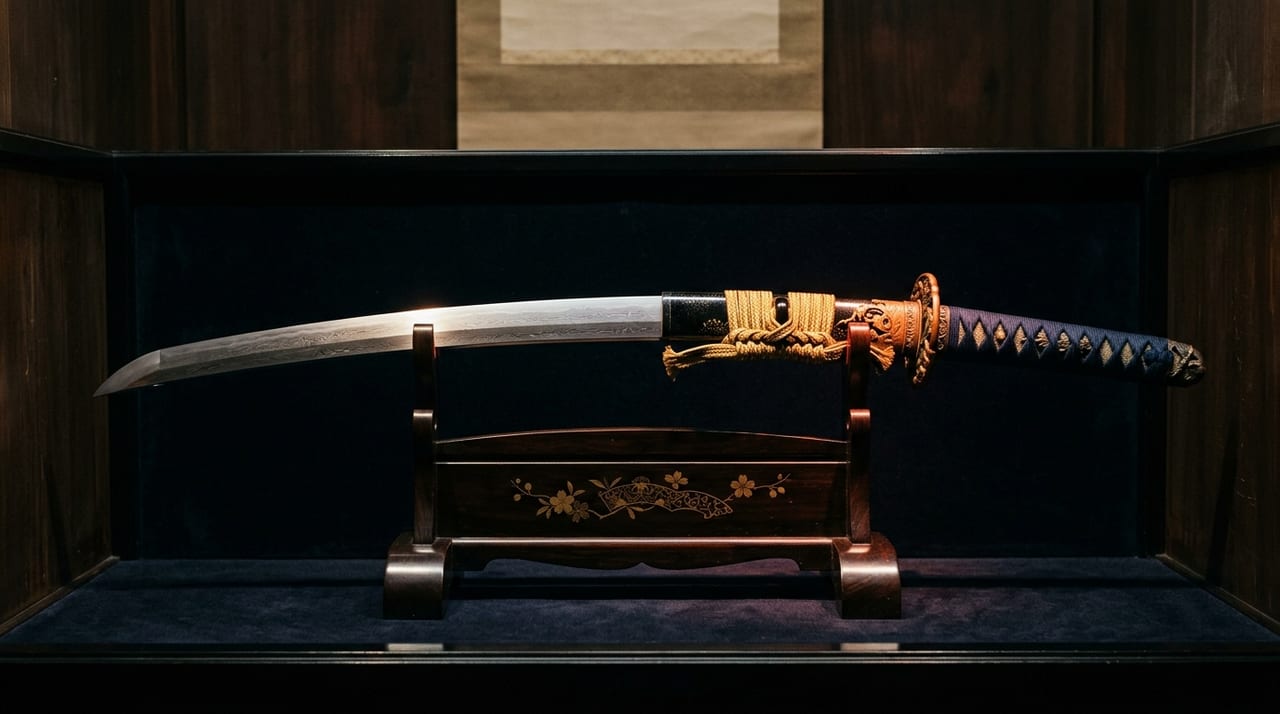
The overall length, including the mounting, was approximately one meter, with a blade length of around 65–70 cm. Though the external form mimicked the shape of traditional Japanese swords, the grip (kabuto-gane) and guard were made of brass, and the scabbard was made of standardized iron. After a modification in 1938 (Showa 13), the mid-period and later models shifted to aluminum (light alloy) production. The blade itself was manufactured through industrial mechanical processes—steel stock machining and grinding—employing none of the traditional methods involving tamahagane or fold-forged tempering. Lacking jihada and hamon, the blade was an industrial product devoid of elements considered fundamental to Japanese swords, classified in sword circles as a typical example of "Showa swords."
The Reality of Mass Production — Where and How It Was Made
Manufacturing of the Type 95 military sword was widely outsourced to private metal processing and tool industries. While the Imperial Army Arsenals (Tokyo, Osaka, Nagoya) oversaw specification standards and inspection, actual production was handled by private factories throughout various regions in a divided labor system. For a comprehensive overview of Army-Navy sword management systems and the differences among Type 94, Type 95, and Type 98 models, refer to History and Manufacturing System of Showa Military Swords.
The major production centers and division of labor are as follows:
| Region/Process | Details |
|---|---|
| Seki blade production center (Seki, Gifu Prefecture) | Known since antiquity as the "city of blades," Seki became the largest military sword and bayonet production facility during the war. Factories under the Seki Kaji (blacksmith) association, including Showa Manufacturing, established mass-production lines and manufactured blades continuously via conveyor belt systems. The fact that Seki's present blade industry experienced this wartime industrial conversion represents an important turning point in local industrial history. |
| Echizen (Echizen, Fukui Prefecture) and Sakai (Osaka Prefecture) | Both regions maintained forging traditions dating to the medieval period and accepted military orders to participate in military sword blade and bayonet production. The craftsmanship of Echizen uchihamono was partially integrated into industrialized military production. |
| Division of labor in mountings | Components other than the blade—grip, scabbard, guard, mekugi, and grip wrapping—were produced by traditional sword-fitting craftspeople including metalworkers, woodworkers, lacquer workers, scabbard makers, and grip wrappers. However, due to wartime standardization, mass-produced aluminum-cast components became mainstream, leaving scant room for craftspeople's discretion. |
Manufacturing stamps, including factory marks and production dates, were often inscribed on blades, serving as crucial reference points for present-day collectors and researchers tracking production lots.
Conflict with Traditional Sword Smiths — "Industrial Products Masquerading as Japanese Swords"
Mass production of the Type 95 military sword inflicted deep fractures in the world of traditional Japanese sword forging.
From the traditional swordsmith's perspective, the following three elements, born solely through fold-forged tempering using tamahagane, constitute the essence of Japanese swords, while machine-cut blades merely imitated their form:
- jihada
- hamon
- sori
Researchers such as Honma Kunzan in the Showa period explicitly adopted the position that "Showa swords do not fall within the category of art swords," and the NBTHK (Society for Preservation of Japanese Art Swords) maintained its policy of excluding military sword blades from authentication.
Conversely, certain swordsmiths attempted to reconcile traditional technique preservation with wartime adaptation by accepting commissions for officer-grade military swords (Type 98). Records survive of renowned swordsmiths such as Gassan Sadakazu (the first) and Miyairi Akihira forging "genuine blade military swords" for officers, which today receive high artistic appreciation.
The problem, however, lay in more structural dimensions. Tamahagane production through tatara iron-making faced restricted material supplies under wartime iron-steel control economies, forcing some traditional production regions to halt operations semi-coercively. Situations arose where "Western iron (Western steel)" had to substitute for tamahagane, jeopardizing the inheritance of traditional techniques at the material level as well.
Quality Issues and On-Site Reality
The consequences of mass production manifested as quality variation even on the battlefield.
Military specifications for Type 95 military sword blade steel designated carbon steel (roughly equivalent to SK-series), but by the war's final stages (1944–1945), material shortages caused quality to deteriorate sharply. Front-line units reportedly filed the following complaints:
- Blade edge hardness was uneven and prone to chipping
- Inadequate hardening caused the blade to bend easily
- While aluminum-cast mounting components contributed to weight reduction, durability was poor, and actual combat use saw repeated breakage of grip fittings
From a traditional swordsmith's perspective, these were "problems foreseeable from the start." The dual-structure of "skin iron and core iron" born from fold-forged tamahagane tempering represents ancestral wisdom reconciling toughness with hardness—industrial steel stock merely machined and ground cannot access these benefits. The outcome of mass-production logic overriding quality logic was a situation that exposed soldiers' lives to danger.
Postwar Evaluation and Contemporary Market Position
The contemporary sword market's assessment of the Type 95 military sword diverges sharply between artistic and historical perspectives.
The NBTHK (Society for Preservation of Japanese Art Swords) excludes military sword blades from authentication, and they receive no grading such as "preserved sword" or "special preserved sword." As artworks and cultural heritage, their market value is extremely low, with handling by domestic sword dealers being limited.
Conversely, as primary source material for Showa prewar military and industrial history, they maintain steady demand from domestic and international military collectors. Examples with clear manufacturing marks, dates, and unit stamps, as well as "complete" specimens with well-preserved mountings, have fetched several hundred to several thousand dollars at overseas auctions such as Rock Island Auction. Specimens that survived GHQ occupation-era confiscation and destruction are particularly rare; those bearing regimental marks or officer-gift inscriptions are particularly valued for historical documentation.
What the Type 95 Military Sword Asks Us
What emerges through the Type 95 military sword is a universal theme: the collision between modernization and traditional culture. While industrialization could mass-produce "form," the "properties" of steel created through tamahagane forging remained beyond replication. This limitation surfaced as quality issues on the battlefield and became entrenched postwar as placement "outside the realm of art swords."
The redundancy inherent in traditional technique and consistent quality represent elements that standardization and specification alone cannot substitute. The Showa prewar sword history in which industrialized "weapons bearing the form of Japanese swords" coexisted with "cultural heritage Japanese swords" imbued with craftspeople's spirit continues to demonstrate to us today the weight of the questions mass production posed to traditional industries. The Type 95 military sword's existence paradoxically proves that the essence of Japanese swords lies not in "form" but in "the spirit of forging."