The Type 94 Military Sword: Complete Guide to Showa's 'Return to Japanese Style' — Structure, Identification, and Collector Notes
 * Image is for illustrative purposes only.
Table of Contents
Establishment Background of the Type 94 Military Sword — The Ideological Context of Showa "Return to the Japanese Sword"
On February 14, 1934 (Showa 9), the Imperial Army formally established the "Type 94 Military Sword" as the standard sword for officers. The immediate predecessor of the officer-model Type 94 was the Western-style officer's military sword (saber type) from the Meiji period. Note that the Type 32 Military Sword (established in Meiji 32) is from the line for non-commissioned officers and enlisted men, subsequently inherited by the later Type 95 Military Sword, and is not the predecessor to the officer model (see also Manufacturing System of the Type 95 Military Sword).
Behind the establishment of the Type 94 lay deep connections with the ideological currents of the early Showa period. After the Mukden Incident (1931), the glorification of "Yamato spirit" and "samurai spirit" within the military rapidly intensified, and momentum grew for the view that "the swords worn by Imperial Army officers must follow the style of the Japanese sword." Officers of the Kodo faction, led by Army Minister Araki Sadao, spearheaded this reform, leading to the establishment of a standard sword that faithfully reproduced the external appearance and style of the traditional Japanese sword.
The establishment of the Type 94 was not merely an equipment update but also a symbol indicating the military's spiritual and cultural direction. This development was inherited by the later Type 98 Military Sword (1938) and determined the sword-wearing styles of officers and non-commissioned officers throughout the Pacific War period (see this article for details on the Type 98).
Construction Structure of the Type 94 — Details of Each Component
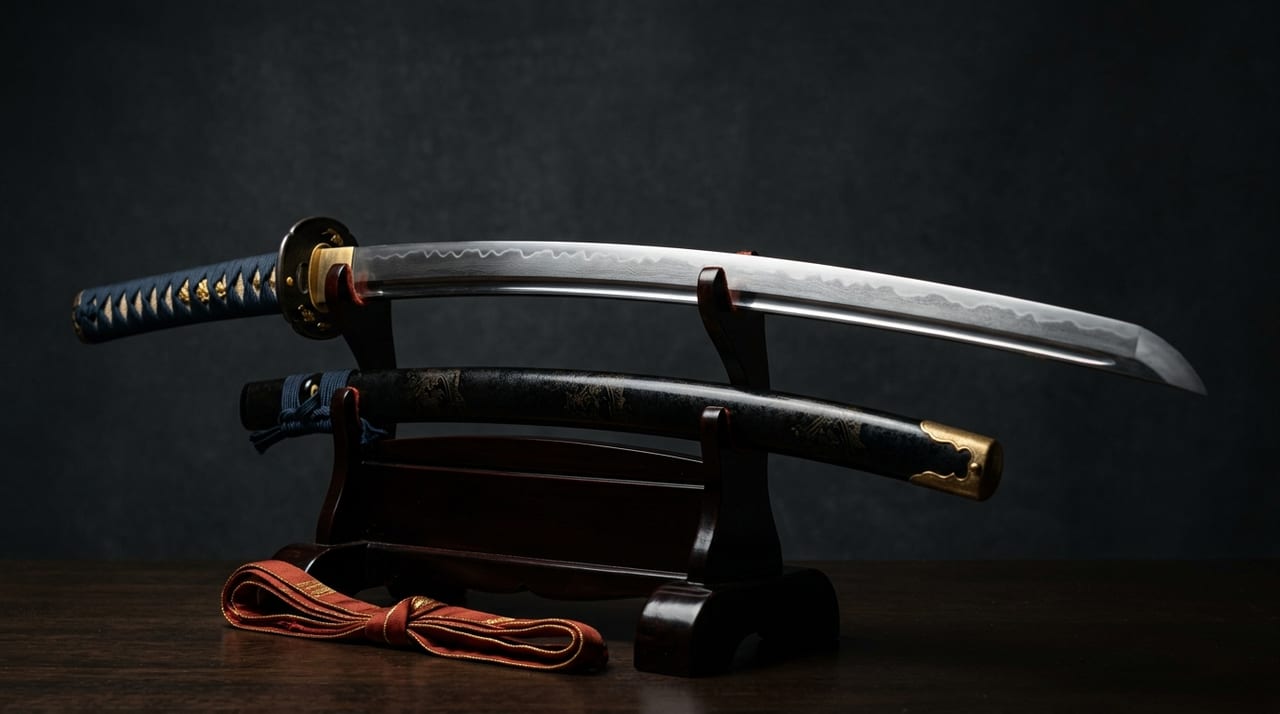
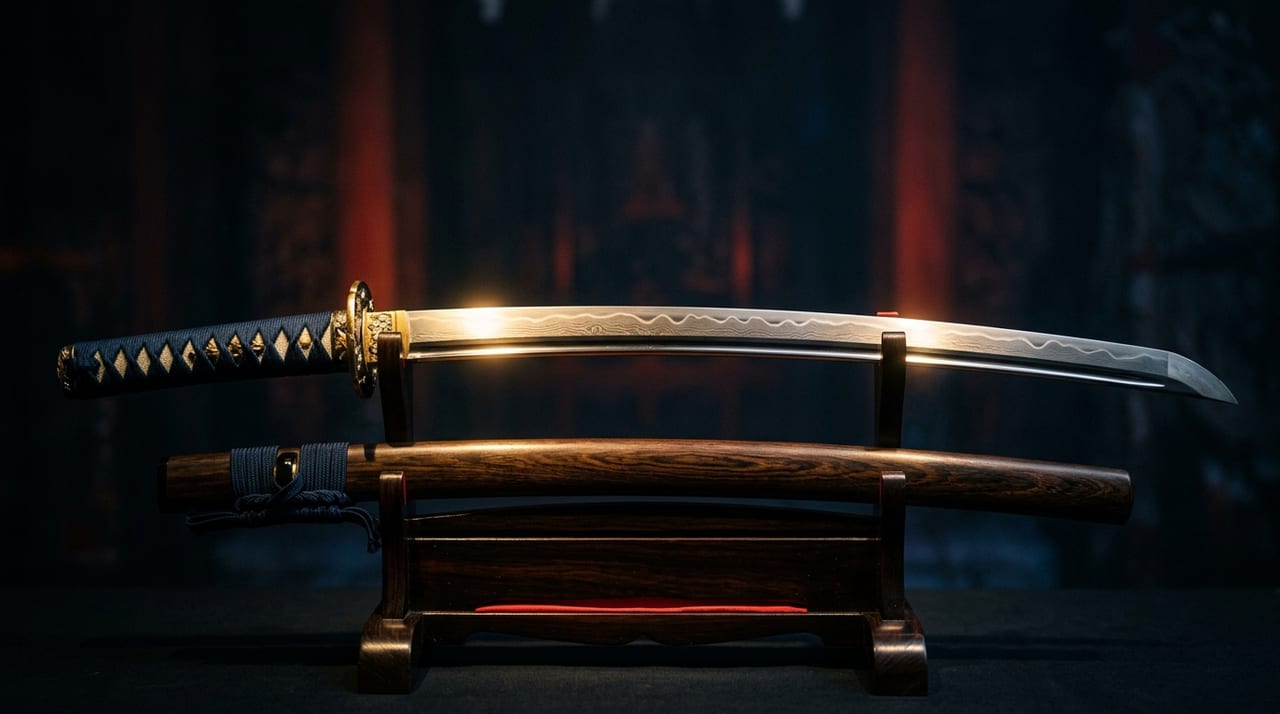
The construction (koshirae) of the Type 94 military sword, while respecting the nomenclature and structure of traditional Japanese swords, possessed a unique design that added practical utility for military use. Let us examine each component's characteristics carefully.
| Component | Characteristics |
|---|---|
| Saya (Scabbard) | A wooden core material was covered with black or dark brown leather, with military-standard fittings attached. The kurikata was fitted with holes for passing a leather strap, the design taking into consideration field portability. The kojiri was made of metal to prevent damage to the scabbard from contact with the ground. The leather covering represented a different choice from the traditional lacquered scabbard, but offered considerable practical advantages from the perspective of moisture resistance and impact resistance. |
| Tsuka (Handle) | With samegawa (ray skin) as the base and wrapped with diagonal or flat wrapped handle cord (usually brown or black), this is shared with traditional swords. However, military sword handles were standardized to dimensions emphasizing grip comfort, with custom-made pieces fitted to an individual's hand limited to cases of special officer commissions. The kashira (pommel) was made of metal, often featuring cherry blossom or chrysanthemum designs. |
| Tsuba (Guard) | The standard tsuba of the Type 94 was circular or elliptical in shape, made of iron, with openwork designs featuring the Imperial Army emblem (five-pointed star) or cherry blossom crests being the standard. However, cases in which officers used decorative tsuba specially commissioned from metalworkers were frequent, and this is one of the sources of the diversity seen in surviving examples and difficulties in authentication. |
| Menuki and Fuchikashira (Blade Collar and Pommel Ring) | Metal fittings featuring cherry blossoms, chrysanthemums, dragons, tigers, and similar motifs were widely used. Custom pieces incorporating unit emblems or individual family crests also existed, sometimes reflecting an officer's social status or origin. |
Two Classifications of the Blade — Traditional Forged Swords and Industrially Manufactured Showa Swords
The blades housed in Type 94 koshirae are broadly classified into two types based on their manufacturing method and materials. This distinction brings decisive differences in terms of both artistic and market value.
| Classification | Characteristics |
|---|---|
| Traditional Forged Sword (hon-zukuri) | Blade forged by the "Koryo Sword Forging Workshop" within Yasukuni Shrine (Yasukuni swords) or Imperial Army commissioned swordsmiths (Getsuyama Sadaichi, Miyairi Yukihira, and others) using traditional tamahagane and Japanese steel. Possessing a hamon formed by proper heat treatment and jihada resulting from forging, with the swordsmith's signature cut into the nakago. High in artistic completeness and eligible for authentication by the Japan Society for the Preservation of Japanese Art Swords (NBTHK). |
| Industrially Manufactured Showa Sword (Official Supply Sword / Mass-Produced Sword) | Blades machined from standardized carbon steel (or alloy steel) in military factories. Without hamon, or possessing uniform and artificial pseudo-hamon from electrical heat treatment. Lacking jihada, with polishing marks prominent on the surface. No swordsmith signature on the nakago, typically bearing only military stamps such as "Showa ××" or "○○ Arsenal." |
What should be noted is that even with the same "Type 94" appearance, value varies greatly depending on the combination of koshirae quality and blade type. "Matched complete sets" with traditional forged blades mounted in high-quality koshirae receive exceptional evaluation in the current collector market.
Specific Authentication Checkpoints for the Type 94
Let us systematically organize the points of authentication that can be applied when handling an actual example.
- Koshirae Dating: Koshirae restored or modified in Type 94 style exist in the market after World War II. To distinguish originals, one should comprehensively observe the aging of leather (drying, cracking, color fading), natural oxidation and wear of metal fittings, and the balance of cord fading and loosening. Koshirae that appear "too clean" like new goods likely represent later replacements.
- Blade Assessment: The most critical verification task. Determine whether the blade is traditionally forged or industrially made based on the presence or absence and form of hamon (straight hamon, ranged hamon, wavy hamon, etc.) and the presence or absence of jihada (itame, masame, mokume patterns). If amateur judgment is difficult, specialist consultation or having it appraised by a sword merchant is strongly recommended.
- Nakago Verification: If there is a swordsmith signature, verification against a swordsmith reference work (such as "Nippon-to Taikan") is necessary. By combining this with the presence or absence of military stamps (arsenal mark, manufacturing year, catalog number), it becomes possible to estimate the manufacturing source and period.
- Component Completeness: "Complete sets" with all parts present — tsuka, saya, tsuba, menuki, fuchikashira, habaki, kozuka, and kogai — are rare and value increases significantly. Missing or later replacement components should be price-evaluated only after confirming their source and reason.
- Presence of a Registration Certificate: Within Japan, possession of swords is legally required to be registered with the Board of Education. One must always verify whether a "registration certificate" is present and whether it matches the blade's dimensions. Blades without a registration certificate generally cannot be traded.
Market Value and Significance of Collection in Modern Times
The market value of Type 94 military swords varies greatly depending on the blade type, koshirae condition, and completeness of accompanying fittings.
| Type | Price Range |
|---|---|
| Traditional forged blade (with swordsmith signature) + complete koshirae (high-quality) | ¥500,000–1,500,000+ |
| Industrially manufactured blade + complete koshirae | ¥50,000–200,000 approximately |
| Koshirae only (without blade) | ¥20,000–80,000 approximately |
Yasukuni swords and works by commissioned swordsmiths in good condition are evaluated by the same standards as ordinary art swords.
The significance of collecting Type 94 military swords extends beyond price. As physical evidence of the cultural and political movement of the early Showa period's "return to the Japanese sword," and as material culture of an era in which traditional craftsmanship and modern industry intersected, the Type 94 possesses multilayered historical value. The very dichotomy of whether the blade is traditionally forged or industrially manufactured symbolizes "the conflict between tradition and modernization" in early Showa Japanese society. Collectors, rather than acquiring merely as weapons, should preserve them together with the historical context underlying them, as this leads to an essential understanding of this sword type.