The Technique of Tsuchioki (Applying the Clay Coating): The Secret Art of Clay Application That Determines the Hamon and Its Variations by School
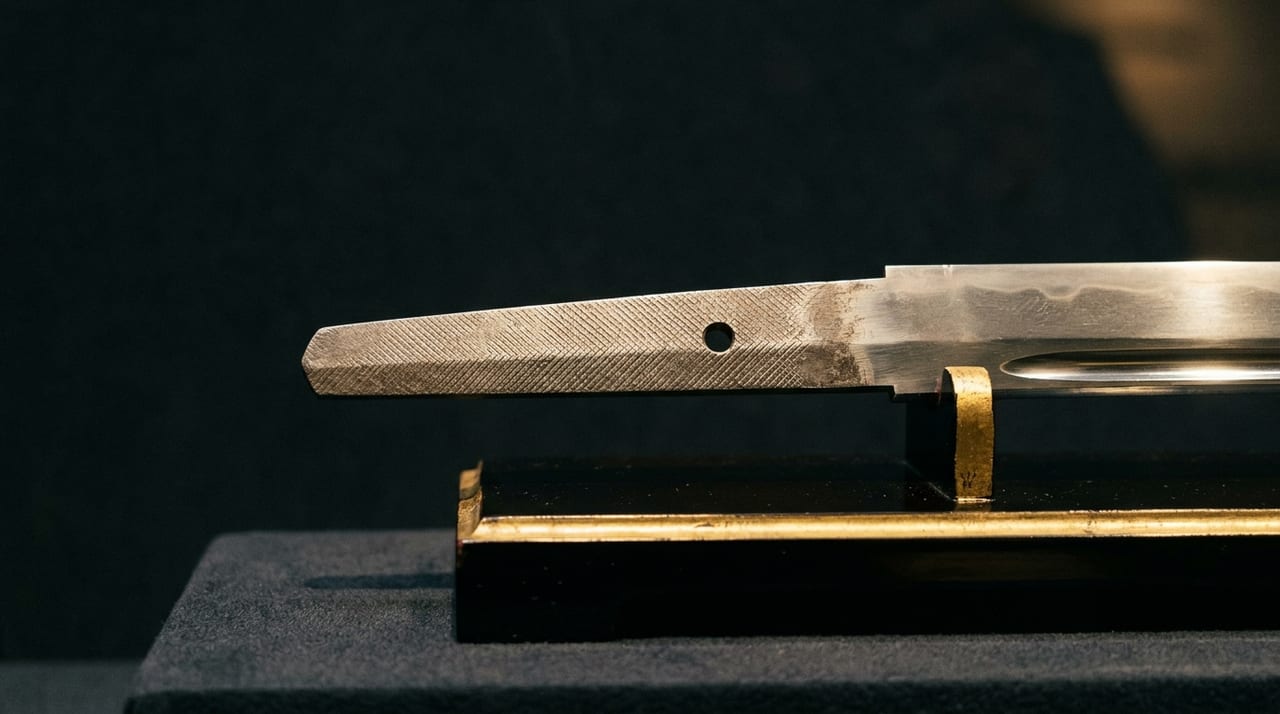 * Image is for illustrative purposes only.
Table of Contents
What Is Tsuchioki: The Final Preparation Before Yaki-ire
Among the steps in making a nihontō, the most important yet least visible technique is "tsuchioki (applying the clay coating)." Immediately before yaki-ire, the tōkō applies a specially blended clay to the blade. This seemingly unassuming step determines the hardness distribution across the entire blade, the beauty of the hamon, and the overall strength of the sword.
The principle of tsuchioki lies in "controlling the cooling rate by section" during yaki-ire. Different parts of the blade — the cutting edge, the jihada, and the mune (back of the blade) — must cool at different rates, and it is the role of tsuchioki to control this through the thickness and composition of the clay.
Clay Composition: The Secret Recipe
The clay used in tsuchioki is by no means a simple "pottery clay." Each school of swordsmiths has blended its clay according to a secret formula.
The basic component is locally sourced yellow clay (ōdo). This clay has a fine grain size and moderate viscosity, with an excellent balance between adhesion to the blade and the ease with which it falls away after yaki-ire.
The following additives are incorporated:
- Charcoal powder: Absorbs radiant heat during yaki-ire and adjusts the cooling rate of the jihada areas
- Straw ash (warabai): Reduces the viscosity of the clay and makes it easier to remove after yaki-ire. It also has heat-retaining properties that moderate the cooling rate
- Salt: Reacts with the quenching water to regulate the formation of the vapor film
- Grain powder (kokuko): Rice bran, soybean flour, and the like. Burns away during yaki-ire, creating complex cooling conditions
- Animal bone ash: Rare, but used by particularly high-end tōkō. Adjusts the chemical reactions during yaki-ire
These materials are carefully mixed with added water and then "aged" (nekase) for anywhere from several days to several weeks. The aging causes the clay particles to rebind, yielding a more uniform texture. The reason the tsuchioki blend of a celebrated sword is considered a secret formula is that the ratio of this mixture was the tōkō's greatest piece of know-how.
Application Technique: The Concentration of Craftsmanship
Applying tsuchioki clay is a more highly skilled technique than it appears.
Application to the cutting edge: Applied most thinly (0.5–1.5 mm). Because it is applied thinly, the cutting edge cools most quickly during yaki-ire, achieving maximum hardness. Even a 1 mm deviation in application thickness changes the hardness of the edge by tens of units.
Application to the jihada: Applied at a medium thickness (2–4 mm). By applying it more thickly than the cutting edge, the cooling rate is slowed, securing toughness (resistance to fracture).
Application to the mune: Applied most thickly (3–6 mm). To avoid excessive hardening of the mune, the thickest layer of clay is placed here. This is a deliberate measure to allow the mune to function as the "axis of flexibility" of the blade.
These differences in thickness are adjusted repeatedly using a chisel (tagane) or bamboo spatula, and the clay is built up accordingly. For a single blade, the tōkō spends thirty minutes to over an hour shaping the clay to millimeter precision.
The Ingenuity of Tsuchioki That Produces the Hamon
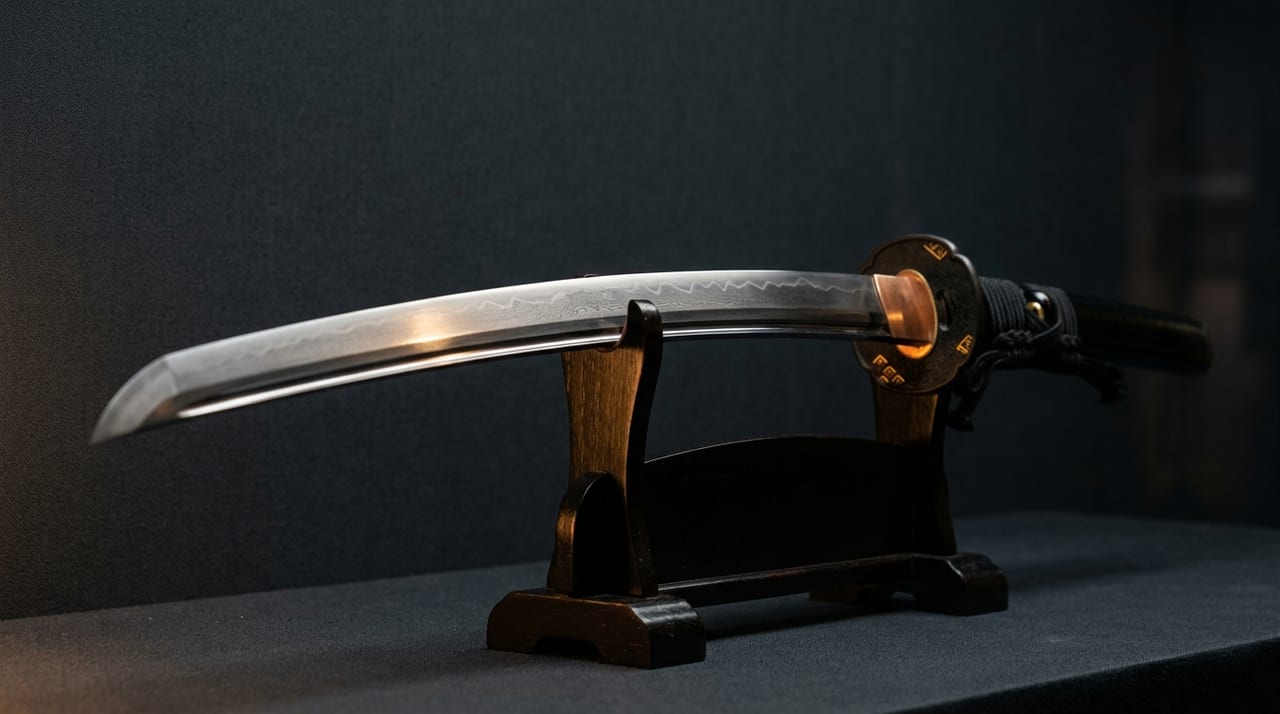
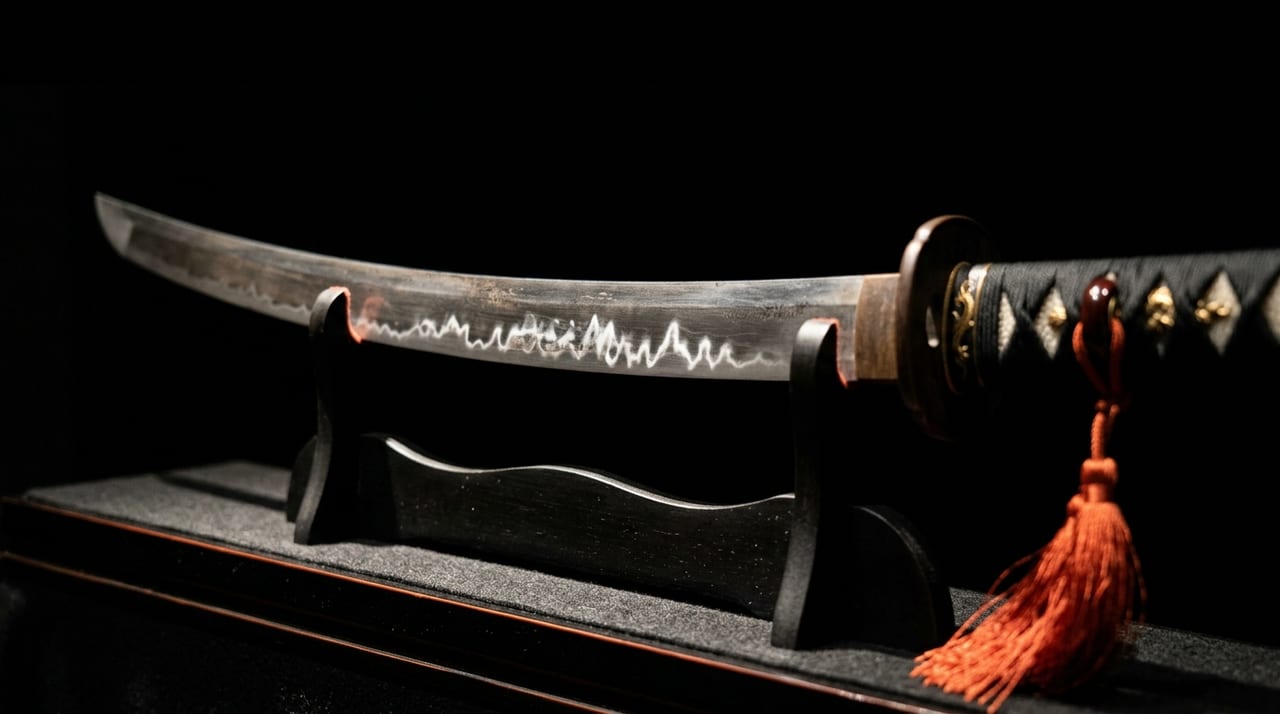
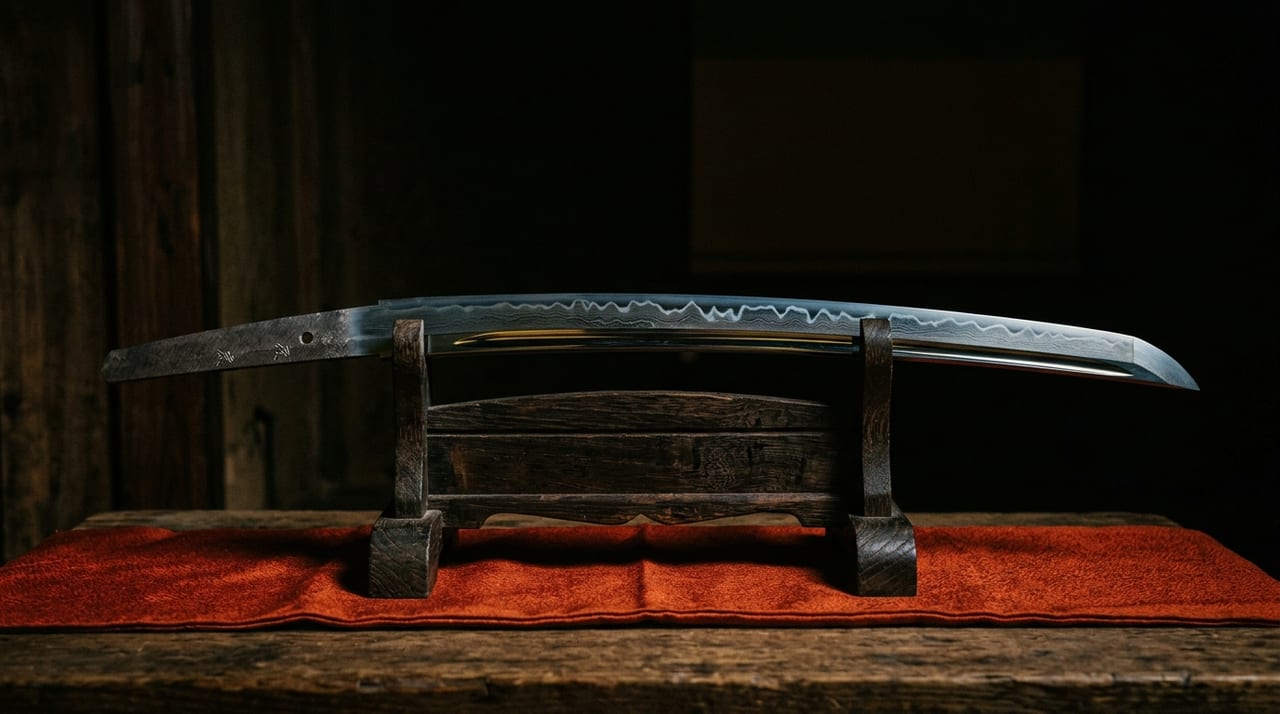
The reason tsuchioki is not merely a "cooling-control tool" but draws the boundary of an artistic craft object is that the hamon — the wave-like pattern seen on the cutting edge — is determined at this stage.
The "surface shape" applied to the cutting edge — whether perfectly smooth, slightly undulating, or given small projections — subtly changes the cooling during yaki-ire. Where rapidly cooled areas adjoin slowly cooled areas, slight unevenness in the quenching arises in the blade, and this becomes visible as the contrasts of light and shadow that form the hamon.
Celebrated tōkō intentionally adjusted the surface shape of the tsuchioki to deliberately produce a characteristic hamon that signified their own school. For example:
- Bizen-den's suguha: The tsuchioki on the cutting edge is made perfectly smooth, producing a straight and orderly hamon
- Yamashiro-den's chōji hamon: Fine irregularities are added to the surface of the tsuchioki, creating the distinctive chōji-shaped hamon
In this way, tsuchioki is the crystallization of the tōkō's technique, achieving the dual goals of "scientific control of yaki-ire" and "expression of artistic intent."
Appreciating the Traces of Tsuchioki: Evaluation Criteria Seen in Kanteisho
In the hamon that appears on the blade after togi (polishing) is complete, structures called "nioi (fine martensite mist)" and "nie (visible martensite crystals)" can be observed. Nioi is a fine structure that appears like a mist along the hamon boundary, while nie refers to particle-like structures within it that sparkle like stars. Both are records of the temperature differentials during yaki-ire created by tsuchioki, inscribed in the blade as transformations in the steel's microstructure.
In the appraisal of swords, how nioi and nie appear, and the degree of irregularity or regularity of the hamon, become important clues for estimating the tōkō and school that made the sword. Since the skill of tsuchioki directly determines the quality of the hamon, the condition of the hamon is also treated as an important evaluation criterion when issuing a kanteisho (appraisal certificate).
It should be noted that the clay itself used in tsuchioki falls away from the blade during yaki-ire, and no clay remains on surviving swords. However, the record of the differential cooling the clay produced is permanently inscribed in the blade as the microstructure of the steel. This is why, even with swords that have survived many centuries, the level of tsuchioki technique at the time of their creation can still be read today.
Tsuchioki in Gunto: Balancing Efficiency and Reliability
In the gunto of the Showa era, tsuchioki technique was also important, but it was used for different purposes than in art swords.
The tsuchioki of gunto was designed with the highest priority given to balancing "efficient mass production" and "ensuring a consistent level of quality." There was no room to add the complex and intricate surface shapes seen in art swords, and clay application was carried out as simply as possible. In return, records remain indicating that tsuchioki thickness was strictly controlled to meet measurable "hardness standards."
On the other hand, in high-end gunto workshops, intricate tsuchioki was sometimes carried out that was in no way inferior to that of art swords, and such swords are highly regarded even today. The reason tsuchioki is "the most direct indicator of a sword's individuality and quality" lies precisely here.
Frequently Asked Questions About Tsuchioki
Q. Does the hamon change when a sword is re-polished? Togi is a process of bringing to the surface the microstructure already inscribed in the steel through tsuchioki and yaki-ire; it is not a process that creates a new hamon. Therefore, the basic shape of the hamon does not change through ordinary re-polishing.
Q. Can anyone learn the technique of tsuchioki? Tsuchioki is based on formulations and intuitive application skills cultivated over many years by each school and each tōkō, and it is said to be difficult to reproduce the same hamon simply by following the procedures. For this reason, it is said that many tōkō have traditionally handled the tsuchioki process themselves rather than entrusting it to apprentices.
Q. How can one assess the quality of tsuchioki in a surviving sword? The regularity of the hamon outline, the uniformity of how nioi and nie appear, and the clarity of the boundary with the jihada are the points confirmed during appreciation and appraisal. For specialist judgement, it is most reliable to consult the kanteisho of an appraisal institution.