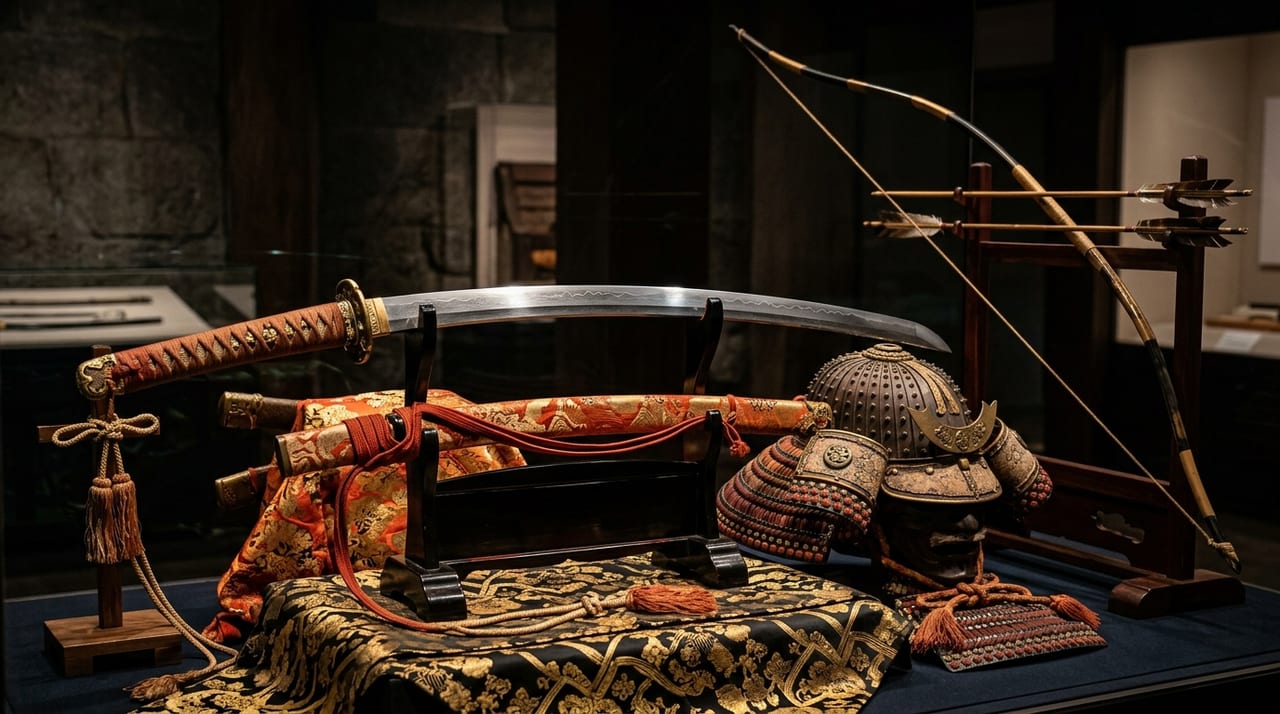
The Seinan War (1877) and the Japanese Sword — The Impact of the Last Great Sword Battle of the Meiji Era on the Sword Industry and Swordsmith Culture
 * Image is for illustrative purposes only.
Table of Contents
The "Rebellion of Swords" in the Year After the Sword Abolishment Edict (Haitōrei)
The Sword Abolishment Edict (Haitōrei), promulgated in 1876 (Meiji 9), was a historic turning point that stripped samurai of their right to wear swords and drove blades out of everyday Japanese society. Yet the very next year, in 1877 (Meiji 10), the Seinan War (Seinan no Eki) broke out, centered on former Satsuma domain samurai who had risen in opposition to that very edict.
This war holds a special place in sword history not only as the last large-scale samurai rebellion in modern Japanese history, but also as "the last large-scale battle in which swords were used in actual combat."
The Satsuma Samurai and the Sword — Resistance to the Sword Abolishment Edict (Haitōrei)
For the samurai of Satsuma (present-day Kagoshima Prefecture), the sword was not merely a weapon but the very embodiment of samurai identity. The Sword Abolishment Edict (Haitōrei) meant to them "the stripping away of samurai pride," and it gave rise to profound resentment.
When Saigō Takamori raised an army together with students of the Shigakkō (a military training school for former Satsuma domain samurai), many samurai joined bearing their swords. In the close-quarters combat of the early stages of the war in particular, it is said that the swordsmanship of the Satsuma samurai posed a considerable threat to the government's new recruits.
However, the superiority of modern weaponry (rifles, artillery, and machine guns) over the sword was already clear, and the course of the war favored the government forces from the outset.
The Place of Swords in the Government Forces
On the other side, swords had not entirely disappeared from the Meiji government forces (the Kangun) either. Officers wore guntō for both ceremonial and practical purposes, and these could function as auxiliary weapons in close-quarters combat.
In the Seinan War, however, the indirect impact on tōkō and sword dealers was historically more significant than the "tactical necessity" of swords.
The Impact of the War on the Sword Industry
The Sudden Emergence of Demand and the Response of Craftsmen
After the Sword Abolishment Edict (Haitōrei), new demand for swords had plummeted sharply, and many tōkō had been forced to close up shop or change trades. However, the outbreak of the Seinan War gave rise to sudden demand for swords from the armed samurai on the Satsuma side.
Records remain indicating that local tōkō of Satsuma — including those of the Naminohira school and other smiths in the Satsuma tradition — resumed forging guntō and practical swords at this time. However, they could not meet mass-production demands, and most of the samurai had no choice but to bring out swords they already owned or to purchase from other domains.
The "Paradoxical Increase" in Sword Demand After the War
After the end of the Seinan War, social changes occurred.
- Rise in nostalgic and collecting demand: The war left a decisive impression as "the end of the age of the samurai," which heightened nostalgic sentiment toward samurai culture. A community of enthusiasts who collected swords as "symbols of bushidō" began to form, becoming a precursor to the later Meiji-era shift toward "swords as art objects."
- Impact on the guntō system: The experience of close-quarters combat in the Seinan War caused the Meiji government to reaffirm the custom that "officers should wear swords," leading to the establishment of the "Army Officers' Sword-Wearing Regulations" in Meiji 19 (1886). This became the prototype for the later guntō system.
- Confirmation of the effectiveness and "loopholes" of the Sword Abolishment Edict (Haitōrei): The fact that the Satsuma side used large numbers of swords during the Seinan War showed that enforcement of the Sword Abolishment Edict (Haitōrei) had not been complete. After the war, the government moved toward tightening control over swords while permitting the circulation of swords as art objects and craft works.
The Hardship and Revival of the Naminohira School Tōkō
The Seinan War had a complex impact on the local tōkō of Satsuma, particularly the Naminohira school. The Naminohira school, which had been placed in dire straits by the disappearance of demand after the Sword Abolishment Edict (Haitōrei), experienced a temporary recovery of demand during the war, but demand disappeared again after it ended.
The Meiji government viewed Satsuma's tōkō with suspicion as "supporters of the rebellion," and records exist of sword-forging activities being temporarily restricted. In the long term, however, the tradition of the Naminohira school was passed on tenuously through the Meiji and Taishō eras, and its lineage continues to the present day.
Historical Significance — Proof of "The End of the Age of Swords in Actual Combat"
The Seinan War was the conflict that conclusively proved "the end of the Japanese sword as a weapon of actual combat" in sword history. While it had already been theoretically clear that firepower surpassed swordsmanship, the Seinan War was the last opportunity to prove this in large-scale actual combat.
This experience accelerated the shift in sword culture after Meiji from "practical objects to art objects and spiritual symbols." Swords would come to the end of their role as weapons and find new significance as cultural artifacts, tools of the martial arts, and spiritual symbols.
Conclusion
The Seinan War is not merely a samurai rebellion in history. It was a historic event that had a profound impact on both the sword industry and swordsmith culture at a turning point when sword culture was shifting from practical use to symbolic significance. By viewing the Sword Abolishment Edict (Haitōrei) and the Seinan War as a pair, one can gain a more three-dimensional understanding of the transformation of Japanese sword culture in the Meiji era. Those interested in Meiji-era swords and historically famous blades are encouraged to browse the online collection.
It is worth noting that Satsuma, the setting of the Seinan War, had an ancient sword tradition dating back to the Kamakura period. Symbolizing the origins of that tradition is the zaimei (signed) tachi forged by Naminohira Yukiyasu — Sasanuki — jūyō bunkazai (Important Cultural Property).