How Japanese Swords Become Cultural Properties: The Complete Process for Important Cultural Property and National Treasure Designation
 * Image is for illustrative purposes only.
Table of Contents
What Is Cultural Property Designation?—Legal Status
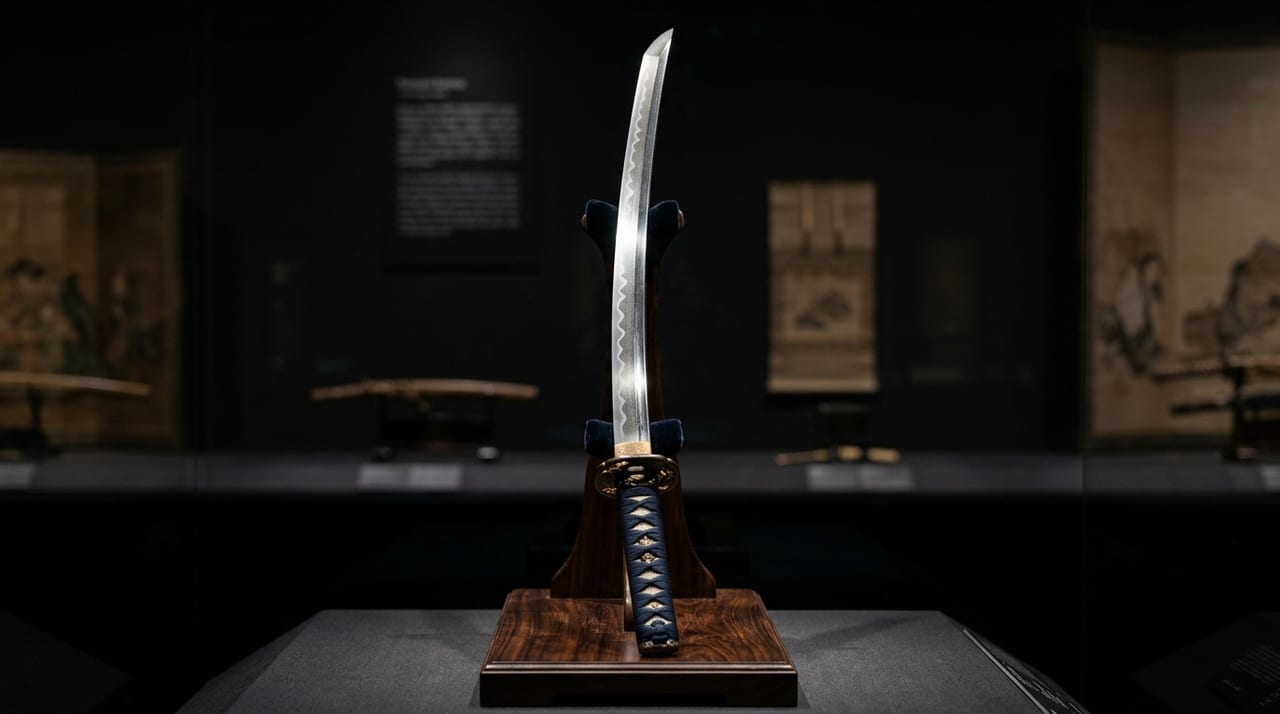
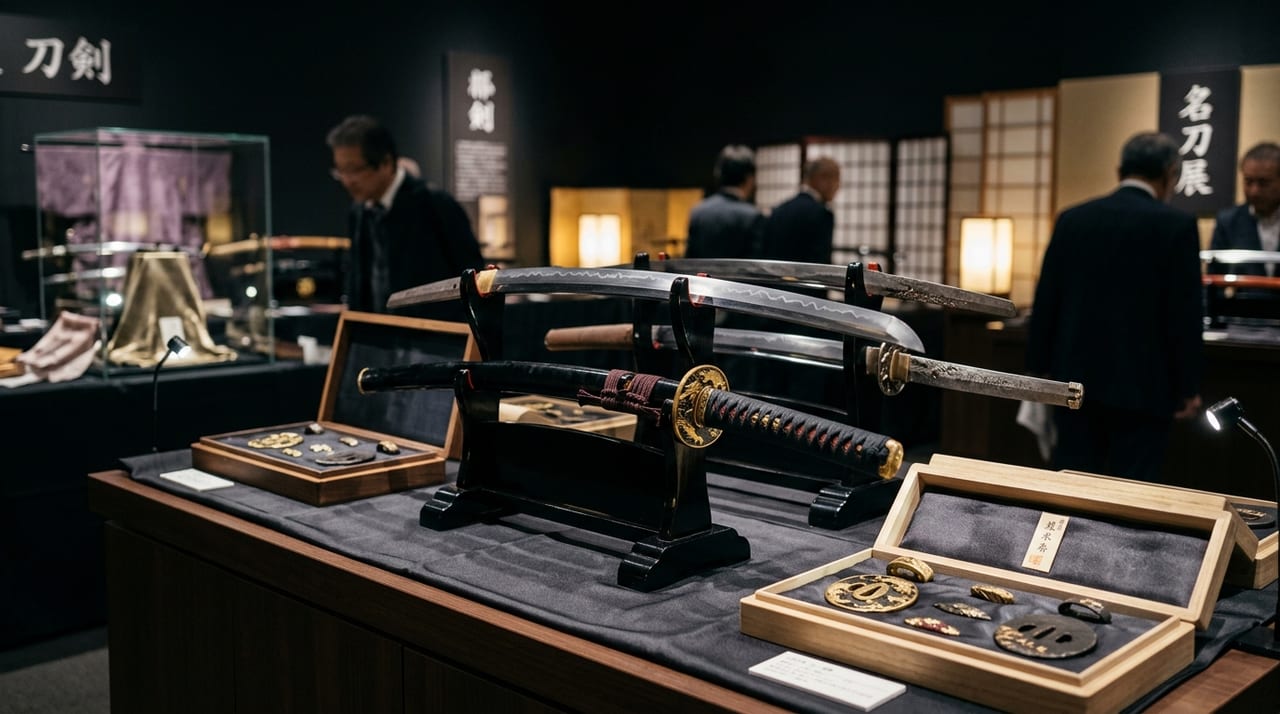
When a Japanese sword is designated as an "Important Cultural Property" or "National Treasure," it means that the state officially recognizes its cultural and historical value based on the Cultural Properties Protection Act. Designated swords are treated not merely as art objects or antiques, but as "cultural properties shared by all citizens," and their owners acquire certain obligations and rights.
The Cultural Properties Protection Act (enacted in 1950) is the foundational law for protecting movable and immovable property of historical and artistic merit. Japanese swords are classified as "art and craft works" within "tangible cultural properties."
Types and Hierarchy of Designations
The designation categories under the Cultural Properties Protection Act are as follows.
| Category | Target | Number (Reference) |
|---|---|---|
| National Treasure | Items of exceptional value among Important Cultural Properties | Approximately 120 swords |
| Important Cultural Property | Items of high artistic and scholarly value | Over approximately 650 swords |
| Registered Tangible Cultural Property | Items whose cultural value is becoming established | Few registered swords |
A National Treasure is a higher category than Important Cultural Property, and nothing becomes a National Treasure without first being designated as an Important Cultural Property.
Designation Criteria—What Is Evaluated
The main criteria that the Cultural Affairs Agency references when designating swords as Important Cultural Properties are as follows.
Artistic Value
- Excellence of jihada, hamon, and kissaki (shape)
- Typicality that embodies the aesthetic sensibilities of the era
- Outstanding refinement compared to contemporaries and practitioners of the same school
Historical Value
- Connection to famous historical figures (existence of donation records, grant records, or provenance documents)
- Records of use in specific historical events or scenes
- Continuity of clear provenance
Scholarly Value
- Being an example that marks a turning point in sword history
- Being an important reference example for technical research
Condition of Preservation
- Absence of extreme damage, poor polishing, or loss (completeness)
These are evaluated comprehensively by the Cultural Affairs Agency's cultural property examiners and commissioned expert committee members (in the field of swords, these are specialists and researchers who specialize in Japanese swords).
The Actual Designation Process
Step 1: Investigation and Candidate Selection
The Cultural Affairs Agency identifies candidate swords through surveys of museum collections, monitoring of domestic and international sales and auction information, and reports from researchers. Privately owned swords sometimes take longer to be discovered.
Step 2: Consultation with Owners and Obtaining Consent
The Cultural Affairs Agency approaches the owner of a sword that has been identified as a designation candidate. Owners may decline designation, but most agree if the cultural value is clear.
Step 3: Deliberation by the Council for Cultural Affairs
The Cultural Properties Division of the Council for Cultural Affairs (an advisory body to the Minister of Education, Culture, Sports, Science and Technology) deliberates and submits a recommendation for Important Cultural Property designation. The division includes committee members who specialize in swords.
Step 4: Announcement and Designation
Formal designation is completed when the Minister of Education, Culture, Sports, Science and Technology announces it in the Official Gazette. Upgrading to National Treasure status follows a similar process.
Effects on Owners—Benefits and Restrictions
Benefits
Tax Benefits: Cultural properties may receive favorable treatment in the calculation of assessed value for inheritance tax compared to general art objects. Additionally, some municipalities offer reductions or exemptions in property tax for those who cooperate in the public display of Important Cultural Properties.
Preservation Subsidies: Subsidies from the national government are available for repair and preservation (the government subsidizes part of the repair costs).
Authority and Credibility: The designations "Important Cultural Property" and "National Treasure" significantly enhance market credibility and value.
Restrictions
Export Prohibition and Restrictions: Important Cultural Properties and National Treasures are in principle prohibited from export abroad. Even temporary overseas exhibitions require permission from the Cultural Affairs Agency.
Notification Requirement for Sales: Changes in ownership of Important Cultural Properties (through sale, gift, or inheritance) require prior notification or reporting to the Cultural Affairs Agency.
Restrictions on Alterations: Changes to shape or form and repairs cannot be undertaken without permission from the Cultural Affairs Agency.
Practical Considerations When Aiming for Important Cultural Property Designation
The possibility of a privately owned sword being designated as an Important Cultural Property is not zero. Especially when provenance is clear and the connection to famous military figures or daimyo families can be proven through documents and records, consulting with specialists is effective.
First, obtaining an appraisal from NBTHK and acquiring "Special Important Sword" status often becomes the first step toward cultural property designation. Subsequently, by contacting Cultural Affairs Agency examiners and university sword researchers, opportunities arise to be recognized as a candidate.
Conclusion
Cultural property designation of Japanese swords is not merely an "official stamp of approval," but a national certification system that comes with legal rights and obligations. While it is an honor for owners, it is necessary to understand that restrictions arise regarding sales, export, and repair. Whether aiming for designation or already owning a designated sword, accurate understanding of the relevant laws and systems is required.