The Keichō Campaign (1597–1598) and Japanese Swords — The Impact of the Korean Invasions on East Asian Sword Culture and the Outflow of Swords Abroad
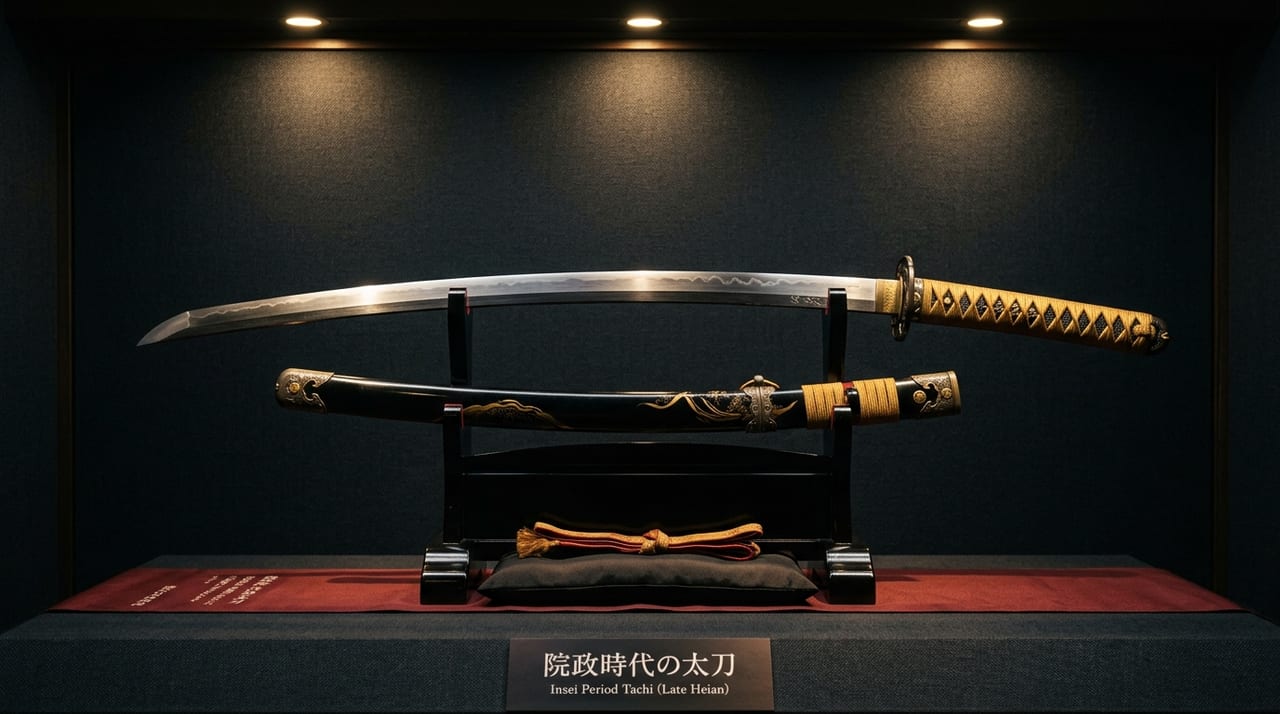 * Image is for illustrative purposes only.
Table of Contents
The Korean Invasions and Japanese Swords — Background of the Two Campaigns
Toyotomi Hideyoshi launched large-scale invasions of the Korean Peninsula twice: in 1592 (Bunroku 1) and 1597 (Keichō 2). The former is called the Bunroku campaign, and the latter the Keichō campaign. This article focuses primarily on the Keichō campaign (1597–1598) to trace the marks this war left on the history of Japanese swords.
The Keichō campaign was a renewed invasion triggered by the breakdown of ceasefire negotiations following the Bunroku campaign. The Toyotomi forces mobilized a total of more than 140,000 troops and, using Busan as their base, subjugated the southern part of the peninsula. However, the death of Hideyoshi (August 1598) forced the Japanese forces to withdraw, and the war effectively ended in a draw.
Surge in Demand for Swords During the War
The period of the Korean invasions was also the final phase of mass production for the sword industry, which had matured throughout the Sengoku period.
Mass orders of kazuuchi-mono: From a logistical standpoint, there was no margin to equip individual warriors with high-quality custom-made swords, and groups of tōkō centered on Bizen and Mino mass-produced swords known as kazuuchi-mono (mass-produced swords). While the quality of individual pieces varied, they maintained practical cutting ability.
Mobilization of renowned tōkō: On the other hand, superior custom-made swords were supplied to daimyo and officer-class warriors. Among zaimei (signed) swords from the Keichō period, some bearing dated mei such as "Keichō 2" still survive, reflecting the wartime demand of this era.
Japanese Swords Lost on the Battlefield — The Reality of Swords Going Overseas
Combat on the Korean Peninsula was fierce, and many Japanese swords were left behind on the battlefield. The routes of outflow can be categorized as follows.
- Loss and abandonment during combat: Many swords were left on the battlefield during the retreat. These swords, recovered by Korean and Ming forces, were called "wado" and were placed in Korean armories.
- Seizure from surrendered soldiers and prisoners of war: The swords carried by Japanese soldiers who surrendered in combat were confiscated.
- Technology transfer by Korean sword craftsmen: Some sources record that Japanese kaji (smiths) taken prisoner were kept in Korea and passed on their techniques. In the ceramics field, the records of craftsmen taken to Korea as founders of the craft are well known, and similar cases are said to have occurred with kaji as well.
Wado Remaining Today in Korea and China
Today, Japanese swords estimated to date from the time of the Keichō campaign are preserved in Korea's national museums and folk museums. These are classified as "wado," and some have been confirmed to be the work of Japanese tōkō.
In China as well, some Japanese swords recovered by Ming forces from the fighting in Korea still survive and are said to be included in the museum collections of Beijing and Nanjing. However, detailed investigation and disclosure is limited, and much of the full picture remains unclear.
What the Keichō Campaign Left on the History of Sword Culture
After the war ended, the sword industry changed rapidly.
Sharp drop in demand and tōkō going out of business: The groups of Bizen tōkō that had supported the mass-production system suffered devastating blows due to the disappearance of wartime demand and the arrival of the "era of peace" following the establishment of the Edo shogunate in 1603. As it happened, the Bizen-Osafune area had already suffered a devastating blow from the Great Yoshii River Flood (a mudslide from Mount Kumazan) in Tenshō 18 (1590), prior to the Korean invasions, with many tōkō dying or going out of business. The disappearance of wartime demand dealt a further blow to the subsequent decline of the Osafune school.
Transition to the shintō era: From the late Keichō period through the Genna period, sword styles transitioned from kotō to shintō. There is a view that the actual combat experience of the Korean invasions — the demands placed on the cutting ability and shape of swords — had an influence on this turning point.
Reciprocity of cultural influence: While Japanese swords flowed out to the Korean Peninsula, many technologies and cultural artifacts were also brought to Japan from Korea (ceramic techniques, books, etc.). Regarding swords, the influence was largely one-directional, but the overall cultural exchange had a complex bidirectionality.
The Tenshō 18 Flood and the Historical Context of the Osafune School
The reason Bizen Osafune, after suffering the devastating blow of the great flood of Tenshō 18 (1590), was still able to meet the enormous sword demand of the Korean invasions (1592–98) was the resilience of Osafune-lineage tōkō who had scattered to various regions, and the proactive policies of daimyo to recruit tōkō. The triple wave of the Tenshō flood → wartime demand → disappearance of demand rapidly drove the Osafune school from its position as the largest production center of the kotō era into decline. This background is worth understanding as the historical context that makes Bizen-den swords rare today.
Bizen-den swords continue to command high regard in today's sword market, and kotō assessed as the work of the Osafune school are subject to collection after careful verification of authenticity and condition. The traces left on early modern sword history by the Great Yoshii River Flood of Tenshō 18 run deep, and among researchers there is a persistent view of distinguishing "Bizen swords before the flood" from "the reconstruction period after it," using the disaster as a benchmark.
Conclusion
From the perspective of sword history, the Keichō campaign can be positioned as "the war that accelerated the end of the kotō era." The fact that large numbers of Japanese swords flowed abroad and remain on the Korean Peninsula and in China as "wado" demonstrates that Japanese swords are not merely domestic cultural artifacts but form part of the broad cultural history of East Asia.