Wakō and the Japanese Sword: The Sword Culture Spread across East Asia by Pirates and Traders
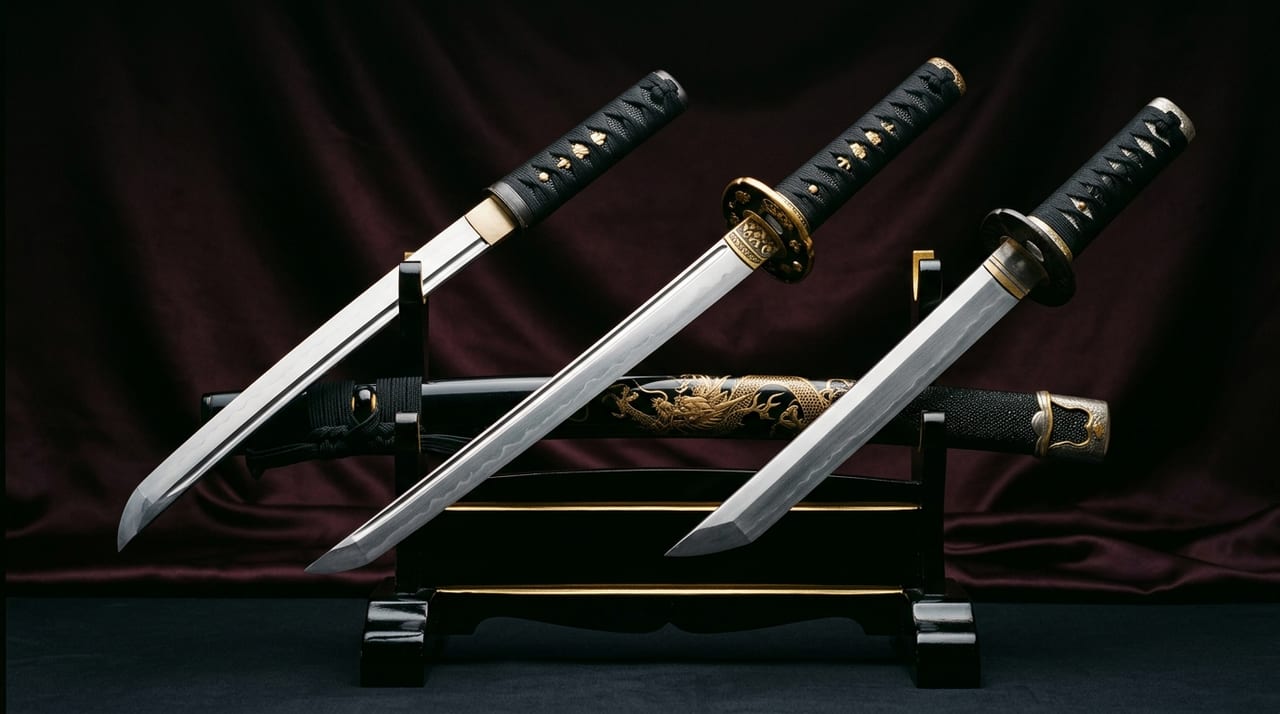 * Image is for illustrative purposes only.
Table of Contents
Who Were the Wakō? — Pirates or Armed Merchants?
"Wakō" is a collective term for the armed groups that operated along the coasts of China, Korea, and Southeast Asia from the 14th to the 16th century. "Wa" is a name for Japan, and "kō" means invader or raider. True to the name, they were initially groups composed mainly of Japanese, but over time they became multinational.
The early wakō (14th–15th centuries) and the late wakō (16th century) differed greatly in their bases, composition, and activities.
| Category | Period | Bases | Main Composition | Activities |
|---|---|---|---|---|
| Early wakō | 14th–15th centuries | Kyushu, Tsushima, Iki | Mainly Japanese | Plundering and smuggling along the Korean Peninsula and Chinese coast |
| Late wakō | 16th century | Hirado, Gotō Islands | Chinese merchants, Portuguese (led by Chinese chieftains such as Ō Choku) | Character increasingly that of smuggling merchants; dominated the trade networks of the East China Sea |
The image of "wakō as sword-wielding pirates" fits well for the early wakō, but the reality of the late wakō is more complex. Nevertheless, in both periods the Japanese sword continued to be recognized throughout East Asia as the symbolic weapon of the wakō.
The Impact of the Japanese Sword on China and Korea
Through the activities of the wakō, the Japanese sword came to be widely recognized in China and Korea as an "exceptional weapon." Its superior cutting performance and portability left a powerful impression on military men of the continent.
Defense against the wakō in Korea: The Goryeo and Joseon dynasties researched and adopted similar curved-blade technology in order to counter the slashing attacks of the Japanese sword. The "fandō" transmitted to Korea developed as a guntō influenced by the Japanese sword, and it is said that Japanese sword techniques were referenced in its flexible, tough steel and gently curved blade shape.
Influence on China (the Ming dynasty): When the late wakō ravaged the region in the 16th century, the Ming dynasty's army suffered greatly from the fighting techniques employed with the Japanese sword. The military manual "Kikō Shinsho" by Seki Keikō records in detail methods for countering Japanese sword techniques, and explicitly states: "The sword techniques of the people of Wa are extremely swift and keen; our army's weapons cannot match them." The Ming dynasty ultimately came to manufacture and adopt the "wadō" domestically, devoting considerable effort to mastering its shape and production methods.
The Era When the Japanese Sword Became an Export — The Reality of the Kangō Trade
In Japan during the Nanbokuchō and Muromachi periods, swords were also an important export. In particular, the Japanese sword was one of the most important exports in the "kangō trade" (1404–1547) with the Ming dynasty.
Records of sword exports to the Ming dynasty include units of "tens of thousands of swords," and it is known that several thousand to several tens of thousands of swords were exported in a single trading voyage. Bizen Osafune (Osafune, present-day Setouchi City, Okayama Prefecture) built an organized mass-production system to meet this demand, mass-producing practical "kazuuchimono" and establishing a standard for trade goods. Port cities such as Satsuma, Hakata, and Sakai functioned as collection and export hubs for Japanese swords, and as legitimate kangō trade and illicit smuggling became intricately intertwined, the Japanese sword spread throughout East Asia.
Technology Crossed the Sea — The Spread of Sword-Forging Techniques
The activities of the wakō were not limited to plundering; they also served as a cultural conduit for transmitting Japanese techniques and culture to East Asia. The prime example of this was the spread of sword-making technology.
The heart of the Japanese sword lies in tamahagane. The process by which tamahagane is produced and refined into a blade that unites hardness and flexibility is as follows.
- Iron sand is reduced and refined at low temperature to obtain Japanese steel.
- That Japanese steel is subjected to thousands of cycles of orikaeshi tanren (folding), producing tamahagane of a kind found nowhere else in the world that achieves both hardness and toughness simultaneously.
- The clay coating is applied in a technique called tsuchioki.
- Yaki-ire (quenching) is applied, forming a hard and sharp hamon on the cutting edge while leaving a tough structure on the spine side.
This two-layer structure is the secret behind the Japanese sword's unity of hardness and flexibility, and it astonished the tōkō (swordsmiths) and warriors of the continent.
After the Imjin War (1592–1598), craftsmen including Japanese tōkō crossed to the Korean Peninsula, and it is said that the techniques of orikaeshi tanren and hamon took root locally. In China as well, swords imitating the shape of the "wadō" were produced from the late Ming dynasty through the Qing dynasty, and the beauty of the Japanese sword came to be appreciated by Chinese literati. Many works from Ming and Qing dynasty poetry and prose that celebrate the appreciation of the "wadō" survive, testifying that the Japanese sword was recognized throughout East Asia not merely as a weapon but as an object of artistic appreciation.
Wakō Tactics and the Japanese Sword — The Reasons They Were Feared
One of the greatest legacies the wakō left in East Asian military history was a distinctive combat style using the Japanese sword. They excelled at small-unit, high-mobility fighting, and at the core of this were long nodachi and ōdachi.
Nodachi with a nagasa (blade length) often exceeding 90 cm possessed the destructive power to cleave through sturdy armor in a single downward stroke. The spears, halberds, and sword-and-shield combinations that formed the mainstay of Chinese and Korean armies are said to have been unable to respond to these swift slashing attacks. The "En'ōjin" formation developed by Seki Keikō was a counter-formation designed specifically against the Japanese sword, using composite teams combining shields, spears, and pole weapons to suppress the wakō's slashing charges. The wakō's cutting attacks, which embodied the rational emphasis of Japanese martial arts on finishing an opponent with "the first sword stroke," became one of the most feared close-combat techniques in East Asia before the spread of firearms.
The Legacy of the Wakō in the Modern Era
In historical museums across Japan, China, and Korea, the wakō remain an important historical theme for exhibitions. Among the swords from the Muromachi and Sengoku periods held by the Kyushu National Museum and the Tokyo National Museum, some are presumed to have been manufactured for export, testifying to the high international demand for swords at that time.
Among overseas collections, there are also works presumed to have crossed to the continent through the wakō and the kangō trade, serving as historical evidence of sword cultural exchange on an East Asian scale. By tracing swords recorded as "wadō" bearing the characteristics of Bizen Osafune or Sōshū-den, a cross-section of East Asian exchange history comes into view.
The history of the wakō is not a simple story of "villains," but reflects the diverse lives of people who lived amid the political, economic, and military tensions of their age. A single sword crosses the sea, is feared on the battlefield, is celebrated in poetry, and is imitated by tōkō of foreign lands — that trajectory is nothing less than proof of the universal power possessed by the Japanese sword as a craft object.