Tsuka-maki Techniques: Thread Types, Wrapping Styles, and Maintenance You Can Do Yourself
 * Image is for illustrative purposes only.
Table of Contents
What Is Tsuka-maki
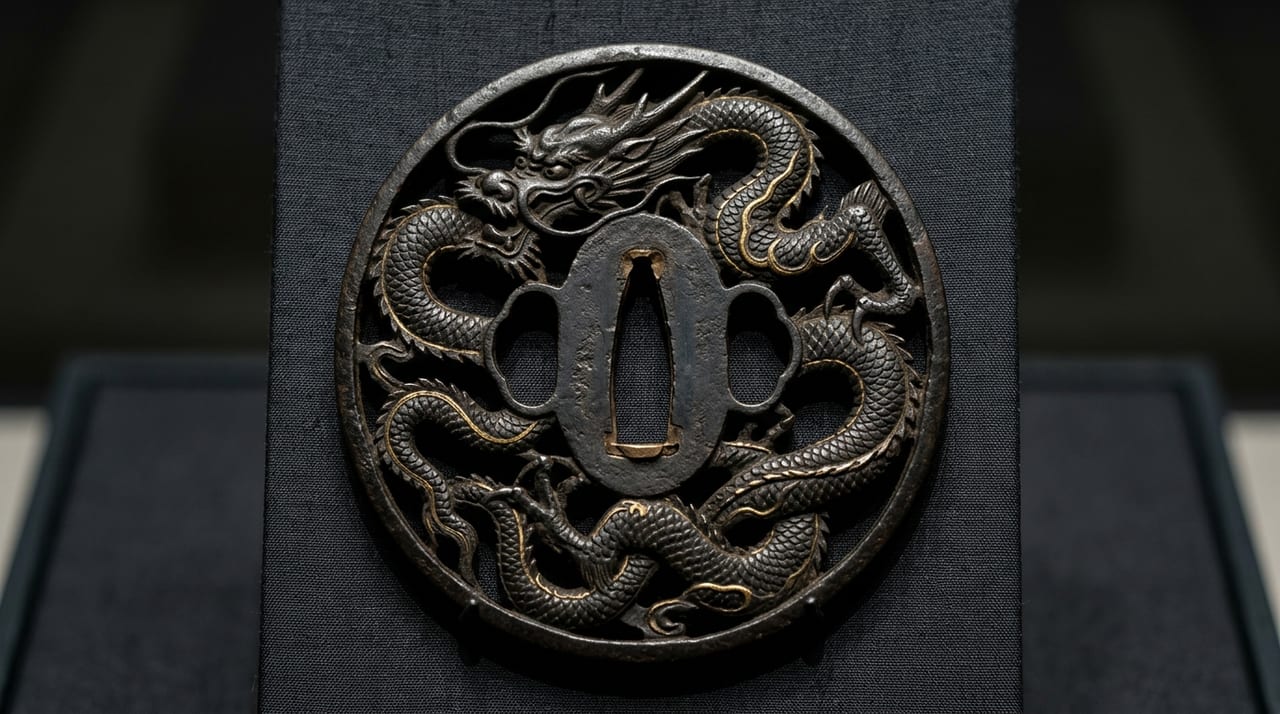
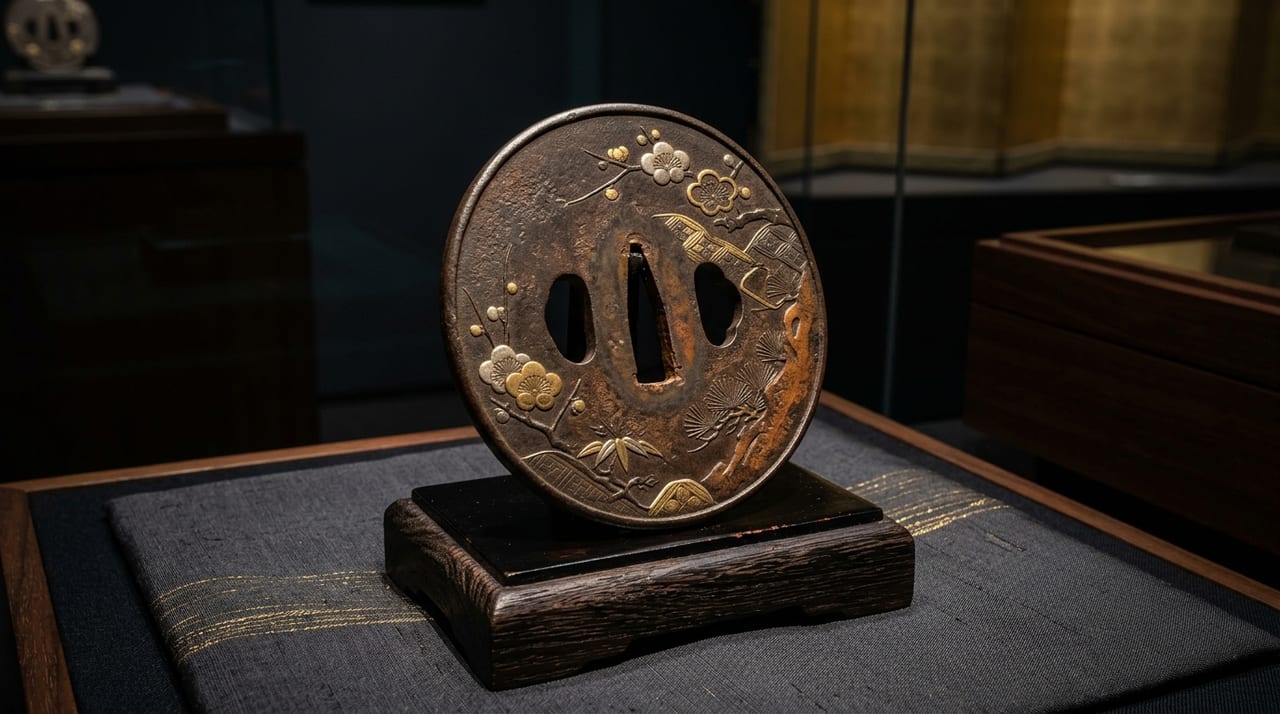
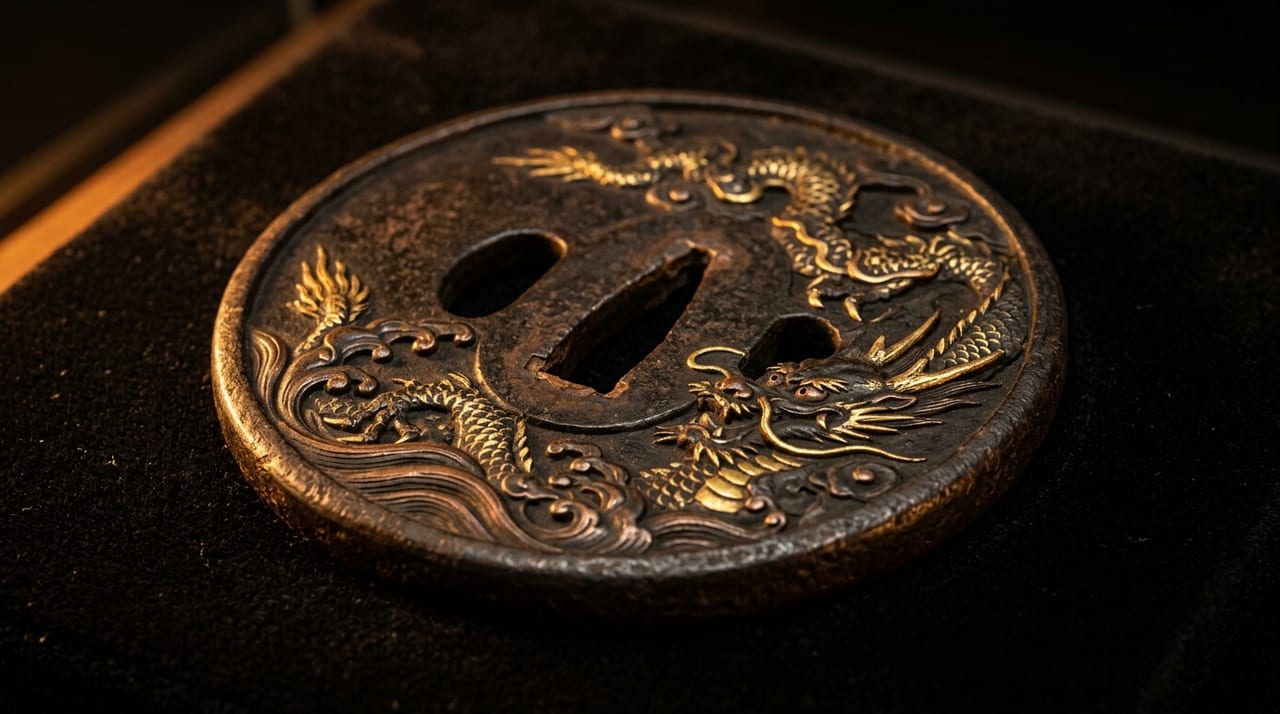
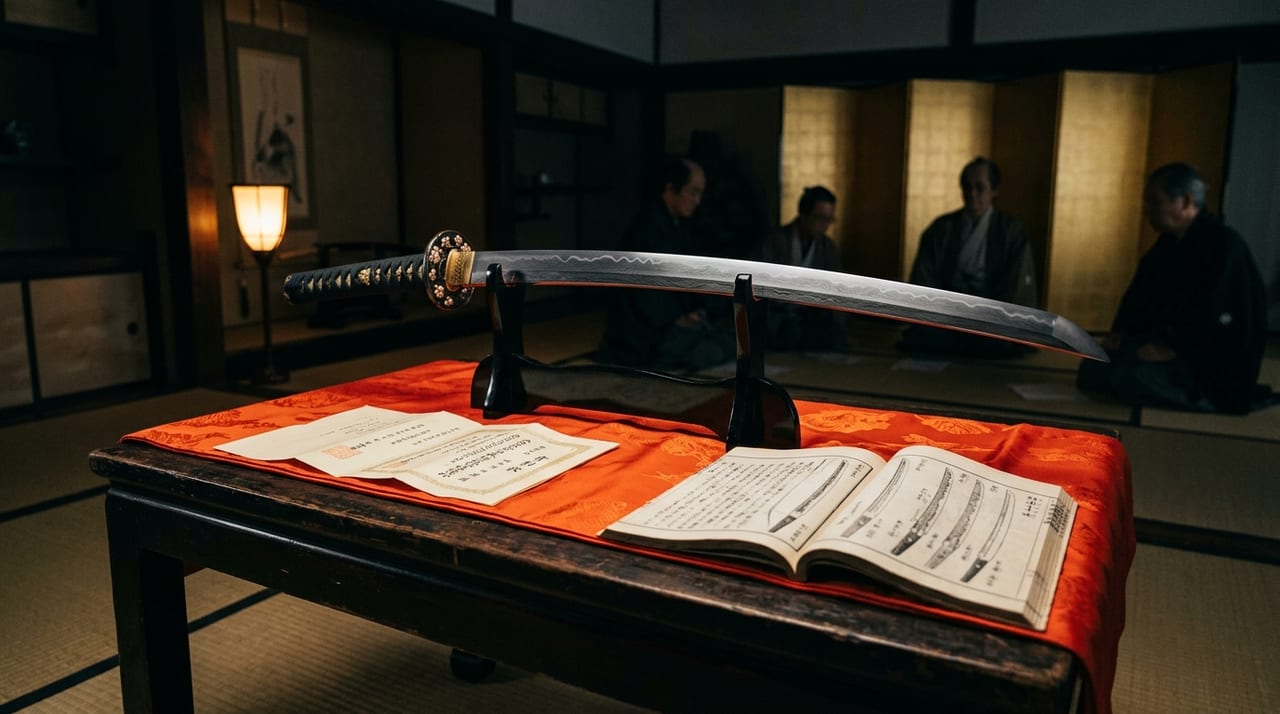
Tsuka-maki is a traditional technique of wrapping thread or leather around the tsuka (hilt) of a Japanese sword. It is not mere decoration; it serves important practical functions: improving grip, preventing the hand from slipping, and protecting the tsukagi (hilt wood). Because the wrapping style and material affect the overall quality and purpose of the sword, tsuka-maki is the part among the tōsōgu — including the tsuba (hand guard), menuki, and fuchi-kashira — where the maker's individuality and skill shine brightest.
Inside the tsuka, the nakago (tang) is housed and secured by the mekugi. The tsukagi is normally covered with samegawa (ray skin), which serves as the base for the tsuka-maki thread. The granular texture of the samegawa grips the thread and prevents it from slipping. In other words, tsuka-maki is a structure that only functions when the samegawa and the thread work as one.
When you pick up a sword, the first thing you touch is the tsuka. The quality of the tsuka-maki directly affects the feel in the hand and has a direct bearing on handling and safety in iai and battōjutsu. For this reason, an understanding of tsuka-maki is essential knowledge for everyone who owns or uses a sword.
Key Materials: Characteristics and How to Choose Silk, Cotton, and Leather
There are three main materials used in tsuka-maki, each with its own applications and characteristics.
- Silk thread (shōken) is the most prestigious material and is widely used for display swords and period reproductions. Its distinctive sheen is beautiful, and its soft texture produces a high-quality finish. However, it has the drawback of being vulnerable to sweat and moisture, making it unsuitable in some cases for practice swords used in training. It was an indispensable material for ceremonial swords of samurai families and for swords presented to shoguns and daimyo. Black, dark blue, and brown were the most common colors, and the choice varied according to the rank of the occasion.
- Cotton thread is highly practical and, thanks to its excellent moisture absorption, is well suited for training sessions involving sweat and for actual use. It is widely adopted for modern iai swords and practice swords, and its ease of care makes it a manageable material even for beginners. It is also more affordable than shōken, which is an advantage when keeping down the cost of re-wrapping. In recent years, advances in dyeing technology have brought cotton threads to market that possess a sheen close to that of shōken.
- Leather (tanned leather, deer hide, etc.) was a material commonly found on practical swords of the Sengoku period, and is highly durable with strong resistance to rain and mud. Deer hide (shishigawa) in particular has a good balance of flexibility and strength, and was widely used on the battle swords of military commanders. Today it is often used for replicas and katchū-tō, and its distinctive rugged appearance is one of its attractions. The way it conforms to the hand through long use, developing character over time, is also prized by enthusiasts.
Representative Wrapping Styles and Their Historical Background
There are many school-specific styles of tsuka-maki; the following introduces the most representative ones.
- Morohinerimaki is the most common wrapping style, a technique in which the thread is wound diagonally while being crossed. The crossings on the front and back create a continuous pattern of diamond shapes, which is visually beautiful and provides a high level of grip, making it widely used for both battle swords and display swords. It spread from the mid-Edo period onward and has become established today as the most standard wrapping style.
- Katahinerimaki is a variation of morohinerimaki in which only one side is twisted. The finished lines are softer, giving a somewhat decorative impression. It is a technique most often used for comparatively small swords such as tantō and wakizashi.
- Asanoha-maki is a wrapping style that was fashionable in the Edo period, characterized by hexagonal geometric patterns reminiscent of the asanoha (hemp-leaf) design. It is a highly demanding technique requiring precise spacing and careful thread-tension management, and its finished beauty surpasses all other wrapping styles. It is considered very prestigious and was used for high-ranking sword mountings and votive swords.
- Hiramaki is a method in which the thread is wound flat without any twisting. It has a simple, understated appearance and is often seen on wakizashi and tantō. Its plain finish suits rugged practical swords, and in the Edo period it was widely used on swords owned by townspeople.
- Jabaramaki is a type of variant wrapping in which the thread is folded back in a wavelike manner as it is wound, producing large diamond shapes. Because it is visually striking, it suits distinctive sword mountings and is found on special swords such as the command swords of military commanders.
The Structure of Tsuka-maki and Artisanal Skill
A tsukamakishi (hilt-wrapper) does not simply wind thread; the work proceeds while maintaining uniform thread tension, spacing between the wrapping eyes, and the angle of the twist. In professional work, attention to detail — such as using the position of the samegawa's grain (there is a large grain called the oyatsubu near the center) to align the center of the diamond shapes — is what determines quality.
If the thread tension is too loose, the wrapping will slacken during use and grip will deteriorate; conversely, if it is too tight, the tsukagi may warp. The handling near the kashira and kiriha is particularly difficult, and concealing the thread ends neatly also requires considerable skill. Completing the tsuka-maki on a single sword — from selecting materials to finishing — can easily take several hours to half a day or more.
Condition Checks and Practical Self-Maintenance
Tsuka-maki is a consumable. Years of use and storage cause loosening and deterioration, but proper care can extend its lifespan.
Key points for condition checks are as follows.
- First, press with a finger to check for any looseness or slack in the thread, paying particular attention to the area near the kashira and kiriha.
- Also carefully inspect the thread visually for any fraying or sections that are beginning to break.
- In the case of cotton thread, discoloration (yellowing or darkening) is also a sign of deterioration.
- For leather wrappings, watch out for cracking and peeling.
- If the diamond-shaped eyes are distorted, this is often a sign of overall loosening.
As routine maintenance, the basic practice after training is to wipe the entire tsuka with a dry cloth to remove sweat and moisture. Sweat is the single greatest factor that damages thread fibers, and if left unattended it can weaken the thread within a matter of months. When a sword will not be used for an extended period, store it together with a desiccant such as silica gel to prevent moisture-related deterioration. Direct sunlight and high-temperature environments accelerate the fading and deterioration of thread, so careful attention must also be paid to where the sword is stored.
As first aid for fraying, if the thread has only unraveled slightly at the end, it can be fixed by applying a small amount of water-soluble adhesive. However, fundamental loosening or significant fraying can only be addressed by re-wrapping the entire hilt, and in such cases it is strongly recommended to consult a specialist sword dealer or tsukamakishi. Attempting amateur repairs risks causing further damage to the tsukagi or samegawa.
What Tsuka-maki Reveals About a Sword's Character and Era
Tsuka-maki reflects not only function but also the purpose, period, and personality of the sword's owner. For swords used by Sengoku commanders on the battlefield, leather wrapping was chosen to prioritize durability; for ceremonial swords worn by daimyo in the peaceful Edo period, lustrous shōken morohinerimaki; and for modern iai practitioners, cotton hiramaki emphasizing ease of handling — in each case the optimal wrapping style was chosen according to the era and purpose.
Examining the tsuka-maki of surviving famous swords, it is sometimes possible to read from the traces of re-wrappings the succession of owners and the changes in era. Among the kokuhō (National Treasure) and jūyō bunkazai (Important Cultural Property) swords held in museums, there are some on which Edo-period tsuka-maki has survived intact, bearing witness to the exceptional artisanal skills of the time.
Learning about tsuka-maki is also to touch the depths of sword history and Japanese aesthetic sensibility. By carefully observing the tsuka-maki of the sword you own, and understanding the details of its material, wrapping style, and finish, your dialogue with that sword will become all the richer. And continuing to perform proper maintenance is also a responsibility: passing the sword on to the next generation.