The Zen'kunen War and the Gosannen War (1051–1087) and the Nihontō — The Martial Valor and Sword Culture Cultivated by the Minamoto Warrior Clan in the Eastern Provinces
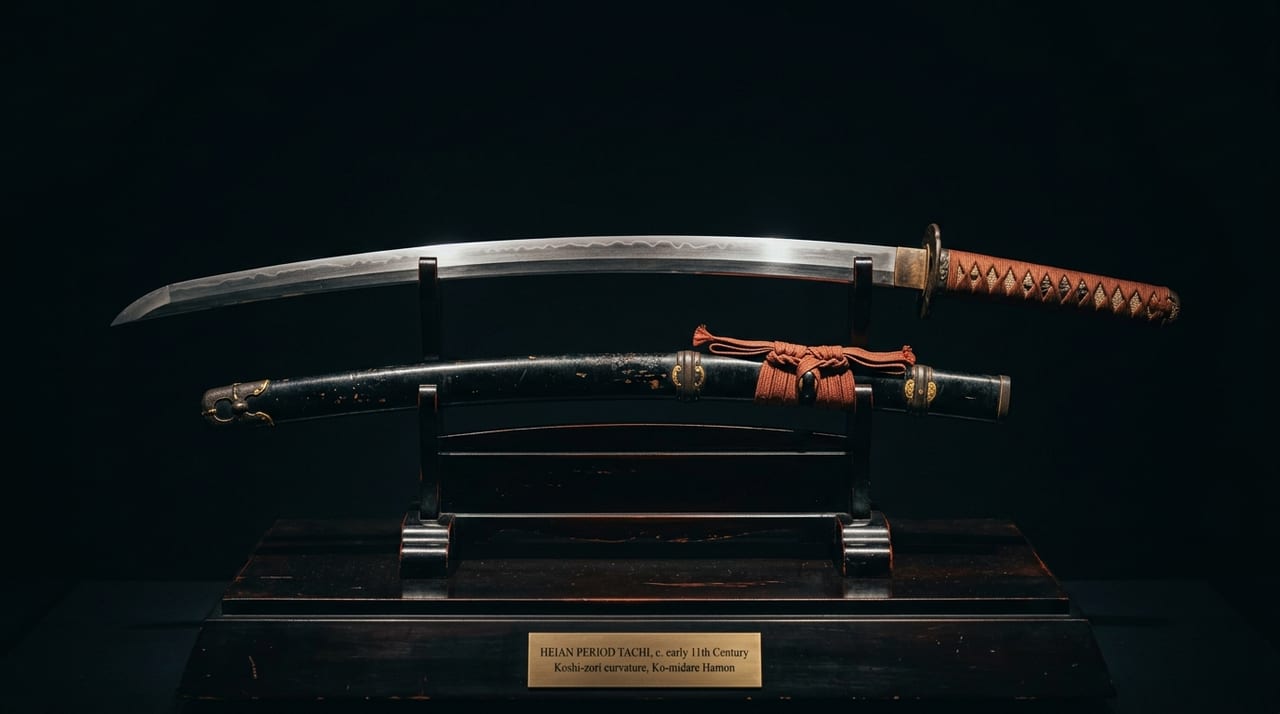 * Image is for illustrative purposes only.
Table of Contents
The Zen'kunen War and the Gosannen War — An Era of Rising Warrior Power Born in Tōhoku
In the late Heian period, two large-scale civil wars broke out in succession in Mutsu Province (present-day Tōhoku). These were the Zen'kunen War (1051–1062) and the Gosannen War (1083–1087). Far from being mere regional uprisings, these conflicts were a historical turning point that determined the rise of the Minamoto warrior clan — who would later establish the Kamakura shogunate — and they also exerted a profound influence on the development of the nihontō.
The Zen'kunen War originated when the court dispatched Minamoto no Yoriyoshi (みなもとのよりよし) as Governor of Mutsu in response to the expanding power of the Abe clan, the dominant local magnates of Mutsu. Yoriyoshi crushed the Abe clan with the support of the Kiyohara clan, and through this military achievement the Minamoto established a firm footing in the eastern provinces. In the subsequent Gosannen War, Minamoto no Yoshiie (Hachimantarō Yoshiie) intervened in an internal conflict within the Kiyohara clan and suppressed it, cementing the Minamoto's unassailable position as the "paramount warrior chieftain" of the eastern provinces.
The Practicality That the Tōhoku Battlefields Demanded of Swords
The terrain of Tōhoku, where the Zen'kunen and Gosannen Wars were fought, provides important context for thinking about the development of swords in the Heian period. While combat in the mountainous and forested terrain centered on mounted archery exchanges, the practical effectiveness of swords played a decisive role in determining victory or defeat in mounted grappling and close-quarters fighting.
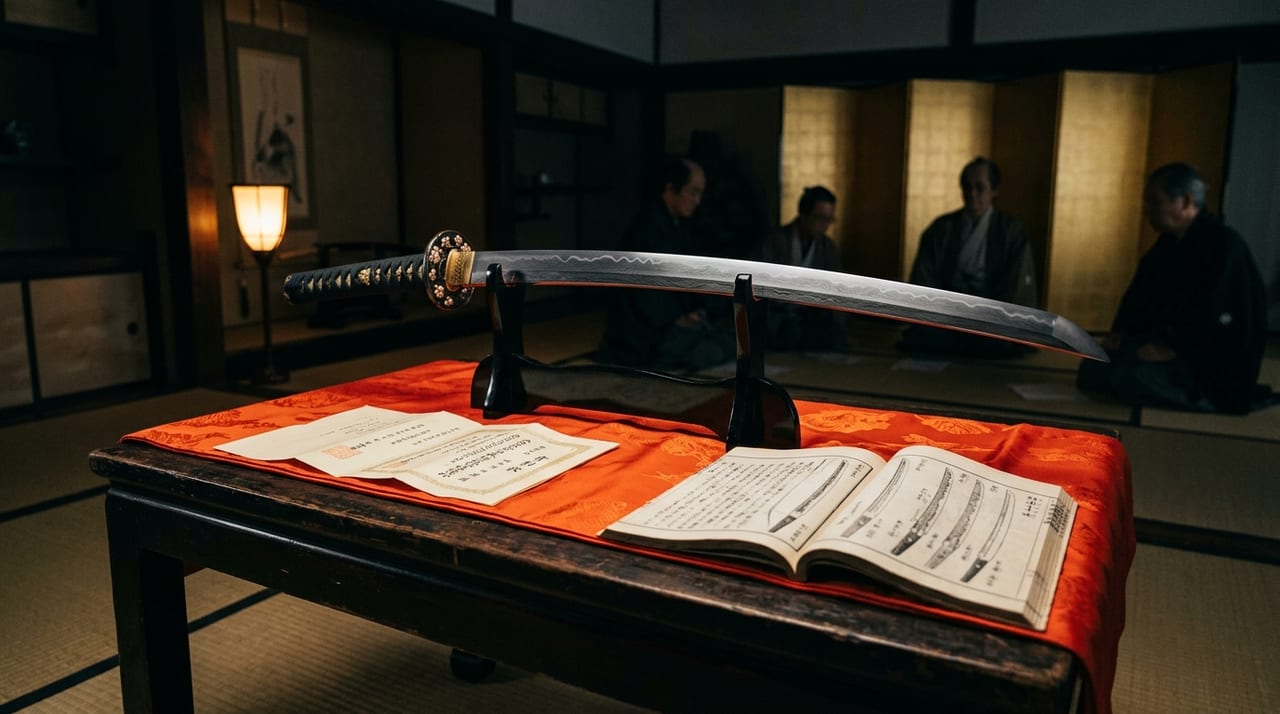
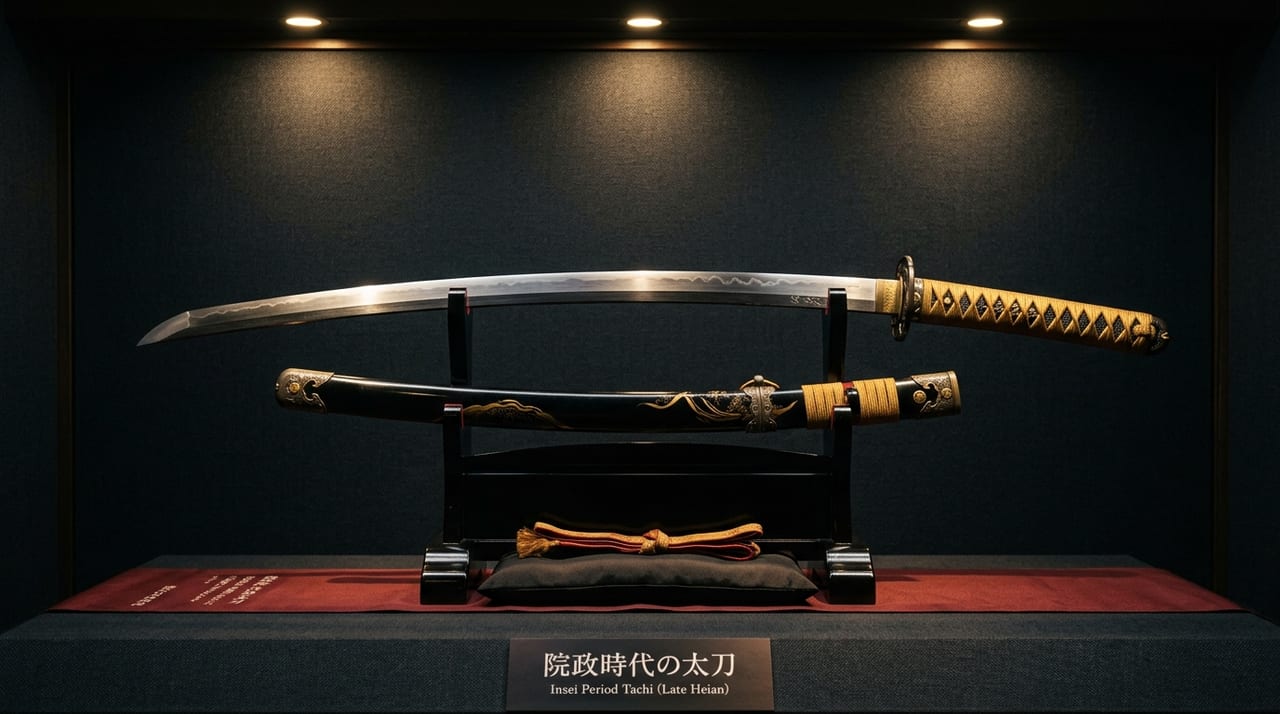
The nihontō of this era falls within the early phase of the kotō period (kotōki). Slender tachi with pronounced koshi-zori were the mainstream, designed with single-handed operation on horseback in mind. A nagasa of around 2 shaku 7 sun to 3 shaku (approximately 82–91 centimeters) was standard, and deep sori with a small kissaki were characteristic features of the tachi from the mid to late Heian period.
At the Battle of Kinomi (1057), one of the fiercest engagements of the Zen'kunen War, Minamoto no Yoriyoshi and his son Yoshiie suffered a major defeat at the hands of Abe no Sadatō's forces. Records of this defeat note that "many soldiers were cut down in close-quarters fighting after their arrows were exhausted," conveying the ferocity of sword-to-sword combat. By contrast, at the Battle of Kuriyagawa (1062), Yoshiie's forces — reinforced by the Kiyohara clan — won a decisive victory, killing Abe no Sadatō and bringing the war to an end.
Minamoto no Yoshiie and the Establishment of the "Way of Bow and Arrow"
Minamoto no Yoshiie's exploits in the Gosannen War (1083–1087) would be handed down to later generations as the origin of Japanese bushidō. Particularly famous is the anecdote of "the breaking formation of wild geese." During a march, Yoshiie noticed that a flock of geese flying overhead suddenly broke formation, sensed the presence of an ambush, and averted disaster — an episode widely known as a symbol of a commander's perceptiveness.
Yoshiie was not only a skilled archer but also renowned as a master of the sword. The warriors who served under him were based in the eastern provinces and pursued the cutting edge of practical forging technique for swords as well. Mutsu Province was also known as a source of iron sand, and it has been pointed out that Tōhoku's ironworking culture may have been drawn upon in sword production.
The Sword Industry Supported by Tōhoku's Ironworking Culture
The Tōhoku region in the Heian period was not only a battlefield but also an important area in terms of ironworking technology. Ōshū (Mutsu and Dewa) was home to abundant sources of iron sand, and local iron masters actively refined it. This Tōhoku iron culture is thought to have underpinned the supply of weapons to the Minamoto warrior clan.
Multiple traces of sword production have been confirmed in the vicinity of Hiraizumi, the center of the Ōshū Fujiwara clan. Archaeological surveys have uncovered kaji ruins dating from the late Heian to the early Kamakura period at various sites across Tōhoku, and the actual state of local sword production is gradually being brought to light.
At the same time, many of the warriors who participated in the Zen'kunen and Gosannen Wars were from the Kantō (Bandō) region, and the swords they used are thought to have been commissioned primarily from prominent kaji in Kyoto, Yamato, and Bizen. While local kaji handled the replenishment and repair of weapons during expeditions, the production centers of fine swords remained firmly with the central tōkō groups.
The Sword Culture of the Minamoto Warrior Clan and Its Legacy
The sword culture of the Minamoto, established through the Zen'kunen and Gosannen Wars, connects directly to how swords were regarded in the later warrior governments. Within the Minamoto lineage stretching from Minamoto no Yoshiie to Yoritomo, swords came to be positioned not merely as weapons but as symbolic objects representing the authority and legitimacy of the warrior class.
Particularly noteworthy is the fact that the Minamoto took Hachiman as their clan deity and established the custom of dedicating swords to Tsurugaoka Hachimangū (Kamakura). This culture of dedication originated in the votive offerings and thanksgiving dedications made during the Zen'kunen and Gosannen Wars, and it became the precedent for later warrior clans' practice of dedicating swords to shrines.
Furthermore, the "noble tale of Yoshiie" — in which Yoshiie, unrewarded by the court for his achievements in the Gosannen War, used his own funds to bestow rewards on his retainers — was widely handed down from the medieval period onward. The warrior culture of symbolizing lord-vassal relationships through swords — the acts of bestowing, gifting, and dedicating swords — took deep root as a Minamoto tradition through the experience of the Tōhoku conflicts.
The Significance of the Zen'kunen and Gosannen Wars in the History of the Sword
The Zen'kunen and Gosannen Wars hold several important meanings in the history of the nihontō.
- By establishing the rise of the Minamoto warrior clan and opening the path to the founding of the Kamakura shogunate, these wars laid the foundation for the development of warrior culture as a whole, centered on the nihontō.
- Large-scale combat in the regional setting of Tōhoku heightened demand for practical swords and served as a catalyst for refining the tachi style capable of meeting the demands of both mounted and close-quarters combat.
- The custom established in this era of "the paramount warrior chieftain rewarding retainers with swords" elevated the nihontō beyond a mere weapon into a social symbol. This legacy was passed down from the late Heian period through the Kamakura and Muromachi periods to the Edo period, forming the cultural foundation by which the nihontō came to be called "the soul of the samurai."