The Genko Incident (1331) and Kemmu Restoration: The Sword Culture Turning Point at the End of Kamakura
 * Image is for illustrative purposes only.
Table of Contents
What was the Genkō Disturbance? - The Trigger for the Collapse of the Kamakura Shogunate
In 1331 (Genkō 1), Emperor Go-Daigo planned the overthrow of the Kamakura Shogunate and went in person to Kasagi Mountain. This marked the beginning of the "Genkō Disturbance." The emperor's anti-shogunate movement initially failed, and he was exiled to Oki, but anti-shogunate forces including Kusunoki Masashige, Nitta Yoshisada, and Ashikaga Takauji rose in succession, and the Kamakura Shogunate fell in 1333.
Simultaneously with the fall of the Kamakura Shogunate, Emperor Go-Daigo launched the "Kenmu Restoration," presenting the ideal of direct imperial rule. The era name was changed to Kenmu in 1334, but direct imperial rule itself began immediately after the fall of the shogunate in 1333. This too collapsed in less than three years due to conflict between the court nobility and warrior classes, leading Ashikaga Takauji to cross the bridge to the period of the Northern and Southern Courts (the relationship between the Kenmu Restoration and sword culture is detailed in this article).
This five-year period (1331–1336) marked an important turning point in the history of the Japanese sword.
Sword Forms of the Late Kamakura Period - The Eve of Transformation
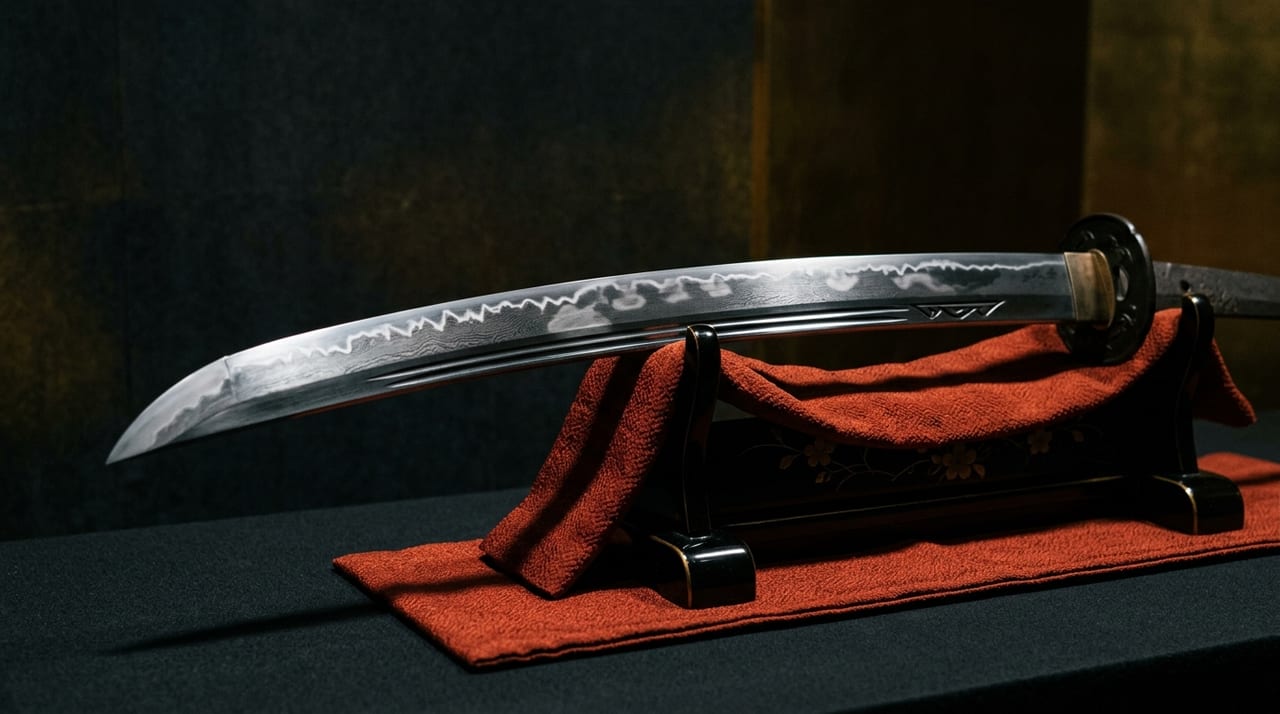
Japanese swords of the Kamakura period functioned as "swords of the warrior government," with emphasis on functional beauty. Representative characteristics include:
- Inokubi kissaki (boar-neck point): The tip is short and sharp, with a shape strong in thrusting
- Itame and flowing masame jihada: The vibrant skin of Bizen
- Ko-chōji midare: Hamon influenced by the Bizen tradition
- Modest proportions with shallow curve: Practicality during the transition from mounted to foot warfare
Masamune (Sōshū Kamakura) and Osafune Kagemitsu (Bizen) represent the peak of this era, and blades forged in the late Kamakura period through the Genkō period reached their summit.
The Influence of the Genkō Disturbance on Swords - The Beginning of Grandiose Proportions
During the upheaval from the Genkō Disturbance through the Kenmu Restoration, mobile small-unit close-quarters combat occurred more frequently than organized mass warfare. The guerrilla tactics of Kusunoki Masashige and the lightning assault on Kamakura by Nitta Yoshisada presented a different aspect from traditional cavalry-centered battles.
This change promoted the "grandiose enlargement" and "expansion in size" of sword forms.
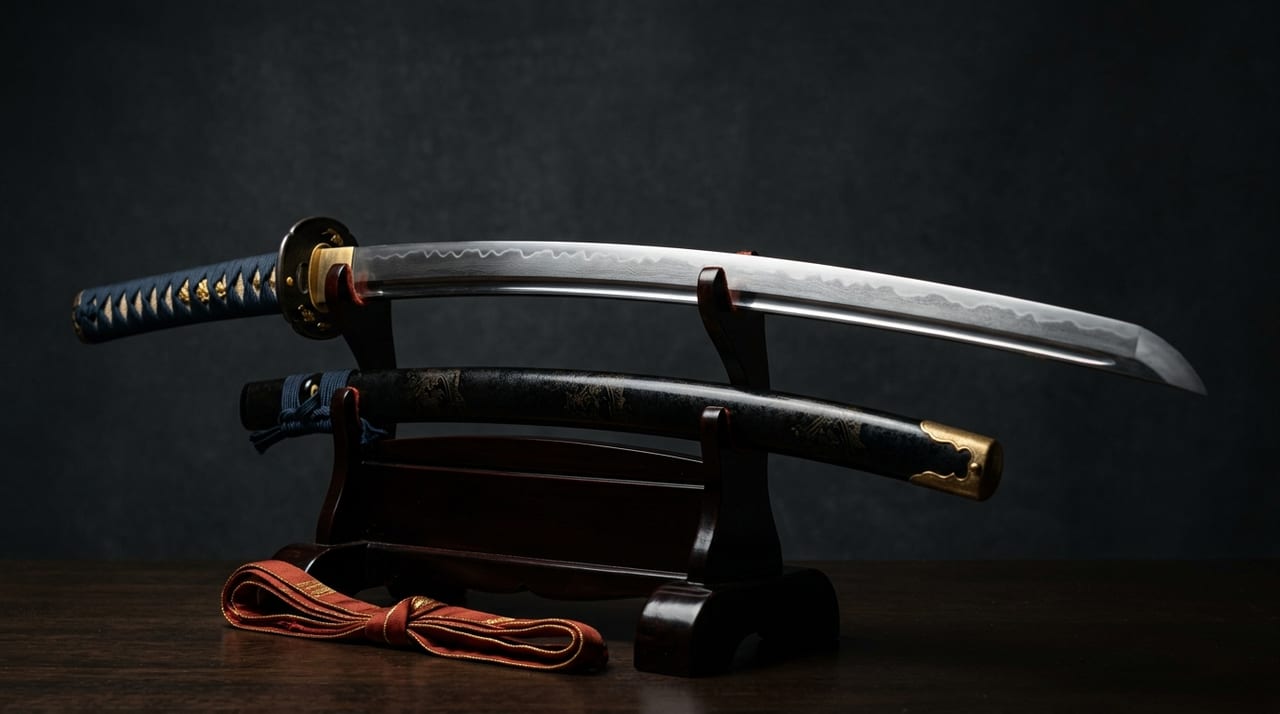
The Trend Toward Expanded Kissaki The transition from inokubi kissaki to chū-kissaki and ō-kissaki is clearly visible through the Northern and Southern Courts period. This reflects the increased prominence of "nukitō" (drawing and cutting strokes). Ko-kissaki excels in thrusting performance but falls short in cutting power for large slashing motions, so changes in combat style manifested in sword form.
The Trend Toward Broader, Heavier Blades Swords from the Genkō through Kenmu periods show little difference between the width at the base and width at the point (fukura remains) and frequently display grandiose forms with broad blade widths overall. This is interpreted as conscious attention to durability in mass combat in open-field warfare.
The Kenmu Restoration and the Influence of Court Culture on Swords
The Kenmu Restoration (1333–1336) aimed to revive court nobility politics with the emperor at its apex. During this brief period when the warrior government was abolished, court aesthetic values flowed momentarily into sword culture.
The Rise of Interest in Ceremonial Swords and Mountings At the Go-Daigo court, interest revived in ceremonial swords of the imperial court system (gold-decorated and silver-decorated swords in the Shōsōin style) over purely utilitarian warrior swords. The rituals of imperial sword dedication and bestowal were reorganized, and works imitating classical mounting styles were commissioned.
Service of Celebrated Swordsmiths Records of swordsmiths serving the Kenmu court are sparse, but master smiths such as Osafune Kanemitsu are confirmed from signatures and oshigata records to have continued forging amid the political upheaval of this era (Kanemitsu's life is introduced in this article). Kanemitsu has multiple confirmed works bearing Kenmu-period signatures, showing that smithing continued even amid the chaos of the age.
The Collapse of the Kenmu Government and the Chain to the Northern and Southern Courts - The Dawn of the Ōdachi Age
In 1336, Ashikaga Takauji occupied Kyoto and the Kenmu government collapsed. Emperor Go-Daigo fled to Yoshino, and the "era of the Northern and Southern Courts" opened.
The continuation of this upheaval prompted further "expansion in size" of sword forms. The path toward the age of nodachi and ōdachi was laid by the five-year political transformation from the Genkō Disturbance through the Kenmu Restoration.
- The Rise of Nodachi (wild sword): Large swords exceeding 3 shaku (about 90 cm) in blade length began to be used in foot warfare
- The Culture of Ōdachi Dedication: Enormous tachi were created as dedication pieces for temples and shrines (the ōdachi collections of Kasuga Grand Shrine and Tsurugaoka Hachimangū)
- The Emergence of Mass Production: As demand increased, lower-quality mass-produced swords also began to appear
Major Swordsmiths and Extant Works of the Genkō-Kenmu Period
The following names are cited as representative smiths of this transformative period:
Osafune Kanemitsu A master of the Bizen Osafune school active from the late Kamakura period into the early Northern and Southern Courts era. Works bearing Genkō and Kenmu signatures are important as precursors of the Northern and Southern Courts style, exhibiting expanded kissaki and grandiose form.
Osafune Nagayoshi A Bizen swordsmith of the Kenmu period and early Northern and Southern Courts era. His works fusing the elegance of the Bizen tradition with the grandiosity of the Northern and Southern Courts style are highly valued.
From the Late Kamakura Period to the Northern and Southern Courts - Continuity in Sword Culture
The Genkō Disturbance and Kenmu Restoration were brief events spanning merely five years, but in the history of the Japanese sword they triggered the transformation from the Kamakura period's "precise and warrior-oriented sword" to the Northern and Southern Courts period's "grandiose and enlarged sword."
Political chaos and intensifying warfare directly changed the form of swords, making the Genkō-Kenmu period a crucial "hinge" in the history of the Japanese blade. As the Kamakura order crumbled and new values of the age were sought, swords too evolved in response to the demands of the times.