Sword Transition from Late Kamakura to the Kenmu Restoration: Swordsmiths and Blade Styles in the Genko-Shokyo Period (1331-1334)
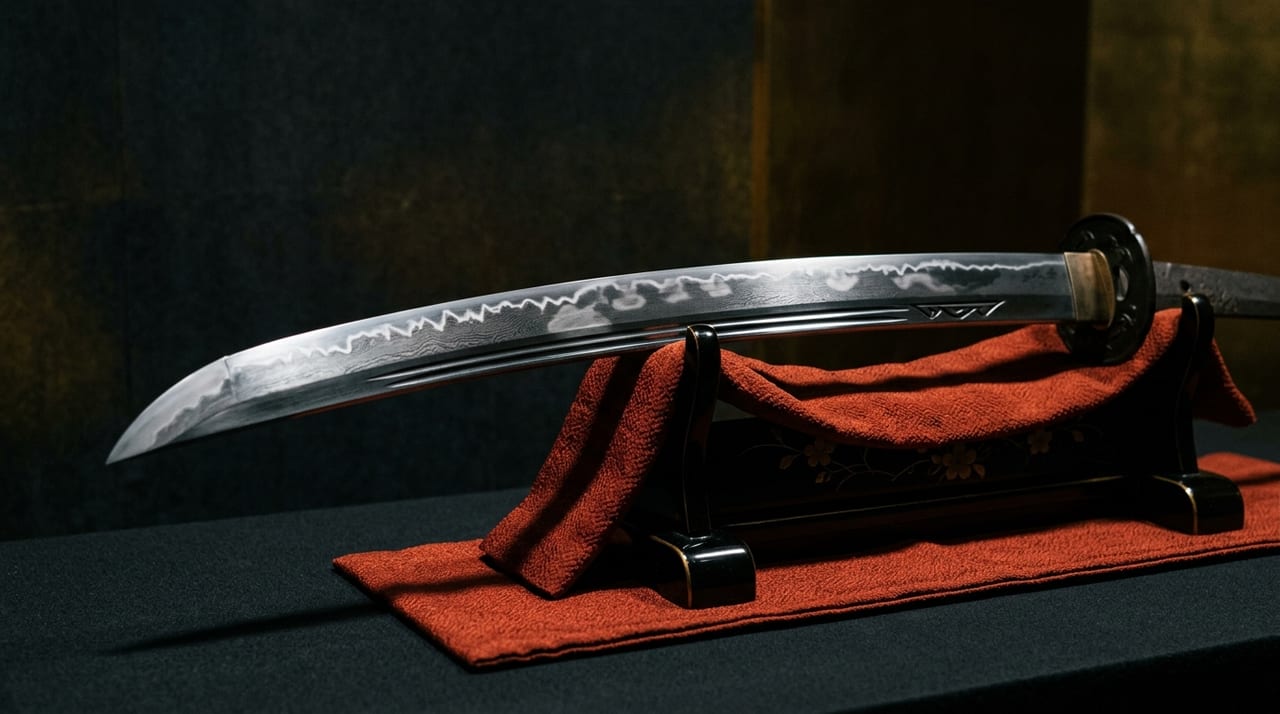 * Image is for illustrative purposes only.
Table of Contents
The End of the Kamakura Period as a Turning Point in Sword History
From the Genko Incident of Genko 1 (1331) to the start of the Kemmu Restoration in Genko 3 (1333), Japan's political system was fundamentally shaken in the span of just three years. The anti-bakufu movement of Emperor Go-Daigo, the fall of the Kamakura shogunate, and the temporary collapse of the warrior government—this turbulent period was also an unavoidable turning point in sword history. This article reconsiders the end of the Kamakura period from the perspective of sword styles and the trends of swordsmiths.
The Perfected Form of "Kamakura Swords" Before Genko
Throughout the Kamakura period (1185-1333), Japanese sword styles gradually reached higher levels of perfection. Particularly during the "middle to late Kamakura period" from the late 13th to early 14th century, masters such as Shintōgo Kunimitsu, who was the teacher of Masamune, the master of the Soshu tradition (dates unknown, active around the first half of the 14th century), and Osafune Kagemitsu of Bizen were active.
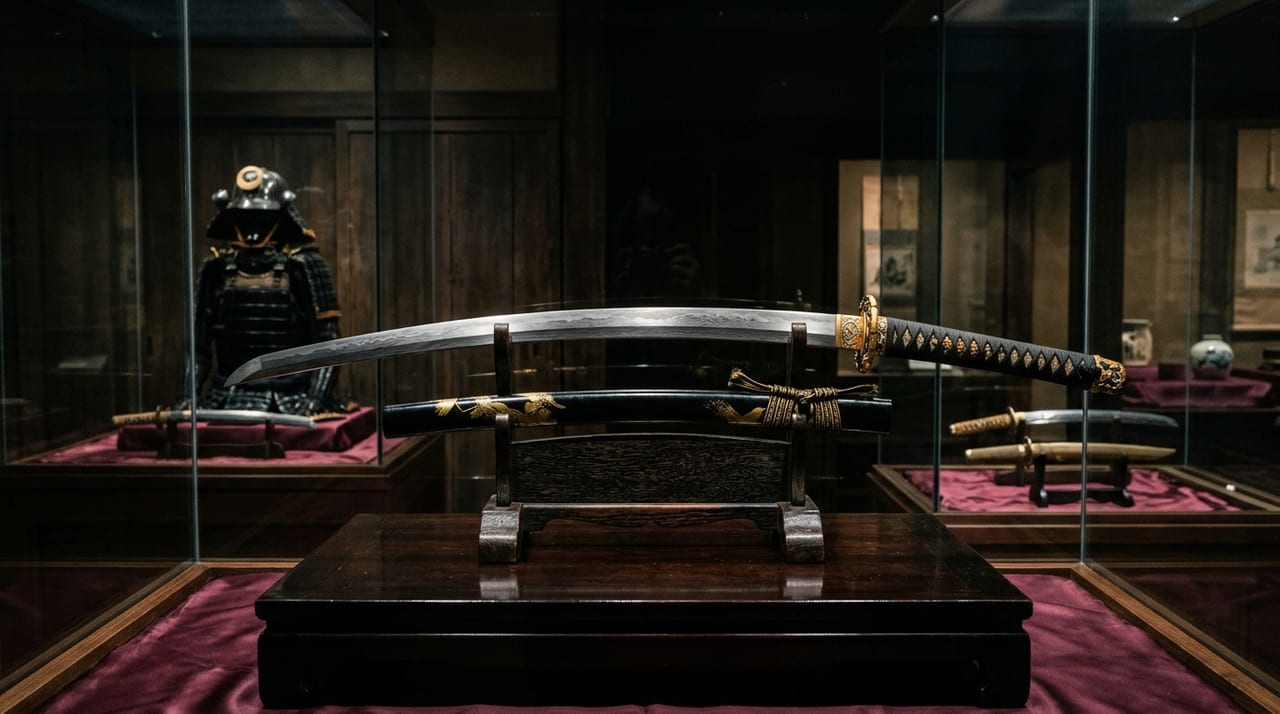
The tachi of this period embodied a style called "the grand beauty of Kamakura." The blade length was generally 2 shaku 5 sun to 2 shaku 8 sun (75-85 cm), the blade was broad, and it was characterized by a powerful tip shape called ikubi-kissaki. Many jihada featured nie-deki, and visual elements called chikei and utsuri appeared abundantly. The "utsuri" that appears in the jihada after hardening is the hallmark of the Bizen tradition and is typically seen in works by Kagemitsu, Nagayoshi, and others.
The Impact of the Genko Incident on the Sword World
In Genko 1 (1331), the uprising at Kasagiyama, where Emperor Go-Daigo attempted to overthrow the shogunate, ended in failure, and he was exiled to Oki. However, this incident stirred samurai and outlaw forces in various regions, and for the next three years, armed conflicts of various scales continued. Naturally, demand for swords increased dramatically.
The "goban-kaji" system established by the Kamakura shogunate—a system where prominent swordsmiths were regularly summoned to Kamakura to produce swords for shogunal use—ceased to function effectively during this period of turmoil. Instead, local warlords and outlaws increasingly ordered directly from local swordsmiths, increasing "local production for local consumption"-type sword procurement. This became one of the factors behind the dispersal and diversification of production centers during the later Northern and Southern Courts period.
Some works by Nagayoshi of Bizen's Osafune (dates unknown, active around 1360-1379) bear era names corresponding to the year after the Genko era, the last official Japanese calendar year of the Kamakura shogunate, revealing that swordsmiths continued their craft even amid the turmoil.
The Kemmu Restoration (1334-1336) and the Position of Swordsmiths
In Genko 3 (1333), Emperor Go-Daigo initiated the Kemmu Restoration (the change to the "Kemmu" era name occurred in the following year, 1334). The restoration of aristocratic rule through direct imperial governance brought complex effects to swordsmith society.
In terms of the revival of aristocratic culture, rituals of wearing tachi were emphasized, and demand for decorative ceremonial mountings (reisō koshirae) increased. On the other hand, because the Kemmu government needed the military power of warrior forces such as Ashikaga Takauji and Nitta Yoshisada, demand for practical combat-oriented swords coexisted.
Among the swordsmiths of this period, the work of Soshu Masamune is particularly noteworthy. Masamune is said to have forged swords during the Kemmu Restoration period as well, but few of his works bear era-name inscriptions, making it difficult to identify the details of his period of activity. What is certain, however, is that Masamune's disciples produced ten master swordsmiths later called the "Ten Masamune Worthies," who dispersed to various regions and supported sword culture during the Northern and Southern Courts and Muromachi periods.
The Transitional Change in Sword Form—A Harbinger of Large Tachi
Swords from the end of the Kamakura period through the Kemmu years show signs of the transition toward "ootachi" and "notachi" (large tachi), which would become explosively popular in the later Northern and Southern Courts period. Works exceeding 2 shaku 8 sun to 3 shaku (85-90 cm) in blade length began to increase, and the shape of the nakago also changed. Mid-Kamakura period swords had a long blade relative to a short nakago, whereas late-period examples show modifications to lengthen the nakago and stabilize the center of balance near the hilt. This reflects a change in combat tactics—a shift from close-quarters combat by mounted warriors to group warfare on foot. After the Genko Incident, outlaws and foot soldiers in various regions began engaging in large-scale group combat, and swords that prioritized striking power over portability came to be demanded.
Legacy for Future Generations
The legacy left by swordsmiths of the late Kamakura period extends beyond merely material masterpieces. The accumulation of techniques centered on the three traditions of Bizen, Soshu, and Yamato became the foundation for the "Five Traditions' competition and exchange," which would flourish all at once in the Northern and Southern Courts through the early Muromachi period. Furthermore, the establishment of a flexible production system that responded to drastic changes in political power and large-scale orders—in other words, the coexistence of "high-quality products by master smiths" and "mass-produced practical weapons"—formed the prototype for the kazuuchi sword culture of the later Sengoku period.
Swords from the Genko and Shokei eras are rare in quantity, and extant examples with era-name inscriptions are scarce. Yet those few surviving pieces testify to the pride of swordsmiths who lived through turbulent times and the stirring of a new aesthetic sensibility.
Genko and Shokei—Blades Inscribed with Two Era Names
When Emperor Go-Daigo raised troops at Kasagiyama in Genko 1 (1331) and was defeated and exiled to Oki, the Kamakura shogunate enthroned Emperor Kōgon and changed the era name to "Shokei" in Genko 2 (1332). However, Emperor Go-Daigo did not recognize this change and consistently continued using the "Genko" era name even during his exile to Oki. As a result, a rare situation in Japanese era history emerged in which two era names, "Genko" and "Shokei," were used in parallel during the same period.
This political conflict is directly reflected in the nenki-mei (the inscription of the production year carved on the nakago of swords). If a swordsmith inscribed "Shokei" on the nakago, it indicated adoption of the Kamakura shogunate and Northern Court calendar, while continuing to inscribe "Genko" implicitly indicated allegiance to the Go-Daigo Emperor's side. To be sure, how accurately swordsmiths in remote areas grasped information about the era change varied, and one cannot definitively determine a swordsmith's personal political stance based solely on the choice of era name. Nevertheless, whether "Shokei" or "Genko" is inscribed in the nenki-mei becomes a clue for inferring the information environment of the region and period in which the sword was made. When Emperor Go-Daigo returned to Kyoto and initiated the Kemmu Restoration, "Shokei" was abandoned, the calendar was unified to "Genko," and soon after, the change to the "Kemmu" era name was implemented.
How to Identify Extant Examples
Swords whose production can be definitively dated to the less-than-three-year period of the Genko and Shokei eras are extremely rare among surviving examples. Since the majority of swords lack nenki-mei inscriptions altogether, when determining whether a work dates to this era, one must not rely solely on the presence or absence of an inscription but must comprehensively examine stylistic features such as the following while comparing them with contemporaneous dated examples:
- jihada characteristics
- hamon variation
- nakago construction
- position of mekugi holes
Such estimation of age and maker requires specialized connoisseurship and is difficult to complete based on individual judgment alone. Certificates from appraisal institutions such as the Society for the Preservation of Japanese Art Swords (NBTHK) are widely used as materials that corroborate such stylistic judgments from an impartial standpoint. When seeking swords, regardless of whether nenki-mei are present, it becomes a basic practical matter to confirm whether a certificate of appraisal is included and whether the appraisal content is consistent with the description of the maker's style.