Swords Depicted in Heian Literature — The Aesthetic Sensibility and Martial World of the Sword as Reflected in The Tale of Genji, The Pillow Book, and the Konjaku Monogatari-shū
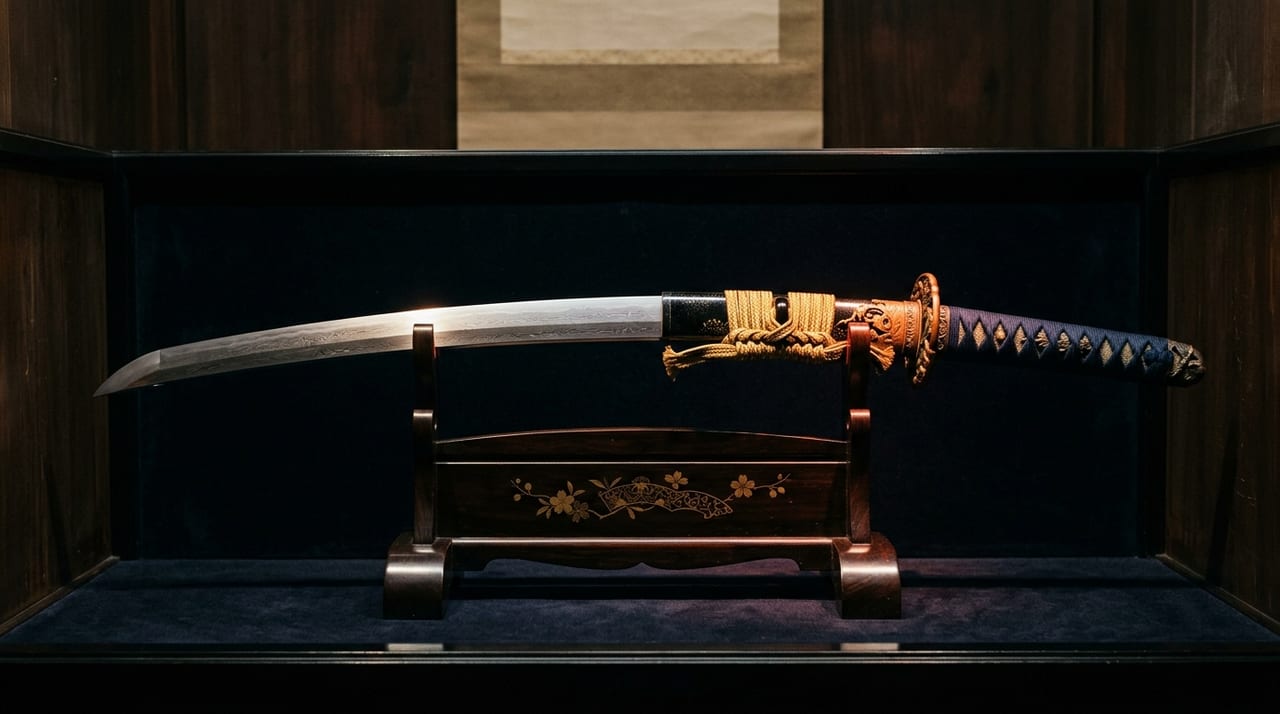 * Image is for illustrative purposes only.
Table of Contents
Heian Literature and Swords — A Mirror Reflecting the Martial World
The Heian period (794–1185) was the age in which Japanese literature reached its first maturity. Beginning with the Taketori Monogatari and the Tosa Nikki, masterworks that have been passed down through the ages appeared one after another — among them Murasaki Shikibu's The Tale of Genji, Sei Shōnagon's The Pillow Book, and the Izumi Shikibu Diary. While these literary works paint a meticulous portrait of the inner life of aristocratic society, they also contain references to swords, weapons, and warriors throughout, making them first-rate historical sources for understanding how people of the time regarded swords.
The Heian period was simultaneously the golden age of kuge (aristocratic) culture and an era in which warriors (mononofu) — centered on the Genji (Minamoto) and Heike (Taira) clans — were rising to prominence. The swords depicted in literary works are representations of the "martial world" as seen from an aristocratic vantage point, and reflect the reality of contemporaneous sword culture.
The Ritual Significance of Wearing a Sword in The Tale of Genji
The Tale of Genji, written by Murasaki Shikibu in the early eleventh century, is a work that primarily depicts the romantic, political, and spiritual life of the court aristocracy, yet it contains multiple references to swords.
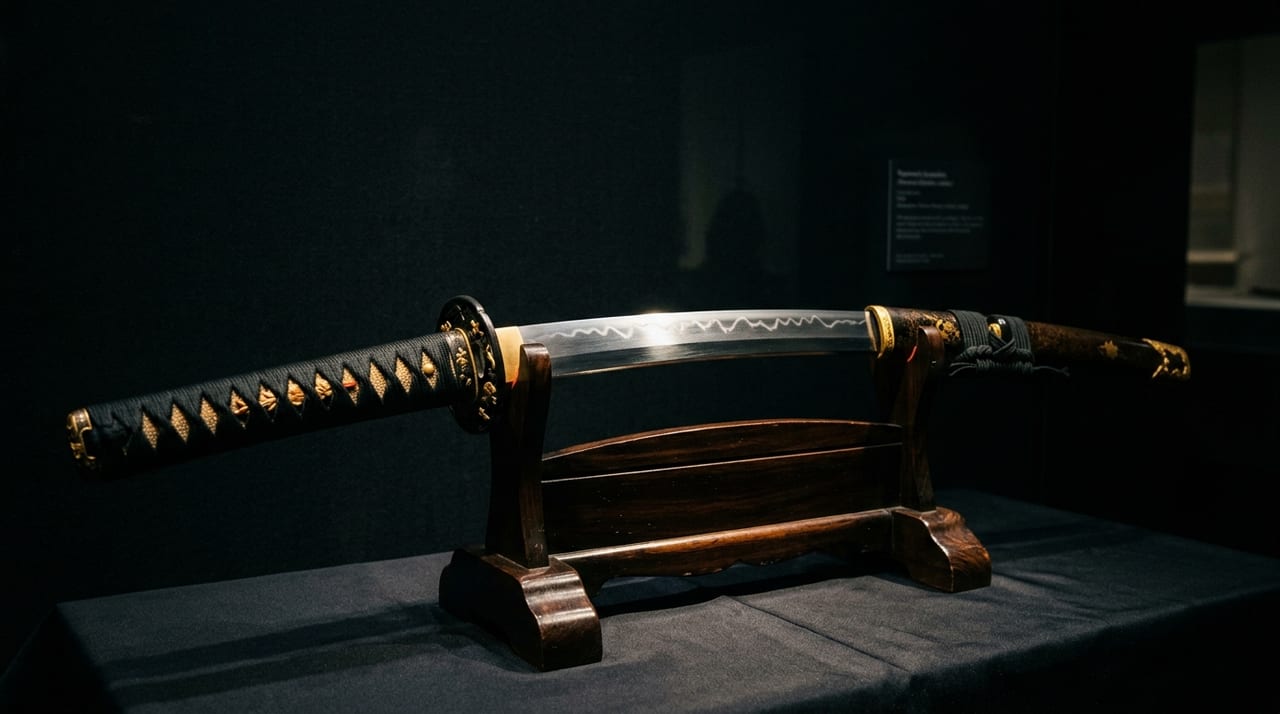
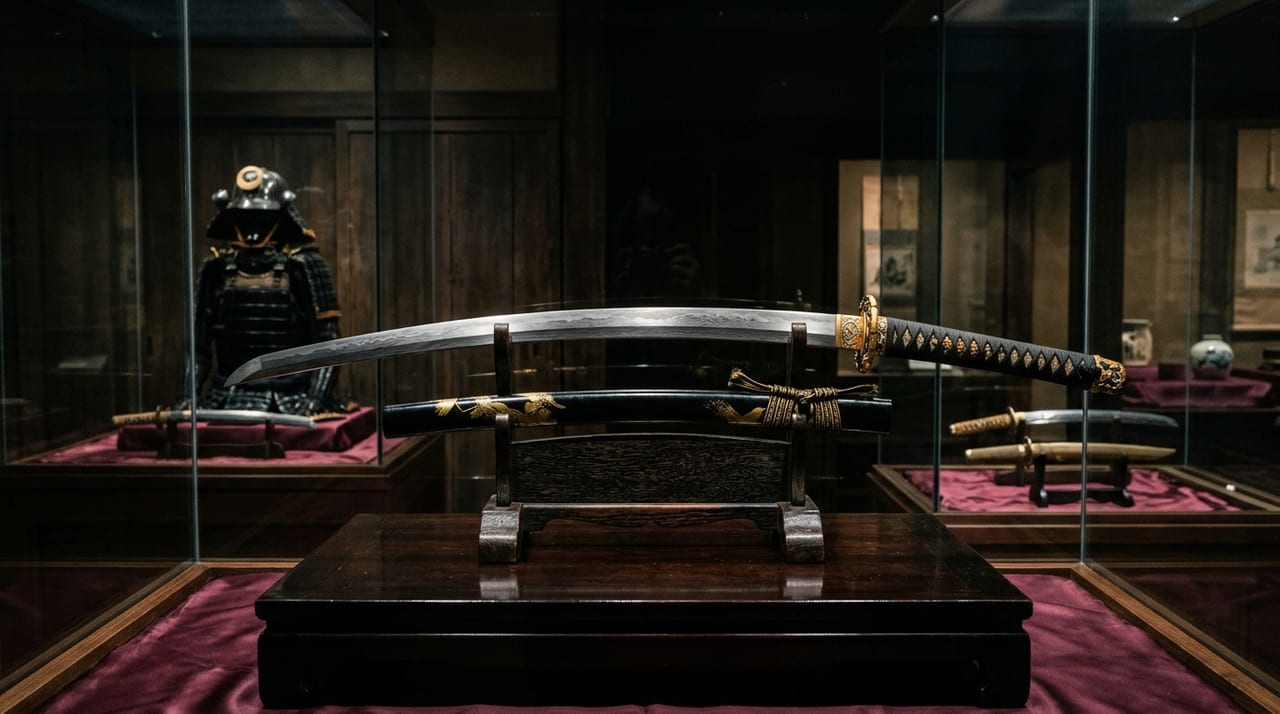
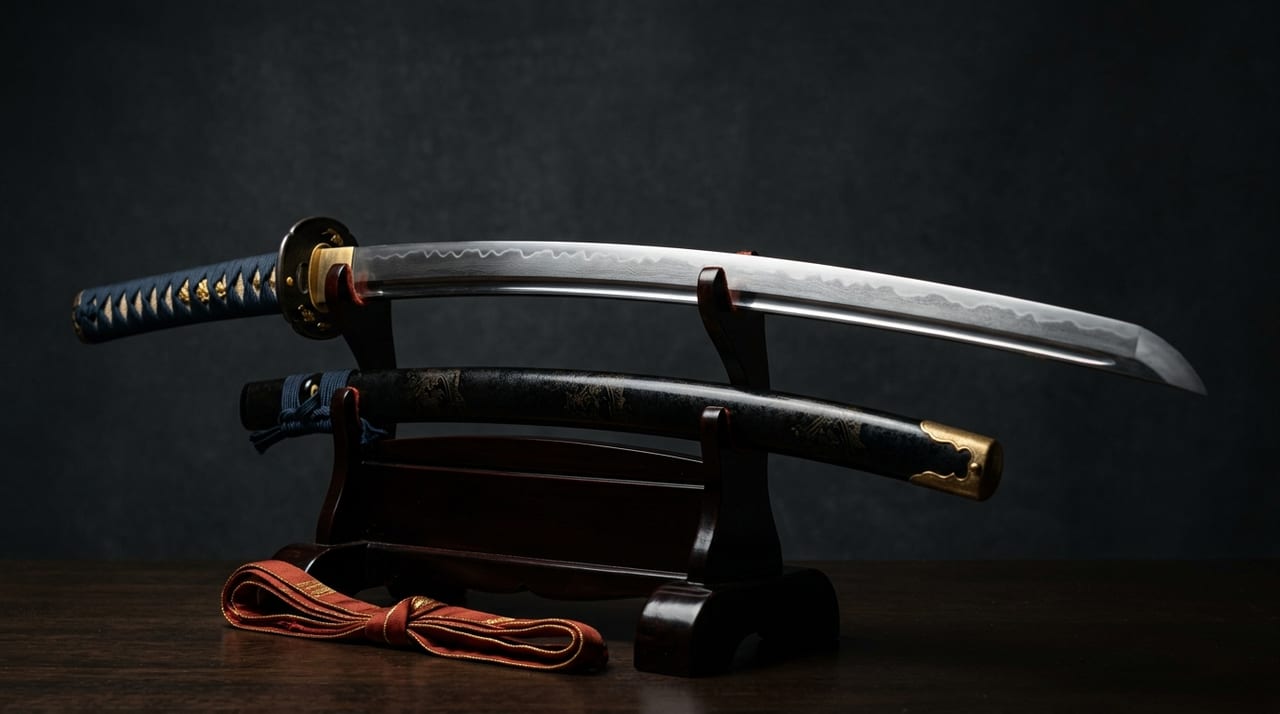
Most striking are the descriptions of tachihaki (sword-wearing) by male aristocrats. Male aristocrats of the Heian period were required to gird specific swords on the occasion of court ceremonies, gyōkō (miyuki, imperial outings), and religious rites. In The Tale of Genji, such scenes of sword-wearing are depicted as symbols of rank and decorum, with swords functioning not merely as weapons but as "signs of status and propriety."
In the "Aoi" chapter, the scene in which Hikaru Genji joins the procession to the Aoi Festival (the Kamo Festival) describes in detail the dress and sword-wearing of his attendants. This description shows that tachihaki had been institutionalized as part of official court ceremony, and reveals that swords carried ritual and symbolic meaning beyond their practical utility as weapons.
In the "Wakamurasaki" chapter, when Hikaru Genji visits a temple in the northern hills, the figures of warrior escorts are depicted in the background. Even in The Tale of Genji, which takes aristocratic society as its primary stage, martial force, warriors, and swords are ever-present as part of reality, portrayed as a tangible power underpinning the safety and authority of the aristocracy.
The Martial World as Seen in The Pillow Book — Sei Shōnagon's View of Swords
The Pillow Book by Sei Shōnagon (late tenth to early eleventh century) is known as an essay collection rich in sharp observation and wit. References to "warriors" and "swords" appear more directly in The Pillow Book than in The Tale of Genji, offering a glimpse of a distinctive perception of the martial world as seen through the eyes of a female literary figure.
- There are passages that depict the bravery and beauty of warriors (mononofu) in a positive light. Sei Shōnagon perceives the dress, bows, and swords of warriors with a sense of "ririshi (imposing and beautiful)," demonstrating an aesthetic interest in weapons and armor. While warriors were sometimes looked down upon hierarchically in Heian aristocratic society, The Pillow Book held a perspective that honestly acknowledged their strength and beauty.
- The presence of warriors on night watch and guard duty is depicted in The Pillow Book, reflecting the reality that court life depended on the physical protection of warriors. The sight of sword-bearing warriors guarding the interior and exterior of the court was a natural part of the daily life of the aristocracy.
Sword Tales in the Konjaku Monogatari-shū — The Vivid World of Warriors and Swords
The Konjaku Monogatari-shū, compiled from the latter half of the eleventh century through the early twelfth century, is a collection of tales gathered from Japan, China, and India. Within its Honchō Sezoku-bu (section on secular affairs of Japan) are numerous tales concerning warriors, swords, and combat, depicting a more vivid world of swords that differs from The Tale of Genji or The Pillow Book.
In the warrior tales of the Konjaku Monogatari-shū, swords are often depicted as entities possessing a "spiritual power of a meitō (famous sword)" that transcends mere tools. Tales such as "This sword is a keepsake from a parent now deceased, and their spirit dwells within it" and "A wound inflicted by a meitō is deeper than one received from an ordinary sword" appear repeatedly, reflecting the religious beliefs of the Heian period in which swords were imbued with spiritual and supernatural significance.
In scenes where warriors use swords in life-or-death duels and the routing of bandits, there are descriptions that praise the sharpness of the sword and the bravery of the warrior. These tales reflect the reality of the late Heian period, when warriors were rising socially, and demonstrate that swords functioned as symbols of a "martial power" that transcended social hierarchy.
The Religious Significance of Swords — Swords, Shinto, and Buddhism
One theme that recurs throughout Heian literature is the connection between swords and religion.
In Shinto, "shinken (divine swords)" — foremost among them the Kusanagi-no-Tsurugi, one of the Three Sacred Treasures — were objects of veneration as swords that embodied the power of the gods. In Heian court ritual, the divine sword, the divine jewel (mizutama), and the divine mirror functioned as devices symbolizing the legitimacy of the emperor, and this positioning of swords within a religious and political context is also reflected in literature.
In Buddhism, Fudō Myō-ō is depicted holding a sword in his hand, and the sword symbolizes "the power of wisdom that severs bonnō (earthly desires)." Motifs such as sacred swords that cut down demons and swords blessed by the Buddha appear frequently in the Buddhist literature and tales of the Heian period.
The True Picture of Heian Sword Culture as Seen Through Literature
Swords as depicted in Heian literature are more often portrayed not as "weapons" in the modern sense, but as cultural objects with multifaceted meaning encompassing ritual, symbolism, spiritual power, and aesthetic appreciation.
This literary depiction reflects the reality of Heian sword culture — namely, the duality in which the tachi played an important role in the ceremonial wearing of swords while at the same time serving as a practical weapon used by warriors in actual combat.
Reading Heian sword culture through the medium of literature deepens our understanding of a cultural and spiritual dimension — "what meaning people found in swords" — that differs from the technological and morphological history of swords. The continuity with depictions of swords in medieval literature from the Heike Monogatari onward is also addressed in Swords and Literature.