The Profession of Tōsōgu Metalsmith — The Master-Apprentice System, Training Process, and Business Realities After Going Independent
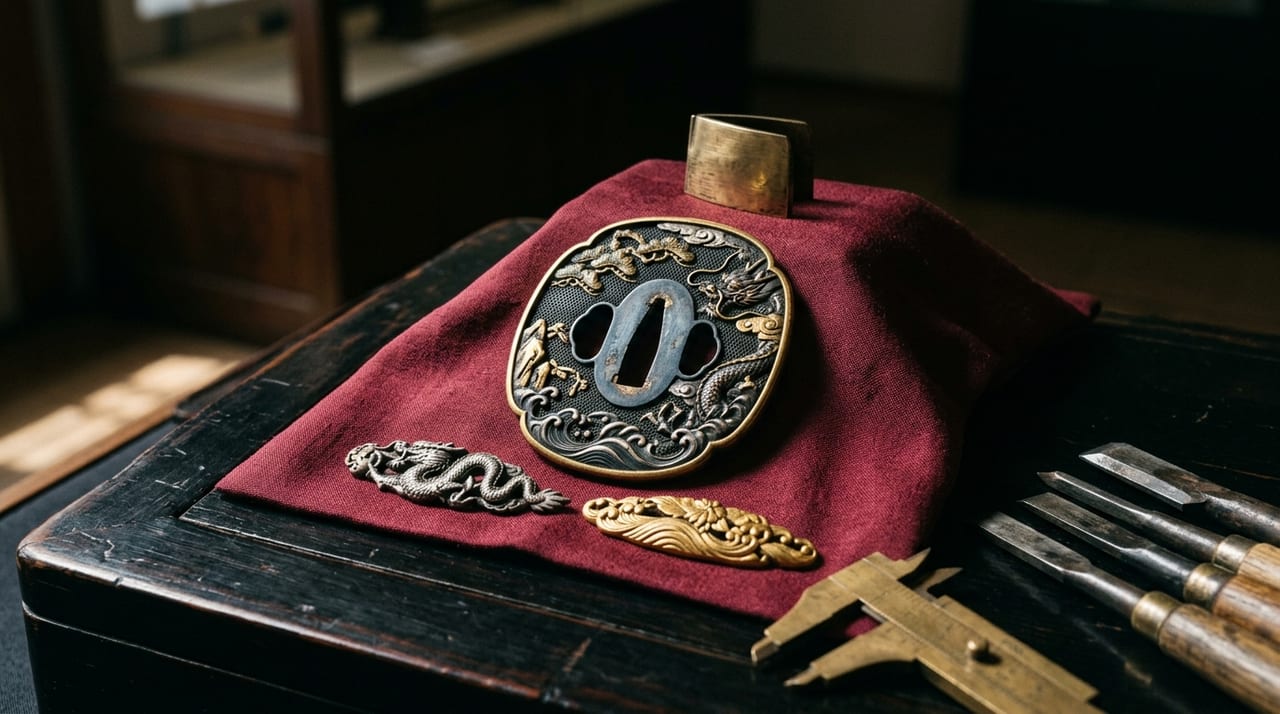 * Image is for illustrative purposes only.
Table of Contents
The Specialized Profession of Tōsōgu Metalsmith — The "Decorative Craftsman" of the Nihontō World
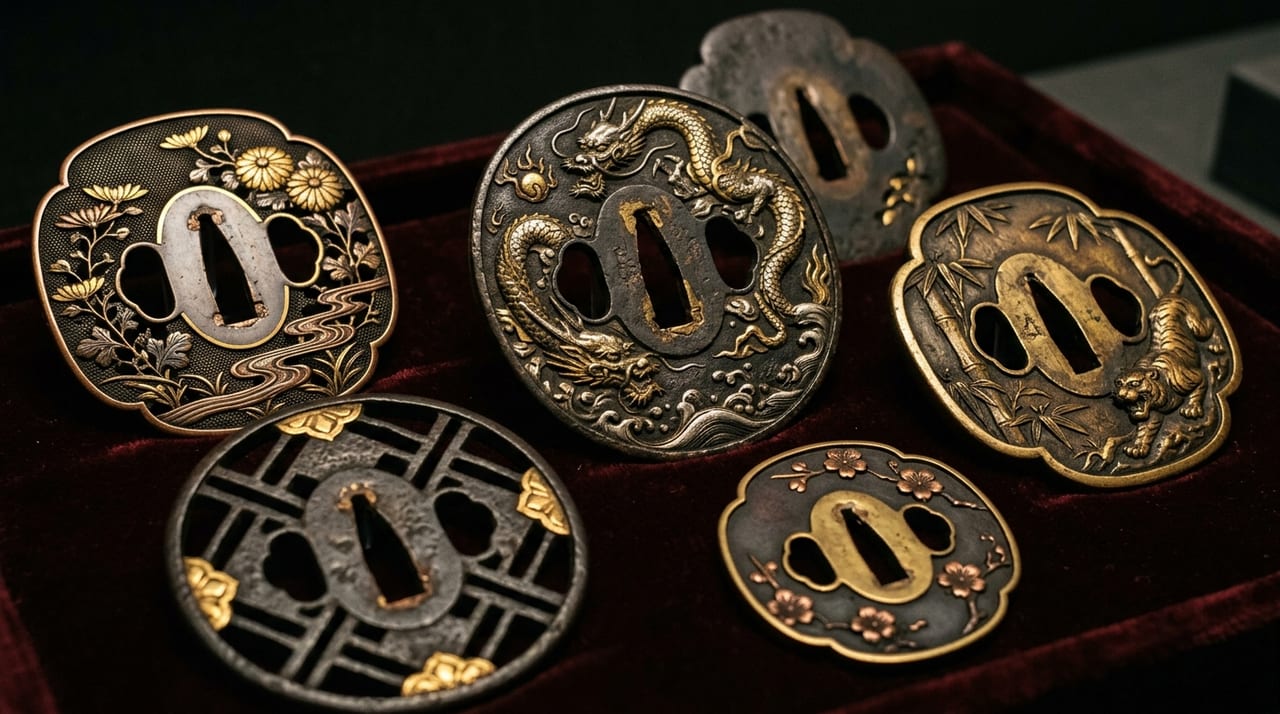
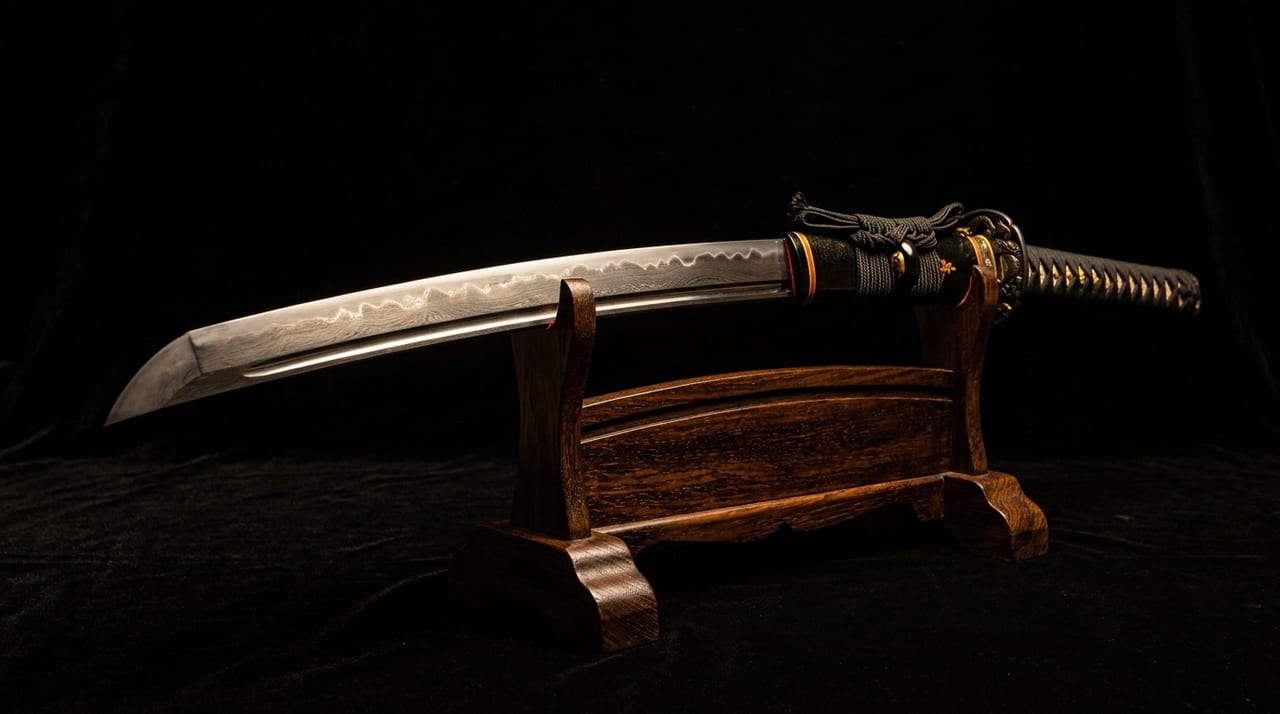
The beauty of nihontō is not complete with the blade alone. The koshirae that protects and decorates the blade comprises many components — tsuba, menuki, fuchi-kashira, kozuka, kōgai, and habaki — each with its own specialist craftsman; among them, the "kinkōshi" who handles metalworking is central to tōsōgu production.
The scope of a kinkōshi's work is broad, ranging from the production of tōsōgu in materials such as iron, copper, shakudō, shibuichi, gold, and silver to the restoration and reconstruction of antique tōsōgu. The techniques — chōkin, zōgan, nanako-uchi, nikubori, takabori, and others — represent an accumulation of highly advanced skills requiring decades of training.
During the Edo period, renowned schools such as the Gotō family, Higo kinkō, Shōami school, and Nara kinkō flourished as the highest-ranking craftsman guilds, receiving commissions from daimyō and the shogunal house. However, after the Sword Abolishment Edict (Haitōrei) of 1876, demand for tōsōgu plummeted, and kinkōshi sought new avenues in the production of decorative art objects, tea ceremony utensils, and personal ornaments. In the modern era, kinkōshi who specialize exclusively in tōsōgu production have become extremely rare throughout Japan.
Training Paths for the Modern Kinkōshi — The Realities of the Master-Apprentice System and Vocational Training
There are broadly two training paths available today to young people who aspire to become tōsōgu kinkōshi.
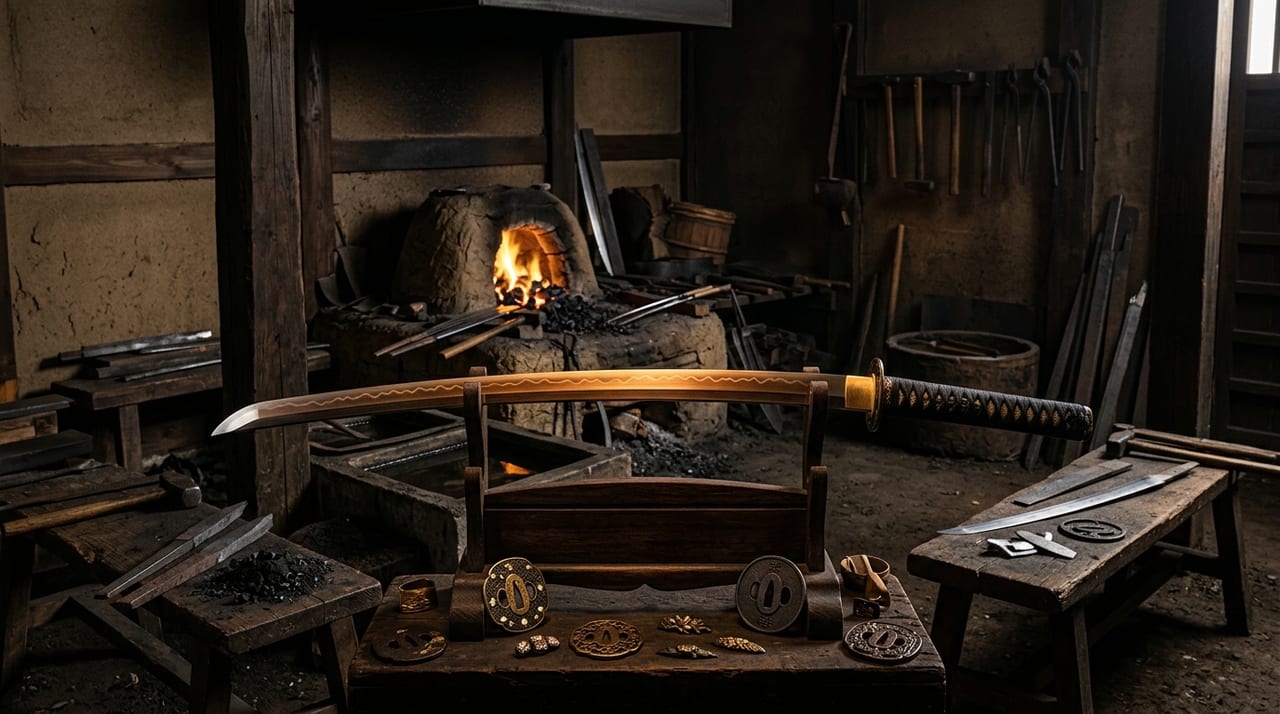
- Traditional master-apprentice system: The apprentice joins an active kinkōshi as a disciple and, after several years to more than a decade of training, goes independent. It follows the classical apprenticeship form of learning by observing and absorbing techniques while assisting the master with daily tasks. The breadth and depth of skills that can be acquired through this method are the greatest of all paths, but simply finding a master willing to take on a live-in apprentice is not easy. Wages are low and life during training is demanding.
- Via vocational training or specialist schools: Several art and craft schools and specialist colleges across the country offer introductory courses in chōkin and kinkō that serve as entry points into tōsōgu metalworking. The craft departments of art universities in Tokyo, Osaka, Kyoto, and elsewhere also offer metal craft training. However, what can be acquired through school education is limited to basic chōkin techniques, and the tōsōgu-specific styles, formality codes, and materials knowledge must be supplemented through hands-on training in the master-apprentice system.
The Process of Acquiring Chōkin Techniques — The "Memory of the Hands" That Takes Ten Years
Among the skills a tōsōgu kinkōshi must acquire, chōkin takes the longest. The process of mastering the principal techniques is as follows.
| Technique | Description |
|---|---|
| kebori | The most fundamental carving technique, using a nomi or carving chisel to inscribe fine lines on the metal surface. How finely various motifs — plants, wave patterns, geometric designs — can be expressed with a single nomi is the standard of evaluation for basic skill. The saying "only after carving ten thousand lines does it become one with the hand" is passed down among craftsmen, and during the early stages of training one repeats the same line-carving patterns every day. |
| takabori / marubori | High-relief carving, in which the metal surface is raised three-dimensionally, is far more difficult than kebori. To carve three-dimensional designs such as dragons, tigers, and waves out of metal, one must apply the nomi while calculating the volume of the material, how light falls on it, and the viewer's perspective in three dimensions. Mastery of this technique normally requires more than five years. |
| zōgan | A technique in which grooves are cut into the metal surface and different metals (gold, silver, shakudō, etc.) are inlaid. Balancing the thermal expansion rates of the materials, the hammering pressure during inlaying, and the finishing polish is difficult, and the technical systems required differ according to type — kome-zōgan, kirigane-zōgan, nunome-zōgan, and others. |
| nanako-uchi | A technique of uniformly hammering a fish-roe-like (nanako) fine-grain pattern onto the base metal of tsuba and fuchi-kashira. Using a dedicated tagane (nanako-tagane), one covers the entire base metal while maintaining uniform depth, spacing, and direction with each strike. Although it appears to be simple repetitive work, maintaining uniformity is extremely difficult, and reaching proficiency requires several years. |
Business Challenges for the Modern Kinkōshi — Materials, Customers, and Income
The practical challenges facing an independent kinkōshi continue even after the acquisition of technique is complete.
Materials procurement: The traditional tōsōgu materials shakudō (a copper-gold alloy; genuine shakudō is 97% copper and 3% gold) and shibuichi (an alloy of 75% copper and 25% silver) cannot be obtained from mass-produced or industrial sources and must be sourced from specialist materials suppliers. The number of suppliers for these traditional materials is declining, making the securing of quality materials a significant business challenge.
Customer development: The customers for tōsōgu are limited to nihontō collectors, fine arts enthusiasts, and restoration commissions from museums. The spread of the internet and social media has improved the environment in which individual kinkōshi can exhibit and sell their work, but raising awareness of tōsōgu as a highly specialized field and finding customers with purchasing power remains difficult.
The reality of income: The annual income of an independent tōsōgu kinkōshi varies greatly depending on the recognition their work receives, the number of commissions, and whether they have side work (general chōkin, teaching classes, restoration). Kinkōshi who can support themselves from tōsōgu work alone are a minority; most maintain their tōsōgu production alongside other metalwork.
Young Kinkōshi Carrying On the Tradition — Modern Efforts in Successor Training
In the field of tōsōgu metalworking, where the shortage of successors is severe, a number of new training initiatives have emerged in recent years.
Workshops hosted by institutions such as the Japanese Sword Museum in Tokyo and the Kyoto National Museum feature demonstration and hands-on programs in tōsōgu metalworking, and efforts to create entry points for the general public continue. Some kinkōshi also publish their production process on social media such as YouTube and Instagram, aiming to discover potential successors by conveying a broad picture of what it means to work as a kinkōshi professionally.
In the domain of the institutional protection of intangible cultural heritage as well, the preservation of tōsōgu kinkōshi techniques has come to be recognized as an issue, and there is a growing number of cases in which successor training is supported through grant programs of the Agency for Cultural Affairs. The survival of the tōsōgu kinkōshi profession is an indispensable element for the transmission of nihontō culture as a whole, and supporting its training has become an important challenge for cultural policy.