The Craftsmen Who Complete a Single Koshirae — The Reality of "Integrated Koshirae Production" Uniting the Sayashi, Nurishi, Kinkōshi, and Tsukamakishi
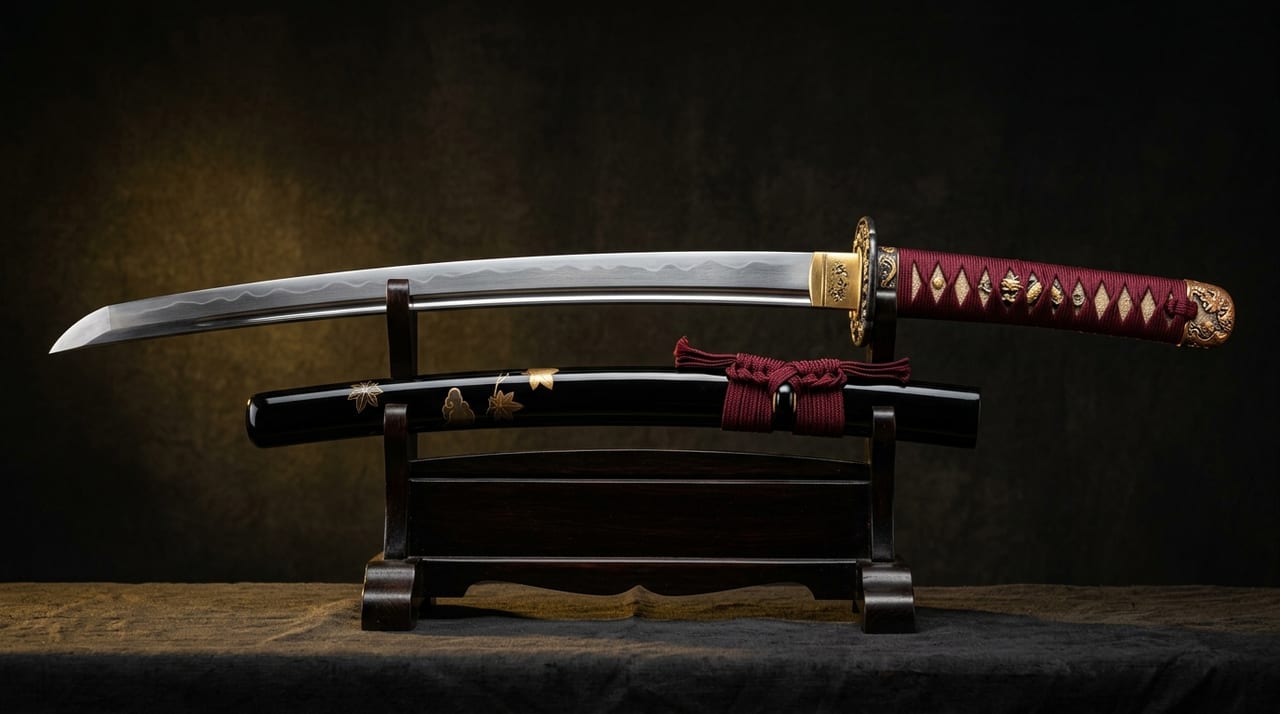 * Image is for illustrative purposes only.
Table of Contents
Koshirae: "A Work of Teamwork"
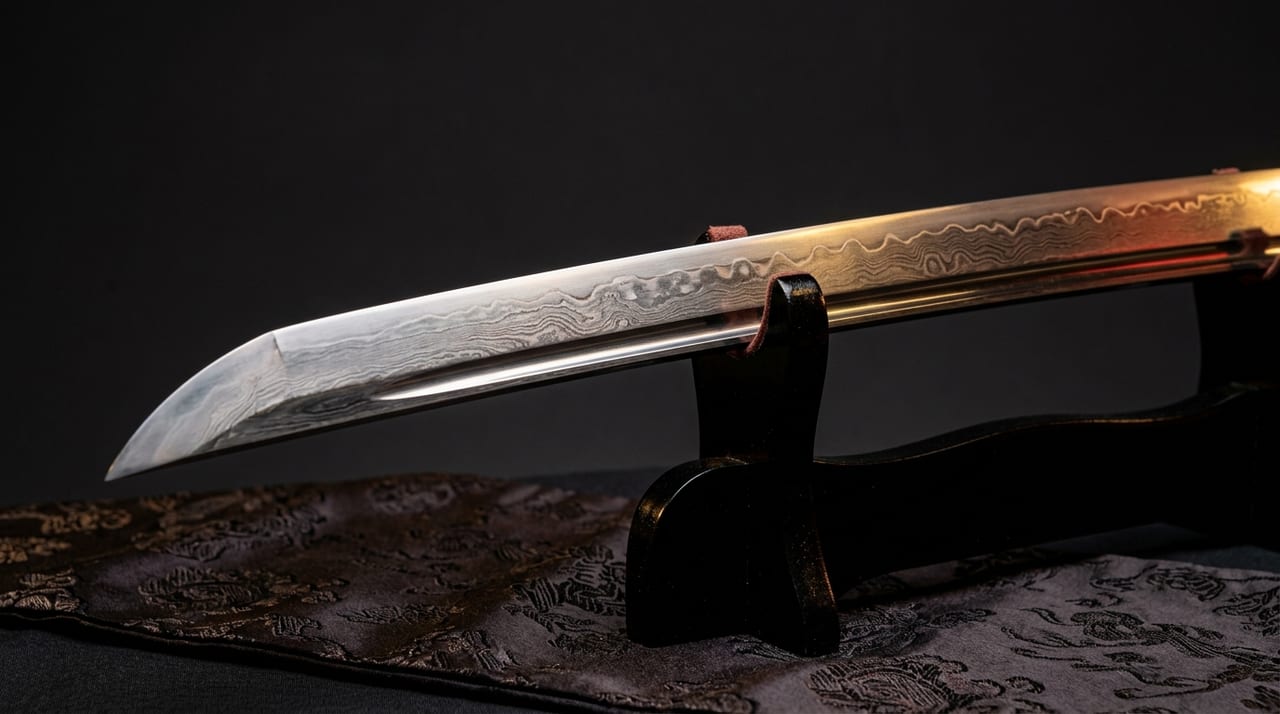
A Japanese sword consists of two elements: the blade (forged by the tōkō) and the koshirae (mounting). Koshirae refers to the entire exterior fitting applied to the blade, composed of the following parts.
- Saya (scabbard)
- Tsuka (hilt)
- Tsuba (hand guard)
- Menuki
- Fuchi-kashira
- Seppa
- Habaki (blade collar)
Completing the koshirae for a single sword typically requires the coordination of four to six craft specialties. Each practitioner is an independent specialist who adjusts their technique and aesthetic sensibility in concert with the others to produce a single work. This article details the processes and the reality of craftsman coordination, using a complete uchigatana koshirae as the example.
Process 1: Hakuginshi — Habaki and Seppa
Once the blade has left the tōshō's hands and the togishi (polisher) has completed the polishing, the first koshirae craftsman to appear is the hakuginshi. This is the metalworking specialist who produces the habaki (blade collar) and the seppa.
The habaki fixes the base of the blade and protects it from the koiguchi. It is precision work that requires exact measurement of the blade's motohaba, the thickness of the mune (back of the blade), and the position of the machi, matched to a tolerance of 0.1 mm.
- Materials include brass, shakudō, silver, gold, and others (depending on the commission)
- Forms include the "double habaki," "yakiochi," and "nanako"
The seppa are thin metal plates that sandwich both faces of the tsuba (hand guard), preventing play between the blade and the tsuba. Because the habaki and seppa are always designed as a set, the hakuginshi is the first koshirae craftsman to handle the blade.
| Type | Time Required |
|---|---|
| Standard | 3–5 days |
| Custom order | 2 weeks or more |
Process 2: Tsubashi — The Metal Art That Defines Prestige
Next comes the tsubashi. Among all tōsōgu (sword fittings), the tsuba (hand guard) commands the greatest presence, and its form and design vary greatly by period, school, and intended use. Everyday swords of the warrior class most often featured practical iron tsuba (mokko-shaped or round), while formal swords of daimyo and high-ranking samurai employed ornate tsuba of shakudō with gold inlay.
The work of a contemporary tsubashi falls into two categories.
- "Toriawase" — selecting and combining existing tsuba
- "Chūmon seisaku" — designing one from scratch
For high-grade koshirae, the tsubashi listens to the blade's balance, total weight, and the owner's preferences, proposes a design, and proceeds to production only after receiving approval. Popular openwork (sukashibori) tsuba can take more than a month from the initial sketch to completion.
Process 3: Menukishi — Miniature Sculpture That Adorns the Tsuka
Menuki are small metalwork sculptures inset into both faces of the tsuka (hilt). They may appear to be purely decorative, but menuki are also fundamentally a practical component that conceals the hole of the mekugi (peg) that secures the nakago (tang). Their forms are diverse — dragons, tigers, phoenixes, grasses and flowers, family crests, and more — and a matched pair of front and rear menuki expressed the rank and taste of the sword's owner.
A menukishi casts or forges metal and finishes it using techniques such as kebori (line engraving), takabori (raised carving), and iroe (coloring). Today it is common for the tsubashi and the menukishi to be the same person, but during the Edo period this was a highly specialized field: the Gotō family, known as the "Gotōke Gotei," served as the shogunate's appointed metalworkers, specializing in the mitokoromono (the three-piece set of menuki, kozuka, and kōgai).
Process 4: Fuchikashirashi — Capping Both Ends of the Tsuka
The fuchi is the metal ring that secures the tsuba-side end of the tsuka (hilt), and the kashira is the metal cap that closes the tip of the tsuka. Materials include shakudō, polished black iron, gold, silver, alloys, and others; aesthetic unity with the menuki is required.
The fuchikashirashi works in coordination with the menukishi to realize a unified design program (for example, if a dragon is the main theme, dragon motifs are also incorporated into the border of the fuchi). Today there is a growing number of craftsmen who operate as "tōsōgushi," accepting integrated commissions for fuchi-kashira, menuki, and kozuka as a set.
Process 5: Sayashi — The Wood Specialist Who Encases the Blade
Once the specifications for the metal fittings have been determined, the sayashi takes direct measurements of the blade and produces the wooden saya base (ki-zaya). The standard material for the saya is hōnoki (Japanese whitebark magnolia); the craftsman selects wood by evaluating grain, degree of drying, and specific gravity. Because using insufficiently dried wood leads to splitting later, some tōshō use timber seasoned for three to ten or more years.
The sayashi takes precise impressions of the blade's length, motohaba, sakihaba, thickness of the mune (back of the blade), and sori (curvature), then crafts a "kiriwari-zaya" in which the blade fits snugly inside. A koiguchi (blade mouth) clearance of 0.1 to 0.2 mm achieves the balance between "easy to draw" and "will not fall out." There are only a few dozen sayashi in Japan today, and a chronic shortage of successors is an ongoing challenge.
Process 6: Nurishi — Protecting and Coloring with Layers of Lacquer
Once the wooden saya base is complete, the nurishi applies the lacquer finish. Representative techniques are as follows.
- Kuro-nuri (black lacquer — the most common)
- Shu-nuri (red lacquer)
- Aogai-nuri (blue shell inlay lacquer)
- Roiro-nuri (burnished lacquer)
Lacquer is built up in multiple layers — ground coat, intermediate coat, and top coat — each requiring a high-humidity environment (urushi-buro, a lacquer curing chamber) to dry. Completion takes a minimum of two weeks; high-quality pieces require one to two months. The saya of daimyo koshirae may also receive gold maki-e or raden (mother-of-pearl inlay), in which case coordination with a maki-eshi (maki-e artist) is also necessary.
Process 7: Tsukamakishi — The Sensation in the Hand
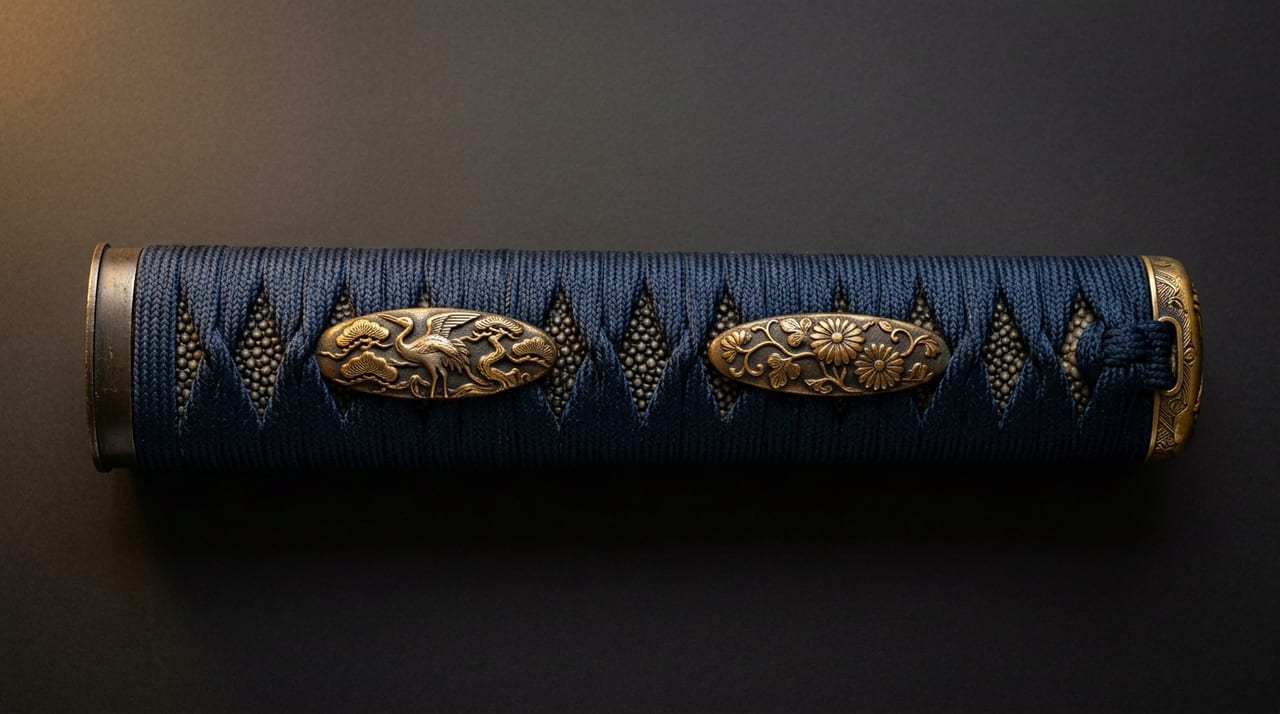
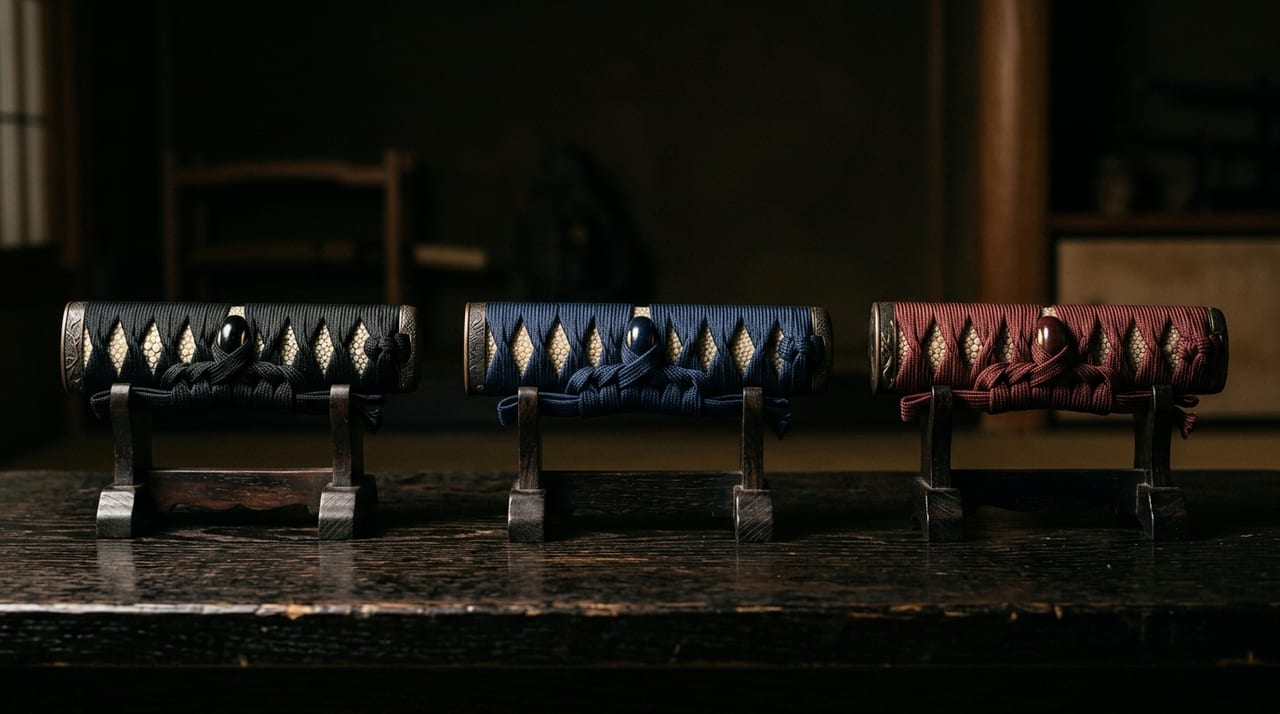
The tsukamakishi affixes same-kawa (ray skin) to the tsuka-gi (hilt core) and then wraps tsuka-ito (hilt cord) over it. Variations differ by school as follows.
- Cord materials include silk, cotton, leather, and others
- Wrapping styles include hishi-maki (diamond wrap), moroyori, and ittō-maki, among others
The wrapping style and tension are decided after calculating not only visual beauty but also the feel when gripped, resistance to slipping, and the effect on the sword's center of gravity.
Koshiraeshi — The Coordinator Who Oversees the Whole
There is a specialist known as the koshiraeshi who brings together the multiple craftsmen described above. The koshiraeshi is primarily responsible for the following.
- Coordinating the schedules of each craftsman
- Ensuring material consistency throughout
- Serving as the single point of contact for the client
During the Edo period, a koshiraeshi retained by a daimyo household would receive integrated commissions and distribute the work among the respective specialists. Today, sword dealers and some craftsmen frequently take on the role of koshiraeshi in addition to their own work.
The time required to complete a single koshirae ranges from two to three months for a standard piece; a high-quality custom order can take over a year. When each craftsman, working in a separate workshop, finally integrates their work into a single sword — the moment when the brilliance of the blade and the beauty of the koshirae (mounting) become one — the fruit of Japan's craft culture as a team is fully realized.