Techniques of the Tsukamakishi: From Tsukaiito Materials, Wrapping Styles, and Tightening Methods to Modern Transmission
 * Image is for illustrative purposes only.
Table of Contents
The Tsukamakishi as Craftsman: Bearing Responsibility for the Final Finish of Sword Koshirae
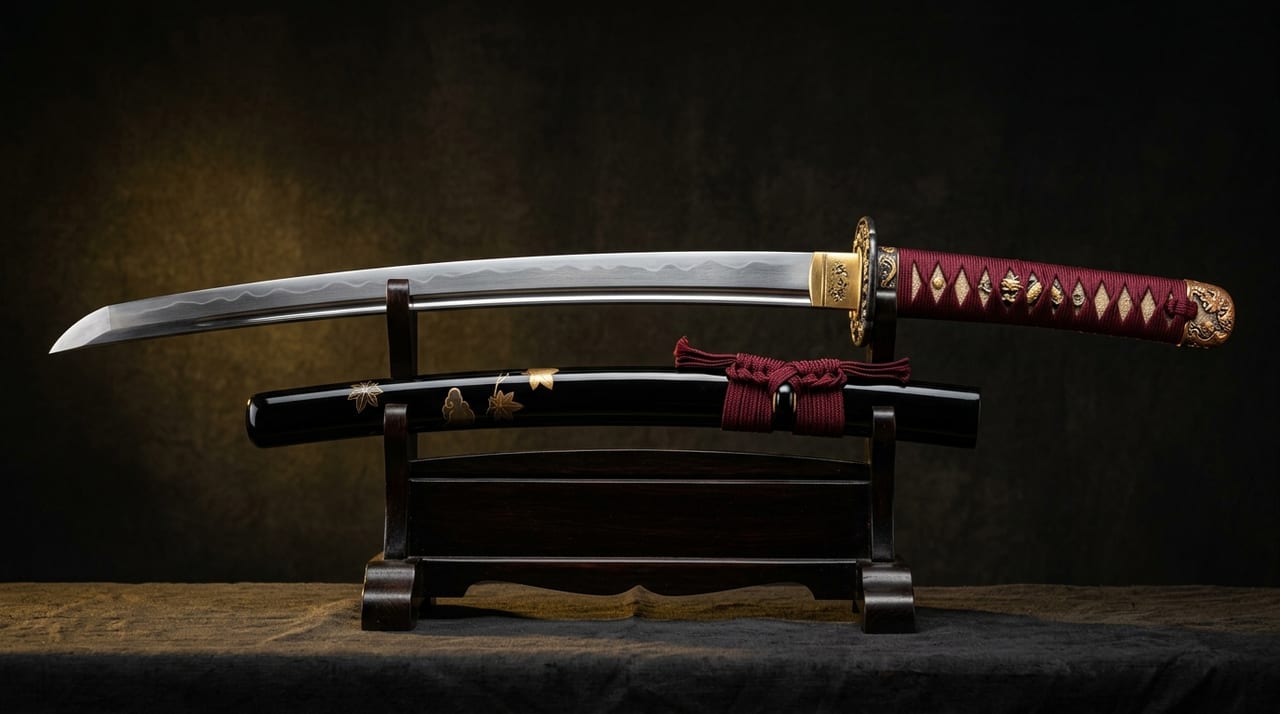
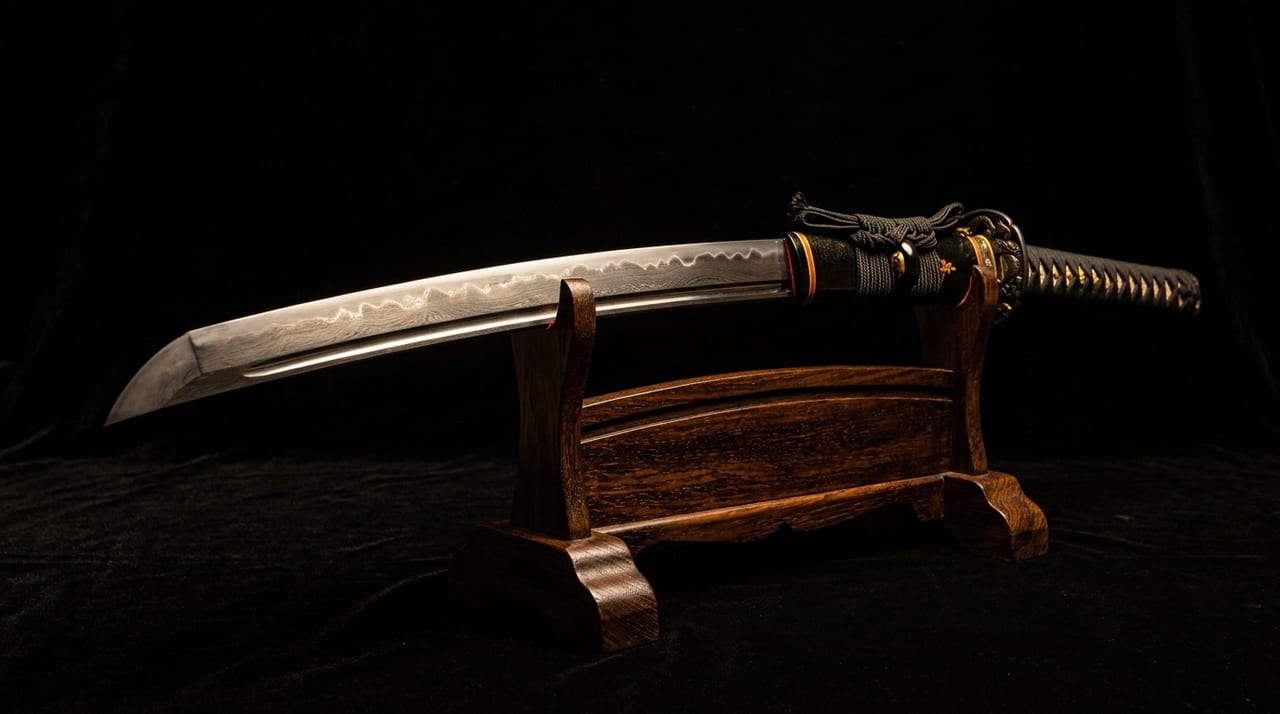
The koshirae of a Japanese sword is an accumulation of the skills of many craftsmen. There is the tōkō who forges the blade, the sayashi who makes the saya, the kinkōshi who creates metal fittings such as the tsuba, menuki, kozuka, and kōgai, the nurishi who applies the lacquer — and finally the tsukamakishi, who wraps thread around the tsuka.
The work of the tsukamakishi may appear unremarkable at first glance, but it in fact demands a high level of specialized skill. The way the tsukaiito is wrapped greatly affects the sword's grip feel, slip resistance, and durability, and if the wrapping does not conform to the appropriate formality and period style, the overall cohesion of the entire mounting is compromised. As the craftsman who finishes the part that directly touches the hand of the samurai, the tsukamakishi bore responsibility for the final stage of koshirae production.
In the Edo period, large numbers of tsukamakishi were active in the sword-producing centers of Edo, Osaka, and Kyoto. When a samurai had his sword altered or repaired, or when he commissioned a new mounting for a ceremonial occasion, a tsukamakishi was called in to finish the work in the formality, material, and wrapping style specified by the owner. Today the skills of the tsukamakishi are carried on in the contexts of sword restoration, reproduction, and martial-arts equipment manufacturing, and the transmission of these techniques is regarded as important from the perspective of cultural heritage preservation.
Tsukaiito Materials: Characteristics and Uses of Silk, Cotton, and Deer Hide
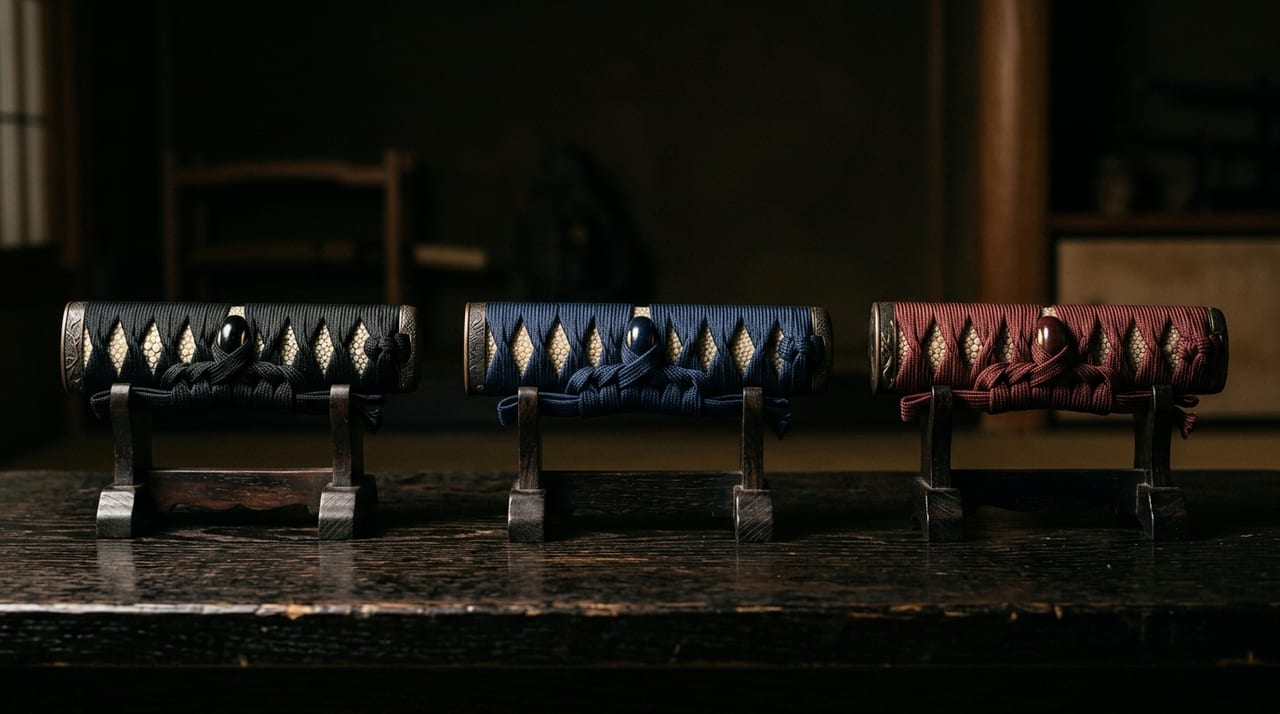
The material of the tsukaiito used in tsuka wrapping differs according to use, formality, and period. The three principal materials are silk (kinu), cotton (momen), and deer hide (kawa).
- Silk (kinu) thread: The highest-ranking material, used on the ceremonial swords of daimyo and the shogunal house. It has a luster that brings out the vividness of dyes. However, silk is weak against friction and low in durability, making it more suited to ceremonial and decorative koshirae than to swords used daily in battle. A flat-woven silk braid known as hirauchi was often used; the range of color choices was wide, and designs were applied that reflected the owner's family rank and personal taste.
- Cotton (momen) thread: More practical than silk and more durable, it was widely used on the everyday koshirae of samurai and on the swords of ashigaru and lower-ranking warriors. It can be dyed but is not as vivid as silk, and ranks below silk in terms of formality. Today cotton braid is widely used in the tsuka wrapping of practice bokuto and replica swords, and its ease of availability and handling has driven its widespread adoption.
- Deer hide (kawa): There is a technique known as kawatsutumi, in which deer hide is cut into long thin strips and wrapped around the tsuka. Hide absorbs sweat, resists slipping, and provides a stable grip. It is said to have been favored by samurai who anticipated actual combat use. The tsuka leather on modern kendo shinai descends from this kawatsutumi tradition; it remains a valued material that withstands intense training.
Types of Wrapping: Classification by Formality and Use
There are multiple styles of tsukaiito wrapping, each with its own formality, significance, and appropriate use.
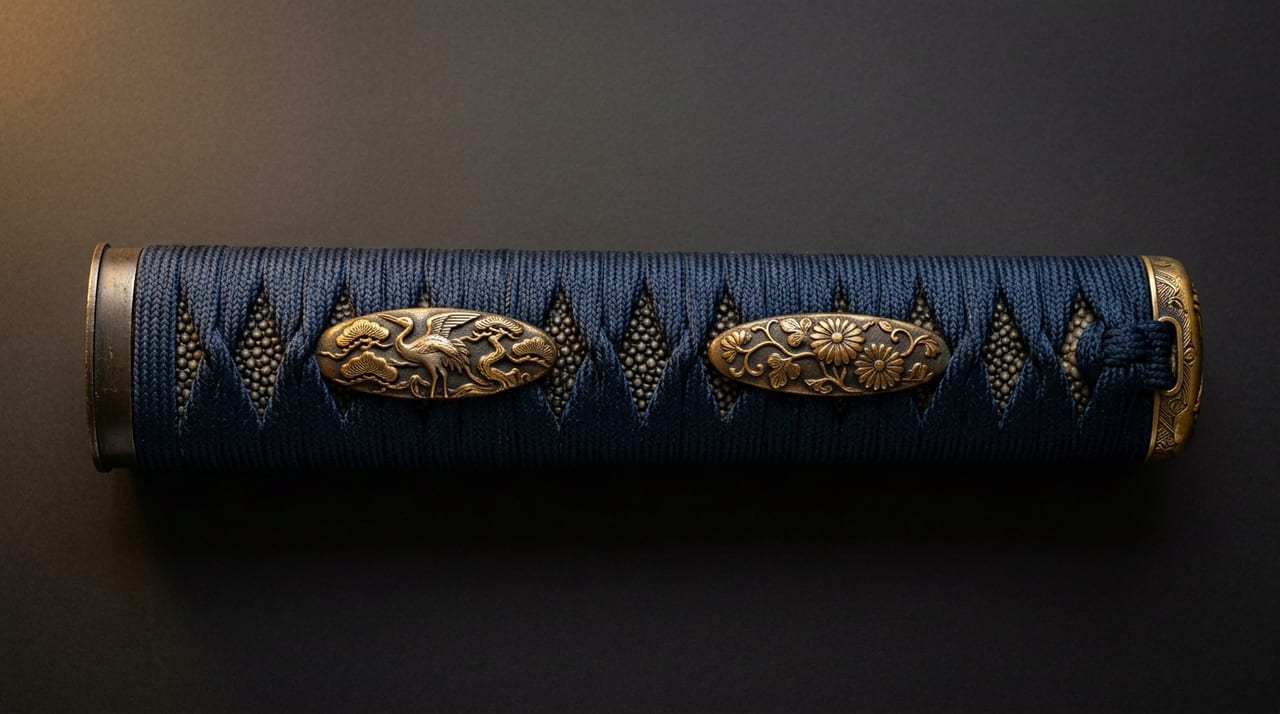
- Hishimaki (diamond wrap): The most common wrapping method, in which the thread is crossed in diamond shapes as it is wound around the tsuka. Viewed from above the tsuka, a row of diamond-shaped patterns can be seen. The great majority of samurai swords of the Edo period used this form, which corresponds to the formality level of namikaku (standard rank). Hishimaki established itself as an all-purpose wrapping style with a good balance of practicality and appearance. The spacing of the diamond shapes also affects the overall impression, and the craftsman's individuality shows through.
- Moroyori: A method of wrapping in which two threads are twisted together as they are wound, producing a finer pattern than hishimaki. It is often used on high-formality koshirae, and when combined with fine silk thread yields a meticulous finish. Managing the tension of the threads is difficult, and it is a technique that demands considerable skill.
- Chidorimaki: A wrapping method that creates a pattern resembling the flight of chidori (plovers), and is one variant of hishimaki. It is often combined with an arrangement that emphasizes the menuki, and is highly decorative. It was particularly favored for ceremonial and ornamental swords.
- Waribishi-maki: A wrapping method that creates a variant diamond pattern in which a vertical or horizontal line runs through the center of the diamond shape. It is a special form seen on the arms of certain schools, and examples survive of it being adopted for koshirae that symbolized the authority wielded by shihan and iemoto.
Securing the Menuki: The Most Critical Step in Tsuka Wrapping
The most precise judgment required in the work of the tsukamakishi is the securing of the menuki. Menuki are decorative metal fittings placed on the front and back of the tsuka, and they also serve the practical function of stabilizing the position of the fingers when gripping.
The placement of the menuki is designed so that the omote (front) menuki falls near the space between the thumb and index finger, and the ura (back) menuki falls at the corresponding position on the back of the tsuka. Because this placement affects the stability of the grip, detailed positional rules existed depending on the tōkō and the martial-arts school. Some schools also established strict rules regarding the orientation of the menuki (whether the head faces up or down).
The tsukamakishi first secures the menuki properly to the tsukagi, then winds the tsukaiito around the tsuka so as to surround the menuki. Adjusting the tension and routing of the thread so that the menuki protrudes just enough from beneath the tsukaiito to show its "face" is a mark of skilled craftsmanship. If the menuki sinks too deeply it loses its decorative effect, while if it protrudes too much the grip feel suffers. The exquisite adjustment made according to the material and the depth of the engraving is where the tsukamakishi's mastery is displayed.
Tightening and Durability: The Shibori the Craftsman Determines Last
The final finishing step of tsuka wrapping is called shibori. It is the process of uniformly tightening the wound tsukaiito and securing it without looseness. The degree of force applied in this shibori determines the durability and grip feel of the wrapping.
If the shibori is too loose, the tsukaiito will unwind over time, and in the worst case there is a danger of the tsuka coming off entirely during martial-arts practice or iai. Conversely, if it is overtightened, the tsukagi may warp or the thread may become prone to breaking. Moreover, the required tightness of the wrapping differs depending on the martial art — kendo, iaido, battōjutsu, and so on — and judging the appropriate shibori-kagen (degree of tightening) for the intended use becomes the craftsman's accumulated rule of thumb. The more years of career a tsukamakishi has, the more they listen to the client's intended use and martial-arts style before applying the optimal shibori.
As a post-shibori treatment, some traditional tsuka wrappings undergo noriduke — in which rice paste or diluted lacquer is made to penetrate the thread and set it — though this is not always done. This treatment increases durability, but since disassembly becomes difficult once it has hardened, noriduke is often omitted when future repairs are anticipated.
The Modern Tsukamakishi: Challenges of Transmission and Martial-Arts Demand
Modern tsukamakishi work in two contexts: the restoration and reproduction of sword koshirae, and the manufacture of martial-arts equipment.
In the context of sword restoration, the skills of the tsukamakishi are indispensable when restoring the koshirae of famous swords held by art museums and museums. Faithfully reproducing Edo-period tsuka wrapping using modern materials and techniques requires detailed knowledge of the styles, materials, and processes of that era. Tsukamakishi capable of undertaking such advanced restoration work remain rare today, and the training of successors has become an urgent issue from the perspective of cultural heritage preservation.
In the context of martial-arts equipment, craftsmen performing tsuka wrapping for enthusiasts of iaido, kendo, and battōjutsu are found throughout the country. Because durability and functionality take precedence over aesthetic formality in martial-arts tsuka wrapping, practical responses using modern materials such as synthetic fiber and artificial leather are also employed. Orders from high-ranking practitioners and shihan-level instructors sometimes call for "wrapping that becomes the face of the dojo," and craftsmen are required to balance practicality with formality.
Hands-on practice using actual swords is indispensable for transmitting traditional tsuka-wrapping techniques, and modern legal regulations (the Firearms and Swords Control Act (Jūtōhō)) and the difficulty of obtaining swords have become structural barriers to training successors. There are cases in which tsukamakishi who have received accreditation under Japan's intangible cultural heritage system have benefited from the official transmission and support of their skills. As interest in sword culture grows both in Japan and abroad, the significance of the tsukamakishi as a craftsman is receiving renewed attention.