The Specialized Craft of the Tsukamakishi and the Art of Tsuka Wrapping — A Complete Guide to Materials, Wrapping Methods, and Maintenance
 * Image is for illustrative purposes only.
Table of Contents
What Is a Tsukamakishi — A Specialist Craftsperson Who Breathes Life into the Tsuka
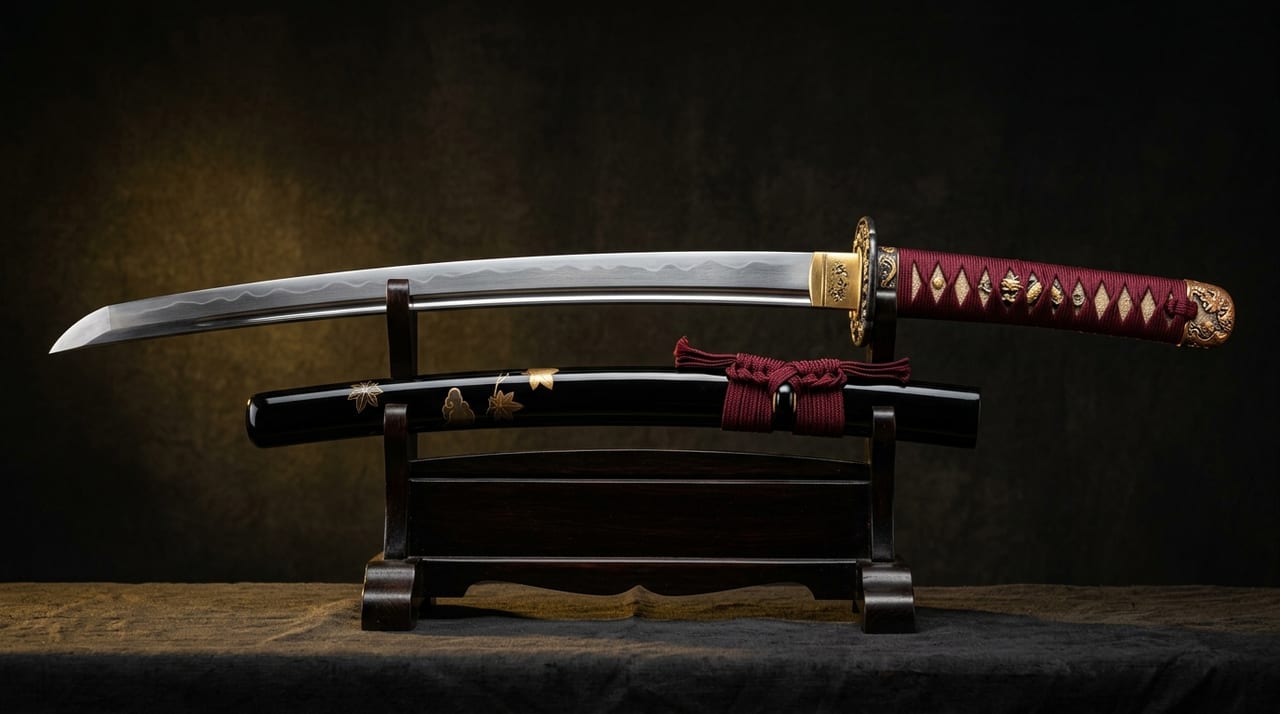
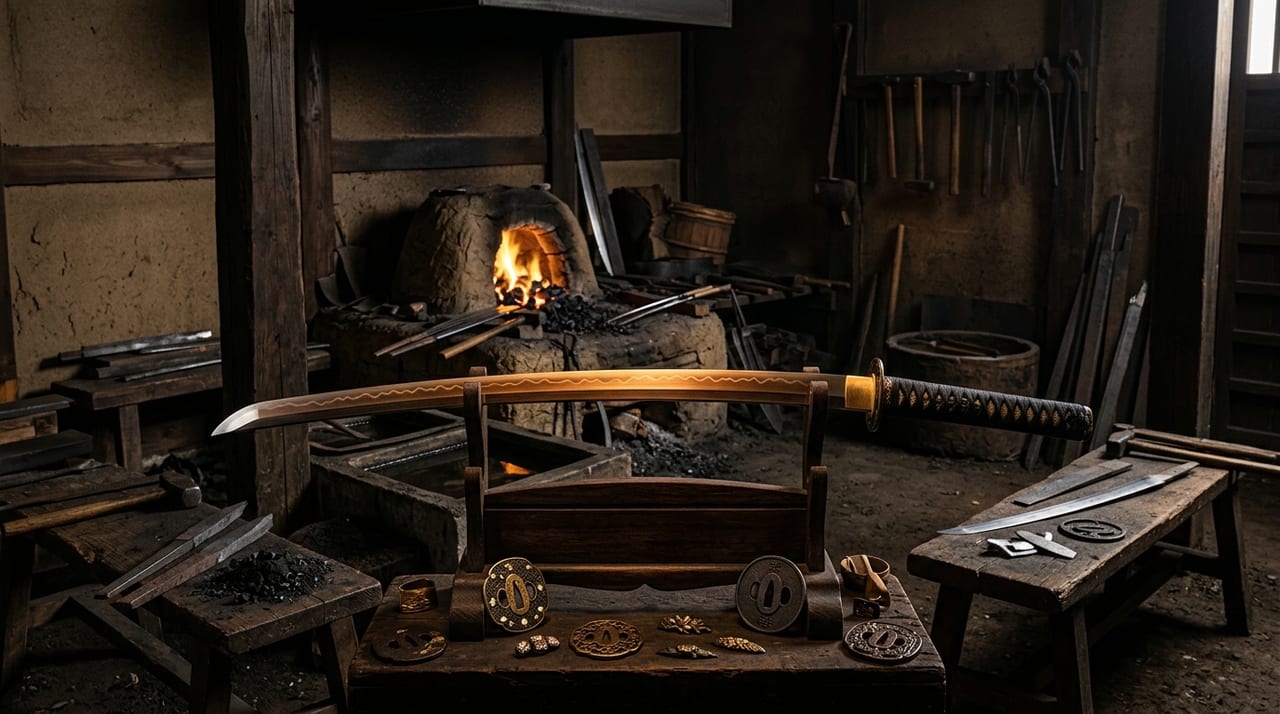
The "tsuka (hilt)" of a Japanese sword is not merely a handgrip. It is a precision structure combining function and beauty that connects the blade made by the tōkō to the hand of the wielder. The craftsperson who specializes in making and restoring this tsuka is the "tsukamakishi."
The tsukamakishi's work is not simply "wrapping thread." The following are all included in the tsukamakishi's work — a sophisticated system of techniques:
- Shaping the tsukaki (tsuka core)
- Applying the samegawa (rayskin)
- Positioning the menuki
- Selecting thread and managing tension
- Finishing the final form
The Structure of the Tsuka — The Parts Handled by the Tsukamakishi
The "tsuka" worked on by the tsukamakishi is composed of the following parts.
Tsukaki
The wooden component that forms the core of the tsuka. In most cases, "honoki (Japanese white bark magnolia)" is used. The interior is carved to match the shape of the blade (nakago), and it is shaped so that the nakago fits snugly.
Because the tsukaki wraps and secures the nakago, it must conform precisely to the nakago's shape (length, width, and sori). This precision in shaping determines the overall quality of the tsuka.
Samegawa
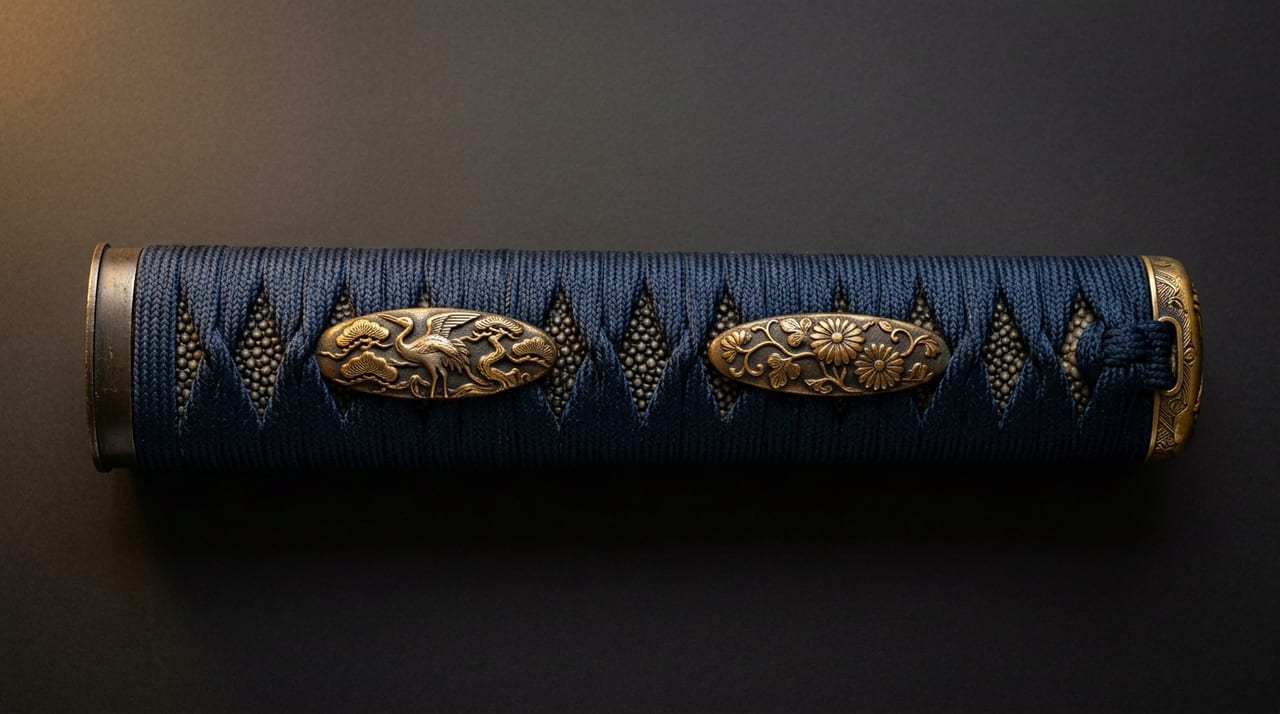
The material covering the outside of the tsukaki. The name means "shark skin," but in practice the skin of rays (particularly the red stingray) is used. The skin of rays, with its uniform rows of fine granular protrusions (small nodules), has excellent friction and water resistance, preventing the sword from slipping in the hand.
Quality and grade of samegawa: Uniformity and density of the granules and purity of the white color determine quality. There is a traditional protocol requiring that the central area (the large protruding nodule called "oyatsubu" or "hoshi") be positioned toward the pommel side when applying the skin.
Ito (Thread)
The thread wound over the samegawa is the "tsukamaki ito." The material, color, twist strength, and wrapping method of the thread determine the tsuka's function and appearance.
Materials and Types of Tsukamaki Thread
Kinuito (Silk Thread)
The highest-grade material. It has a sheen and is used for fine koshirae. However, it may deteriorate faster than cotton thread over time, requiring regular maintenance.
Men'ito (Cotton Thread)
Slightly lower in grade than silk, but superior in durability and cost-effectiveness. It was used in the majority of practical and warrior-class swords of the Edo period. It is also widely used in modern iai swords.
Kawa (Leather)
"Kawamaki," or tsuka wrapping in rayskin leather or deerskin. It is lightweight and provides good grip when dry. It was adopted for practical swords used by samurai commanders and foot soldiers in field combat.
Thread Colors
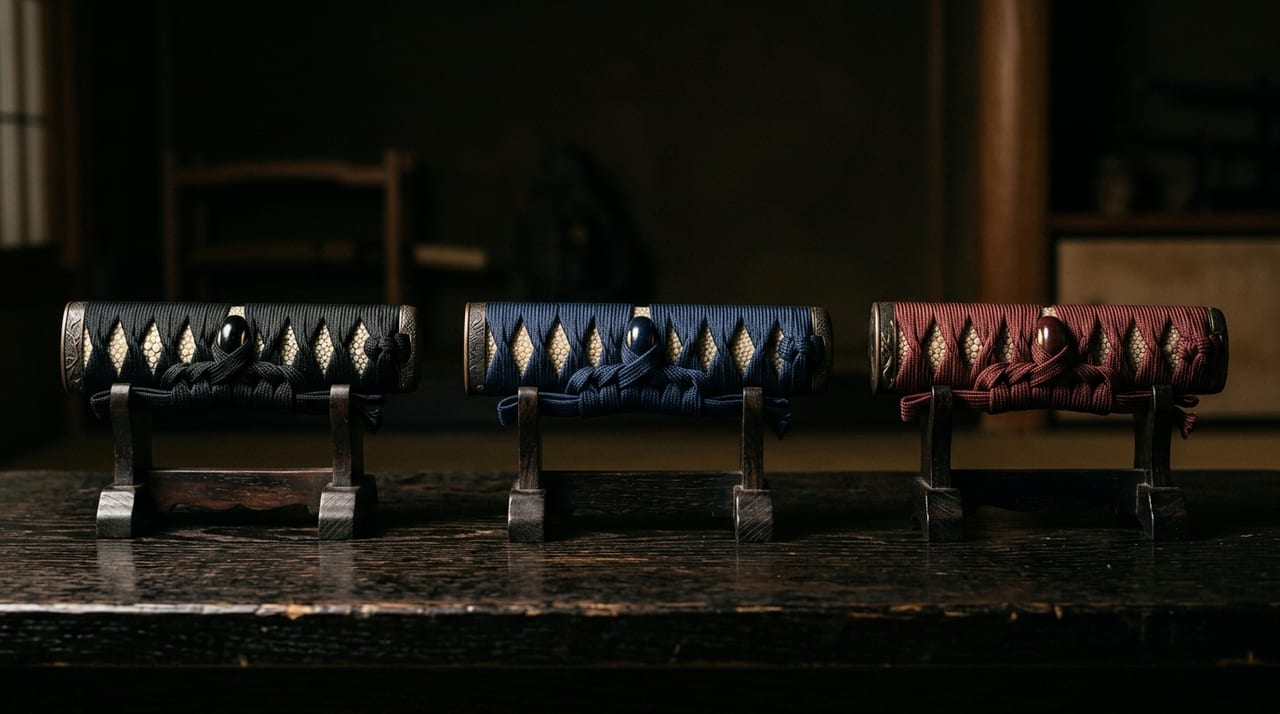
Thread color is chosen to match the overall formality and aesthetic of the koshirae.
- Black: The basic color of the warrior class. Embodies an aesthetic of austere simplicity.
- Navy blue and deep green: Common in formal warrior-class koshirae. Refined and composed in impression.
- White and off-white: Used in koshirae for Shinto priests and court officials, or for special ceremonial swords.
- Brown, gold, and red: Used in sumptuous koshirae and special designs.
For an overview of how to assemble and select koshirae as a whole, Choosing Koshirae is also a useful reference.
Types of Wrapping — The Core of the Tsukamakishi's Skill
There are many wrapping formats for tsukamaki, each differing in function, appearance, and formality.
Morohinerimaki
The most common wrapping method. A format in which diamond-shaped exposed sections of samegawa are arranged at equal intervals. It balances practicality and aesthetics well, and was widely adopted as the standard koshirae for uchigatana.
Jabaramaki
A format in which the thread is wound densely like the belly of a snake, with no (or very minimal) diamond-shaped exposed samegawa sections. It maximizes grip strength and was used in combat-oriented koshirae.
Hiramaki
A format in which thread is wound flat (without gaps), leaving the samegawa either entirely hidden or only minimally exposed. It gives the entire tsuka a uniform appearance and is used for ceremonial or decorative koshirae.
Katatemaki and Ryōtemaki
Depending on the length of the tsuka, the wrapping differs for "held with one hand" or "held with both hands." The gripping position and thread placement are optimized according to the length of the tachi or uchigatana.
The Tsukamakishi's Training Process — Acquiring the Craft
Beginning of Training
Training as a tsukamakishi begins by entering a master's workshop. Today, as with tōshō and togishi, training is also conducted at specialized schools and craftsperson associations, but the traditional apprenticeship system remains the mainstream.
- Stage One: Handling materials — learning how to select, cut, and soak samegawa in water (softening it by wetting before pressing it against the tsukaki).
- Stage Two: Shaping the tsukaki — carving to match the shape of the nakago and finishing the form. This precision determines the overall quality.
- Stage Three: Wrapping the thread — the most time-consuming process. Repeated practice until the thread tension (which must be consistent), angle, and handling of intersections become uniform.
It typically takes five to ten years before one becomes independent as a full-fledged craftsperson.
Challenges in the Modern Era
Tsukamakishi is a field with few craftspeople even within the sword industry. The shortage of successors is severe, and craftspeople closing their workshops continues. On the other hand, with the growing population of iai and tameshigiri practitioners and increasing demand from the Japanese sword boom, demand for tsuka repair and new production is rising. This imbalance between supply and demand is a challenge for the industry.
Maintenance and Lifespan of Tsukamaki
Tsukamaki is a consumable. Regular maintenance is needed, and when the condition deteriorates, "makikaeshi (re-wrapping)" becomes necessary.
- Deterioration from sweat and oil: On frequently used swords, the tsukamaki thread absorbs hand sweat and oil and becomes damaged. Silk thread in particular may deteriorate within five to ten years.
- Peeling of samegawa: With long-term use or poor storage conditions, samegawa may separate from the tsukaki.
- Cost of re-wrapping: As a contemporary price range, re-wrapping the tsuka of a typical uchigatana costs several tens of thousands of yen (varying by material, the craftsperson's skill level, and region).
Conclusion — The Tsukamakishi's Craft Makes a Japanese Sword a "Usable Sword"
No matter how superior the blade made by the tōshō, it is of no practical use if the tsukamaki is improper. Loose thread, lifted samegawa, and uneven wrapping undermine the stability of the sword in the hand, and in the worst case create the danger of the sword leaving one's grip.
The tsukamakishi's work is that of an unsung hero. Those who look upon a completed koshirae evaluate "the beauty of the sword," but it is the skill of the tsukamakishi — who continues wrapping thread in a place that attracts no notice — that achieves that beauty together with functionality.
Japanese sword culture centers on appreciating the blade, hamon (temper line), and jigane (steel of the blade surface), but knowing the tsuka — and the existence of craftspeople called tsukamakishi — allows one to see the full picture of Japanese sword culture in a richer way.