Historical Evolution of Uchigatana Koshirae: Designs and Materials Chosen by Samurai from the Muromachi to Bakumatsu Periods
 * Image is for illustrative purposes only.
Table of Contents
What Is Uchigatana Koshirae? — Fundamental Differences from Tachi Koshirae
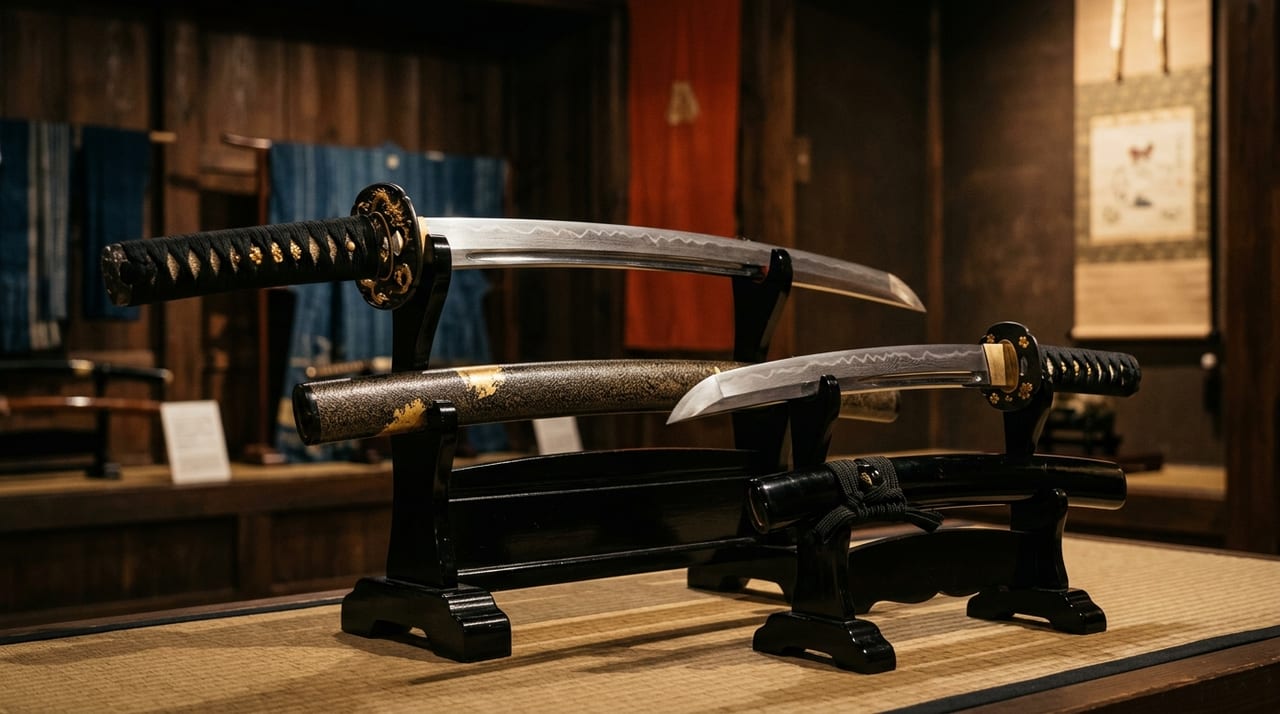
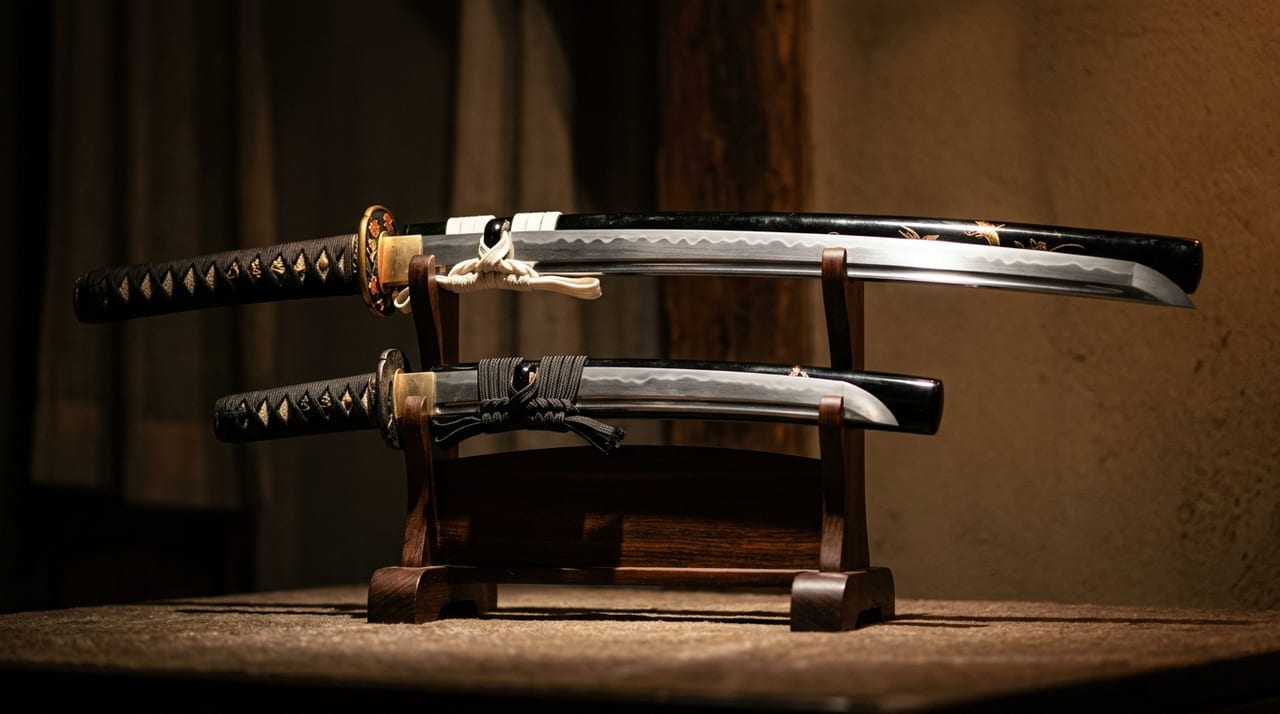
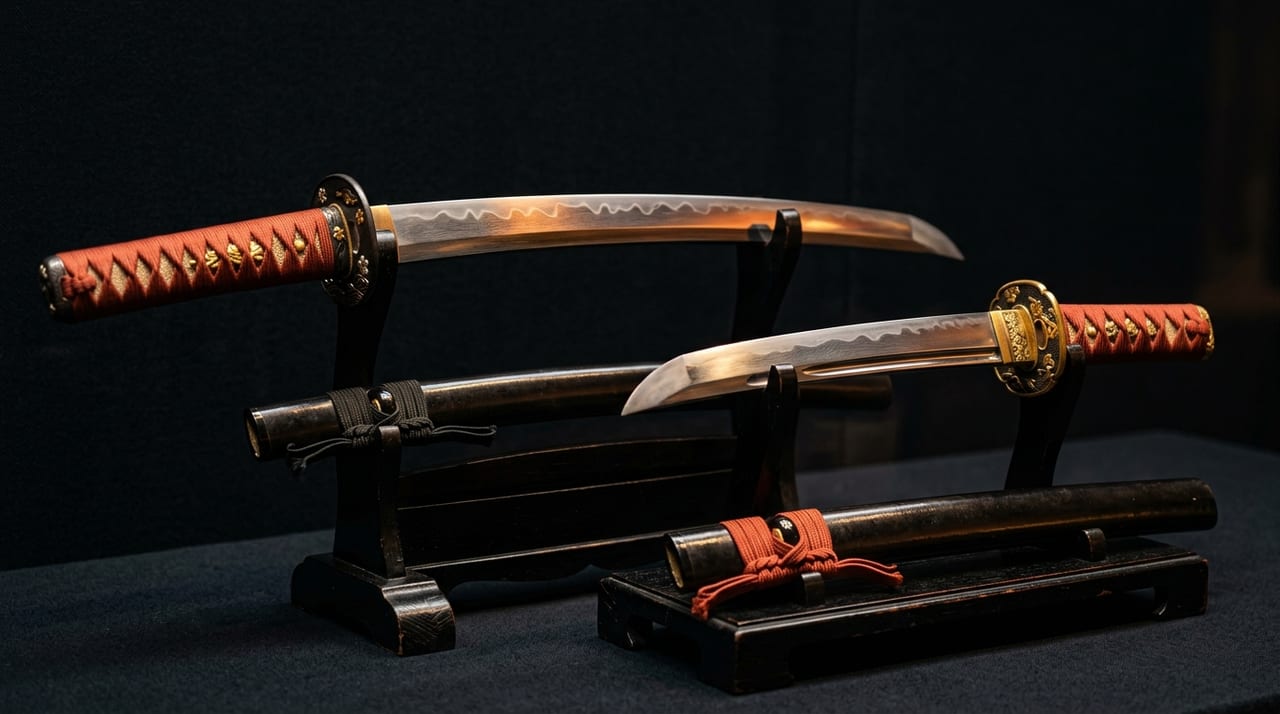
"Koshirae" refers to the entire exterior of a Japanese sword — the saya (scabbard), tsuka (grip), tsuba (handguard), and metal fittings. The blade (the sword itself) and koshirae are originally separate things, distinct from the shirasaya (plain storage scabbard) used to preserve the blade.
The "uchigatana koshirae" is the koshirae for the uchigatana (sword worn blade-up at the waist). It differs fundamentally from the "tachi koshirae" (koshirae for the tachi, worn blade-down at the waist) in the following ways.
| Aspect | Tachi Koshirae | Uchigatana Koshirae |
|---|---|---|
| Wearing Method | Hung from the waist belt and "worn" (haku) | Inserted into the waist belt and "worn" (sasu) |
| Scabbard Structure | Multiple suspension metal fittings called "ashi" (feet) | A protrusion called "kurigata" through which the "sageo" (cord) is threaded to secure to the waist belt |
| Tsuba Orientation | Set to stand upright when viewed from the front while worn | Positioned to stand upright when viewed from the front while worn |
Muromachi Period Uchigatana Koshirae — Establishing Practicality
The Establishment of Uchigatana and Development of Koshirae
The uchigatana was established in the mid-Muromachi period (15th century). Before that, the tachi was the primary sword of samurai, but due to the increase in infantry combat (a shift from mounted to foot combat) and demand for portability, the uchigatana, worn blade-up, rapidly became widespread.
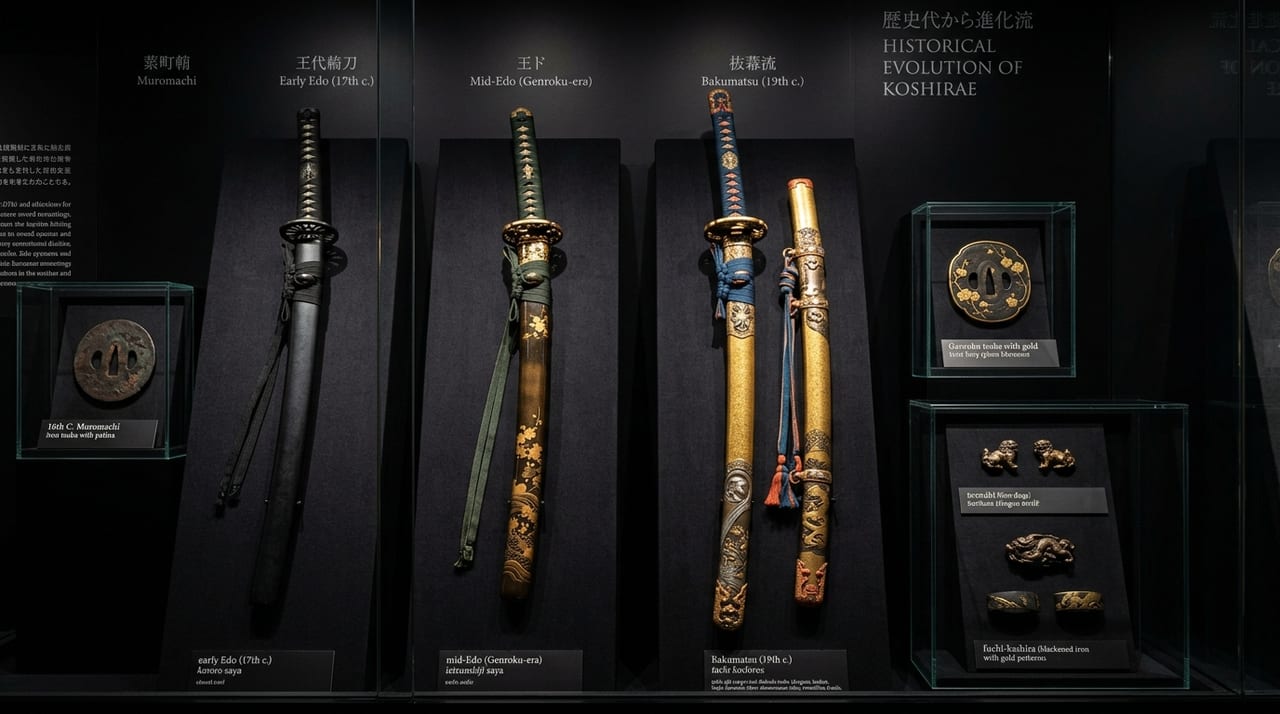
The mid-Muromachi period uchigatana koshirae was practical in nature. The saya was typically black lacquered, the tsuka was wrapped with samegawa (actually stingray skin) and wrapped with silk or cotton cord, and the metal fittings were chosen for their durability using iron or copper alloys. While decorative fittings (tsuba, seppa, menuki) existed, they were not as elaborate as those of tachi koshirae.
Mass Production and Simplification During the Sengoku Period
During the Sengoku period (15th-16th centuries), due to mass demand for swords, koshirae also became simplified. The koshirae of this era became polarized.
- Mass-produced swords called "kazuuchimono": simple iron tsuba, plain saya, and basic cord-wrapped tsuka
- High-ranking warlords and daimyo: elaborate koshirae at the level of fine art
Azuchi-Momoyama Period — Integration of Martial Power and Beauty
The Age of "Magnificent Beauty"
The era of Oda Nobunaga and Toyotomi Hideyoshi (late 16th century) was a unique cultural environment where "the beauty of tea ceremony and the grandeur of martial power" intersected. This influence is evident in the koshirae of the period.
Elaborate koshirae using gold maki-e (gold dust lacquer painting), raden (mother-of-pearl inlay), and red lacquer on the saya became fashionable among upper-class samurai families. The tsuba of this period favored "large, powerful designs," with carved tsuba employing abundant gold, silver, and copper becoming representative of the era.
Early Edo Period — Standardization of Formality and Refinement of Materials
The Shogunate's Buke Shohatto and Regulation of Koshirae
The Edo shogunate regulated the lifestyle of samurai families through the "Buke Shohatto" (Laws for the Military Houses). Specifications for swords and koshirae were also subject to restrictions based on rank, with different regulations for daimyo, hatamoto, gokenin, and commoners regarding tsuba size, metal fitting materials, and saya designs.
- Daimyo Class: Elaborate koshirae such as those with akagane shakuji-ji (copper-base fish-roe ground) metal fittings and gold maki-e scabbards were permitted. The "daisho-soroi" (a matching set of uchigatana and wakizashi with identical designs) became the standard for formal occasions.
- Hatamoto and Gokenin: Basic construction using practical black lacquered saya, iron tsuba, and stingray-skin wrapped tsuka. Simple and sincere aesthetics befitting samurai were considered virtuous.
Representative Koshirae Styles of Early Edo Period
- Edo Koshirae: The standard uchigatana koshirae of Edo samurai families. The basic construction consists of a saya with black glossy lacquer coating, a stingray-skin grip with black and white cord wrapping, and iron-based metal fittings. It embodies practical and austere samurai aesthetics.
- Higo Koshirae: A koshirae that developed from the samurai culture of the Higo (Kumamoto) domain. Metal fittings with gold and silver inlay (Higo inlay) on an iron ground and a distinctively finished saya exude individuality. It continues to be highly valued as a style embodying rugged, Zen-influenced aesthetic sensibilities.
Genroku Culture — The Apex of Ornamentation
"Ornamental Koshirae" Born in an Age of Peace
The mid-Edo Genroku period (1688-1704) enjoyed an extended peace, during which swords were valued more as works of art and decorative objects than as military equipment.
The decorative qualities of koshirae were pushed to their limit, and the following styles became fashionable.
- Maki-e Saya: Koshirae with the entire saya decorated with urushi maki-e (designs drawn with lacquer using gold and silver powder). Motifs such as flowers and birds, landscapes, and Tales of Genji were depicted.
- Refinement of Metal Fittings: Tsuba, seppa, and menuki received highly sophisticated carving and inlay work, and sets of metal fittings came to be valued as independent works of art.
- Matching Metal Fittings: "Soroi kinagu" (matched metal fittings) with unified design across the entire koshirae became the standard for upper-class samurai families.
Late Edo Period — Revival and Return to Practicality
As the late Edo period (late 19th century) arrived, along with the rise of the sonno-joi (revere the emperor, expel the barbarians) movement and anti-shogunate movements came a "return to practical swords." Koshirae with restrained ornamentation and utilitarian designs were preferred by the activists.
A style commonly called "kinno koshirae" — black lacquered saya, simple iron tsuba, and practical cord wrapping — became fashionable. This was also a conscious return to the practical aesthetics of early Edo period koshirae.
Conclusion — Koshirae as a Mirror of the Times
The evolution of uchigatana koshirae is a mirror reflecting changes in samurai society. The politics, culture, and values of each era are reflected in the design and material choices of koshirae.
- Sengoku period: Pragmatism
- Momoyama period: Integration of martial power and beauty
- Early Edo period: Formalization
- Genroku period: Apex of ornamentation
- Late Edo period: Return to practicality
When confronted with a single uchigatana koshirae, by reading the lacquer finish of its saya, the design of its metal fittings, and the color of its cord wrapping, one can discern "in which era, by whom, and with what values this sword was worn." Koshirae is the "narrator" of sword culture and a medium for dialogue across time. In TOUKENZA's online collection, you can browse works with koshirae from each era by category. Through photographs of the actual pieces, we invite you to verify the knowledge you have learned here.