Kurigata and Semegane — The Koshirae Fittings That Support How the Uchigatana Is Worn
 * Image is for illustrative purposes only.
Table of Contents
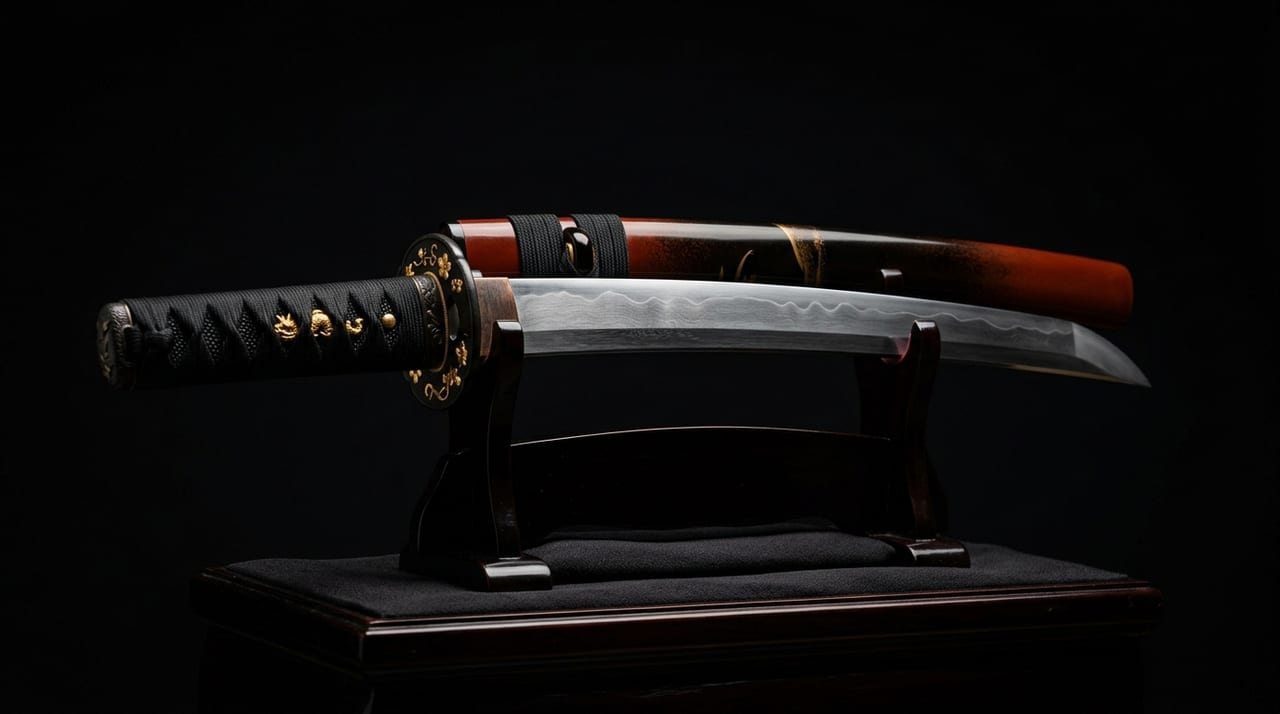
When looking at a uchigatana koshirae, the eye is drawn to the striking parts — the tsuba, fuchi-kashira, and tsukamaki. Yet there is a component that works quietly to make actually wearing the sword at the hip possible: the kurigata, a fitting attached near the mouth of the saya. In this article, we focus on the kurigata and the semegane, a fitting recorded among the metal fittings of the koshirae, and organize their roles in supporting how the sword is worn, along with their structural and material highlights. Parts such as the tsukamaki, same, habaki, fuchi-kashira, and sageo are covered in separate articles, so they will not be explained again here; this article centers on the kurigata and semegane.
What Kind of Component Is the Kurigata?
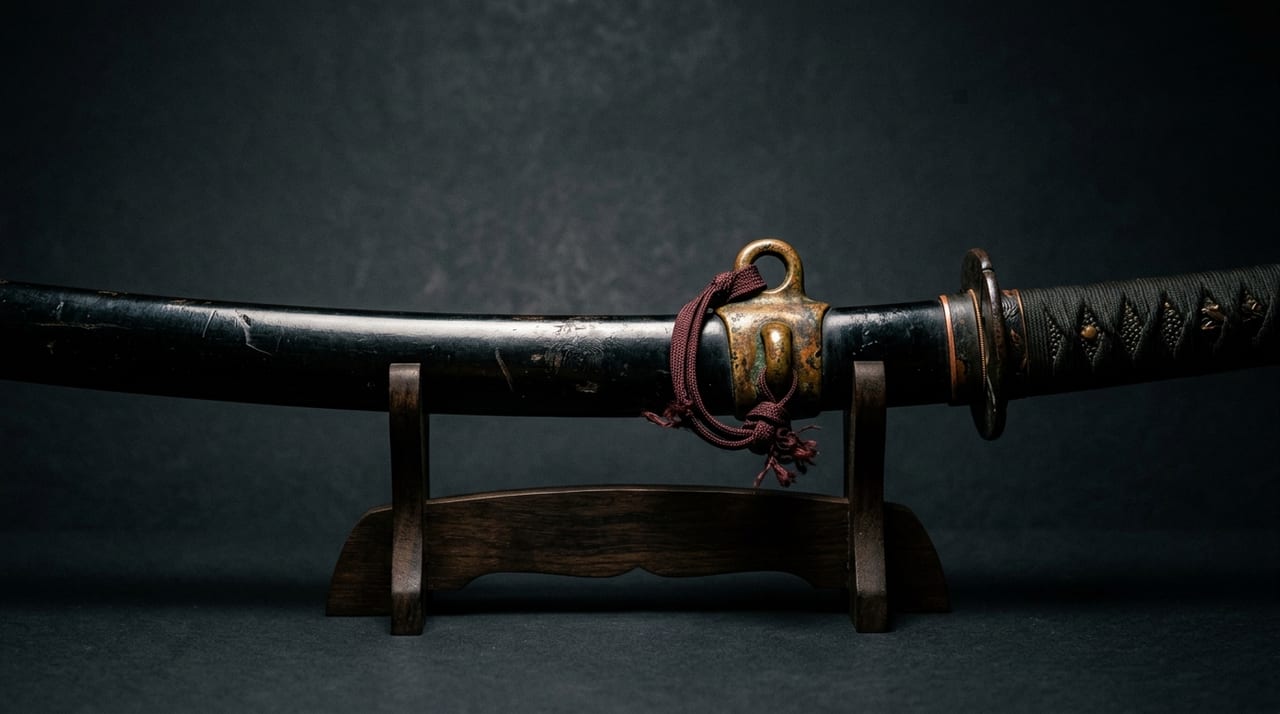
The kurigata is a protruding component with a hole, attached near the koiguchi of the saya on the outward-facing side (sashiomote) when the sword is worn. In dictionaries it is described as shaped like a chestnut cut in half, or as a crescent-shaped piece with a hole. The basic use is to thread the sageo through the hole.
As for the origin of the name, one theory holds that it resembles a chestnut (kuri), while another derives it from the verb kuru (to hollow out), since it has a hole. Neither has been established as definitive; both are offered as explanations.
Two Functions That Support How the Sword Is Worn
The role of the kurigata becomes easier to understand when divided into two main functions.
- It acts as a loop through which the sageo is threaded.
- It catches against the belt, preventing the saya from being inserted too deeply (acting as a stop to prevent the saya from slipping out).
The first is a function that is visually easy to understand. The sageo is tied to the saya by passing through the kurigata, connecting the belt and the saya. The history and varieties of the sageo itself are covered in detail in the article on sageo types, designs, and history, so here we will only note that the kurigata serves as the passage for the sageo.
The second concerns the relationship with the belt. A saya inserted into the hip belt might otherwise shift forward or backward or slide too far in. Because the kurigata is positioned to catch on the belt, the saya is more easily held in place inside the belt. This function as a "stop" becomes clear when one imagines the everyday act of wearing a sword.
How to Read the Semegane Fitting
The semegane is a name that appears in descriptions of designated cultural properties as one of the metal fittings of the koshirae. For example, in descriptions of tachi koshirae designated as national cultural properties, fittings such as the kabutogane, fuchikanamono, kuchikanamono, ashikanamono, semegane, and ishizuki are listed alongside their materials and decorative motifs. The semegane is, in this way, recorded as one set of fittings among the koshirae components.
It is worth noting that where the semegane is attached and what role it plays can vary depending on the style and period of the koshirae and on the explanation provided by the holding institution. Unlike the kurigata, it is not a component whose role can be summed up in a single phrase, so this article avoids making definitive statements about its precise location. When examining an actual koshirae, check the part names in the exhibition captions or illustrated catalog and use those as a guide to which fitting is being called the semegane in that particular koshirae.
The following points are generally easy to check when looking at a semegane.
- Material (gilded bronze, silver, shakudo, iron, etc.)
- Surface finish (plain, or engraved with a design or motif)
- How well its design matches other fittings (such as the kuchikanamono and ashikanamono)
- Signs of wear from age or traces of repair
When the designs of the fittings match one another, it can be read as a sign that the koshirae as a whole was assembled according to a unified conception.
Materials and Design of the Kurigata
The materials used for the kurigata are varied — horn, wood, metal, and others. Material is considered one of the elements that reflects the formality or personal preference associated with the saya. For example, in the koshirae of certain regions where the kurigata is made small and round, it is sometimes explained as a design that assumes the saya will be drawn quickly along with the sword. Such interpretations differ from one explanation to the next, so it is most reliable to examine actual koshirae while working through them.
Key points for appreciation include the following.
- What is the material? (horn, wood, metal)
- Does the color match the lacquer of the saya and the other fittings?
- Is the edge of the hole worn smooth from the sageo rubbing against it?
- Is the shape not overly large, and is it positioned where it will catch on the belt?
The more a koshirae was used as a practical object, the more it may bear traces of wear around the hole of the kurigata. Rather than damage, these can be read as marks left by the time the sword was worn.
Viewing the Kurigata and Semegane Within the Koshirae as a Whole
The kurigata and semegane are not self-contained components; they function within the relationships among the saya, sageo, and belt. For a full understanding of the structure of the koshirae, the articles on koshirae fundamentals and the historical evolution of the uchigatana koshirae are helpful. For tsukamaki, please also refer to tsukamaki techniques and materials.
When viewing a koshirae at an exhibition or in an illustrated catalog, moving the eye in the following order makes it easier to notice the components that support how the sword is worn.
- Starting near the koiguchi, confirm the position and material of the kurigata.
- Check whether the sageo is threaded through it, and look at the shape of the hole through which it passes.
- Look at how the design matches the other fittings on the saya, such as the kuchikanamono and ashikanamono.
- Confirm the positioning of the semegane in the explanatory text.
Summary
The kurigata is a component directly tied to how the sword is worn — it threads the sageo and catches against the belt to hold the saya in place. The semegane is a name recorded as one set among the metal fittings of the koshirae; paying attention to its material, motifs, and how it matches the other fittings brings the overall picture of the koshirae into focus. When one becomes aware of these small fittings hidden behind the more striking parts, the koshirae reveals itself not as decoration but as a tool for wearing the sword.
At TOUKENZA, you can view swords and koshirae listed for sale in the online sword catalog. For any inquiries, please contact us via the inquiry form.