Lending Nihontō to Museums and Exhibitions — Practical Guide to Loan Procedures, Insurance, and Transport
 * Image is for illustrative purposes only.
Table of Contents
Special nihontō exhibitions are sustained not only by a museum's own collection but also by works borrowed from private owners and other institutions. To a visitor, each sword appears simply as a single blade on display; behind it, however, lies a layered process of negotiation, paperwork, insurance, transport, and ongoing care. This article outlines, for both lending institutions and lending owners, the general sequence in which a nihontō loan proceeds. Details differ between institutions, so what follows represents a typical framework; actual procedures follow each institution's regulations and the agreement reached with the owner.
The Starting Point: Exhibition Planning and Selection of Works
The loan process begins when the exhibition concept takes shape. The curator in charge identifies the nihontō needed to serve the exhibition's theme and researches their whereabouts and owners. Because swords by the same tōkō can differ in shape, jigane, hamon, and condition, photographs, catalogues, and past examination records are used to narrow the selection down to the blade that best matches the curatorial intent.
At this stage, the following points are typically considered:
- How the sword contributes to the exhibition's theme
- The current condition of the work (worn togi, rust, condition of the saya and shirasaya)
- Documentary status, such as registration certificates or official designations
- The exhibition period, and how long the owner can be without the piece
When approaching an owner, the borrowing party should avoid imposing a unilateral assessment of the work's value and should make inquiries with respect for the owner's circumstances.
Negotiation with the Owner and the Loan Agreement
Once the owner's consent is obtained, the terms of the loan are set out in writing. This is generally done in the form of a loan agreement or lending contract. The items covered vary by institution and owner, but typically include the following:
- Identification of the work on loan (name, mei, dimensions, accessories, and registration information)
- Loan period (from receipt to return)
- Venue and display conditions (lighting, temperature and humidity, type of display case)
- Insurance arrangement and agreement on the assessed value
- Permission for photography, catalogue publication, and image use
- Method of transport and attendance at handover
For the identification of the work, it is important to document the condition at the time of handover with photographs and written records — in order to distinguish later between damage that already existed at the time of the loan and any change that occurred during the exhibition. Having both the institution's representative and the owner jointly verify and sign the condition record provides reassurance for both parties.
Insurance and the Assessment of Value
To prepare for damage or theft of a borrowed work, it is standard practice to take out insurance for the exhibition. The guiding principle is that coverage should span the entire loan period — from the moment the work leaves the owner's hands until it is returned — so that no stage is left unprotected: transport, display, or storage.
The assessed value is agreed upon through discussion between the owner and the borrowing institution. The value of nihontō as art objects is difficult to measure by market price alone; it is also affected by the degree of togi, the condition of preservation, and the state of any accompanying koshirae and shirasaya. Sharing the basis for the assessed value in advance helps prevent disagreements. The specific terms of the insurance policy and the scope of coverage differ by insurer and contract, so no definitive statement is made here; confirmation in writing is recommended.
For a general overview of insurance thinking, Nihontō Insurance and the Basics of Assessed Value is also a useful reference.
Practical Aspects of Transport and Packing
Three principles govern the transport of nihontō: protecting the blade from damage, avoiding moisture and impact, and preventing loss.
- The blade is placed in its shirasaya or saya, secured with cushioning material, and packed in a dedicated case
- The condition of the oil on the blade is checked before handover to prevent rust
- Packing and unpacking are carried out with a responsible person present, documenting the condition throughout
- Sudden changes in temperature or humidity during transit are avoided
Even when transport is entrusted to a specialist carrier, agreeing on the packing method and handover procedure within the loan terms provides additional security. For loans abroad, separate documentation relating to customs clearance and the export of the work from Japan is required, so preparations should begin early. Overseas exhibition considerations are also discussed in the article Nihontō Overseas Exhibitions and Art Fairs.
Care During the Exhibition and the Return of the Work
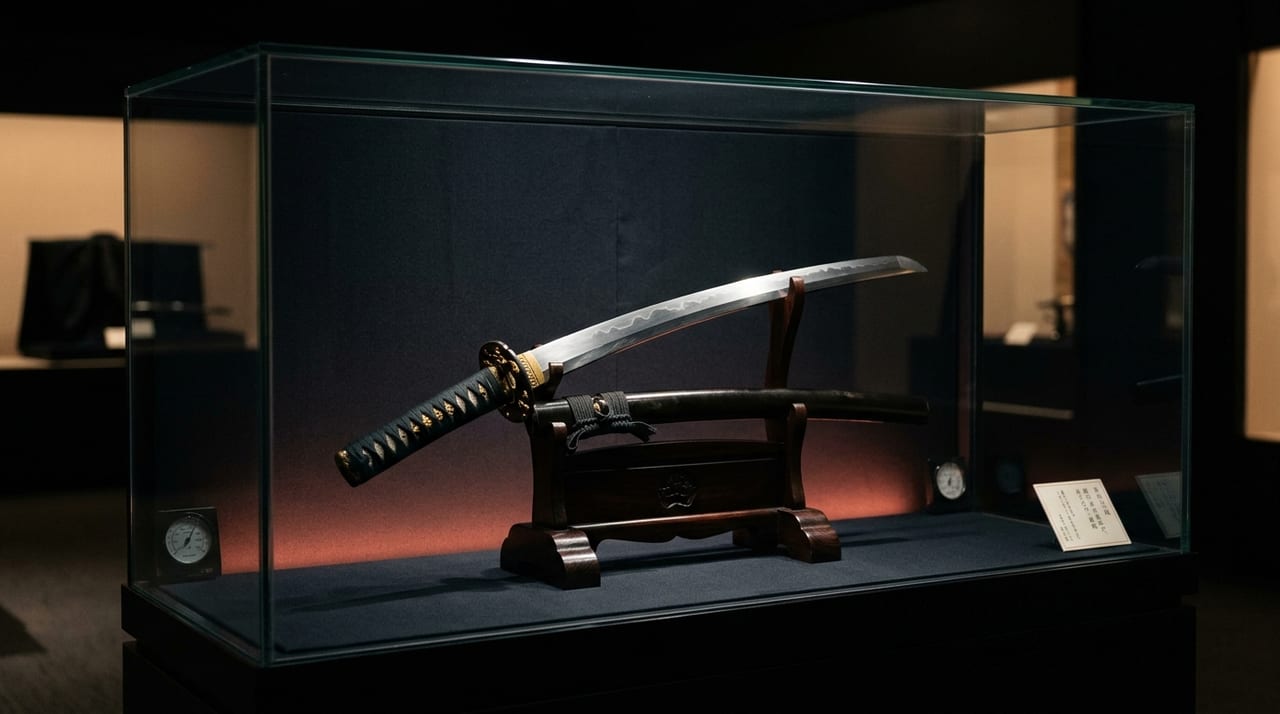
The institution's responsibilities continue once the exhibition opens. Because nihontō on display are continuously subject to the effects of temperature, humidity, and lighting inside the display case, condition checks are carried out at regular intervals throughout the run. Museum exhibitions generally maintain environments with controlled light and humidity to minimize stress on the works. Establishing in the loan agreement how and when the owner will be notified if any change is observed during a check helps ensure a consistent response.
At the time of return, the condition is verified using the same procedure as at receipt and compared against the original record. If no issues are found, the work is packed and returned to the owner. As agreements regarding catalogue and image use may remain in effect after the close of the exhibition, relevant documents should be retained.
Preparing to Lend: The Owner's Perspective
For owners considering lending their nihontō, the following preparations are useful:
- Organize the registration certificate and accessories so they can be confirmed at hand
- Take photographs of the current condition and note the location of any nicks or rust yourself
- Read the loan agreement carefully, paying particular attention to the scope of insurance and the return date
- If anything is unclear, raise it with the borrowing institution before signing
Whether the borrowing institution can be trusted is also a factor in the decision. The way past exhibitions have been handled and the quality of their catalogues provide insight into an institution's standards.
Summary
A nihontō loan follows a continuous sequence: exhibition planning, negotiation with the owner, the loan agreement, insurance, transport, condition checks during the exhibition period, and return. At every stage, documenting the condition of the work and keeping agreements in writing protects both the lender and the borrower. A broader look at exhibitions themselves is provided in A Guide to Nihontō Exhibitions in Japan.
TOUKENZA is a nihontō marketplace where you can browse and purchase swords online. You are welcome to explore the online catalogue of available nihontō, and for any enquiries please use the contact form.