What Is Kairagi — the Name for the Ray Skin That Adorns Koshirae, and How It Differs from the "Kairagi" of Tea Bowls
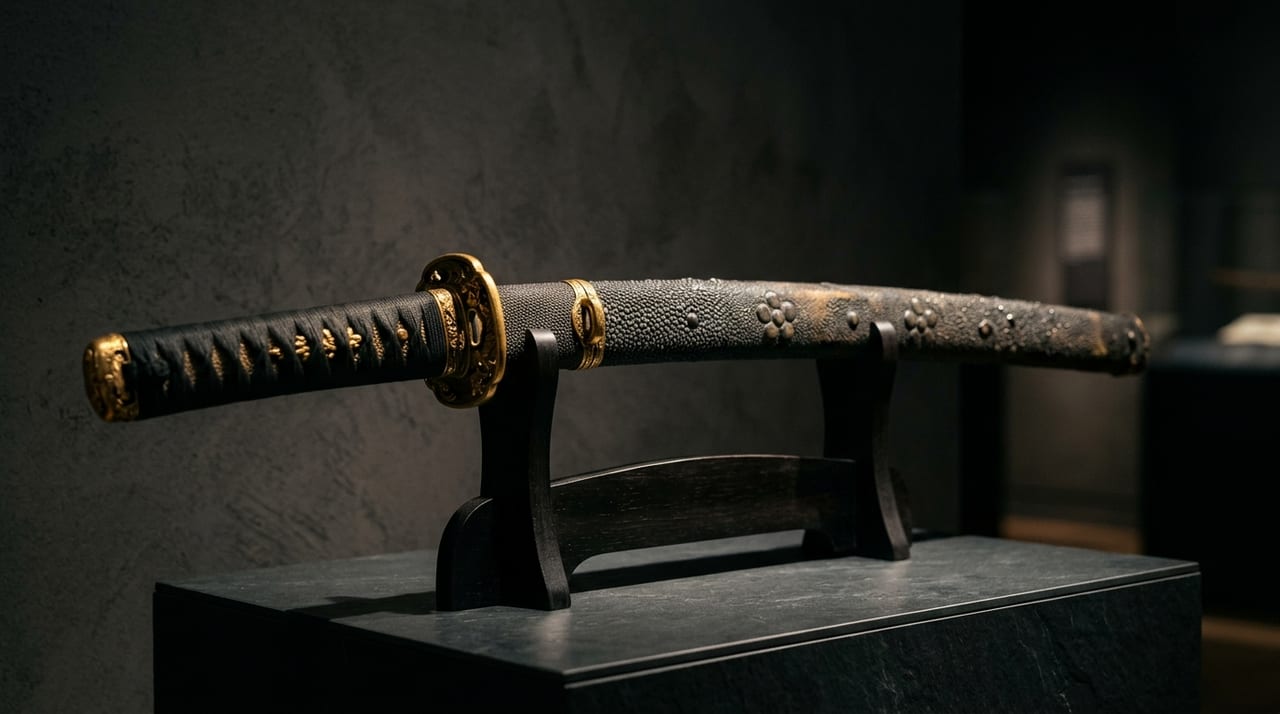 * Image is for illustrative purposes only.
Table of Contents
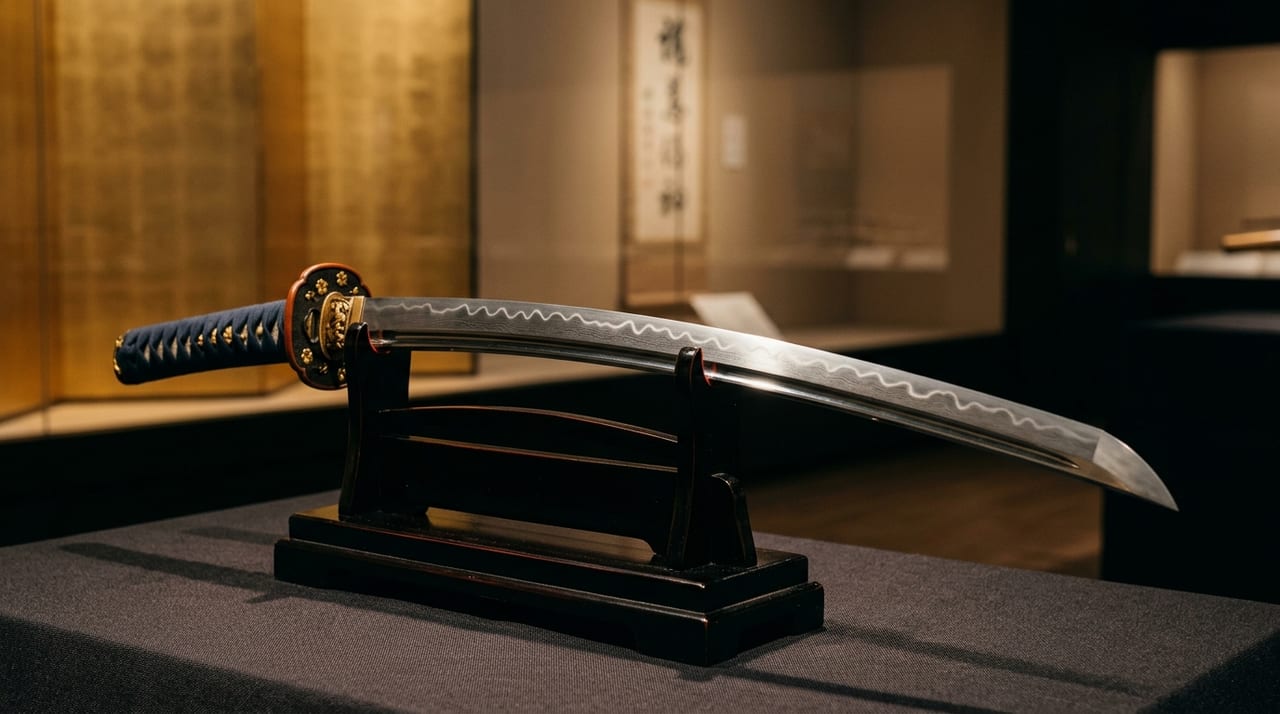
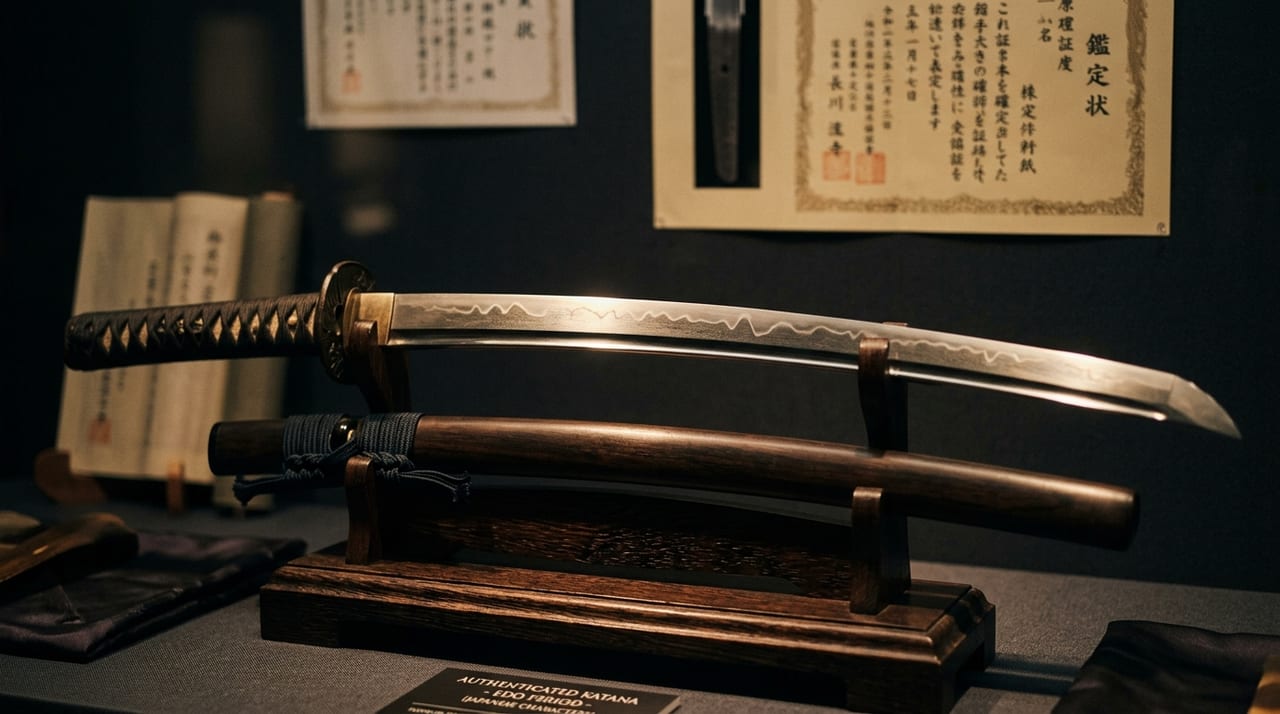
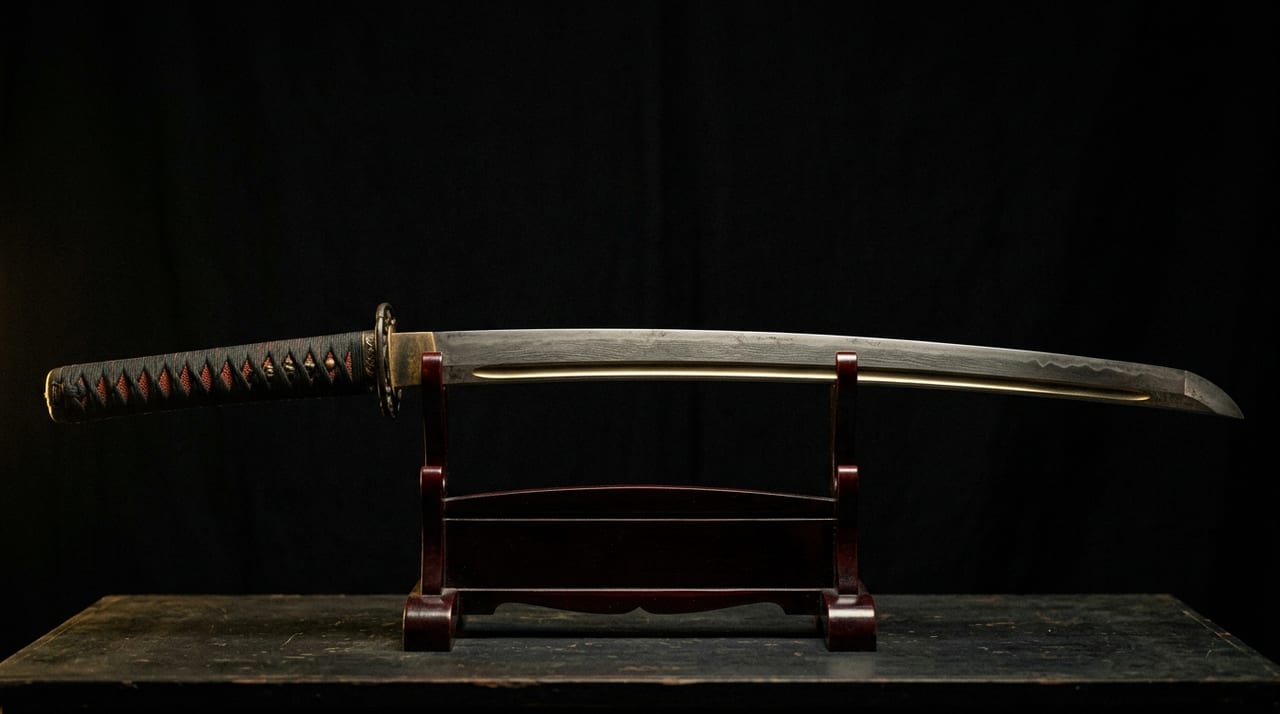
When the term kairagi appears in descriptions of koshirae (mounting), it refers not to the appearance of the jigane (steel of the blade surface) or hamon (temper line) but to the material used to adorn the tsuka (hilt) and saya (scabbard). Because a word with the same reading, "kairagi," also exists in the world of tea ceremony, it can sometimes be misread. This article, limiting itself to what can be confirmed through dictionaries and public databases, organizes the properties of kairagi as a material, its uses in koshirae, and how it differs from the "kairagi" of tea ceremony.
What Kind of Material Is Kairagi
Kairagi is a term referring to the skin of a species of ray native to Southeast Asia. It is a material that has long been used in Japan for the koshirae of swords, and is also called samegawa. It is sometimes written with an alternative kanji character, and both spellings appear in the literature.
The surface is covered with fine granular protrusions arranged across the entire face, among which larger protrusions that resemble flower shapes are scattered. It is said that the name derives from these large protrusions resembling "plum blossoms," and the two-layer texture of densely arranged small grains interspersed with scattered large ones is the material's defining visual characteristic. According to the Seisen-ban Nihon Kokugo Daijiten, it is described as a ray skin with a texture in which flower-shaped large grains are mixed among coarse ones.
The term kairagi is also used as a name for finished goods, and examples appear in medieval literature of tachi with a saya or tsuka adorned with kairagi being called "kairagi-zukuri."
Samegawa and Kairagi — a Distinction Within the Same Material
The tsuka of a nihontō is generally wrapped with samegawa as a base. The texture of fine granular protrusions arranged densely across the surface creates a suitable friction beneath the hilt wrapping cord, serving the function of preventing slipping in the hand. Once the wrapping cord is applied, the samegawa is no longer visible from the outside, so it rarely appears in the finished koshirae's exterior and has been treated purely as a functional base material.
Kairagi is, among such samegawa, a term referring to the skin of a specific species of ray. While ordinary samegawa consists only of fine grains, kairagi contains large flower-shaped grains, which is the visual distinction. Even within materials grouped under the name "samegawa," kairagi earned a separate name because of its distinctive characteristics in texture and pattern.
There are also two modes of use. One is as a base material completely hidden beneath the tsuka wrapping cord; the other is as a decoration deliberately left exposed on the surface of the saya to show the texture of the material itself. In the latter case, the name of the koshirae often contains the terms "kairagi-same-saya" or "kairagi," and this quality is highlighted as one of the work's points of interest.
Medieval Literary References and Examples of Extant Koshirae
As examples of the term kairagi appearing in medieval literature, the dictionary cites the Taiheiki and a record from the Norikoto-kyōki dated Ōei 14 (1407). The former is a passage related to a gold-mounted tachi, and the latter is a court noble's diary from the same period; both show that the term kairagi and the material itself were widely used in the medieval period.
As an extant example of koshirae, a work titled "Botan-zukuri kairagi-same-zaya koshigatana koshirae" is registered as a jūyō bunkazai (Important Cultural Property) in the Cultural Heritage Online database and is a Nanbokuchō-period piece held by the Kyoto National Museum. The term "kairagi-same-saya" is explicitly stated in its name, and it is an example in which the texture of kairagi used for the saya has been actively incorporated as decoration. If you have the opportunity to see such koshirae at a museum, paying attention to the granular texture of the saya's surface will give you a felt sense of the meaning contained in the name.
How Is It Different from the "Kairagi" of Tea Ceremony
In the fields of tea ceremony and ceramics as well, the term "kairagi" — written either using Chinese characters or in the phonetic kana spelling — appears. There, it is not a name for a material but an expression referring to a specific surface texture that appears on pottery. It refers to portions where the glaze has not fully melted during firing and has contracted into a state resembling rough sharkskin, and the appearance of this effect around the kodai (foot ring) and waist of Ido tea bowls in particular is highly prized.
Whereas kairagi in the context of swords refers to the specific material of ray skin from Southeast Asia, kairagi in tea ceremony is an expression describing a kiln-change surface texture produced by firing. The two share the same reading, but one is "the name of a material" and the other is "an expression for a phenomenon that appears on pottery," and their natures are fundamentally different.
What they share is that both take "a rough, sharkskin-like texture" as their conceptual source. It is conceivable that the grainy texture of samegawa was likened to the contracted surface of pottery, but since reliable sources showing a direct connection are limited, it is enough here to treat the two as separate words that happen to share a reading. As a basic approach to avoiding confusion: when a description gives "kairagi" in the Chinese-character spelling, it refers to the material for sword koshirae; when it appears in the phonetic kana spelling, it refers to the expression for a tea bowl's surface texture.
How to Look for Kairagi When Observing Koshirae
When observing koshirae at a museum exhibition or in a catalogue with kairagi in mind, the following points serve as useful guides.
- If fine grains are arranged across the entire surface of the tsuka or saya, that is a sign that the material is samegawa. If, among these, notably larger and rounded grains are scattered, it may bear the characteristics of kairagi.
- In koshirae where kairagi is used exposed on the outer surface of the saya, the arrangement of the grains and traces of wear allow you to read the history of where hands touched it and how it was used.
- When the description or the name column in a catalogue contains the terms "kairagi-same-saya" or "kairagi," the work is often one in which the texture of the material has been positioned as a point of interest, and centering your observation on the surface of the saya will deepen your appreciation.
- Comparing cases where only "samegawa" is recorded with cases where "kairagi-same" is explicitly stated, the latter indicates that there was a conscious material selection with a specific species in mind.
The Significance of Knowing Koshirae Materials
In sword appreciation, attention tends to focus on the jigane, hamon, and shape, but the materials of koshirae also concentrate the aesthetic sensibilities and craftsmanship of each era. The process by which a saya craftsman carves out the wooden base, applies the samegawa, and a lacquerer finishes the saya; the base preparation of the samegawa hidden beneath the tsuka wrapping cord; the metalwork of the menuki and fuchi-kashira — each stands as an independent craft in its own right, while all are integrated into a single koshirae.
The term kairagi is one entry point for stepping into the world of koshirae. If, when a description gives "kairagi" in the Chinese-character spelling, you can recognize that it refers to material rather than the appearance of the blade, and that it is distinct from "kairagi" in a tea bowl description, you will be able to receive the information in exhibitions and catalogues more accurately. When viewing a sword with an accompanying koshirae, using the material terms included in the name as a guide can open up points of interest that might otherwise be overlooked.