Nihontō Insurance and Appraisal | A Practical Guide to Protecting Your Asset
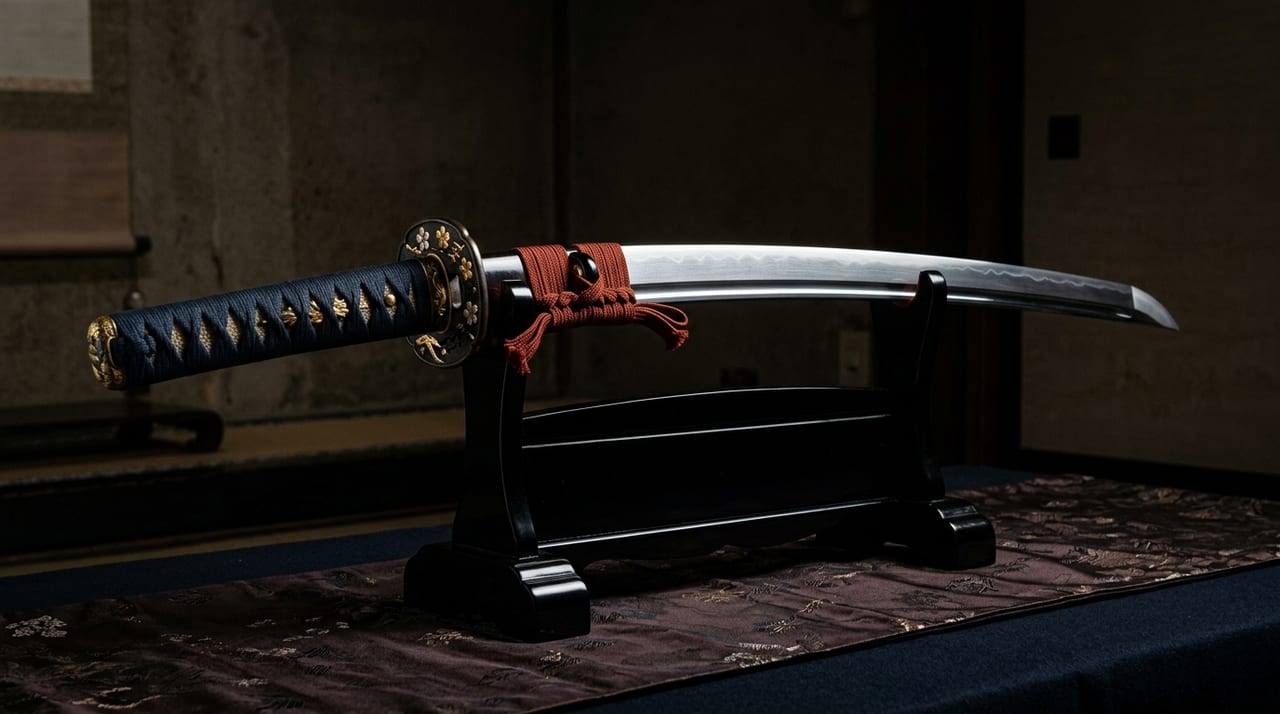 * Image is for illustrative purposes only.
Table of Contents
Introduction — How to Protect the "Value" of Nihontō
Nihontō, while possessing extremely high value as works of fine art and craftsmanship, are simultaneously exposed to many risks such as fire, theft, and natural disasters. Private sword collections are often not covered by standard household insurance, and a special insurance policy is required to prepare for any eventuality. Sword insurance is a specialized means of managing such risks, and an important system closely connected to the "appraisal" of swords.
Sword "appraisal" and "insurance" are two sides of the same coin. Without proper appraisal, proper insurance cannot exist. This article considers two challenges: how to assess the value of a sword, and how to protect that value.
Sword Appraisal — The Necessity of Expert Assessment
The value of a sword is determined by multiple factors. The main appraisal factors are as follows.
- Blade quality: Morphological characteristics such as the quality of the forging, the beauty of the hamon, the refinement of the jihada, and the sori serve as indicators of the tōkō's technical level and period of creation. Assessing these elements requires an extremely advanced level of appraisal skill.
- Authenticity of the mei: Whether the "tōkō's name" engraved on the blade truly indicates the actual maker is an extremely important appraisal point. Works by particularly famous tōkō among kotō command high prices, but are also at high risk of gimei (false signatures). In recent years, the latest appraisal techniques, such as scientific elemental analysis and microscopic examination, have come into use, improving the accuracy of mei authenticity determination.
- Quality and age of the koshirae: The quality and age of the sword fittings — including the tsuka, saya, and metal fittings — also significantly affect overall value. A sword accompanied by an elaborate Edo-period koshirae often has substantially higher value than the blade alone. Research into koshirae has also advanced, and works attributed to a specific tōkō or lacquerer tend to command even higher value.
For a comprehensive assessment of these multiple factors, examination by an officially recognized appraisal institution such as NBTHK (Society for the Preservation of Japanese Art Swords) is indispensable. Assessing value based solely on a personal "estimate" is extremely dangerous, and obtaining an official kanteisho is essential.
Insurance Contract Practice — Determining the Appraised Value and Policy Design
When entering into a sword insurance contract, it is first necessary to determine the sword's appraised value (insured value). This figure becomes the future compensation amount and is therefore extremely important.
In general, the appraised value is determined by referencing official kanteisho and consulting market prices in the art market. For particularly valuable swords, it is recommended to obtain appraisals from multiple appraisal institutions and use the average or highest of those values. As of 2026, the common practice is to carefully determine the appraised value on a case-by-case basis, referencing current transaction prices at major antique markets (Tokyo, Kyoto, and Osaka).
The scope of insurance coverage is also important. It is necessary to discuss in detail how much is covered — loss by fire, damage from earthquakes, theft, and even irreparable damage. The storage location, security measures, and humidity management conditions are also often reflected in the insurance premium. By taking appropriate management measures, such as installing security cameras and storing the sword in a safe, it may be possible to keep the insurance premium low.
Inheritance and Sword Appraisal — Tax Significance
When a privately owned sword becomes subject to inheritance, determining its "appraised value" becomes an important matter that directly affects the inheritance tax amount. Under the Inheritance Tax Act, the inheritance tax assessment of fine art and craft objects is based on "current market value," and assessments backed by official kanteisho tend to be respected.
When selling a sword after inheritance, accurate appraisal is also indispensable. If the appraised value is too low, it puts the seller at a disadvantage, while if it is too high, a buyer may not be found. Consulting a reliable appraisal institution from the inheritance stage is extremely important for preventing future disputes. In particular, when there are multiple heirs, having an official appraisal document can prevent disputes over the division of assets.
The Relationship Between Restoration and Value
When a sword is damaged, the decision of whether to restore it is also directly linked to value assessment. In general, for kotō, polishing and restoration often improve the "quality of the blade itself." However, inappropriate restoration can conversely lower its value. When commissioning restoration, it is important to always consult a reliable togishi or restoration craftsman, and to strictly photograph and document the sword before restoration. Since restoration history may also affect future appraisals, it is recommended to keep accurate records.
Export Overseas and Regulations
As culturally important assets, nihontō are subject to certain export restrictions. Even when exporting privately as art objects, notification to the Agency for Cultural Affairs may be required. Furthermore, when the premise is overseas sale, there is a possibility that evaluation in overseas art markets may differ from evaluation within Japan, making prior market research indispensable. By referencing hammer prices at international auction houses, a more accurate understanding of international valuations can be obtained.
Conclusion — Integrated Management of Insurance and Appraisal
Sword insurance and appraisal are not merely "a matter of money," but a fundamental question of how to properly protect and manage important cultural heritage. Through appropriate insurance contracts based on accurate appraisal, and through periodic review of valuations, it can be said that properly passing on sword culture to the next generation is the responsibility of every owner.