Swords in the Peaceful Era: The Transformation of the Katana's Role During the Edo Period
 * Image is for illustrative purposes only.
Table of Contents
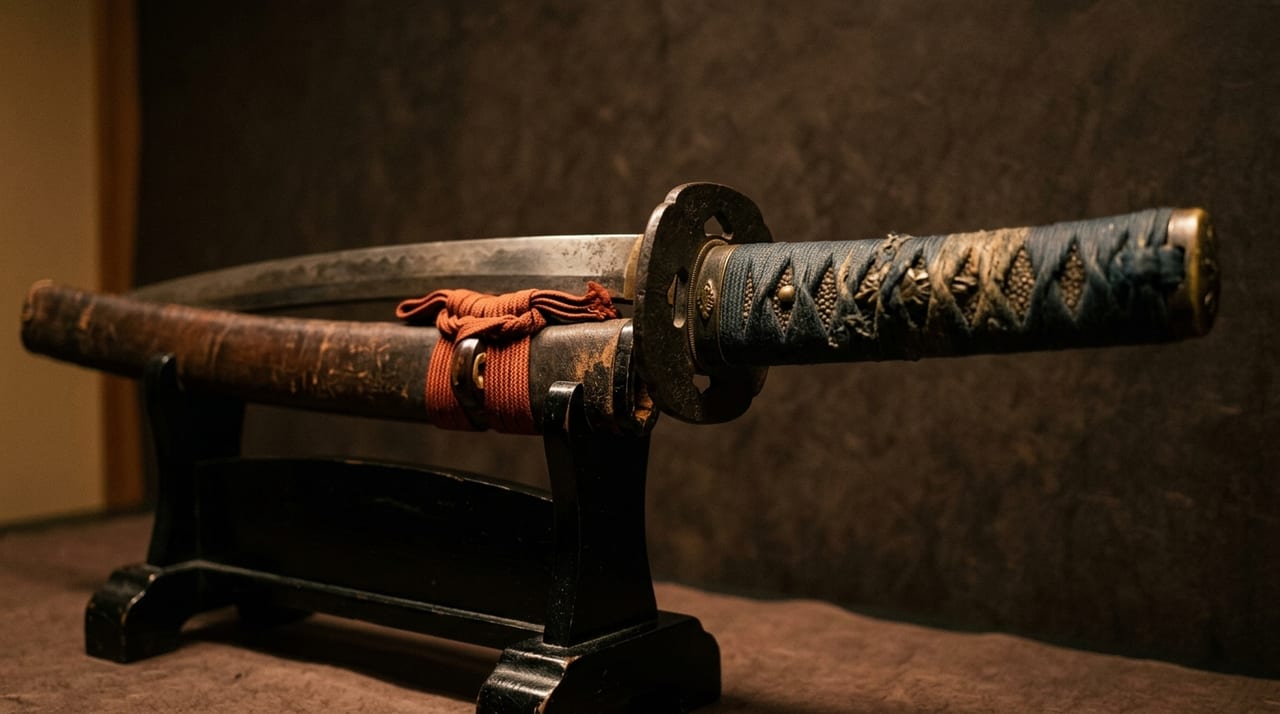
The Edo period (1603–1868) was the longest continuous era of peace in Japanese history. After the Battle of Sekigahara, large-scale warfare virtually ceased, and the samurai class transformed from "warriors" to "bureaucrats." This change brought significant transformation to the role of the Japanese sword. What had originally been a weapon for defeating enemies on the battlefield gradually changed its meaning throughout the Edo period to become a status symbol, spiritual emblem, and work of art.
The Transformation of the Sword from "Weapon to Symbol"
Until the Sengoku period, Japanese swords were first and foremost practical weapons. Functionality—such as sharpness, durability, and ease of handling—took priority, with decoration and aesthetic elements coming second. However, once the Edo period began, practical opportunities for using the sword decreased dramatically, and the occasions when a samurai would draw his blade became limited to duels, vendetta, and the rare incident of injury.
In this context, the sword changed roles from "a tool of the battlefield" to "a symbol indicating the status of a samurai." The Tokugawa shogunate formalized its class system, establishing the wearing of swords (taitou) as a privilege of the samurai class. Samurai were required to always carry two swords—one long and one short—at their waist, and this became proof of being a samurai.
Wearing a sword itself was a social declaration of "I am a samurai," and the quality, decoration, and formality of the blade expressed the samurai's lineage and rank. This cultural transformation greatly shaped the sword culture of the Edo period.
Sword-Making Culture of the Shinto and Shinshin Periods
Swords of the Edo period are broadly divided into "shinto" and "shinshin" categories. This classification reflects not merely a division of eras but changes in sword-making philosophy and technique. The Japanese sword history column also offers detailed explanation of the transmission of techniques from the kotou period.
The Shinto Period (circa Keicho to Horeki: circa 1596–1763)
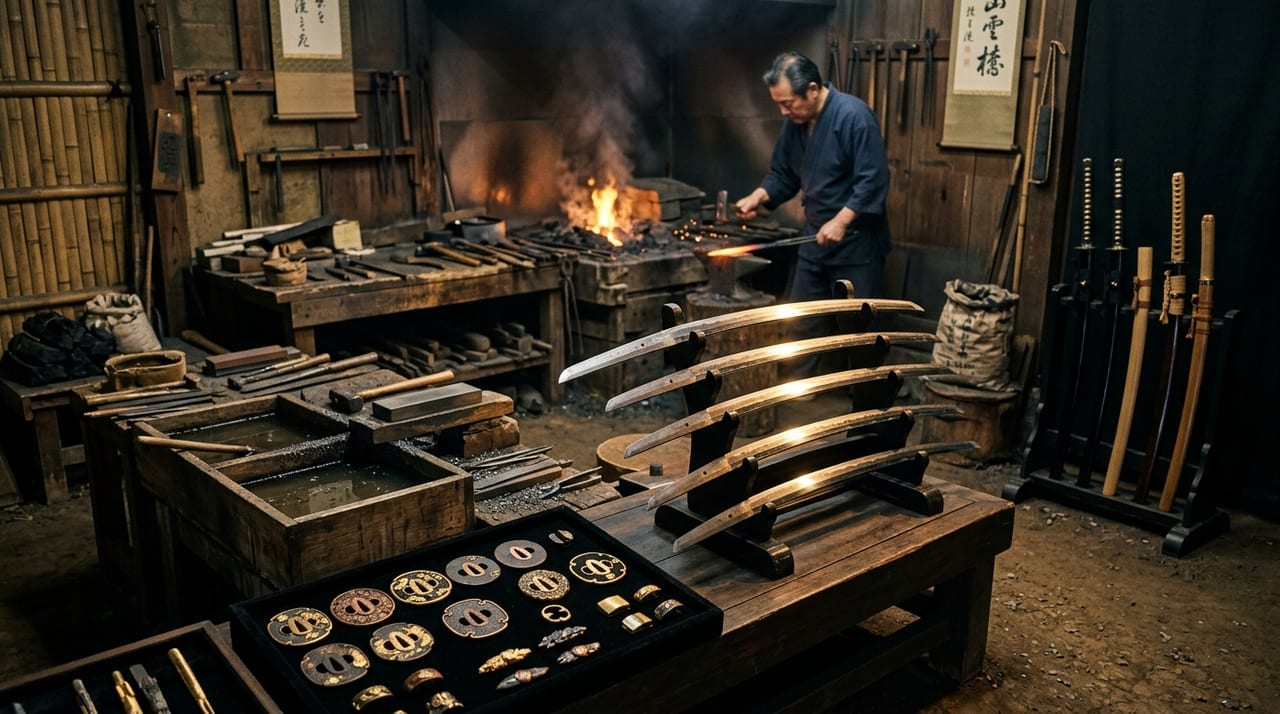
Swordsmiths of the shinto period aimed at recreating the blades of the pre-Sengoku era while also developing elaborate styles that reflected the aesthetic sensibilities of a peaceful age. Swordsmiths became active nationwide, centered in Edo, Osaka, and Kyoto, and renowned masters such as Kotetsu (Nagasone Okisato), Horikawa Kunihiro, and Hizen Tadayoshi appeared. These master craftsmen are discussed in detail in sword craftsman introductions.
The characteristics of shinto blades include the following points.
- Elaborate hamon (gunome, choji, oo-gunome, etc.)
- Vivid jihada
- Highly decorative finishing
Unlike the simple, robust strength of kotou blades, many works were created that pursued refinement and technical sophistication.
The Shinshin Period (circa Kan'en to Sword Abolition Edict: circa 1751–1876)
The shinshin period was an era that attempted to pursue the recreation of kotou techniques even more thoroughly. The "kotou revival theory" centered on Suishinshi Masahide became widespread, and the movement to study and restore techniques from the Kamakura through Nanbokucho periods became active. Swordsmiths such as Suishinshi Masahide, Minamoto Kiyomaro, and Taikei Naotane represent the shinshin period.
Shinshin blades went beyond the technical elaborateness of the shinto period and pursued a more robust and forceful style. Although this was an era not anticipating actual combat, it was a paradoxical challenge to aesthetically revive "swords useful in battle."
The Development of Sword Fittings and Craftsmanship
Another major characteristic of sword culture during the Edo period was the artistic development of sword fittings (tsuba, fuchigashira, menuki, tsukaito, saya coating, etc.). In contrast to the practical focus up to the Sengoku period, sword fittings in the Edo period developed into sophisticated works of art, and specialized metalworkers, lacquer workers, and metal engravers flourished.
Well-known families include the Goto family (official suppliers to the shogun's household), the Shōami school, the Muneha school (such as Yokoya Sōmin), and the Hirata school, and each developed their own distinctive style. Metalworking techniques such as inlay, engraving, fabric-pattern inlay, and forging became increasingly sophisticated, laying the foundation for the later export crafts culture of the Meiji period.
Samurai took a strong interest not only in the blade itself but also in the aesthetic taste, formality, and family crests of the sword fittings, which fostered the development of collecting culture and appreciation culture.
The Institutionalization of Sword Appraisal
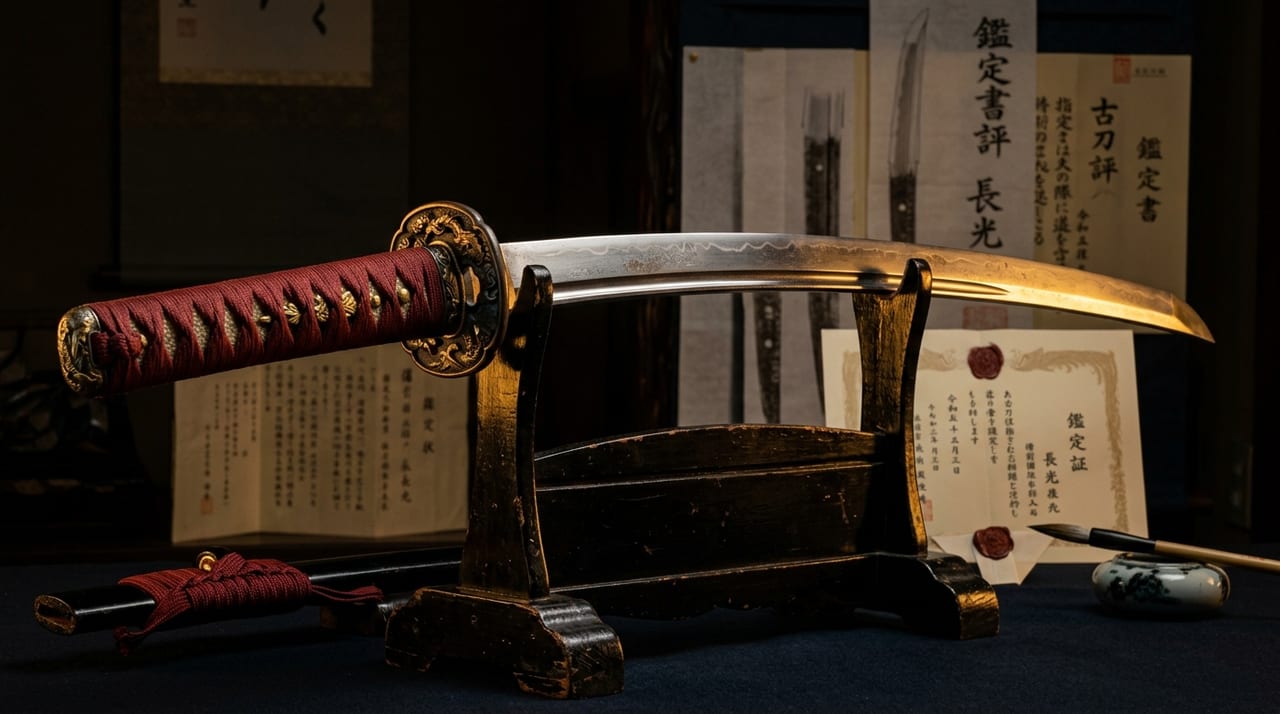
The Edo period was also an age when the techniques and organizations of sword appraisal were systematized. In particular, the Honami family held supreme authority as hereditary sword appraisers serving successive shogunal families. The certificates of appraisal (origami) issued by the Honami family functioned as the most critical documents in determining a sword's price and rank.
As the criteria for appraisal became established, the way of viewing swords, the language used to discuss them, and the methodology for evaluation became refined, forming an intellectual system that might be called "sword studies." These insights are inherited in sword appraisal even at present in 2026, and the achievements left by appraisers of the Edo period are immeasurable.
Bushido Spirit and the Symbolism of the Sword
Bushido in the Edo period was theorized as a comprehensive way of life that encompassed not only martial prowess in battle but also daily cultivation, learning, and ethics. The development of Bushido theory by figures such as Yamaga Soko and Nitobe Inazo (Meiji and later) positioned the sword symbolically as "the soul of a samurai."
The phrase "the sword is the soul of a samurai" precisely reflects the spiritual culture of the Edo period. Even though it was not used in actual combat, to constantly carry it, keep it pure, and treat it with care—this spirituality became the pillar supporting a samurai's self-discipline and his family's honor.
The Maturation of Japanese Sword Culture Born from an Era of Peace
Ironically, the Edo period can be said to be the time when the cultural maturation of the Japanese sword deepened most profoundly precisely because it was an era of "no warfare." By stepping away from actual combat, the sword acquired multilayered meanings as a work of art, spiritual symbol, and object of intellectual appreciation. Most of the culture through which we today appreciate the Japanese sword—the culture of discussing maker's signatures, hamon, and jihada, finding value in appraisal certificates, and enjoying even sword fittings as works of art—had its prototype established during the Edo period.
Peace transformed weapons into art and nurtured the tools of warfare into symbols of the spirit—the endeavors of 260 years in the Edo period represented a great turning point in sword history, fundamentally and profoundly transforming the meaning of the Japanese sword.