Detecting and Responding to Hagire — Recognizing Fatal Blade Injuries
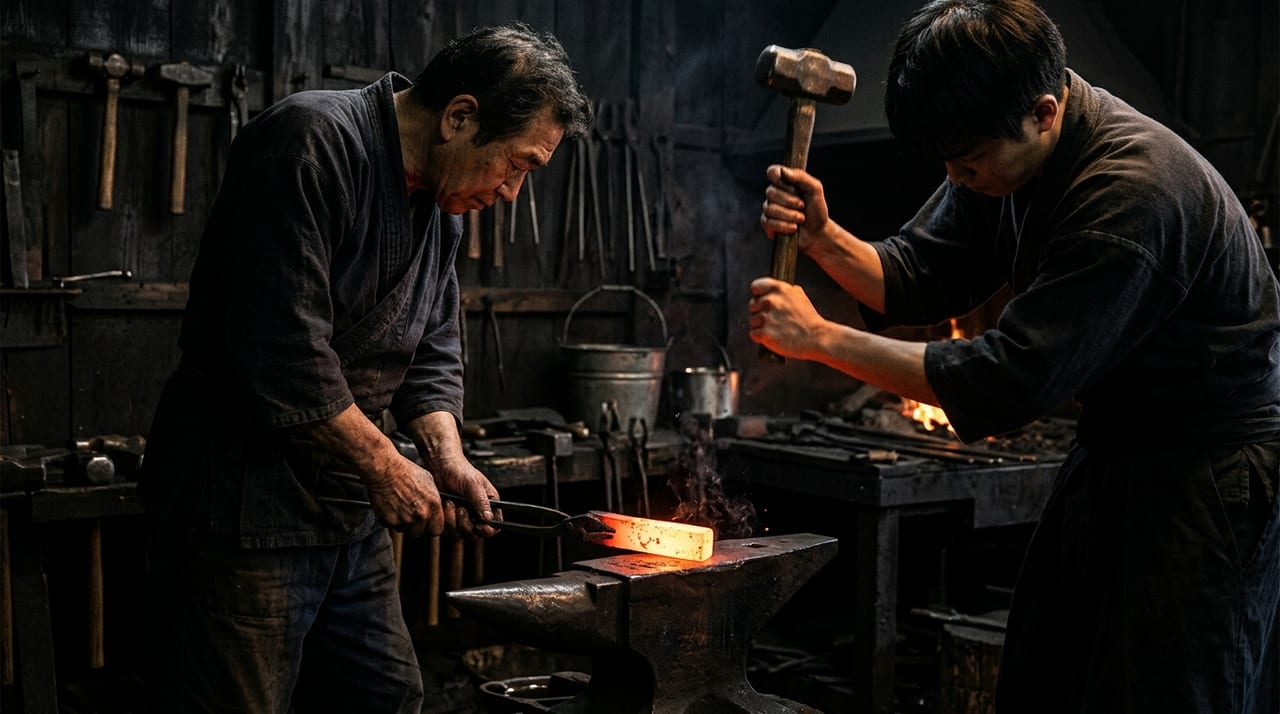 * Image is for illustrative purposes only.
Table of Contents
Japanese swords have various defects, but among them, the most serious is "hagire (blade crack)." Hagire is a crack that occurs in the edge portion of the sword blade, progresses over time, and in the worst case poses a risk of breaking during use. Even for Japanese swords appreciated only as works of art, the presence of hagire becomes a factor that greatly diminishes value.
For Japanese swords you own or are considering purchasing, having knowledge of hagire can be said to be fundamental knowledge for enthusiasts. This article systematically explains everything from the basics of hagire to how to identify it and how to address it.
What is Hagire — Mechanism of Occurrence
Hagire is a microscopic crack that occurs in the steel of the edge portion due to rapid temperature changes during quenching, impact during use, or age-related deterioration. Japanese swords have their yakiba (edge portion) hardened through quenching, and while this hardness produces the cutting ability, it also contains brittleness against impact and thermal stress.
The main causes of hagire can be classified as follows.
1. Microscopic Cracks During Quenching
If the temperature change in the edge during the quenching process is too rapid or if the thickness of the yakiba-tsuchi (hardening clay) is uneven, microscopic cracks occur due to shrinkage differences during cooling. These are initially barely visible to the naked eye, but may gradually open over a long period of time.
2. Impact During Use
There are cases where existing microscopic cracks grow due to impact from test cutting, actual combat, or improper handling. In particular, in old swords with history, they often appear as traces of past use.
3. Age-Related Fatigue
Hagire may progress over time due to temperature changes during long-term storage, humidity fluctuations, and the accumulation of microscopic stress.
How to Identify Hagire
To identify hagire, pay attention to the following points.
Basic Observation Approach
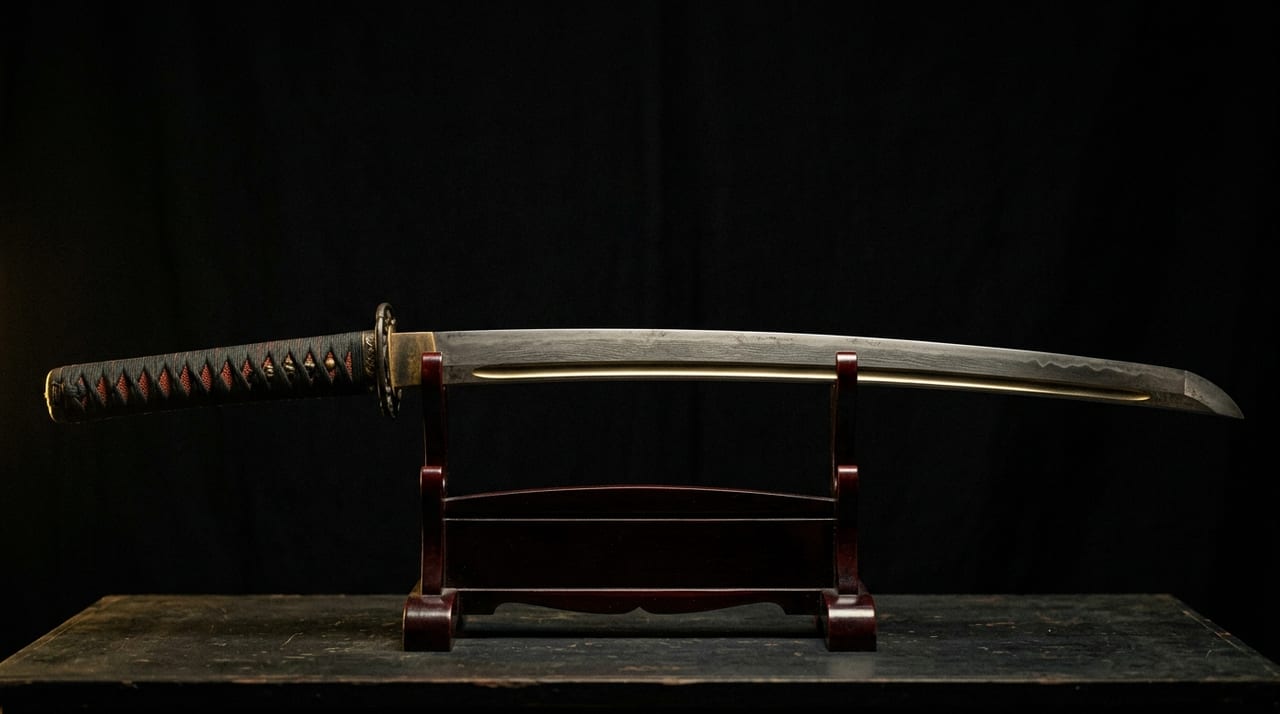
Hold the sword horizontally and shine a light source (natural light or incandescent light) diagonally onto the blade. Under fluorescent lights, contrast is weak and it is easy to miss, so observation under incandescent light is the basic approach. If you have a magnifying glass (10x magnification or higher), more precise observation is possible.
Typical Forms of Hagire
Hagire appears as a thin line running vertically or diagonally from the kissaki (blade tip) in the direction of the hamon (blade pattern). The tone is slightly darker than the surface of the blade and does not reflect light. It often has microscopic steps, and when touched with a finger, a slight catching sensation may be felt.
Particularly noteworthy is "1–2 cm away from the kissaki toward the edge." At this location, stress concentration is likely to occur during quenching, and hagire is said to have a high frequency of occurrence.
Confusing Phenomena
The following phenomena can be confused with hagire.
- Maintenance marks: Fine scratches caused by polishing powder or wiping cloth particles on the blade surface. Unlike hagire, they remain on the shallow surface of the blade.
- Linear rust marks: Traces left by past rust. Unlike hagire, the color is reddish-black and the depth is shallow.
- Nioi-kuchi ripples: The blade pattern may sometimes appear to look like a crack.
If you are unsure, it is safer to consult with Japanese sword specialists or appraisers.
How to Address Hagire When It Is Found
When the presence of hagire is confirmed, take the following steps.
1. Monitoring Progression
Record the length and depth of the crack accurately and reexamine it periodically. By keeping photos with dates, you can objectively determine whether it is progressing.
2. Determining Preservation Policy
Even if hagire is present, the value as a cultural artifact is not necessarily lost. Small hagire can also be interpreted as traces of the long history of Japanese swords and can retain value as historical material. Even when appreciating as a work of art, attempting to remove cracks through forceful polishing results in further reduction of the blade, which actually diminishes value.
3. Refraining from Use
Swords with hagire must absolutely avoid test cutting and practical use. Breakage accidents during use pose serious danger to the owner and third parties.
4. Appraisal and Disclosure
When conducting sales, the existence of hagire must always be disclosed by the seller to the buyer. Concealing this in a transaction violates the ethics of the Japanese sword community and may develop into legal problems.
Purchase Checklist
The following is a checklist to avoid overlooking hagire when purchasing a Japanese sword.
- Observe the sword under sufficient lighting
- Examine the entire blade in multiple passes
- Pay special attention to checking the area near the kissaki
- If there are suspicious areas, take photos and review later
- Ask a trusted expert to accompany you
- Clearly ask the seller about the presence or absence of hagire
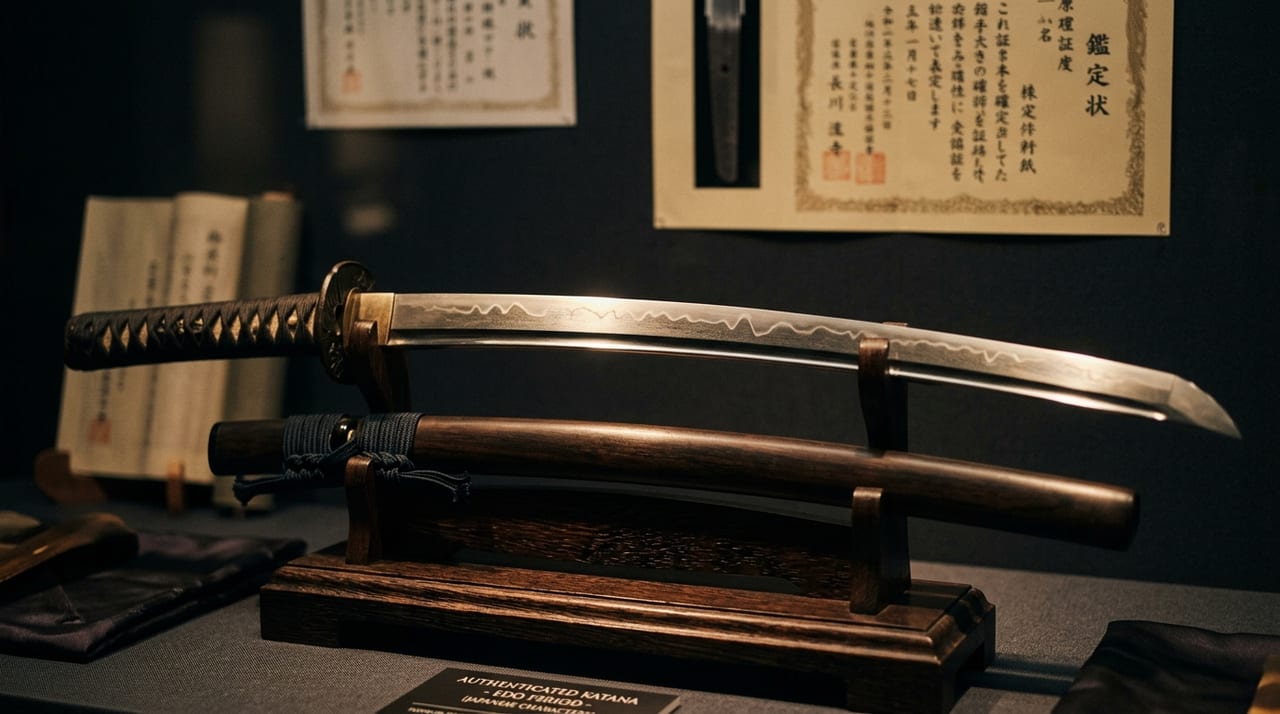
- Verify the contents of the certificate and appraisal documents
Approaching Hagire with the Right Attitude
Hagire is a phenomenon that can be said to be the fate of Japanese swords. For a sword that has survived for hundreds of years, being completely undamaged is nearly miraculous, and the fact that it has been passed down to the present day with fine scratches and changes is rather evidence of history.
What is important is to accurately understand the condition of the sword as an owner and manage it while respecting that condition. Rather than something to hide, by understanding, accepting, and responding appropriately, the relationship with the Japanese sword becomes deeper and richer.
Japanese swords are not mere objects but are like living beings that mark the passage of time. Could it not be said that listening to each and every trace is the very essence of a Japanese sword enthusiast?