Daisho: The Paired Swords That Defined Samurai Identity and Aesthetics
 * Image is for illustrative purposes only.
Table of Contents
The Establishment of Daishō: The Dawn of "Nihon-zashi" Culture
The custom of Japanese samurai wearing two swords at their waist—a katana and a wakizashi—called daishō, is regarded as an icon of the samurai even in 2026, yet this form became established as a convention surprisingly late, during the late Warring States period through the early Edo period.
Samurai during the Heian and Kamakura periods carried the tachi, which focused on mounted combat. The tachi was worn suspended from the waist with the blade facing downward and excelled in mounted warfare, but was not necessarily suited for close combat on foot. With the Muromachi period, the uchigatana—worn with the blade facing upward—began to spread, and it rapidly became widespread during the Warring States period when ashigaru became the main military force. During this process, the custom of carrying a shorter blade alongside the uchigatana was born. At first, tanto were often used, but eventually the wakizashi—with a blade length of one shaku (approximately 30.3 cm) or more and less than two shaku (approximately 60.6 cm)—took on this role.
Toyotomi Hideyoshi's katanagari (Tenshō 16, 1588), which confiscated weapons from farmers and temples and institutionally clarified the boundary between samurai and non-samurai, also became a factor in strengthening the social significance of two-sword wearing for samurai. After the establishment of the Tokugawa shogunate (1603), the custom of the warrior class—from daimyo and hatamoto to han samurai—constantly carrying both uchigatana and wakizashi became firmly established, and by the mid-Edo period, the term daishō itself became established as a symbolic word for samurai status.
The Unique Role of Wakizashi: Self-Defense, Etiquette, and the Blade of Honor
The wakizashi was not merely a "backup sword" but an indispensable object in both the daily life and rituals of samurai. The role the wakizashi played in samurai society can be organized into three main categories.
- Indoor Self-Defense: In samurai society, when visiting a castle or residence, it was customary to leave the uchigatana (or daitō) at the entrance or on a sword stand. However, the wakizashi, functioning as a self-defense implement akin to a kaiken, was never to be separated from the body even indoors—this was samurai protocol. With a length and shape that allowed instant drawing even from a seated position, the wakizashi was a blade embodying the spirit of "ever readiness for battle."
- Self-Infliction in Seppuku: In this ritual where a samurai ended their own life for honor, either a tanto or wakizashi was used. The person performing seppuku held the blade in front of the abdomen and, to minimize pain, would request kaishaku—beheading to shorten the suffering—from a kaishakunin (the second). The kaishakunin typically used the uchigatana, though records indicate that in some cases a wakizashi was employed. The wakizashi, as the blade closest to a samurai's moment of death, carried profound spiritual weight.
- Practical Use in Battle: The wakizashi functioned as a backup blade in emergencies when the primary sword was broken or seized. Furthermore, in narrow spaces such as castle corridors or indoors, swinging a long blade was difficult, making the compact, maneuverable wakizashi invaluable. The notion that "one wakizashi is sufficient in indoor spaces" was based on practical battlefield rationality.
The Beauty of Awase-Koshirae: The Unified Aesthetics Dwelling in Daishō
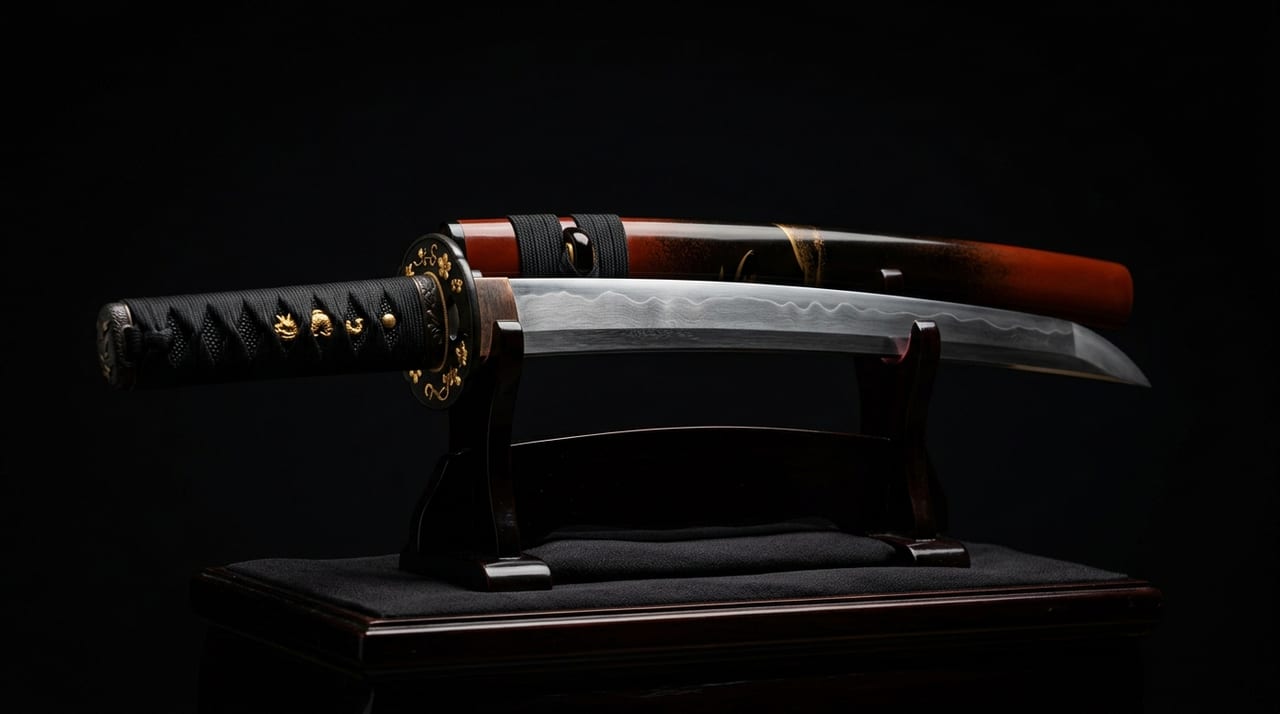
Koshirae refers to the general term for the entire exterior mounting of a sword—the tsuka, tsuba, menuki, fuchikashira, and saya. When the mountings of the daitō and wakizashi were unified through identical design, materials, and maker, it was called awase-koshirae (or daishō-koshirae) and was regarded as one of the highest expressions of samurai aesthetic sensibility.
In awase-koshirae, particular emphasis was placed on the unified design of the tsuba and menuki. For example, if a dragon was openwork-carved on the daitō's tsuba, the wakizashi's tsuba would feature designs such as clouds or waves related to the dragon, creating a cohesive worldview when the two blades were displayed together. The maki-e and metal fittings on the fuchikashira and saya were also handled by the same craftsmen (metal artisans and lacquerers), creating unity in material texture and color. Excellent awase-koshirae exemplifies the pinnacle of the Japanese sword as a comprehensive craft, where the blade-making skill of the swordsmith fuses with the high-level decorative techniques of the koshirae artisan.
Among renowned koshirae artisans, the Gotō family (Gotō school), with Gotō Yūjō as their founder during the Muromachi period, created many daishō-koshirae. Through precise high-relief carving and gilt-painting techniques, they established a unique aesthetic standard in samurai society, and Gotō-mono metalwork became the standard for daishō-koshirae for a long time. Meanwhile, in the Kaga domain (present-day Ishikawa Prefecture), regionally distinctive koshirae developed through the fusion of unique maki-e techniques and Kanazawa's artisan culture, embodying the diversity of daimyo culture.
Master Smiths and Masterpieces of Wakizashi: The Swordsmith's Skill Concentrated in Compact Blades
Wakizashi production presents technical challenges distinct from uchigatana. To harmonize all elements—curve, fuller, jihada, and hamon—in a short blade requires more precise design skills and forging techniques. The work domains of representative sword smiths and schools can be organized as follows.
| Sword Smith/School | Period/Origin | Characteristics |
|---|---|---|
| Awataguchi Yoshimitsu | Kamakura period | Renowned as a master of tanto, his techniques had great influence on short-blade production in later periods |
| Yamato-den Enju and Taima | - | Excelled at short blades and played an important role during the transition period from tanto to wakizashi forms |
| Soshu-den Hiromitsu and Akihiro | - | Known for vigorous, forceful work with lively action in the hamon, with works extending to wakizashi |
| Yasutsugu | Echizen origin (present-day Fukui Prefecture), Edo period | Served the Tokugawa shogunate and became synonymous with official shogunate sword makers |
| Nagasone Okisato, also known as Kotetsu | Edo New Sword period (17th century onward) | Left masterpieces in both uchigatana and wakizashi through robust forging and unique gunome hamon, widely favored by Edo samurai |
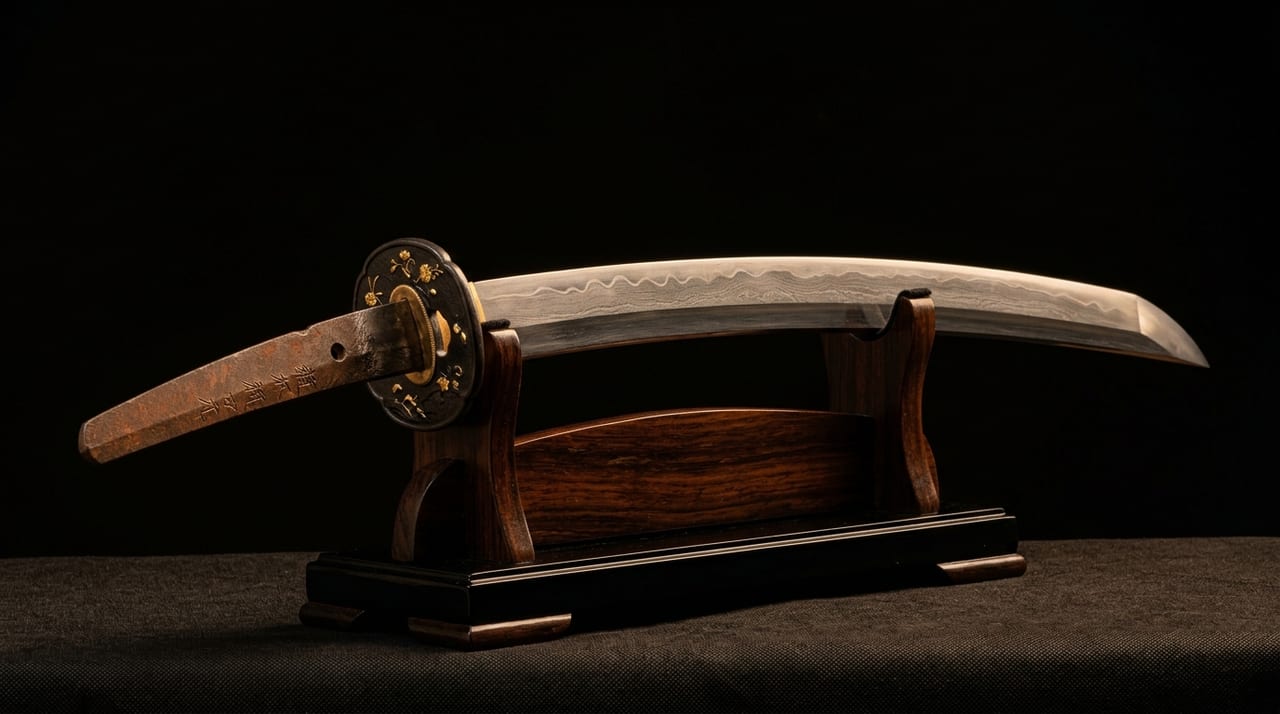
One evaluation criterion particularly emphasized in wakizashi appraisal is the beauty of sugata—the overall silhouette of the blade. Even in short blades under two shaku, the depth of the curve, the kasane (blade thickness), and the shape of the kissaki determine the overall quality and elegance. The sugata of an excellent wakizashi exemplifies the beauty of condensation—achieving the "ideal form of a sword" within a small blade.
Edo-Period Sword-Wearing Regulations: "Family Status" and "Rank" Spoken by the Sword
Through various edicts including the Buke Shohatto, the Tokugawa shogunate established precise regulations regarding sword-wearing. The sword functioned not merely as a weapon but as a "social sign" that visualized the wearer's rank, family status, and situation.
Samurai were required to wear two swords as a principle, and wearing only one or none at all could be seen as abandoning their rank. Meanwhile, townspeople (chonin)—merchants and artisans—who did not have samurai status were forbidden to wear the uchigatana and could only wear a single wakizashi under certain conditions. Farmers remained disarmed following the katanagari, and sword-wearing was generally prohibited.
Even among samurai, the length of the sword, the lavishness of the koshirae, and the material of the saya reflected differences in rank. During sankin-kōtai, daishō appropriate to the procession's formal status was required, and some domains had the custom of using sadame-koshirae for formal occasions such as audiences with the shogun.
Paradoxically, these restrictions promoted the artistic development of swords. Seeking differentiation within constraints, tsuba carving, menuki metalwork, and saya maki-e became highly refined, making the Edo period an era in which swords increasingly took on the character of "fine art objects" rather than functional weapons. With the Meiji 9 (1876) haitōrei edict, the samurai sword-wearing culture came to an end, yet the aesthetic legacy of daishō has been steadily inherited as Japanese sword art through 2026 and into the present day.