The History and Beauty of Tantō: Tracing the World of Small Blades from Kamakura to Bakumatsu
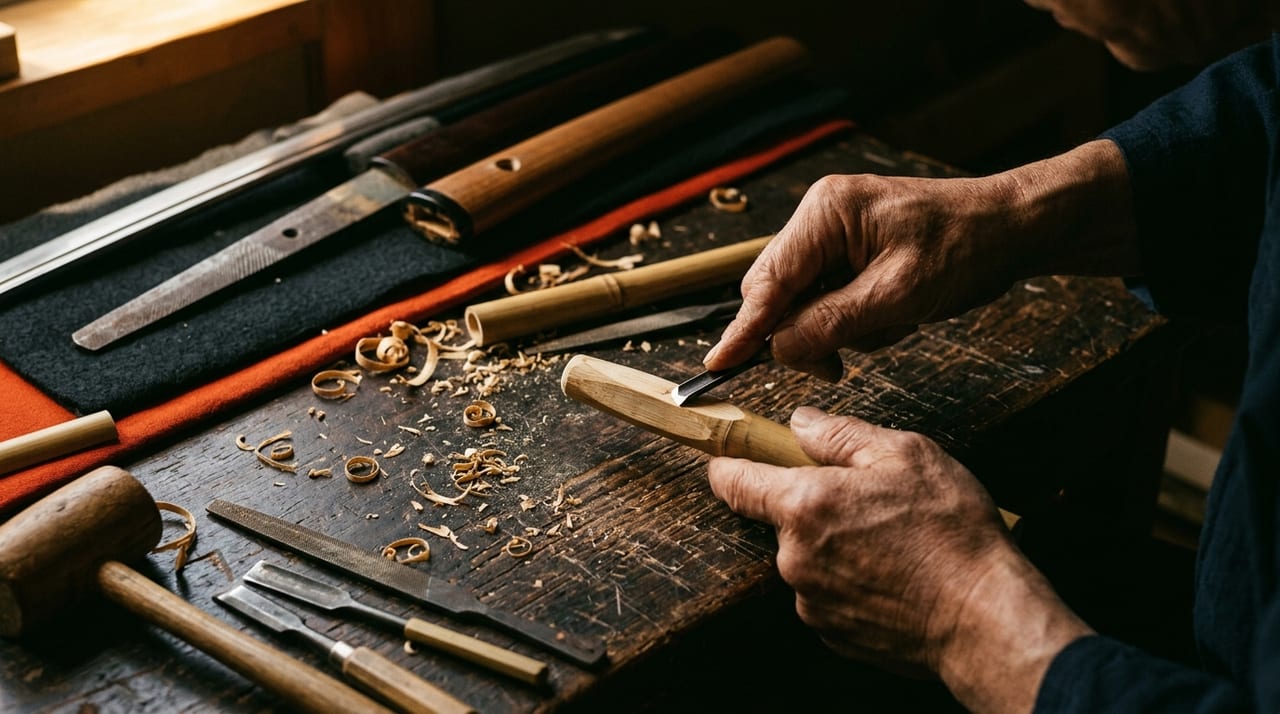 * Image is for illustrative purposes only.
Table of Contents
The Birth of Tantō and Their Development in the Kamakura Period
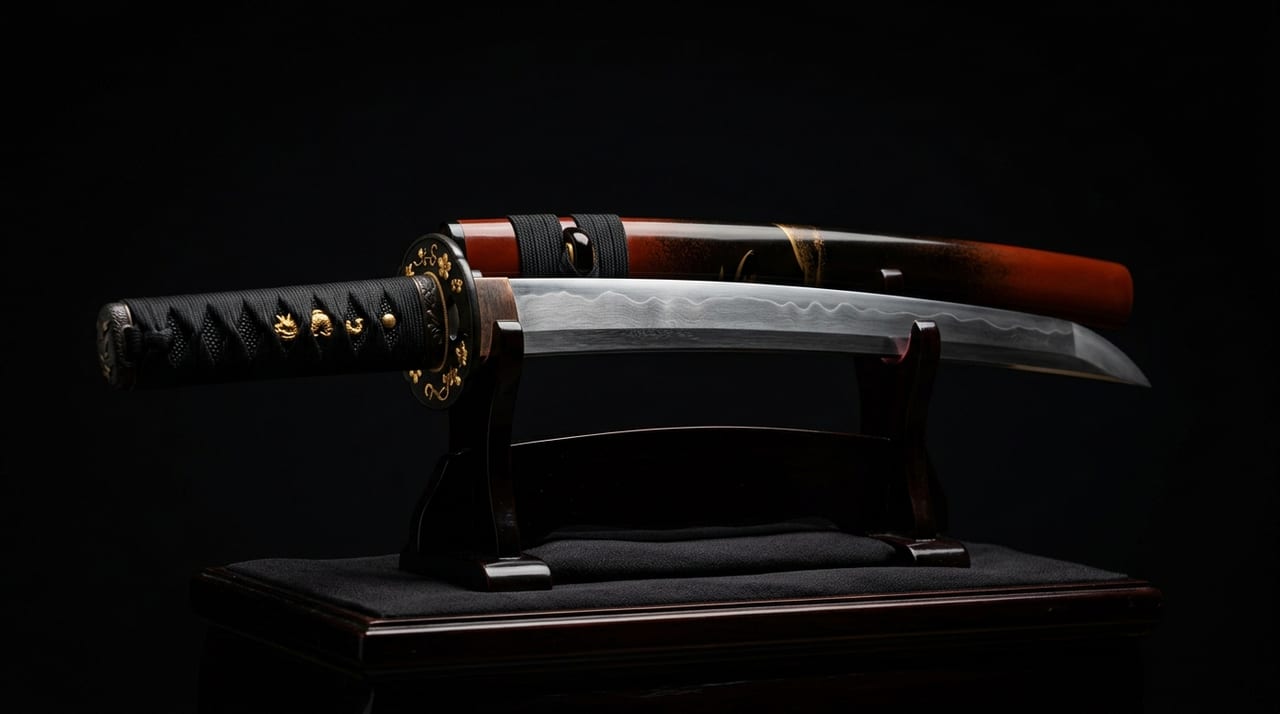
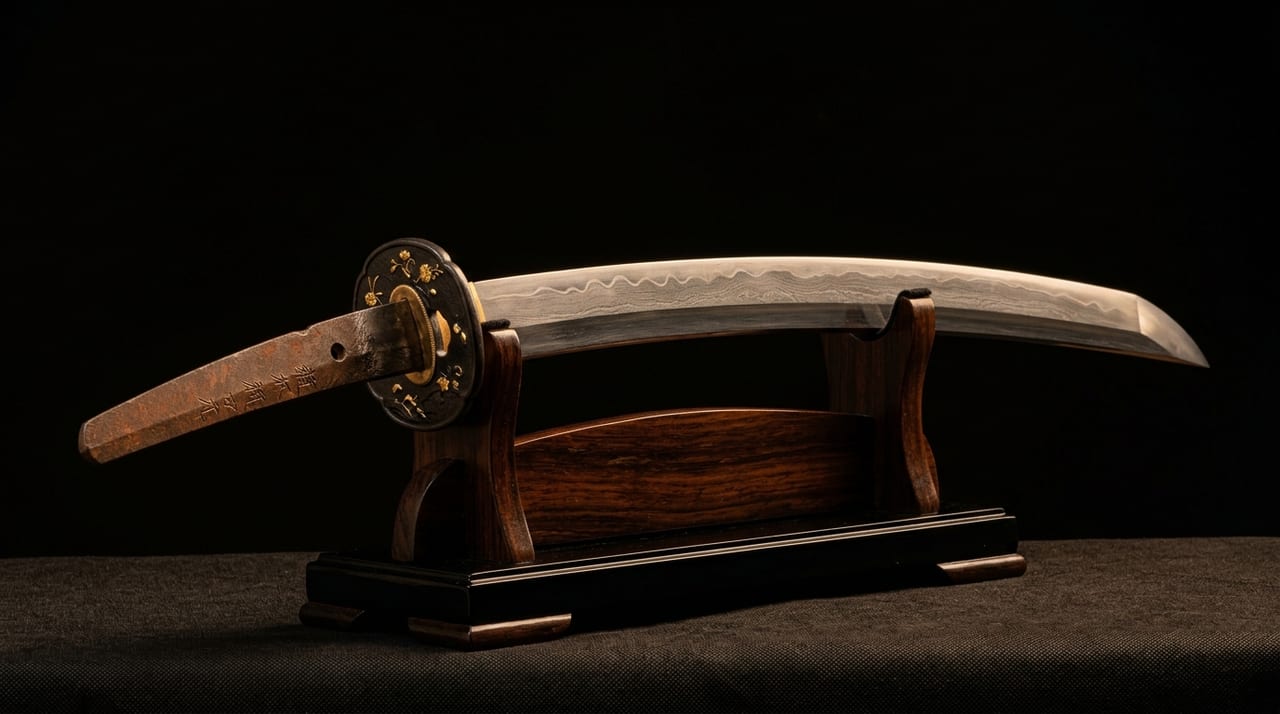
Tantō are the smallest category of Japanese sword, defined as blades with a nagasa of less than one shaku (approximately 30.3 cm). Their origins trace back to the late Heian period, but it was during the Kamakura period — when warrior culture was at its height — that tantō underwent their own distinctive development.
Tantō of the early Kamakura period were characterized by a bold, imposing form with wide mihaba and thick kasane. Early works by Ko-Bizen and Yamato tōkō include examples with shallow sori that approach a straight blade. As time passed, from the late Kamakura period through the Nanbokuchō period, a group of tōkō from Sōshū (present-day Kanagawa Prefecture) established their own distinctive tantō style. Sōshū-den is known for its bold, vigorous style — broad suguha, midareba, and intense activity in the jihada — and had a profound influence on later tantō as well. In the Nanbokuchō period, blades grew longer overall, while tantō also became more imposing, with many large examples of around nine sun (approximately 27 cm) in nagasa being produced.
Classification of Tantō Forms: Hira-zukuri, Shinogi-zukuri, and Moroha-zukuri
Tantō forms are broadly divided into three types.
- Hira-zukuri is the most common construction, in which the blade cross-section is wedge-shaped with no shinogi line. This simple structure, composed only of the cutting edge and mune, is commonly used for tantō and wakizashi. Tantō in hira-zukuri are easy to polish and highly practical, while also allowing the beauty of the jihada and hamon to stand out brilliantly, making them equally fine for appreciation.
- Shinogi-zukuri shares the same structure as tachi and uchigatana, the shinogi dividing the blade into shinogi-ji and ji. It is rare for a tantō to employ shinogi-zukuri, and it gives a powerful impression.
- Moroha-zukuri is a form with an edge on both sides of the blade, used in ancient times for self-defense and ritual purposes. It is still produced in some quarters today for self-defense and ceremonial use.
- Kiribazukuri: a construction featuring a flat bevel on the upper mune side is also found in tantō; it was popular from the Nanbokuchō through the Muromachi period.
The variety of forms is testament to the fact that tantō were far more than mere weapons, continually changing with shifts in use, social standing, and era.
Kaiken Culture and the Tool of Self-Defense
Kaiken refers to a small tantō carried in the bosom of one's garments. It developed as a self-defense implement that warriors concealed beneath their armor, and in peacetime was carried within the clothing. It spread widely among the warrior class throughout the Kamakura and Muromachi periods, and was prized as a backup weapon on the battlefield.
As the saying went, "if the first tachi fails, resort to the secondary sword; if the secondary sword fails, resort to the kaiken," the tantō served as the weapon of last resort in close combat. Particularly in kumiuchi (grappling with an armored opponent), it was used to deliver the coup de grâce when a sword could not be brought into play. The thinness of the blade for thrusting through gaps in armor and the compact size that fits in the hand arose from this practical battlefield need. In the Sengoku period, it was also favored as the weapon of shinobi and spies, with the tantō's maneuverability and concealability highly prized.
Women and Tantō: The Protective Blade in Warrior Culture
Tantō were not the exclusive preserve of warriors. For women of warrior families, the kaiken was an essential item in the bridal trousseau, a symbol of self-defense and moral fidelity.
When the daughter of a warrior family married, it was customary for a kaiken to be presented by her mother. This was not merely a self-defense implement but also a token of resolve to preserve one's chastity and honor. As something to be used for self-immolation (jijin) in extremity, women of warrior families always carried a kaiken. That kaiken are still used today with formal bridal dress is a vestige of this tradition.
The koshirae of kaiken — that is, the decoration of the saya and tsuka — tend to emphasize value as art objects over functional utility as weapons. Kaiken adorned with delicate makie lacquerwork and metalwork were also tokens that displayed the giver's aesthetic sensibility and wealth. Many lavish koshirae were produced during the Edo period, and among the kaiken preserved in daimyo families, some have been designated jūyō bunkazai (Important Cultural Property). The beauty of the koshirae and the beauty of the blade are inseparable, demonstrating that tantō are the crystallization of Japan's composite traditional arts.
Masterworks: Treasures of Sōshū
When speaking of tantō masterworks, the tōkō of Sōshū (present-day Kanagawa Prefecture) who were active from the late Kamakura through the Nanbokuchō period are indispensable.
Yukimitsu is known as a master tōkō of Sōshū, characterized by a bold and richly varied hamon. Tantō by Yukimitsu are especially highly regarded, and the dynamism of the midareba and the beauty of the jigane have long been acclaimed. Most surviving tantō by Yukimitsu have been designated jūyō bunkazai (Important Cultural Property) or jūyō bijutsuhin (Important Art Object), succinctly demonstrating the standard of Sōshū-den.
Sadamune is considered the senior disciple or son of Okazaki Masamune, and was a master tōkō active in the Nanbokuchō period. Tantō by Sadamune inherit the boldness of Masamune while being characterized by a moist, lustrous jihada and a gentle hamon. This style is called "Sadamune-fu" and exerted a great influence on later tōkō. Sadamune's reputation for tantō is particularly high, and these blades have long been treasured as masterworks second only to the tenka-goken.
Production of tantō declined somewhat during the shintō period (from the early Edo period onward), but in the shinshintō period (late Edo through Bakumatsu) tantō in the old style were once again produced as part of a revival movement. Shinshintō masters such as Suishinshi Masahide and Minamoto Kiyomaro studied Sōshū-den and Bizen-den and produced high-quality tantō.
Appreciating and Collecting Tantō Today
Tantō have today completed their role as practical weapons and are cherished purely as works of art and craft.
From an appreciation standpoint, tantō offer distinctive points of interest not found in longer blades. The scenery of the jihada condensed into a small blade, a richly varied hamon, and the delicate expression of the nioiguchi — these are attractions unique to tantō, which permit close-up observation. The craft beauty of the koshirae is also an important aspect of tantō collecting, and kaiken koshirae that bring together the finest of Japan's traditional arts — metalwork, lacquerwork, braided cord — can hold value equal to or greater than the blade itself.
From a collecting perspective, antique tantō from the Kamakura through Nanbokuchō periods are especially highly regarded. Works that have passed NBTHK certification as Jūyō Tōken or Hozon Tōken attract both investment and appreciation interest, and in recent years, as the number of overseas Japanese sword collectors has grown, the international market value of well-preserved antique tantō has been trending upward.
To possess and appreciate a tantō, a registration certificate under the Act for Controlling the Possession of Firearms or Swords and Other Such Weapons (Jūtōhō) is required. Tantō registered as art swords may be legally possessed, displayed, and traded, and their value is officially recognized through appraisal by certification bodies such as NBTHK.
Tantō — blades barely under one shaku, condensing a craftsman's skill and the weight of history into a small form. These small works of steel art continue to captivate the hearts of many enthusiasts and shine on as a heritage of Japanese culture.