The Institutional History of Tameshigiri — The Ritual and Social Meaning of Systematized Sword Performance Evaluation in the Edo Period
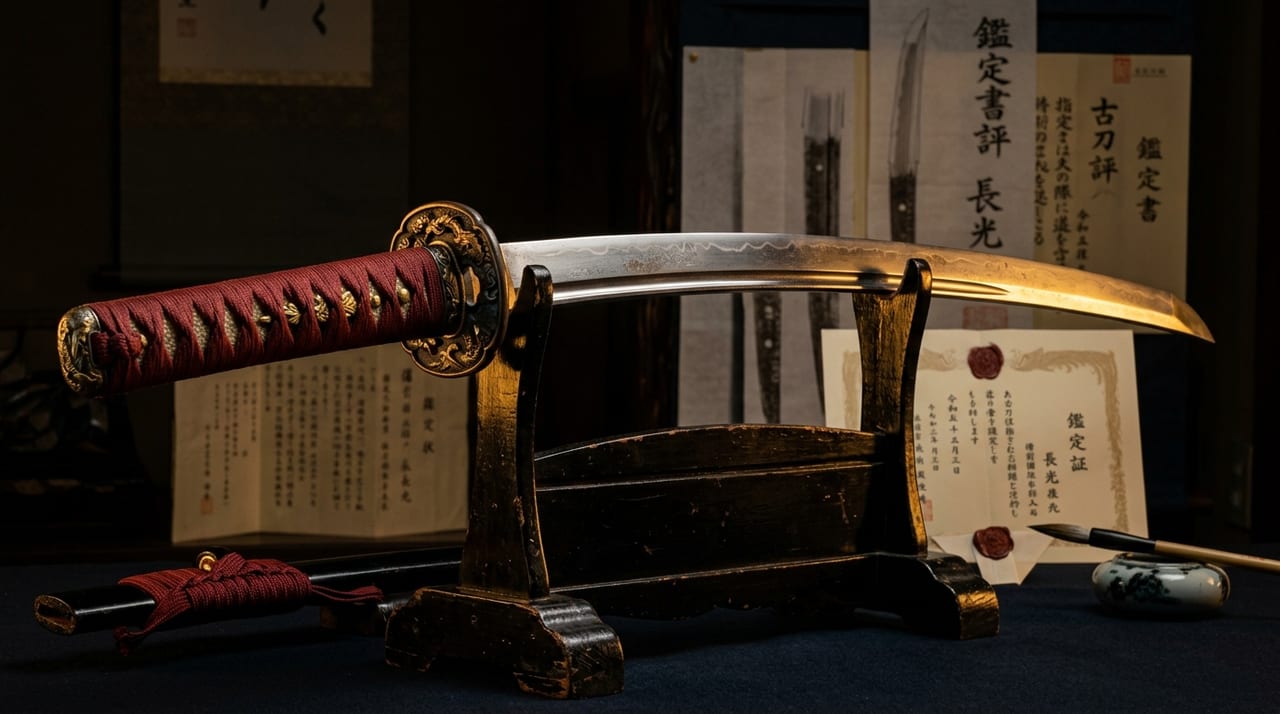 * Image is for illustrative purposes only.
Table of Contents
What Is Tameshigiri — The Practical Significance of Sword Performance Evaluation
Tameshigiri is the act of demonstrating the sharpness and durability of a completed sword on real materials, and it is the most important evaluation system in Japanese sword culture. Known today as a martial arts demonstration, it served throughout the Edo period as a bridge connecting the skill of the tōkō and the trust of the warrior class. A sword is ultimately a cutting tool, and there was a need to objectively demonstrate the performance of a blade finished by a kaji. Warriors who purchased swords demanded reliability in the tools they entrusted with their lives, while tōkō sought to demonstrate their skill to the world. At this intersection of supply and demand, the culture of tameshigiri developed and eventually became systematized as a shogunate-sanctioned institution.
The elements evaluated in tameshigiri were not limited to whether the target could be cut. The sword's overall performance was assessed from multiple perspectives.
- Presence or absence of chipping on the edge
- Bending or distortion in the sori
- Sustained sharpness
By repeating tameshigiri many times on a single sword, it was verified whether the finish of the hamon and jigane could withstand actual combat.
Establishment of the Tameshigiri System and Evaluation Framework by the Yamada Asaemon Household
The family that symbolized the tameshigiri system of the Edo period was the lineage that bore the name "Yamada Asaemon" from generation to generation, specializing in sword appraisal and tameshigiri. Serving as official retainers of the shogunate, they performed the role of "otameshiyaku" (official sword testers), formally conducting tameshigiri on the bodies of executed criminals. The founding head, Yamada Asaemon Sadatake, was active during the Genroku era and recorded the results of tameshigiri in detail in the "tameshi-chō." These records listed the mei of the sword used, the target materials for tameshigiri, and the evaluation results — an important document equivalent, in modern terms, to a sword performance evaluation database.
Terms such as "nidō," "sandō," and "yondō" were evaluation units indicating how many bodies the sword could cut through in tameshigiri, and these figures greatly influenced the market price of a sword. Swords accompanied by a kanteisho from the Yamada household were trusted as "tested" blades and prized by warriors as the finest available.
The target materials used in tameshigiri varied by era and setting, and materials said to approximate the texture of the human body were also employed.
- Bodies of executed criminals
- Bundled straw
- Bamboo
- Multiple layers of thick paper
Tameshigiri using such substitute materials was valued as a means of confirming a sword's performance in settings that did not involve an execution ground.
Documentation of Tameshigiri and Inscriptions on the Blade — The "Tameshi-mei" as Proof
The results of tameshigiri were often inscribed on the nakago of the blade. A sword engraved with characters such as "tameshi-dō futatsudō" or "tameshi gotai" was in effect carrying its own certificate of performance. This "tameshi-mei" became an extremely important element in sword appraisal, and even in the modern sword market, blades bearing a tameshi-mei carry high documentary value. However, forgeries made in later periods also exist, so careful scrutiny of the calligraphic style, depth of carving, and character style is essential.
Records of tameshigiri also functioned as feedback for tōkō. Smiths who received high evaluations were flooded with orders, while those who continued to perform poorly lost their reputations. The Yamada household's assessments functioned in practice as a ranking of tōkō.
The format of tameshi-mei followed a set pattern and often included the number and part of the targets cut, as well as the name of the person who performed the tameshigiri. These characters inscribed on the nakago are one piece of information verified alongside the mei and construction details during appraisal, and are treated as material for determining authenticity. Determining the authenticity of a tameshi-mei requires a comprehensive appraisal by a specialist.
Regional Diversity — The Distinctive Tameshigiri Cultures of Individual Domains
Official systems like that of the Yamada household developed centered on Edo, but individual domains also cultivated their own distinctive tameshigiri cultures. In the Satsuma domain, retainers had a custom of performing tameshigiri as part of their Jigen-ryū training, with retainers actually testing the blades of the domain's resident tōkō. In the Kaga domain, against the backdrop of the wealthy finances of "Kaga hyakumangoku," the system for protecting tōkō and tameshigiri evaluation were organically linked. Domain tameshigiri officials prepared evaluation documents, and tōkō within the domain competed to improve their skills based on these assessments.
What the tameshigiri cultures of the various domains shared was that they functioned as a system simultaneously fulfilling two purposes: the martial training of domain retainers and the technical advancement of tōkō. It is said that the frequency and procedures of tameshigiri differed by domain, and it is thought that the traditions of regional martial arts schools were reflected in the form tameshigiri took.
The Sword Abolishment Edict (Haitōrei) and the Continuation of Tameshigiri Culture
When the Sword Abolishment Edict (Haitōrei) of Meiji 9 (1876) prohibited warriors from wearing swords, the social foundation of the tameshigiri system was lost. However, the techniques and culture of tameshigiri did not disappear entirely.
| Period | Event |
|---|---|
| Meiji 9 (1876) | The Sword Abolishment Edict (Haitōrei) prohibited warriors from wearing swords; the Yamada household's role of "otameshiyaku" was also abolished |
| Meiji 15 (1882) | The eighth-generation Yoshitoyo died |
| Meiji and Taishō periods | Survived as a "kenjutsu demonstration" |
| Shōwa period | Systematized as a martial art |
| Present day | Carried on as a lawful martial arts practice, with demonstrations using bundles of straw and makiwara held throughout the country |
The act of tameshigiri itself came to an end as a public institution with the disappearance of the warrior class, but the idea of demonstrating a sword's performance was passed down in changed form within the training systems of iai and kenjutsu. The suemonogiri used in demonstrations today is regarded as carrying on the practical spirit of Edo-period tameshigiri.
Tameshigiri performed in the training of modern iaidō and battōdō is more often carried out for the purpose of confirming the accuracy of the practitioner's own sword path and body movement rather than testing the performance of the sword itself. While Edo-period tameshigiri was primarily focused on evaluating the tōkō and the sword, modern tameshigiri has taken on a stronger character as an assessment of the practitioner's skill, and in this respect the purposes of the two differ.
The "tameshi-chō" left behind by the Yamada Asaemon household have become invaluable primary sources in the study of Japanese swords today. Edo-period swords bearing tameshi-mei are preserved in museums and by private collectors, conveying to the present the sword evaluation culture of that era.
The Relationship Between Modern Sword Appraisal and Tameshigiri Records
Appraisal of the authenticity and value of swords in the modern era is carried out not through the performance of tameshigiri but through the comprehensive examination of stylistic features such as the activity of the jigane, the configuration of the hamon, and the overall shape and construction. Records preserved in tameshi-mei and the "tameshi-chō" are treated merely as one source that supplements provenance and do not serve as the primary basis for appraisal itself. Accordingly, when evaluating a sword bearing a tameshi-mei, a comprehensive judgment is required that includes the authenticity of the mei, the condition of the carving, and consistency with other sources.
What is important for buyers is not the presence or absence of a tameshi-mei itself, but the overall condition of the blade and whether a kanteisho from an appraisal organization is present. While records of tameshigiri are an interesting element that tells the history of a sword, it should be noted that they do not guarantee performance or value.