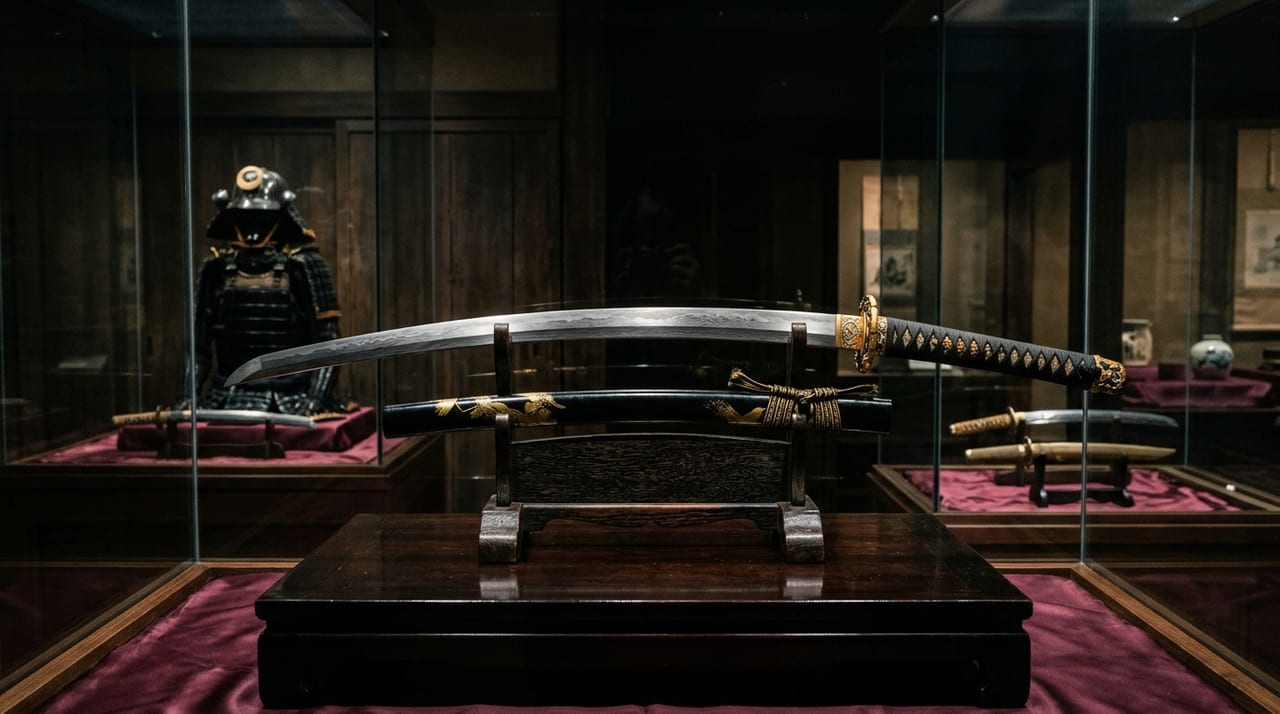
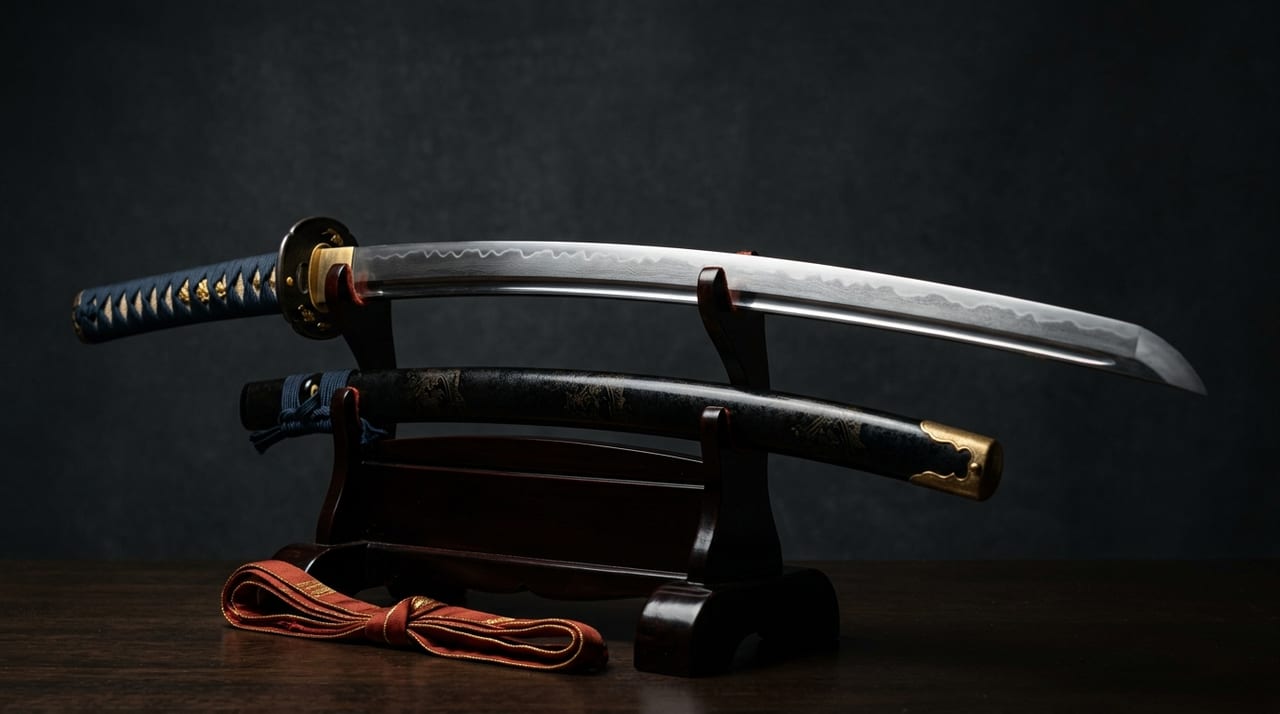
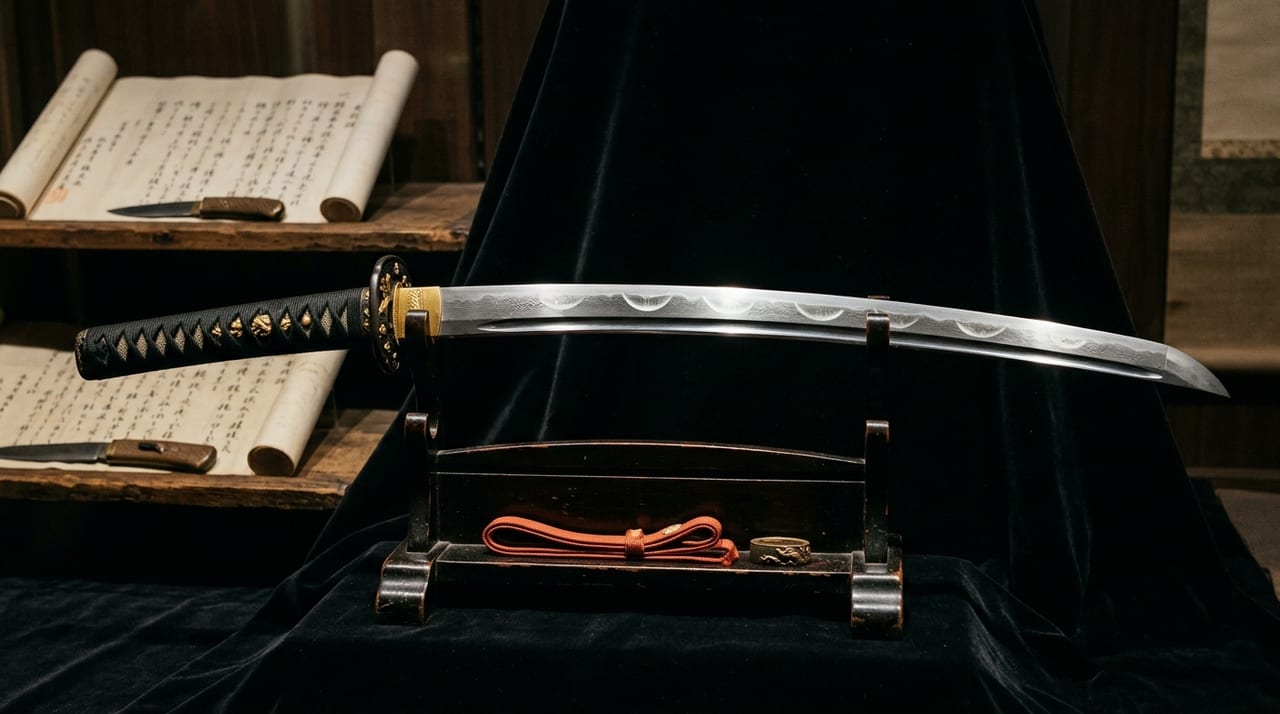
Medieval Temples and Armament | The Swords of Warrior Monks and Their Influence on the Development of Nihontō
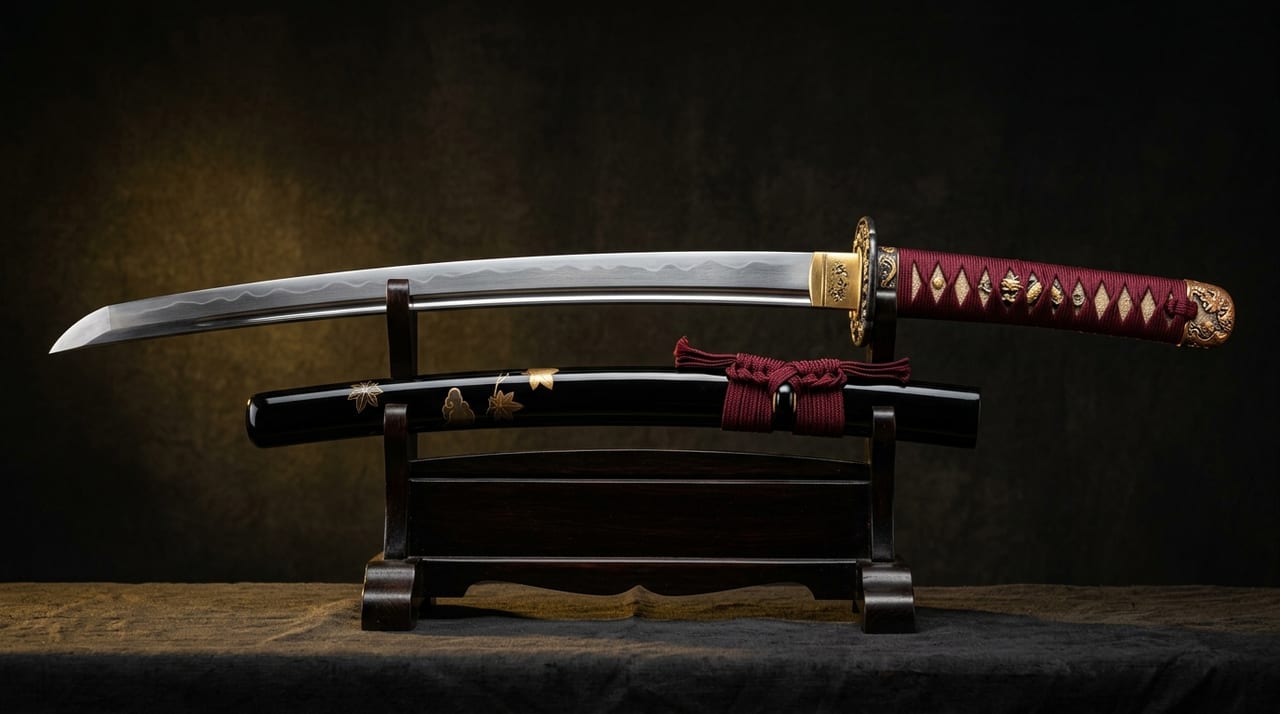 * Image is for illustrative purposes only.
Table of Contents
Militarization of Temples in Medieval Japan
From the Heian period through the Muromachi period, many Japanese Buddhist temples were armed as independent military organizations. This phenomenon unfolded in a historical context unique to Japan, distinct from the militarization seen in Western Christian monasteries.
For much of the medieval period in particular, armed practitioners known as sōhei (warrior monks) exerted a significant influence on Japanese politics and military affairs. Their existence would also play an indispensable role in the history of nihontō development.
The Rise and Development of Sōhei
Militarization as a Means of Self-Defense
In the mid-Heian period, the primary reason the great temples of Kyoto (Enryakuji, Tōdaiji, the various temples of Nara, and others) embarked on militarization was the necessity of self-defense.
As raids on temple lands by provincial estate lords and bandit gangs increased, temples found themselves in a situation where they had no choice but to build up defensive capabilities. Territorial disputes between temples also came to be resolved by force with increasing frequency.
Under these circumstances, temple disciples began training in martial arts alongside their religious practice, and this eventually led to the formation of the class known as "sōhei."
The Organization and Empowerment of Sōhei
Entering the medieval period, the organization of sōhei became more systematically structured. The sōhei of Enryakuji developed into a large-scale armed group and began to exert direct influence over Kyoto's politics and military affairs.
At one point they gained enough power that the imperial court and shogunate were compelled to change their policies when they failed to meet the sōhei's demands. The leaders of the sōhei cooperated with the temple elders (shūto) and conducted highly organized military operations. The fact that internal temple positions functioned directly as a military chain of command is a feature the sōhei shared with other warrior powers.
Sōhei and the Technical Development of Nihontō
Combat Experience and the Improvement of Sword Performance
The swords used by sōhei were not merely ceremonial objects but practical weapons used repeatedly in actual combat. For this reason, tōkō were compelled to forge swords of greater strength and superior durability in response to the demands of the sōhei.
The development of large naginata and tachi designed for simultaneous combat against multiple opponents was especially a challenge that drove tōkō in the first half of the medieval period. As the battlefield changed, so did the form of sword required. The fighting of the sōhei was an existence that confronted tōkō with these shifting demands.
Technical Exchange with Kamakura Warriors
After the Kamakura shogunate seized power following the Genpei War at the end of the 12th century, military exchanges between sōhei and Kamakura warriors became increasingly active. The technology of sword manufacturing developed under mutual influence from both sides.
The style and forging innovations of the tōkō groups that developed in Sagami Province (Sōshū) during the Kamakura period are considered to have been refined through the demand of warriors and exchanges among tōkō across the country. Meanwhile, the sōhei of Enryakuji and Tōdaiji are also thought to have benefited from the new swords of the same era. However, it is difficult to attribute any individual technique to a single group, and it is more appropriate to view this as a mutual influence in both directions.
Temple Military Power and Political Influence
Political Pressure by Sōhei
Incidents in which the sōhei of Enryakuji and Eizan marched on Kyoto and pressed political demands are repeatedly recorded throughout the medieval period. Such use of force could at times even sway the decisions of the emperor.
During the Nanbokuchō period in particular, the sōhei of various temples participated in military operations on different sides. The sōhei of this period increasingly took on the character of a purely armed group. As religious and political forces overlapped, the movements of the temples became a factor that shook the political situation in Kyoto.
Expansion into Regional Control
The power of the temples did not remain confined to the Kyoto area. Great temples such as Enryakuji and Negoroji maintained branch temples throughout the country, where they also deployed sōhei organizations.
The sōhei of these regional temples sometimes clashed with local lords and sometimes cooperated with them, exerting a great influence on regional politics and military affairs. The influence of the temples spread across regions not only as a network of scriptures and faith but as a network of real power that included military force.
Naginata and the Armament of Medieval Sōhei
The Development of Naginata
One of the weapons in which sōhei excelled was the naginata. This weapon, equipped with a curved blade at the end of a long tsuka, was well suited for use against groups of enemies on the ground.
The blade portion of the naginata had a length ranging from that of a tantō to that of a tachi, and by attaching it to a long shaft, slashing attacks from a distance became possible. This weapon is said to have been particularly effective in the group combat of sōhei.
Tactics of Group Combat
Through group combat using naginata, sōhei developed a style of fighting that did not rely solely on individual skill. By having large numbers move in the same form, they were able to compensate for differences in individual ability and push back enemies as a front.
This tradition of group combat is thought to have had some influence on the group tactics of the later Muromachi period. The technology of swords themselves and the fighting methods of the groups that wielded them changed while influencing each other.
The Religious Background and the Contradiction of Military Force
The Conflict Between Buddhist Pacifism and Armament
The existence of sōhei was fundamentally at odds with the principle of fusesshō (non-killing), a core teaching of Buddhism. In response to this contradiction, the sōhei attempted various theoretical justifications. For example, the following arguments were made.
- The argument that their own use of force was "an unavoidable act to protect the property of the temple and its believers"
- The argument that defeating enemies was interpreted as "part of one's ascetic practice"
These logics are thought to have also influenced the formation of the later samurai's honorable view of life and death. The question of how to reconcile faith and military force repeatedly arose in the minds of medieval warriors.
The Road to Decline
In the 16th century, the suppression of Buddhist powers by Oda Nobunaga greatly diminished the strength of the sōhei. The burning of Hieizan Enryakuji (1571) in particular became a symbolic event in the decline of the military power of the sōhei. Thereafter, with the establishment of unity and peace in the Edo period, the sōhei disappeared from the stage of history.
Conclusion
The militarization of temples and the activities of sōhei in medieval Japan were not a temporary historical aberration but a phenomenon that reflected the very structure of medieval society. The combat experience of the sōhei and the skill of the tōkō who endeavored to meet their demands can be understood as one of the backgrounds to nihontō earning its high esteem.
Furthermore, the tradition of the use of military force by sōhei and the logic of religious justification that accompanied it are thought to have also influenced the formation of distinctly Japanese bushidō thought, such as the later samurai's honorable view of life and death and the culture of seppuku. Medieval temples, where military force and faith intersected, are an indispensable stage for understanding the history of swords.