Cross-Border E-Commerce Payment Risk Management for Japanese Swords: Practical Measures Against Card Screening and Chargebacks in High-Value Fine Art Transactions
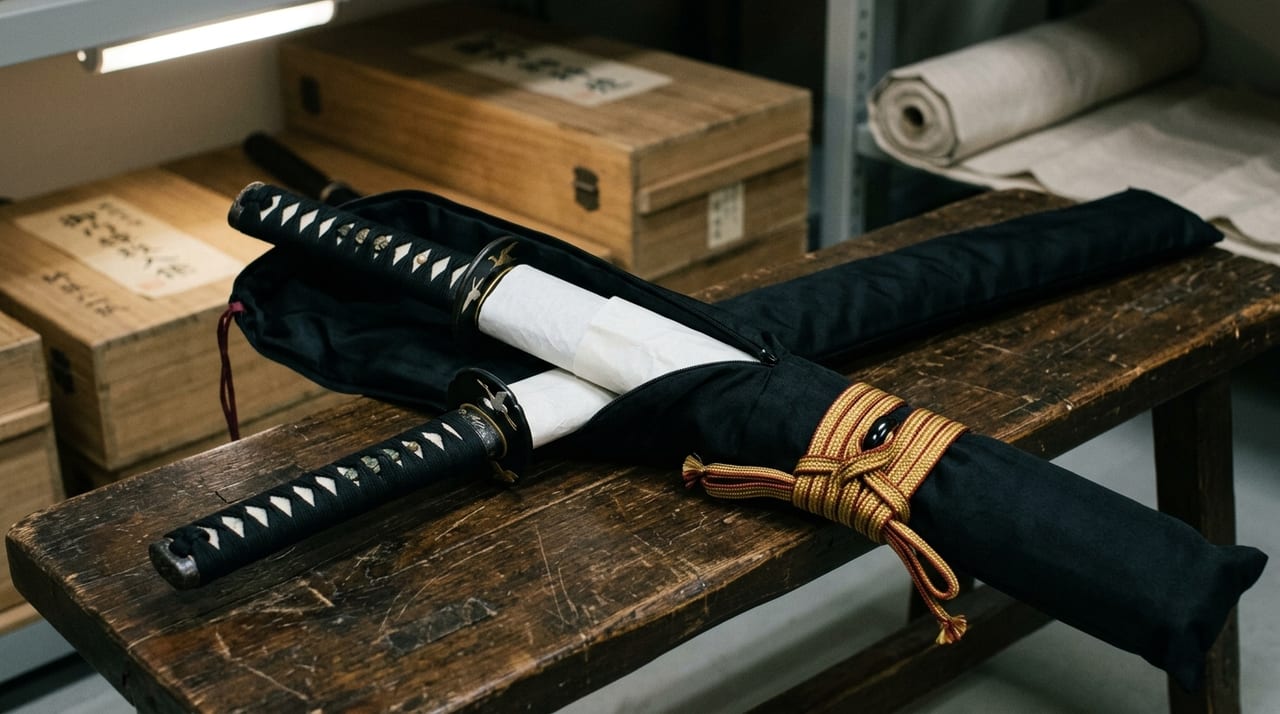
 * Image is for illustrative purposes only.
Table of Contents
The Payment Barrier Facing High-Value Fine Art Transactions
A single nihontō can reach prices ranging from hundreds of thousands to millions of yen, and transactions in this price range are always treated as exceptional from the perspective of payment processing. Unlike everyday goods or clothing sold on typical e-commerce sites, swords trade infrequently and command extremely high unit prices. This combination of "low frequency and high value" fits a profile that card companies' risk-scoring systems tend to misidentify as fraudulent transactions.
Imagine a foreign buyer attempting to purchase a nihontō on a Japanese online marketplace. The moment they enter their card information and press the "purchase" button, the card company's system springs into action. A merchant in a different country from usual, a high-risk category of fine art and antiques, and an amount dozens of times larger than an ordinary purchase — when these conditions overlap, even a legitimate transaction may result in an error screen without authorization being granted. From the seller's side, this creates the frustrating opportunity loss of a customer who showed genuine interest dropping off at the very last step.
Three Barriers in Cross-Border Credit Card Payments
The barriers that arise when using credit cards in cross-border transactions can broadly be organized into three categories.
Credit limit issues are the most direct barrier. Personal cards have spending limits set on them, and nihontō worth several million yen can exceed those limits. The issue can sometimes be resolved by notifying the card company in advance or requesting a temporary increase in the credit limit, but asking a buyer to go through such a procedure at the moment when their purchasing enthusiasm is at its peak tends to cool their interest quickly.
Fraudulent detection system false positives also occur frequently. Each card company has introduced machine-learning-based fraud scoring, and the combination of attributes — "foreign country, high value, antique" — tends to be flagged as high-risk. Even legitimate transactions can trigger temporary holds or additional 3D Secure authentication steps, which can lead to abandonment.
Industry screening by payment service providers manifests as a problem on the merchant's side. Fine art, antiques, and swords can be classified as "high-risk industries," which may result in additional documentation being required when entering into a new contract with a payment processing service, or in longer payment settlement cycles. Merchants who compare and evaluate multiple payment processing services in advance and negotiate by explicitly presenting their track record in sword sales will be better positioned to build a stable payment infrastructure.
Chargeback Risks and Countermeasures
A chargeback is a mechanism by which a cardholder files a dispute with their card company to forcibly reverse a completed transaction. For merchants, it represents the worst-case scenario of losing both the product and the payment, and if the occurrence rate exceeds a certain threshold, it can lead to termination of the payment processing service contract.
The nature of the goods is behind why chargebacks tend to occur in cross-border nihontō transactions. Swords are difficult to convey fully through photographs, and elements such as the texture of the kitae-hada, the patterns of light and shadow in the hamon, and the condition of the nakago all have aspects that cannot be understood without holding the piece in person. Subjective dissatisfaction of the "different from what I imagined" variety is more likely to arise than with manufactured goods.
Additionally, the following risks exist in international shipping:
- Claims of "not received" due to delays or loss in transit
- Refusal to accept delivery due to import country customs issues or unexpected tariffs
- False claims of "not received" after delivery (malicious cases)
An effective countermeasure is to increase the information density of the product page. Numerical data such as nagasa, sori, motohaba, sakihaba, and number of mekugi holes; a detailed condition record including the state of rust and scratches on the nakago; and high-resolution photographs from multiple angles all serve as the merchant's rebuttal evidence against "different from the description" claims. Clearly presenting return conditions and refund policies before purchase also has the effect of guiding buyers toward a more amicable resolution path than a chargeback.
The Practice of Diversifying Payment Methods
One of the most effective measures available to merchants handling high-value goods is building a payment infrastructure that does not rely too heavily on card payments. A comparison of major options is as follows:
| Payment Method | Strengths | Points to Note |
|---|---|---|
| Credit card | Simple procedure; familiar to customers | High-value payments are prone to credit limit and fraud detection issues |
| Bank wire transfer (Wire Transfer) | Not subject to credit limit constraints; suited to high-value transactions | Takes several business days until funds are confirmed |
| Escrow-type services | A third party mediates and reduces risk for both parties | Fees; restrictions on available countries |
| Cryptocurrency (under consideration) | Can be sent across borders | Price volatility risk; regulations vary by country |
Simply having a system in place to inform customers whose card payment was declined that "wire transfer is also available" will improve the transaction completion rate. Clearly stating multiple payment options in order confirmation emails and product detail pages is the basic implementation.
Exchange Rates, Price Display, and Trust Design
The prices of nihontō are normally assessed and set in yen. For foreign buyers, however, the actual payment amount varies depending on the conversion rate to their own currency, so the design of price display is directly linked to the customer experience.
By adopting a payment system with multi-currency display functionality, approximate displays in major currencies such as euros, US dollars, and British pounds become possible. However, it is essential to clearly state within the purchase flow that the actual payment will be made in yen, and that the exchange rate will be fixed at the timing set by the payment processing company. Vague exchange rate explanations can become a pretext for post-payment complaints or chargeback disputes.
The Overlap Between Identity Verification and Legal Compliance
The Secondhand Articles Dealer Act requires dealers in secondhand articles to verify the identity of the counterparty. This requirement applies to cross-border transactions as well, and requesting submission of a passport or government-issued ID from overseas customers is a legal obligation.
This identity verification process is also deeply intertwined with payment risk management. Transactions with customers whose identity has been verified serve as effective rebuttal evidence when a chargeback occurs, and also function as a deterrent against fraudulent transactions involving identity theft. Incorporating KYC (Know Your Customer) as part of the purchase flow is a practically rational choice that simultaneously achieves both legal compliance and payment risk reduction.
Handling nihontō through cross-border e-commerce means taking on a proportionate operational burden alongside the cultural value of the goods. The payment infrastructure is a behind-the-scenes area that is easy to overlook, but it is the foundation that determines transaction completion rates and business continuity, and is worth addressing as a priority issue alongside customer acquisition and content.