Choosing Japanese Swords Online — How to Read Product Photos and Specifications
 * Image is for illustrative purposes only.
Table of Contents
Why Choosing Japanese Swords Through Online Shopping Is Difficult
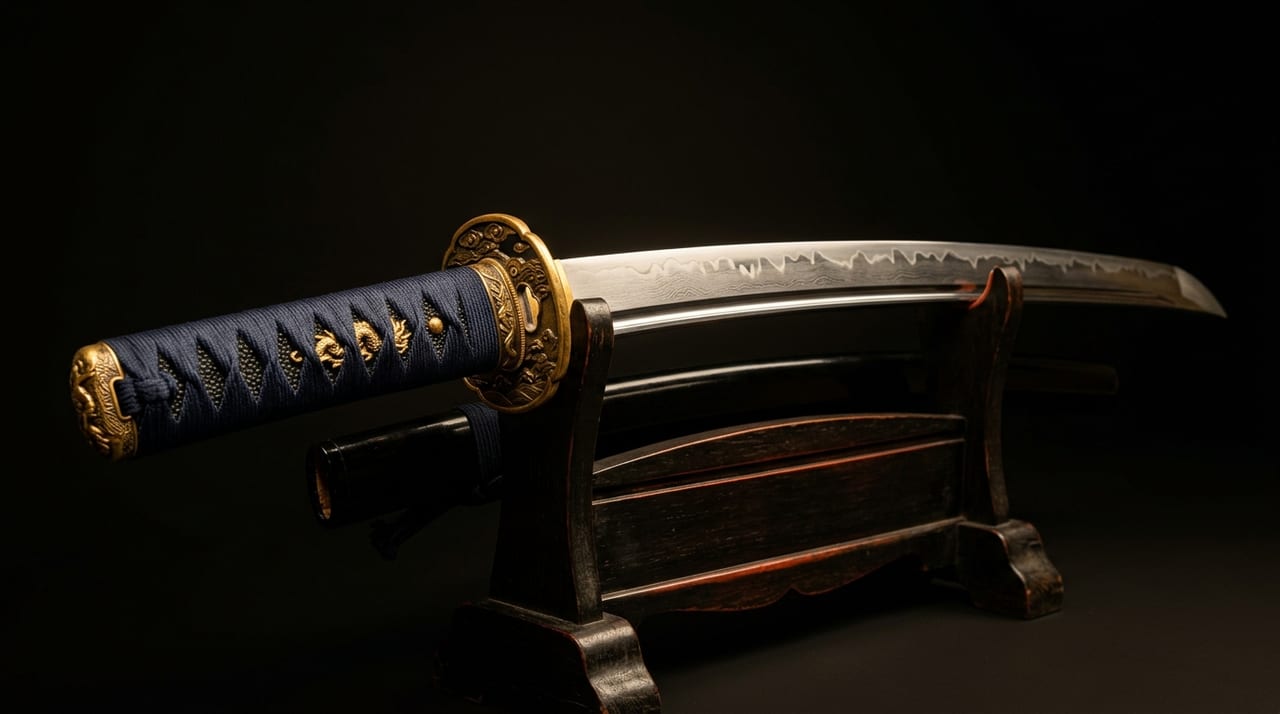
Each Japanese sword is a unique piece with its own distinct appearance, jihada, hamon, and nakago condition, and even swords forged by the same craftsman from the same period are never identical. While this is common to antiques and art in general, Japanese swords have the additional characteristic that elements such as the degree of curve, the difference between hilt width and blade tip width (stance), the activity of the hamon, and the texture of the jihada—which are difficult to fully convey through photographs alone—become the core of evaluation.
Therefore, when selecting swords online, the quality of your purchasing decision is greatly influenced by how you interpret the displayed photographs and specifications. Since you cannot rely on in-person inspection at a physical store, developing the literacy to maximize the use of photographic information becomes the first step toward a satisfying purchase.
Points to Verify in Full-Body Photographs
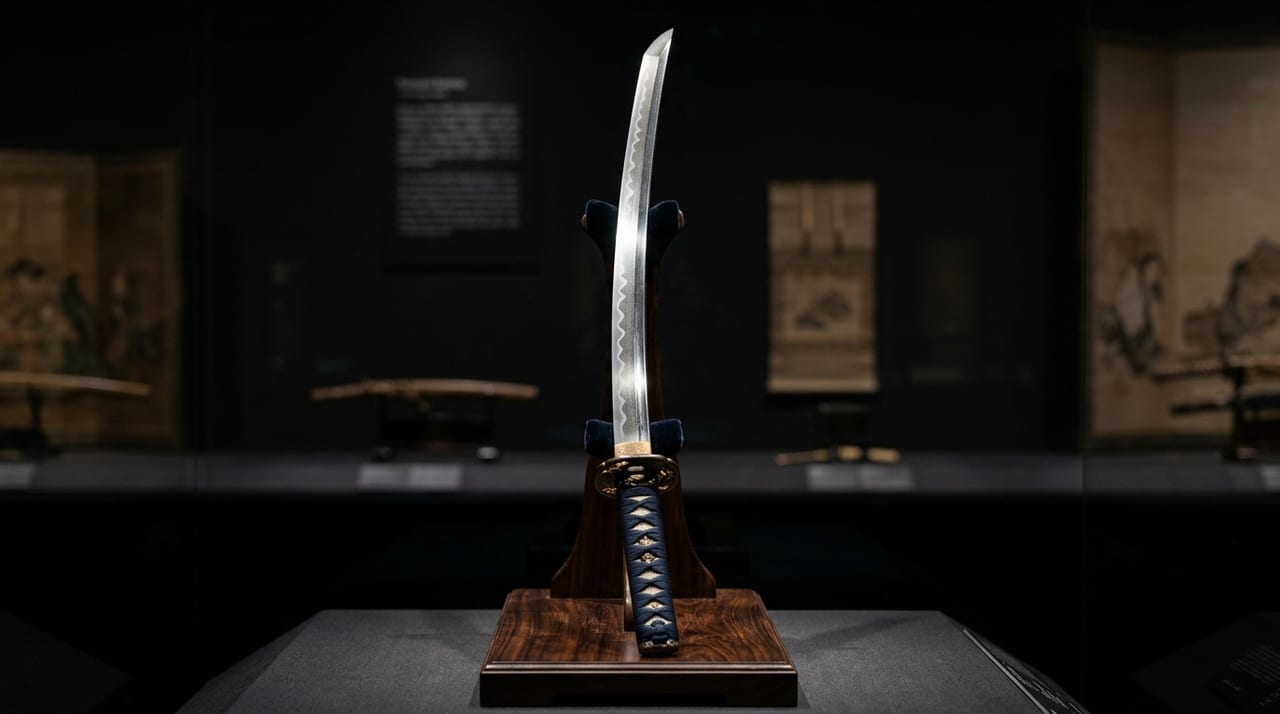
First, you should examine the photograph showing the full sword body, known as the sugata (overall form). The following points are essential basic information for estimating the period and school:
- The position of the curve (koshi-zori, chu-zori, saki-zori)
- The ratio of hilt width to blade tip width
- The size and shape of the kissaki (blade point) (inobushi kissaki, chu-kissaki, o-kissaki, etc.)
You should also verify whether the full photograph is lit uniformly from the top to bottom of the blade and shot from directly above. Photographs taken at an angle or with partial shadows can misrepresent the actual degree of curve.
Next, keep in mind that the kasane (blade thickness) is difficult to judge from photographs alone. It is important to always verify the thickness value in the specifications table (length, curve, hilt width, blade tip width, thickness) using numerical data, rather than judging solely by the appearance in photographs.
Tips for Reading the Hamon and Jihada from Photographs
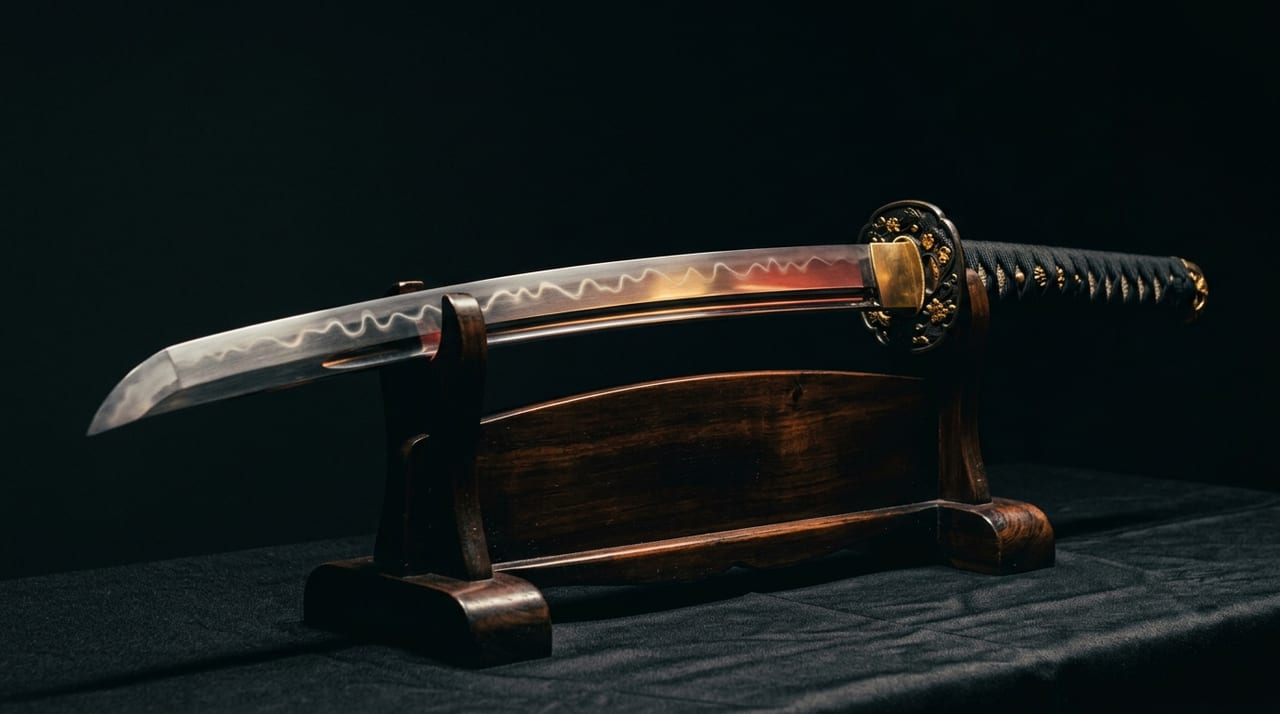
The hamon (the pattern created on the blade edge through heat treatment) can appear very different depending on how it is lit. You should develop the habit of comparing the type of hamon described in the photograph caption or description text—whether it is a suguha (straight line), choji-midare, or gunome-midare (complex undulating patterns)—with the actual photograph to verify.
For the jihada (steel grain pattern), the type of forge grain such as itame, mokume, masame, or ayasugi-hada is often described in the explanatory text. However, the fine details of the jihada (such as jikage and nie) are difficult to judge completely even in magnified photographs viewed on a screen. If the description includes information about preservation condition, presence or absence of rust, or presence or absence of damage, focusing on these details provides judgment materials beyond what photographs alone can offer.
Points to Verify Regarding the Nakago (Tang), Signature, and Certification
Photographs of the nakago (the part of the blade that fits inside the hilt) are an important source of information for verifying the following points:
- Presence or absence of a signature
- The content of the signature inscription
- The type of file marks
- The shape of the tang point
Whether the sword is zaigin (has a signature) or mugin (lacks a signature) directly impacts price and valuation, so you should always verify this individually.
If the sword comes with a certificate of authenticity (such as those issued by the NBTHK or Japan Sword Preservation Society), verify whether the grade designation (such as hozon touken or tokubetsu hozon touken) matches the creator's name and period documented on the actual blade. If a photograph of the certificate is included, reading through the certificate number and issuing organization name provides additional confidence.
Practical Perspective When Reading Specifications
The specifications section of a product page typically includes items such as the following:
- Length (blade length)
- Curve
- Hilt width
- Blade tip width
- Thickness
- Weight
- Period
- Country
- Presence or absence of signature
These numerical values should be used as objective information to correct impressions from photographs. For example, a photograph may show a curve that appears shallow, but the numerical specifications reveal a standard curve; conversely, a narrow blade tip width that is difficult to notice in photographs may become apparent in the specifications.
While blade length is often displayed in centimeters, it may also be expressed in the traditional Japanese measurements of shaku and sun. The general guidelines are as follows:
| Measurement | Classification |
|---|---|
| 2 shaku (approximately 60.6 cm) | Dividing line between tachi/uchigatana and wakizashi |
| 1 shaku (approximately 30.3 cm) | Dividing line between wakizashi and tanto |
Knowing these guidelines makes it easier to estimate the sword type from numerical specifications. Regarding weight, the value can vary significantly depending on whether it includes the koshirae (fittings) or only the blade itself, so you should verify which state the measurement is based on.
Attention is also required regarding the period and country designations. When entries such as Edo Period or Nanboku-Chō Period are listed in the Period field, the nature of the information differs depending on whether it is based on the date inscribed in the signature or is an estimate (gokitsutsu) based on form, jihada, and hamon. Developing the habit of distinguishing from the description whether information is presented as definitive fact or as an appraisal judgment helps you avoid excessive expectations and misunderstandings.
Comparing and Examining Photographs and Descriptions
Photographs, specifications, and descriptions each communicate information about a single sword from different angles. Photographs convey visual impressions, specifications provide objective numerical data, and descriptions convey background information such as appraisal judgments and provenance. Rather than relying on only one, comparing all three and making a comprehensive judgment is the basic approach to reducing mistakes when selecting swords through online shopping.
For example, even if a photograph is taken at an angle that makes the hamon unclear, if the type of hamon is specified in the description, you can infer the nature of the hamon to some extent. Conversely, the individual character of the jihada that cannot be determined from specifications alone, and subjective evaluations such as the overall beauty of form of the blade, rely heavily on the impression conveyed by photographs. You should be conscious of how to read them in a way that complements one another.
When considering a purchase, the basic approach is to compare both the photographic impression and the numerical specifications, and if you have questions, contact the seller. Developing the habit of carefully cross-referencing photographs, descriptions, and numerical information is the most practical method for reducing failures when selecting swords online.
TOUKENZA allows you to view Japanese swords offered for sale in an online catalog and make considerations based on the displayed photographs and specification information. If you have any questions, you can also contact us through the inquiry form.