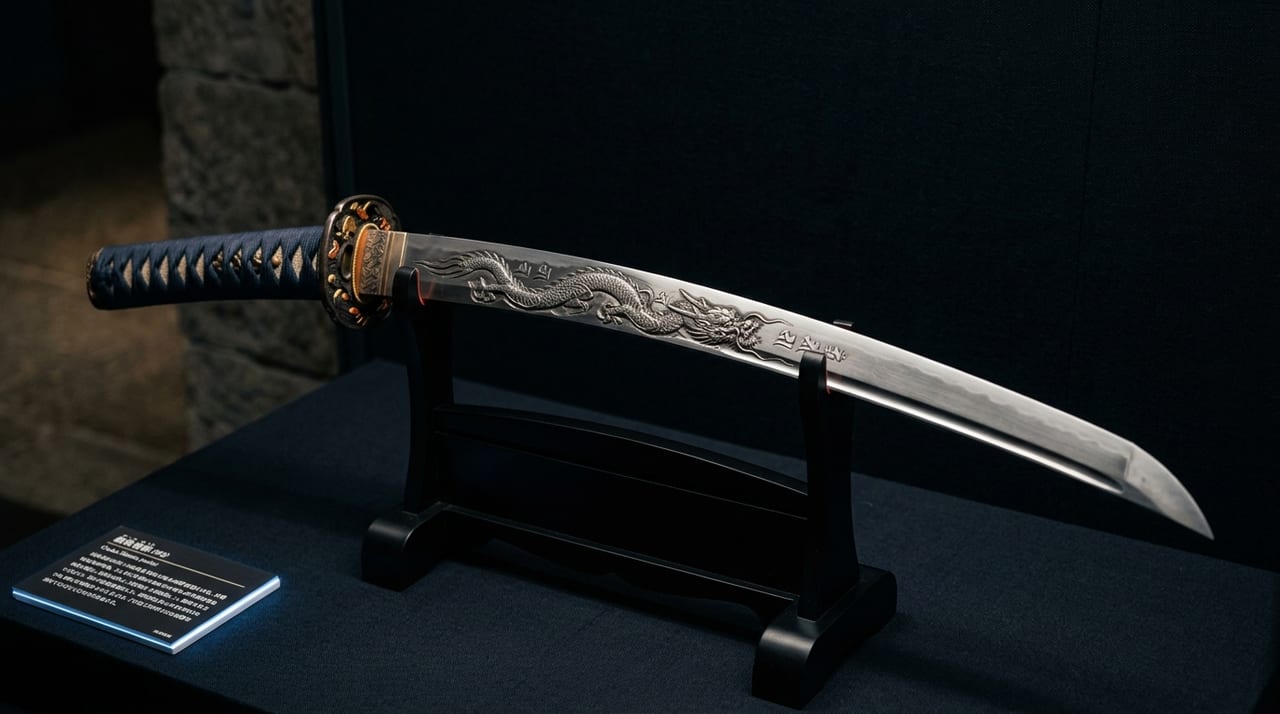
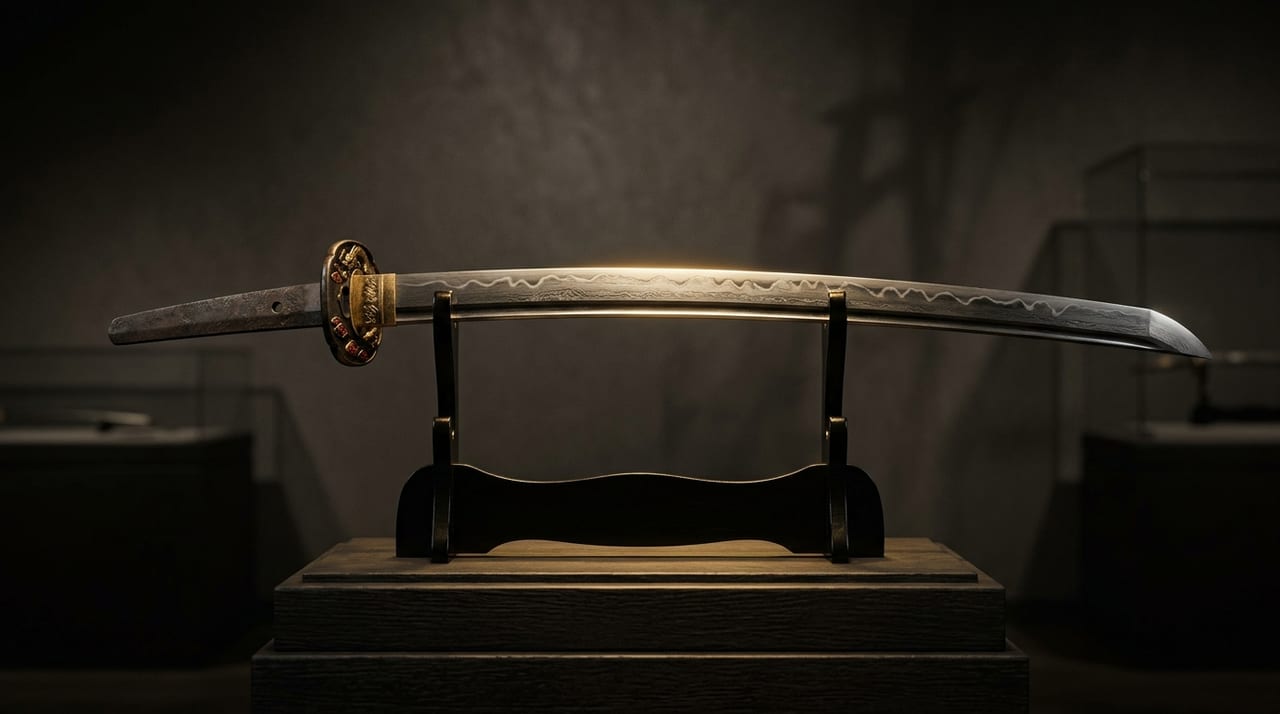
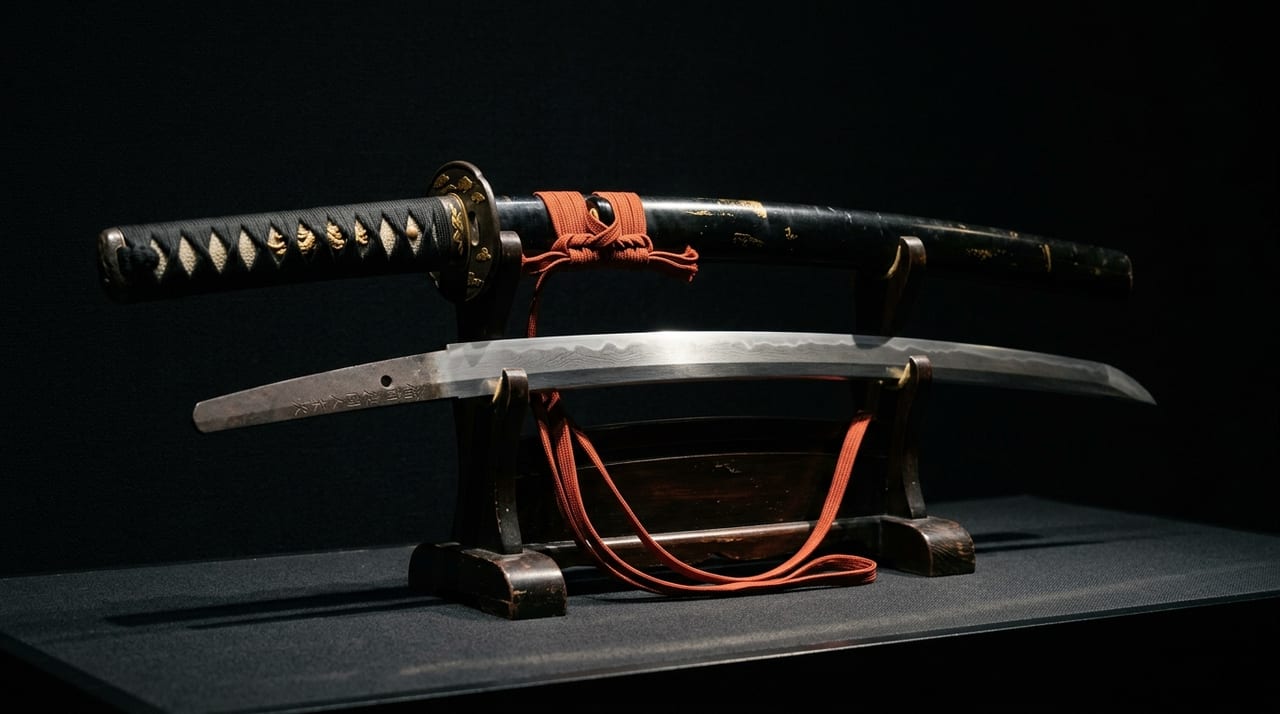
Mutsu no Kami Yoshiyuki — Osaka Shinto Smith and the Blade of Sakamoto Ryoma
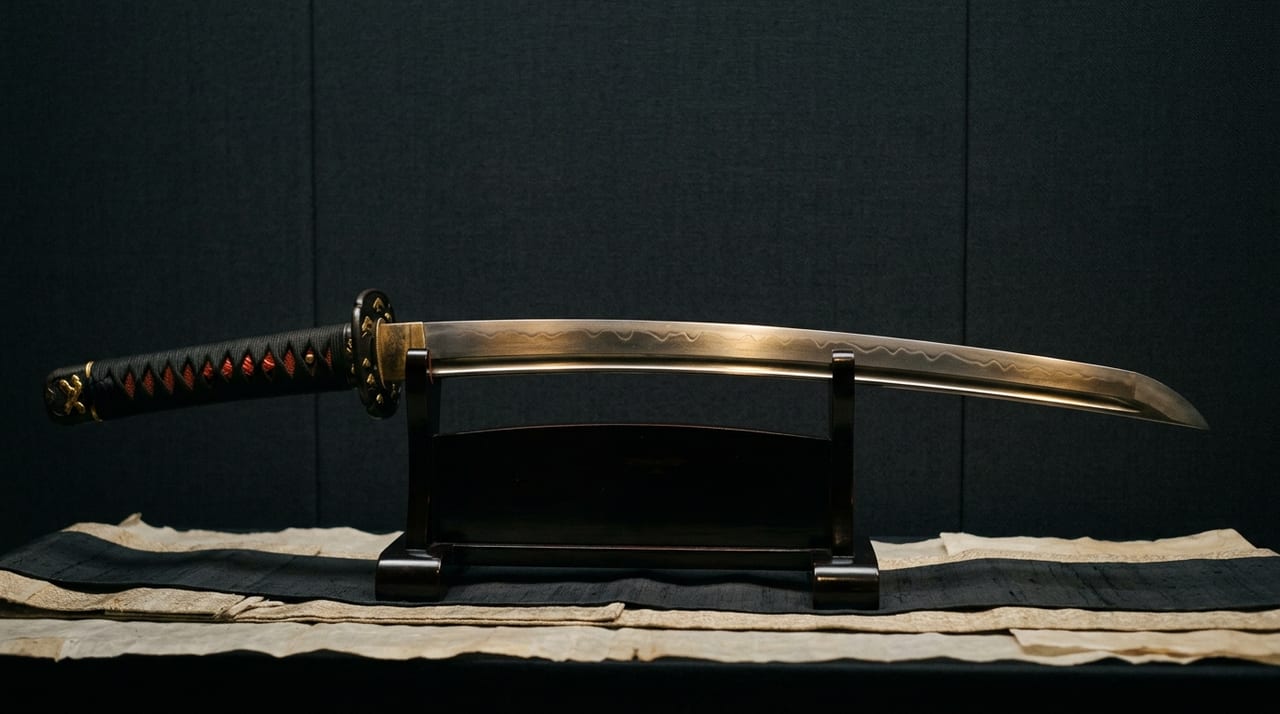 * Image is for illustrative purposes only.
Table of Contents
Mutsu no Kami Yoshiyuki — One of the Representative Sword Makers of Osaka Shintou
Mutsu no Kami Yoshiyuki (陸奥守吉行) is said to have been a sword maker active in Osaka from the early to mid-Edo period. "Mutsu no Kami" is a court-granted title (juryo-mei), and while it was not an actual rule of Mutsu Province (currently part of the Tohoku region), it was one of the titles bestowed upon sword makers of the time based on their skill and reputation. Historical records diverge regarding his birth and death dates and his line of masters, making it difficult to settle on one definitive theory, but he is said to have been a sword maker who honed his skills within the Osaka sword maker community and established his own distinctive style.
Osaka Shintou refers to a group of swords that developed as the center of sword demand shifted to the Kansai region—particularly Kyoto and Osaka—after the Edo period began. It is known for producing master craftsmen such as Inoue Shinkai and Tsuda Sukehiro. The toranba hamon, which Tsuda Sukehiro perfected—a brilliant hamon pattern reminiscent of wave undulations—is highly valued even today as a design symbolic of Osaka Shintou. Mutsu no Kami Yoshiyuki is counted among the sword makers who were active during this flourishing period of Osaka Shintou, and is often spoken of as a figure that speaks to the high technical level of Osaka smithing at the time.
The Historical Context of Osaka Shintou
When discussing the history of Japanese swords in the Edo period, the existence of Osaka Shintou is indispensable. As the Sengoku period came to an end and an age of peace and stability arrived, swords began to take on more spiritual and cultural significance as symbols of samurai status, rather than purely as tools of warfare. During this time, skilled sword-making craftsmen gathered in the economically prosperous city of Osaka, and a distinctive sword culture is said to have flourished there.
The sword makers of Osaka Shintou are said to have pursued sword-making that achieved both functionality and aesthetic beauty, paying particular attention to the beauty of the jihada and the brilliance of the hamon. As each sword maker competed in individuality and collectively elevated Osaka's sword culture to high levels, Mutsu no Kami Yoshiyuki's name is also positioned within this development.
- Inoue Shinkai — A refined and dignified style
- Tsuda Sukehiro — Dynamic toranba hamon full of vitality
- Mutsu no Kami Yoshiyuki — One of the sword makers active during the flourishing period of Osaka Shintou
However, detailed accounts based on reliable primary sources regarding the specifics of Yoshiyuki's individual style and the detailed characteristics of his surviving works are limited. For this reason, I will confine myself to introducing him as one figure within the larger current of Osaka Shintou.
Sakamoto Ryoma and the "Yoshiyuki" Sword — A Widely Known Anecdote and Its Authenticity Debate
The primary reason why the name Mutsu no Kami Yoshiyuki is widely known in modern Japan is that Sakamoto Ryoma, a patriot of the late Edo period, is said to have possessed a sword bearing the signature "Mutsu no Kami Yoshiyuki." This sword, which Ryoma is said to have carried, is passed down through the ages along with anecdotes that it was with him during critical moments of the late Edo period, including the Teradaya Incident, and has attracted the attention of many people as one of the tools symbolizing Ryoma's life.
However, it is also true that various views have been presented among researchers and enthusiasts regarding swords associated with Sakamoto Ryoma, particularly concerning their provenance and the authenticity of surviving blades. While multiple swords bearing the signature "Mutsu no Kami Yoshiyuki" are said to have been handed down, discussions continue regarding definitive evidence supporting that they were made by Yoshiyuki himself, and some voices point out the possibility that their provenance was attributed in later ages. In the world of Japanese swords, which has experienced the tumultuous late Edo period, followed by the Meiji-era sword prohibition and the scattering of sword collections after World War II, it is not uncommon for the details of transmission to become increasingly unclear over time. Therefore, regarding the sword of Yoshiyuki spoken of as "Sakamoto Ryoma's beloved sword," rather than treating it as a definitive historical fact, it would be a more sincere approach to savor it as an anecdote for which various accounts exist, considering it alongside the Osaka Shintou techniques that underlie it and the atmosphere of the late Edo period.
Such debates on authenticity themselves are excellent examples of how Japanese swords are not merely metal workings, but are "tools that carry stories," passed down through the ages while being connected to the lives of their owners and historical events. The depth of Japanese swords as cultural treasures is reflected in the fact that each signature inscribed on the blade and each detail of provenance that has been transmitted continues to be the subject of interest and scrutiny by later generations.
Modern Evaluation of Mutsu no Kami Yoshiyuki and Summary
While Mutsu no Kami Yoshiyuki is a sword maker about whom no definitive theory has been firmly established regarding his birth and death dates or line of masters, he is a rare sword maker whose name is widely known even in the modern era as a figure who played a role in the brilliant age of Osaka Shintou and, above all, as a figure connected to Sakamoto Ryoma, a hero of the late Edo period. He is sometimes mentioned alongside master craftsmen of his era such as Inoue Shinkai and Tsuda Sukehiro, and has become one of the symbolic names through which the high level of technique and aesthetic sensibility produced by Osaka smithing is transmitted.
Japanese swords captivate our hearts not only through their aesthetic form and the value of the sword-making techniques themselves, but also through the "stories" of who used them and in what circumstances. The appeal that the name Mutsu no Kami Yoshiyuki holds can be said to have been shaped as a result of the interweaving of verified historical facts and anecdotes passed down through the ages. Is not enjoying such layered history itself, including discussions of authenticity, one of the joys of engaging with Japanese sword culture?
At TOUKENZA, you can view an online catalog of Japanese swords—including those with such historical backgrounds—submitted by various craftsmen from different eras. Those interested in the world of swords are invited to explore the listing page and find a blade that catches your eye. If you have any questions, please feel free to contact us via the inquiry form.