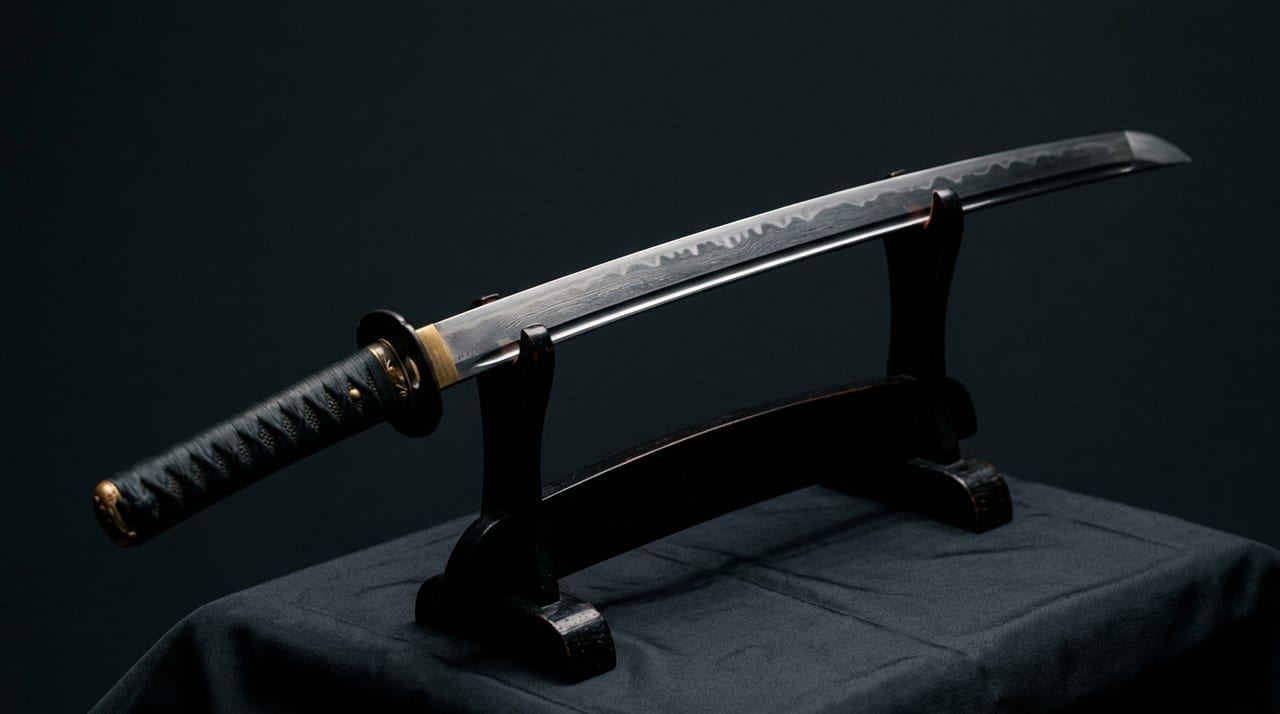
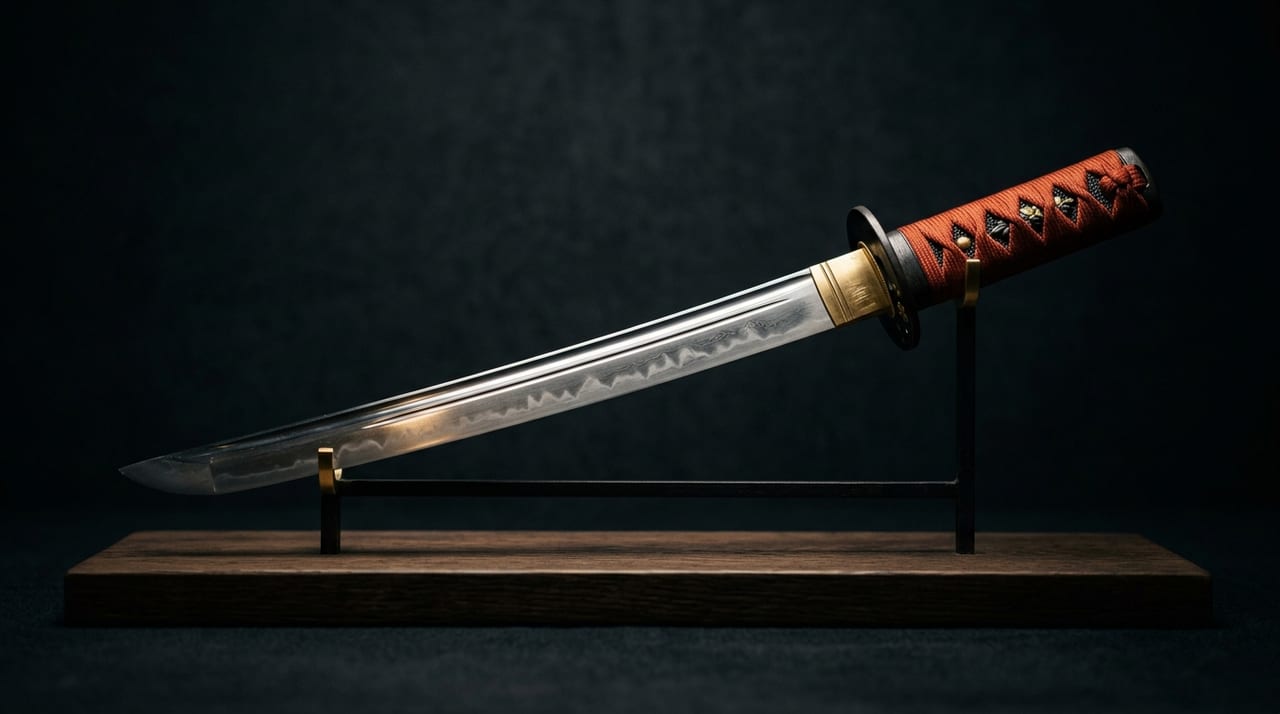
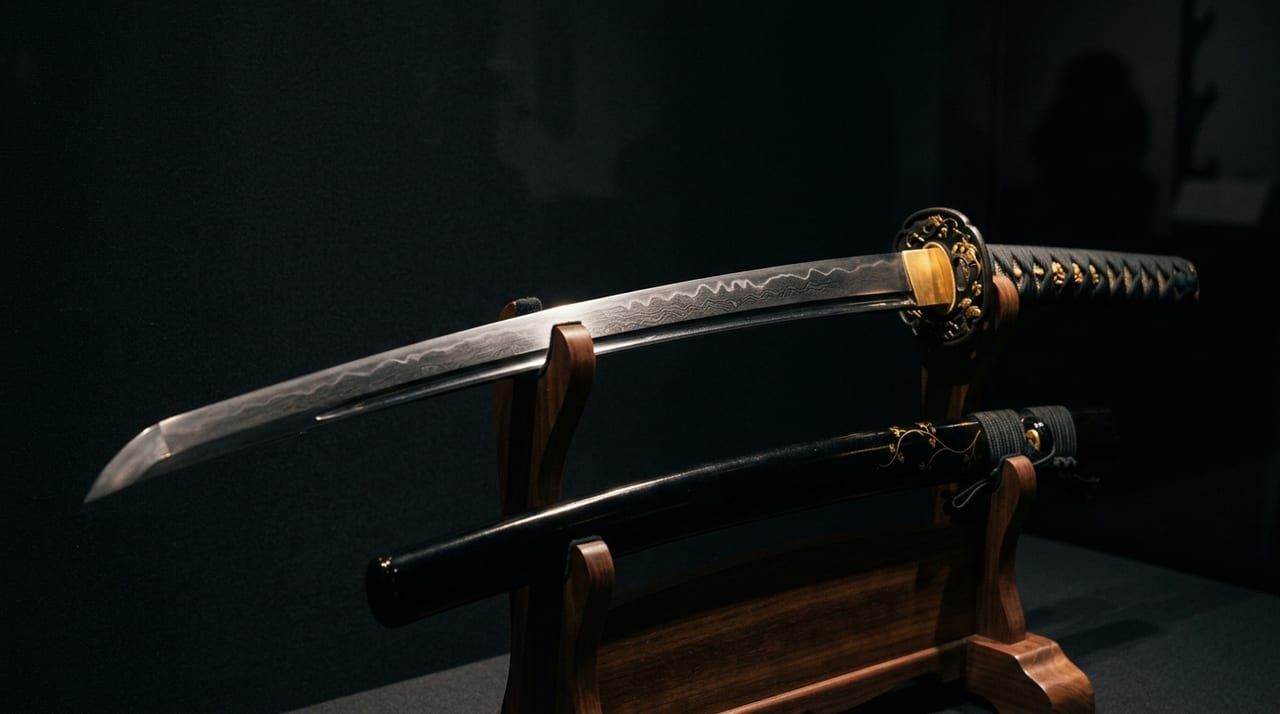
Gō Yoshihiro — A Tōkō of the "Ten Disciples of Masamune" with Extremely Few Extant Works, and His Legend
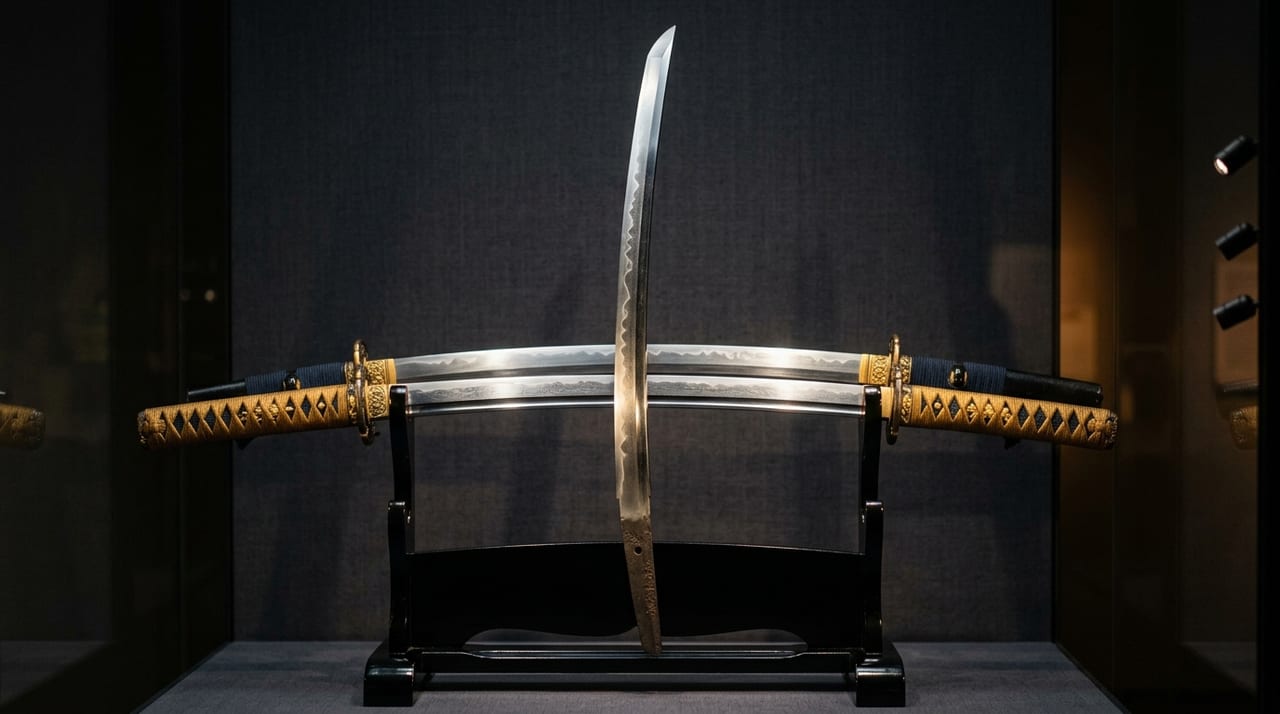 * Image is for illustrative purposes only.
Table of Contents
Who Was Gō Yoshihiro — A Nanbokuchō Tōkō with Scant Historical Records
Gō Yoshihiro is a tōkō said to have been active during the Nanbokuchō period in Etchū Province (present-day Toyama Prefecture). His base of activity is believed to have been Gō in Etchū Province (around present-day Fushiki in Takaoka City), and his family name "Gō" is also said to derive from this place name. Historical sources on his dates of birth and death and on his lineage of training are scarce, and reliable biographical information is extremely limited. Compared with other master smiths of the same era, the true figure of Gō Yoshihiro himself remains shrouded in mystery in many respects.
This scarcity of sources speaks not merely to the loss of records but to the unique nature of the reputation of Gō as a tōkō. The high quality of his works and the paucity of reliable surviving documentation together make Gō Yoshihiro a uniquely exceptional figure in the history of the nihontō.
The Meaning of the Saying "I Have Never Seen a Gō or a Ghost"
An old saying has been passed down in the world of swords: "I have never seen a Gō or a ghost." This saying originates from the fact that almost no swords attributed as genuine works of Gō Yoshihiro have been confirmed to bear his own mei (zaimei). Whereas many master smiths have left tachi and swords bearing their mei that survive to the present day, the great majority of works attributed to Gō are mumei, and it is only through experts in sword appraisal kiwaeru — determining from characteristics such as form, jigane, and hamon that a piece is "by Gō" (kiwaeru: to determine the maker through appraisal) — that such works become known to the world as works of Gō Yoshihiro.
This saying is not a mere metaphor but is still passed down among sword enthusiasts today as a concise illustration of how heavily the assessment of Gō Yoshihiro as a tōkō has depended on the eyes of appraisers.
His Standing among the Ten Disciples of Masamune
Gō Yoshihiro is frequently counted as one of the "Ten Disciples of Masamune," the group of students said in later accounts to have studied under Masamune (Okazaki Masamune), who brought the Sōshū-den tradition to its height from the late Kamakura period through the Nanbokuchō period. Among the names cited as the Ten Disciples of Masamune are the following tōkō who developed the techniques of Sōshū-den in various regions:
- Gō Yoshihiro
- Hasebe Kunishige
- Shizu Saburō Kaneūji
- Osafune Kanemitsu
However, the grouping itself of the "Ten Disciples of Masamune" is generally regarded as having the character of a framework organized and transmitted in later times rather than a definitive record of a master-student relationship based on primary sources contemporary with Masamune. In the case of Gō Yoshihiro as well, no reliable historical source has been confirmed that demonstrates whether he studied directly under Masamune, and it is necessary to understand this as a traditional placement based solely on stylistic lineage and later assessment.
The Gō Style within Sōshū-den — Characteristics of His Work
Swords attributed to Gō Yoshihiro are said to have jigane and hamon rich in the activity of nie, the hallmark of Sōshū-den. Sōshū-den is a forging tradition said to have been established by Masamune, characterized by ji-nie in the jigane and the appearance of activities such as kinsuji and sunagashi in the hamon. Works attributed to Gō have been praised as inheriting these Sōshū-den techniques while displaying a distinctive refined form and brilliance in the jigane and hamon.
That said, given the nature of attributing mumei works to Gō through appraisal, opinions among experts may differ on the details of individual pieces. When discussing the style of Gō Yoshihiro, the practical approach is to understand it as a traditional framework for assessment, bearing in mind the premise that reliable zaimei works are scarce.
Extant Works Attributed to Gō and Their Influence on Later Generations
Among the swords handed down as works of Gō Yoshihiro, some are known to have been called by individual names (meibutsu) in later times and treated as important cultural properties. Examples transmitted as representative works of Gō include the following:
- Tomita-Gō
- Inaba-Gō
These works have all been handed down as mumei tachi and swords bearing no mei on the nakago, and have been associated with Gō Yoshihiro through provenance and appraisal.
In being mumei yet maintaining high esteem, Gō Yoshihiro is also a tōkō who symbolizes the very depth of nihontō appraisal. As an embodiment of the traditional methodology of nihontō appraisal — whereby the maker is inferred through the accumulated information that the sword itself communicates through its jigane, hamon, and form, even without the direct evidence of the maker's signature — Gō Yoshihiro continues to hold a special place in the history of swords to this day.
What the Criterion of the "Mumei Master Smith" Teaches Us
The existence of a tōkō like Gō Yoshihiro teaches us that, in evaluating the nihontō as a cultural artifact, the presence or absence of a mei is not everything. Zaimei works are valuable as primary information that directly indicates the maker and period of production, but even when mumei, experts narrow down the maker and period with high accuracy from the accumulation of elements such as the kitae-hada of the jigane, the activity of the hamon, and the balance of the form. This practice of appraisal itself underpins the perspective that views the nihontō not merely as a weapon but as a work of art in which the skill and aesthetic sensibility of the kaji are concentrated.
The history of assessment surrounding Gō Yoshihiro has value in the very fact that swords forged in the turbulent age of the Nanbokuchō period continue to be the subject of debate among experts even after several hundred years. Precisely because direct evidence in the form of a mei is scarce, appraisers of later generations have continued to examine the details of the jigane and hamon, and it is that accumulation that has supported the assessment of Gō Yoshihiro as a tōkō to the present day.
Gō Yoshihiro as Seen from the Present Day
For modern nihontō enthusiasts, Gō Yoshihiro is often spoken of as "a legendary tōkō whose actual works one has almost no opportunity to see." The reason the saying introduced at the outset — "I have never seen a Gō or a ghost" — continues to be used to this day is that this very rarity is what makes the name of Gō Yoshihiro something special.
In studying the history of the nihontō, knowing the existence of tōkō like Gō Yoshihiro — whose reputation has been formed through mumei works rather than celebrated zaimei pieces — is one indispensable perspective for understanding the depth of the nihontō as a cultural artifact.
TOUKENZA introduces backgrounds related to the history and appraisal of nihontō such as these through columns, and the swords listed for sale can also be browsed through the online catalog.