Shizu Saburō Kaneuji — From Yamato to Mino, Founder of Naoe-Shizu and One of the Masamune Jūtetsu
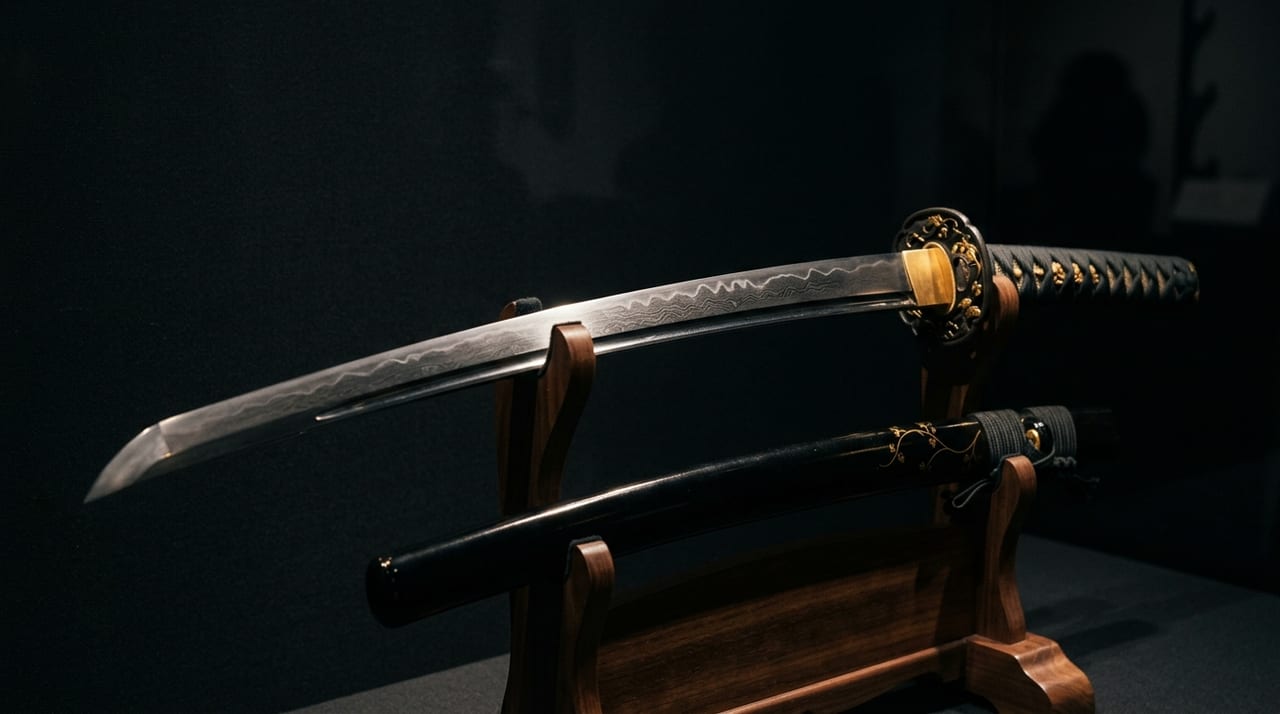 * Image is for illustrative purposes only.
Table of Contents
From Yamato to Sōshū, and Then to Mino
Shizu Saburō Kaneuji (shizu saburō kaneuji) was a tōkō active during the Nanbokuchō period and is counted among the Masamune Jūtetsu as a distinguished master. He is said to have originally come from the Tegai School of Yamato, later studied under Sōshū Masamune, and then moved to Shizu in Mino Province (near present-day Kaizu City, Gifu Prefecture) where he forged blades.
The fact that Kaneuji's biography encompasses multiple traditions — Yamato-den, Sōshū-den, and Mino-den — is an important key to understanding his working style.
A Working Style Where Yamato-den and Sōshū-den Meet
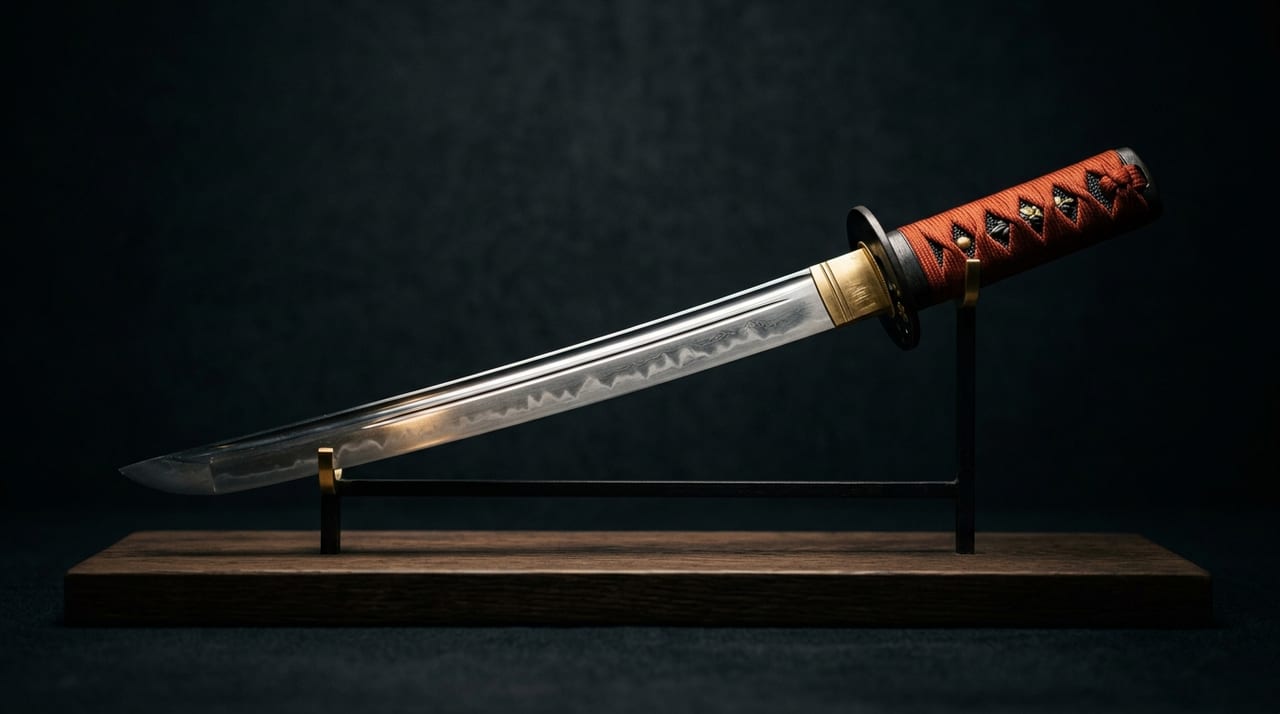
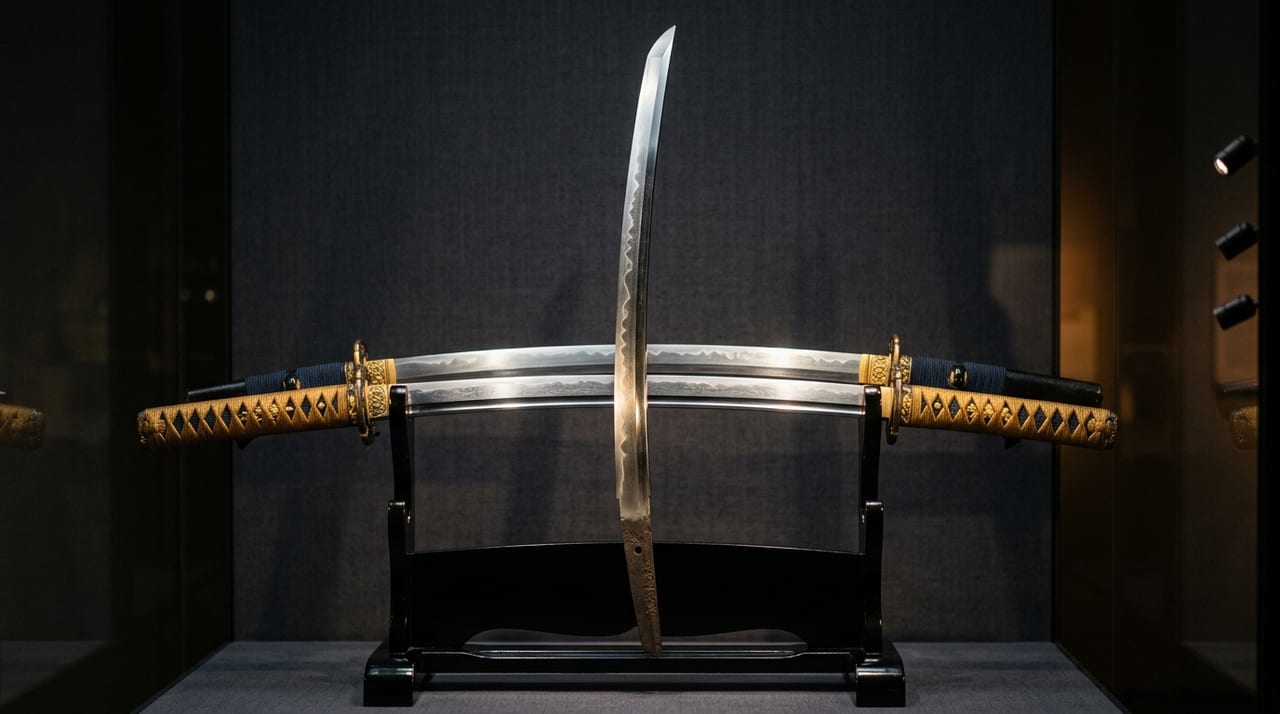
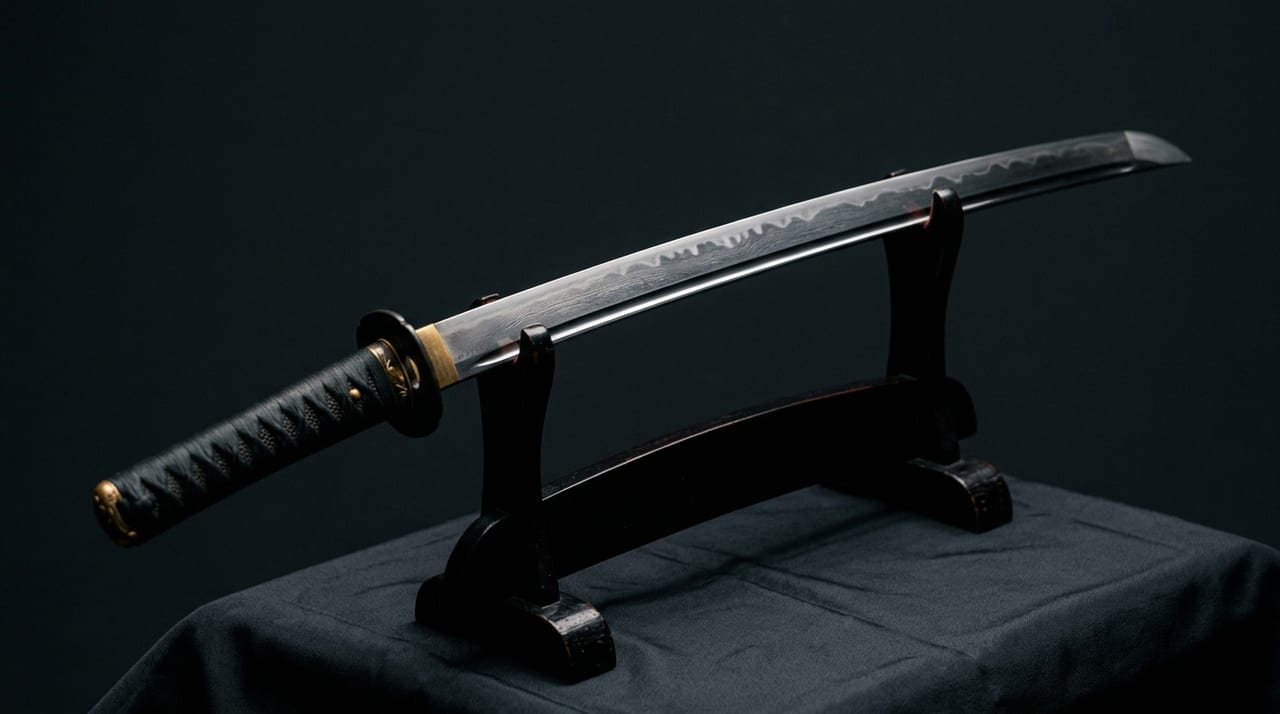
Kaneuji's working style is said to be characterized by the fusion of masame-grained jigane derived from Yamato-den and a hamon with strong nie derived from Sōshū-den. Works are known in which the jigane shows itame mixed with masame, the hamon combines notare with gunome, and thick nie is present.
This quality — as though the splendor of Sōshū-den has been layered over a Yamato foundation — is thought to have influenced the formation of the later Mino-den working style, and Kaneuji is regarded as one of the sources of the Mino blade tradition.
The Lineage Leading to Naoe-Shizu
The school that followed Kaneuji moved to Naoe, near the site of Shizu, and formed the group of tōkō known as "Naoe-Shizu." The works of the founder Kaneuji and the works of Naoe-Shizu are often discussed as stylistically distinct, and this distinction is an important subject in the world of sword appraisal.
In this way, Kaneuji is spoken of not only as an individual master smith but also as the starting point of a current that flows toward the development of the Mino blade tradition.
The Framework of the Masamune Jūtetsu
The Masamune Jūtetsu is the collective term for ten tōkō said to have studied under Masamune, the celebrated master of Sōshū, and Kaneuji is counted among them. However, this framework was formalized in later sword literature; the composition of the ten varies across different accounts, and whether all of them actually became pupils of Masamune is considered difficult to verify from historical sources. In that sense, the Masamune Jūtetsu is better understood not as strict historical fact but as a schematic showing the broad current by which "the influence of Sōshū-den spread to tōkō across the provinces." In Kaneuji's case as well, a working style in which nie activity in the Sōshū manner has been added to a Yamato origin is itself the most telling evidence supporting the tradition.
The Form of Blades in the Nanbokuchō Period
The Nanbokuchō period, when Kaneuji was active, was a time of great change in the form of Japanese swords. Imposing tachi with wide mihaba and extended kissaki were fashionable in this period, and many works subsequently had their length reduced through suriage, losing the mei on the nakago and becoming mumei. Among blades attributed to Shizu, many are ō-suriage mumei, and zaimei works are considered rare. The high regard for mumei blades attributed to "Shizu" in the world of appraisal stems from this historical background. When examining the form, the first step is to sense the grandeur characteristic of the Nanbokuchō from the breadth of the mihaba, the size of the kissaki, and the character of the sori.
Checkpoints When Examining a Work
When examining a work from the lineage of Kaneuji or Naoe-Shizu, focusing on the following points will help you grasp its individual character.
- Jigane. The texture of itame mixed with masame is a vestige of Yamato-den, and the flow of masame can sometimes be seen near the edge or on the shinogiji.
- Hamon. Notare combined with gunome, thick nie, and the appearance of activity such as sunagashi and kinsuji are features inherited from Sōshū-den.
- Form. As mentioned above, the imposing proportions of the Nanbokuchō serve as the standard.
There are also pitfalls.
- An attribution of a mumei blade is based on the judgment of an appraisal organization; making one's own determination — "this must be Shizu" — solely on visual impression is inadvisable.
- In the context of buying and selling, always verify the documents that form the basis of an attribution, such as a kanteisho from the NBTHK.
- Furthermore, since "Shizu" and "Naoe-Shizu" may be discussed as carrying different valuations, whether an attribution's wording refers to one or the other is a point that must not be overlooked.
The Flow Toward Mino-den
After Kaneuji, Mino Province grew into a major center of sword production through the Muromachi period. The fact that at the source of Mino-den's prosperity — known for its practically oriented forging — lay a lineage of kaji who had moved from Yamato is an interesting point when considering the history of the Gokaden (Yamashiro, Yamato, Bizen, Sōshū, and Mino). Mino-den, considered the last of the Gokaden to be established, was formed by incorporating elements of other traditions, and Kaneuji's career can be said to embody that genesis. In later Mino, many tōkō were active centered on Seki, supporting the great demand of the Sengoku period. Comparing the working style of Kaneuji's era with Mino blades of the late Muromachi period, one should be able to clearly feel the difference in character even within the same Mino tradition.
Points for Appreciation and Study
When studying the works of Shizu Saburō Kaneuji, using the three keywords "the masame of Yamato," "the nie of Sōshū," and "the bridge to Mino" as guides will help you grasp his individuality. Comparing his style with those of the other students within the framework of the Masamune Jūtetsu will also help deepen your understanding.
Those with an interest in Shizu Saburō Kaneuji and the lineage of Naoe-Shizu are welcome to browse and purchase the works listed online. Please direct any inquiries through the contact form.