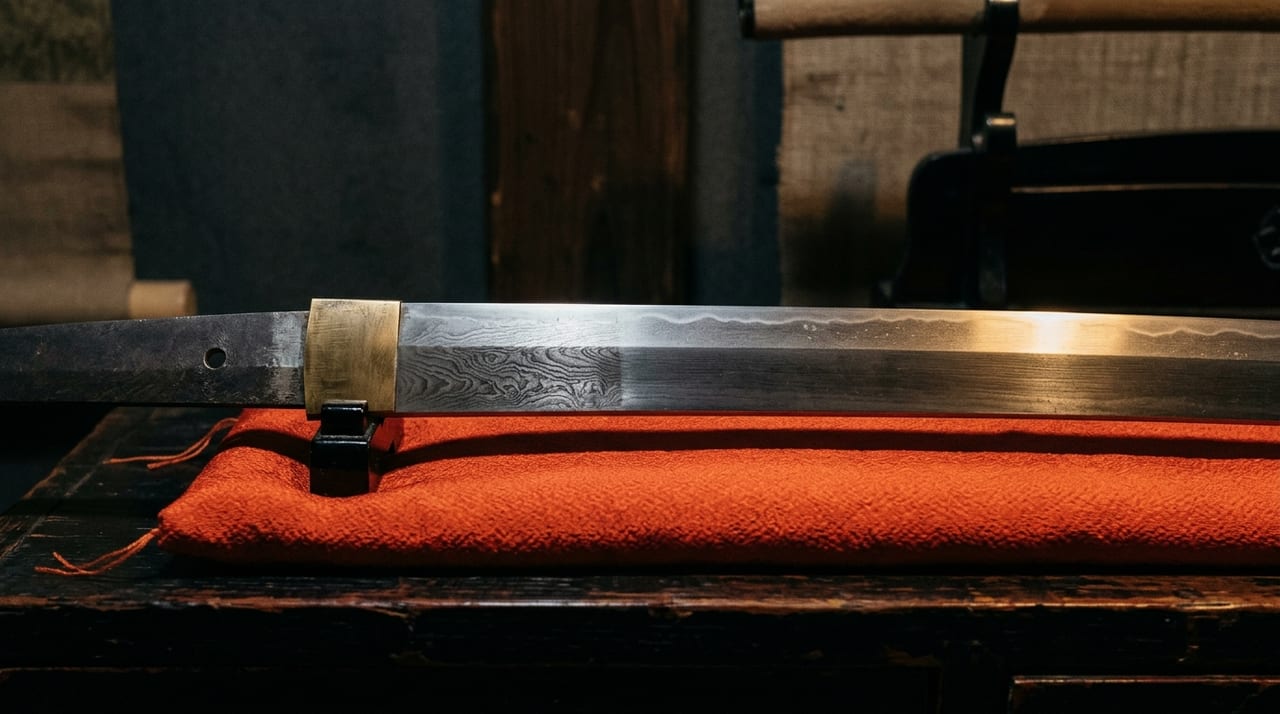
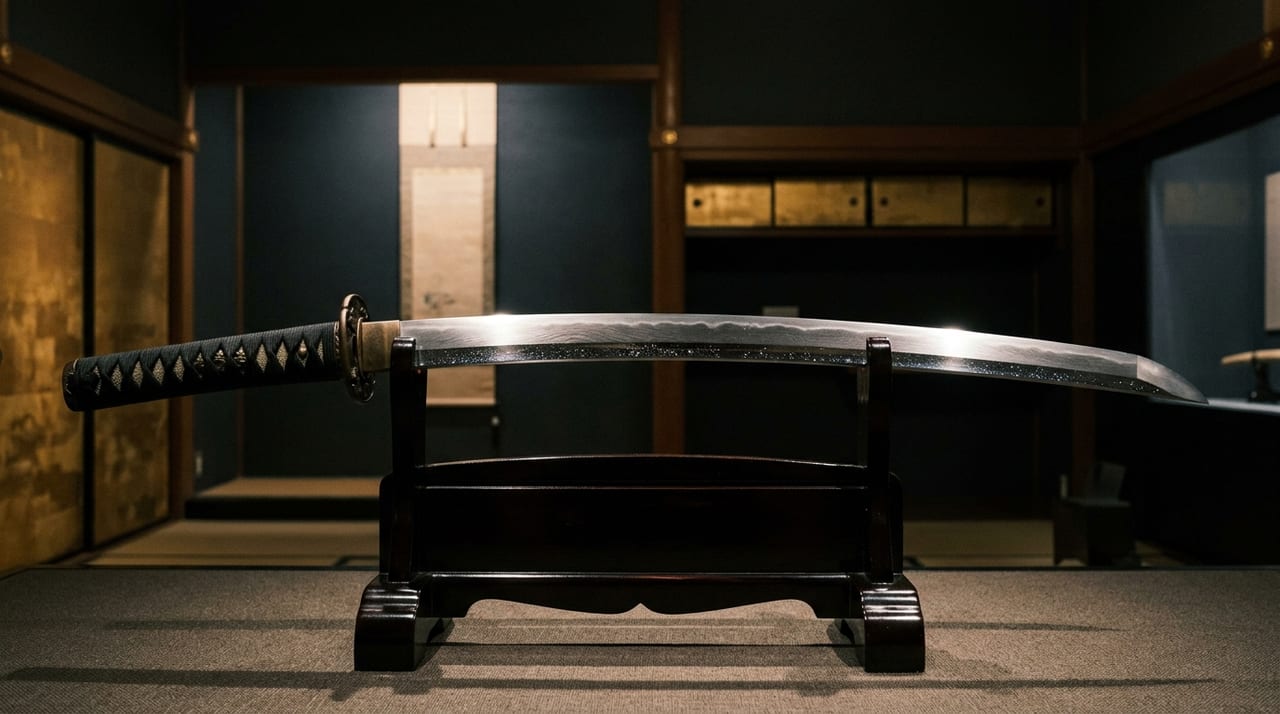
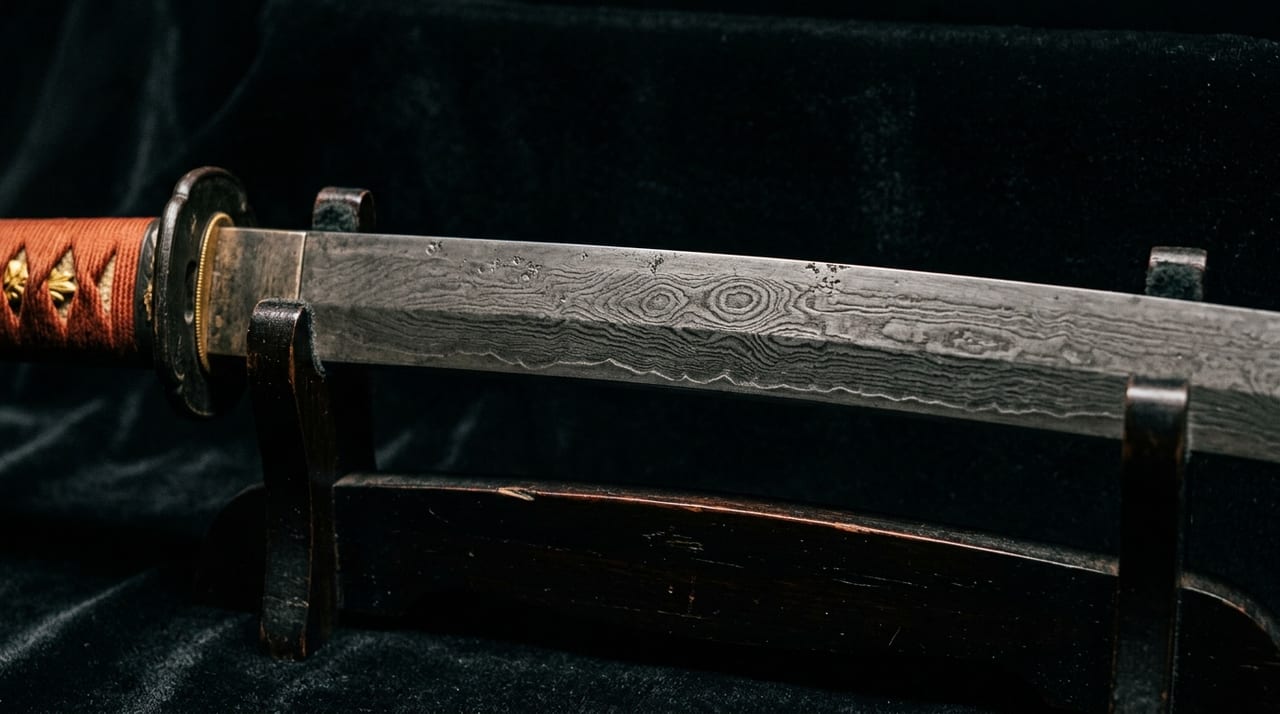
Hōshō School — the tōkō group that carved its identity in the jigane, with masame standing out even among the Yamato Five Schools
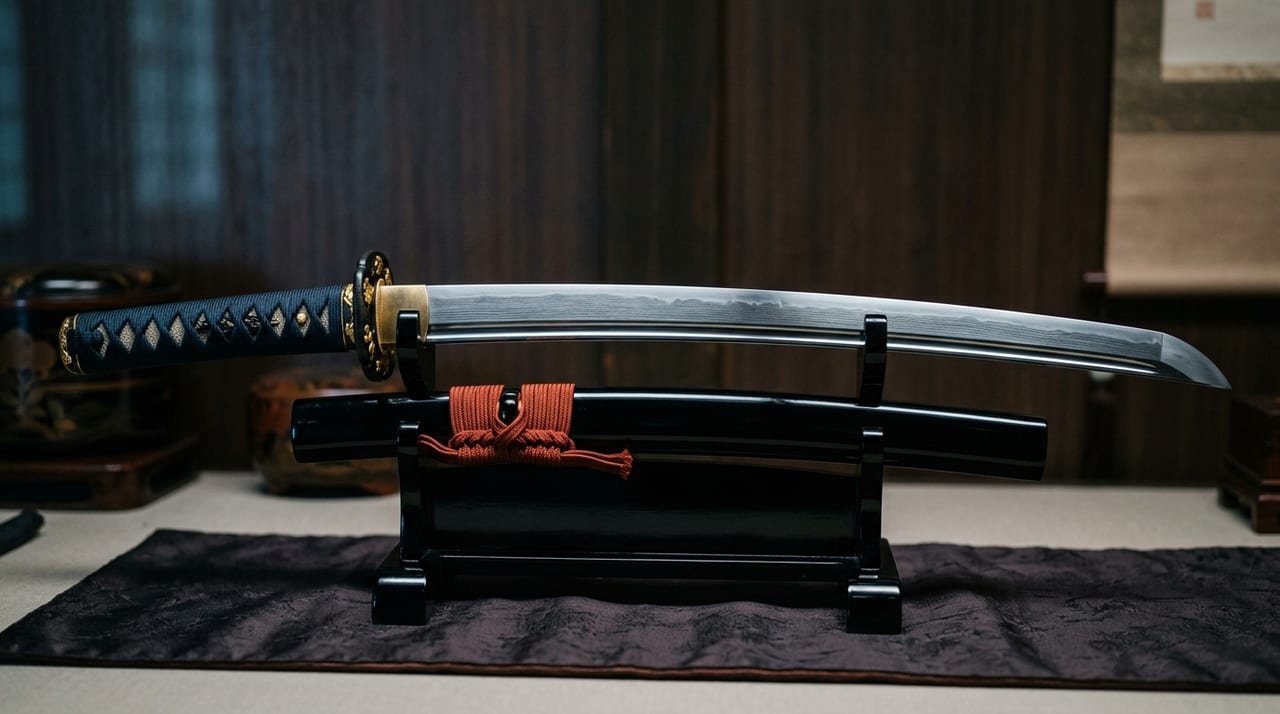 * Image is for illustrative purposes only.
Table of Contents
A school of Yamato known for masame jigane
The Hōshō school (Hōshōha) is a tōkō group that flourished in Yamato Province and is counted among the Yamato Five Schools (Senjuin, Shikkake, Tegai, Taima, and Hōshō). It is said to have been active from the late Kamakura period through the Nanbokuchō period, and is known for an especially distinctive style even within Yamato-den.
All of the Yamato Five Schools share a jigane with a tendency toward masame, but the Hōshō school is renowned as the school in which that masame jigane stands out most strikingly.
The soil of Yamato-den
To understand the individuality of the Hōshō school, it helps to first grasp the background of Yamato-den itself. Yamato Province was a land where great temples held considerable power from early times, and the tōkō of Yamato are said to have continued making swords within close ties to those temples. An ethos that prized practical, unadorned strength over competing for visual brilliance forms the underlying tone of Yamato-den as a whole.
In terms of form, swords of Yamato (Yamato-mono) are frequently characterized by a high shinogi (ridge line) and wide shinogi width. This is a feature rooted in the cross-sectional structure and is also expressed in the sense of thickness and balance when held in the hand. Many have a hamon (temper line) based on suguha, showing activities with nie (visible martensite crystals), and a masame-tending flow appears in the jigane. The Hōshō school can be said to be the school that embodies these shared qualities of Yamato-den in their purest form.
The individuality of thorough masame jigane
Indispensable when discussing the style of the Hōshō school is the masame jigane that appears strongly in the jigane. Masame is a pattern in the jigane resembling annual rings running in straight parallel lines, and a great characteristic of Hōshō school works is that this masame flows in an orderly manner throughout the entire blade.
The hamon is based on suguha, and works are known that show activities such as hotsure and nijūba along the masame jigane. In terms of the jigane's individuality strongly determining the impression of the work, the Hōshō school is frequently cited as an excellent example of jigane appreciation.
How masame jigane comes to be
Masame jigane is a pattern in the jigane created by the way the steel is folded and layered during tanren (forging). Steel forged so that its layers align in the same direction shows a parallel flow like the masame of wood when brought to full polish through togi (polishing). It is no easy matter to forge the entire blade while keeping the layers neatly aligned, and an unbroken masame jigane is itself considered proof of high tanren skill.
In masame jigane, the activities of the hamon also tend to appear along the flow of the layers. The edge of the suguha fraying along the layers to produce scenes of nijūba, uchinoke, and sunagashi is because the structure of the masame jigane and the activities within the hamon are unified. The reason the jigane and hamon appear inseparably linked in Hōshō school works is due to this structural inevitability.
Its place within Yamato-den
When comparing the Yamato Five Schools, the Hōshō school is often remembered as "the Hōshō of masame," and the flow of the jigane is considered the clue to its identification. While other Yamato-mono intermix itame in the jigane, the fact that many Hōshō school works adhere exclusively to masame is regarded as an important point in authentication as well.
In this way, the Hōshō school is an excellent example illustrating the diversity of Yamato-den, and is a school that shows the pleasure of appreciation with attention to the jigane.
Points of focus for deepening appreciation
When actually observing a work attributed to the Hōshō school or its lineage, following this sequence makes it easier to grasp the school's individuality.
- First, trace the entire blade to follow whether the flow of masame runs without interruption from the base to the kissaki (point).
- Next, shift your gaze to the hamon edge and look for activities such as hotsure, uchinoke, and nijūba arising along the masame. These are easier to find by applying moderately strong light from a slight angle.
- Finally, examine the bōshi (temper line in the point). Works with masame tend to show flowing activities in the bōshi as well, and it is considered one of the highlights.
Furthermore, the appearance of masame jigane changes greatly depending on the condition of the togi. In works where togi wear has progressed, the masame flow may be overly emphasized or the jigane surface may stand out too much, so it is important to observe the jigane scenery together with the sword's overall condition.
The pleasure of comparing the Yamato Five Schools
The Yamato Five Schools are said to share a common underlying tone while each having its own distinctive quality, and comparing them is itself considered the greatest pleasure of Yamato-mono appreciation. If you place the Hōshō school as your starting point among the five schools, you can measure the distance to the other schools along the axis of "how thoroughly masame is carried through," making it an excellent teaching material for training the eye to see jigane. When you encounter a Yamato-mono at an exhibition or in an illustrated catalog, it is worthwhile to first pay attention to the way the jigane flows and try assessing for yourself the strength of the masame.
Points of appreciation
When appreciating works of the Hōshō school, it is best above all to turn your attention to the masame of the jigane. By tilting the blade and holding it up to the light to follow the scene of masame flowing straight, you can savor the individuality unique to this school. Seen together with the fine activities mixed into the suguha, its depth is felt all the more.
Those with an interest in the jigane individuality of the Hōshō school and the Yamato Five Schools can browse and purchase listed works online. For inquiries, please feel free to use the contact form.