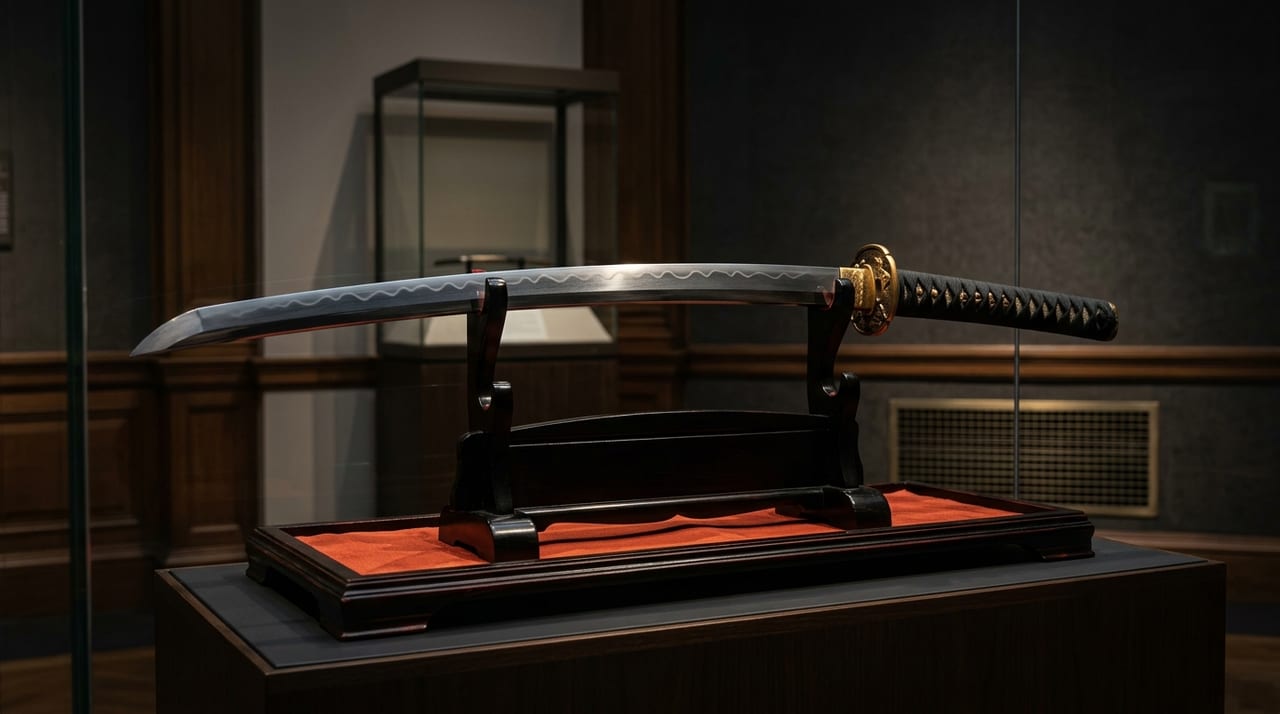
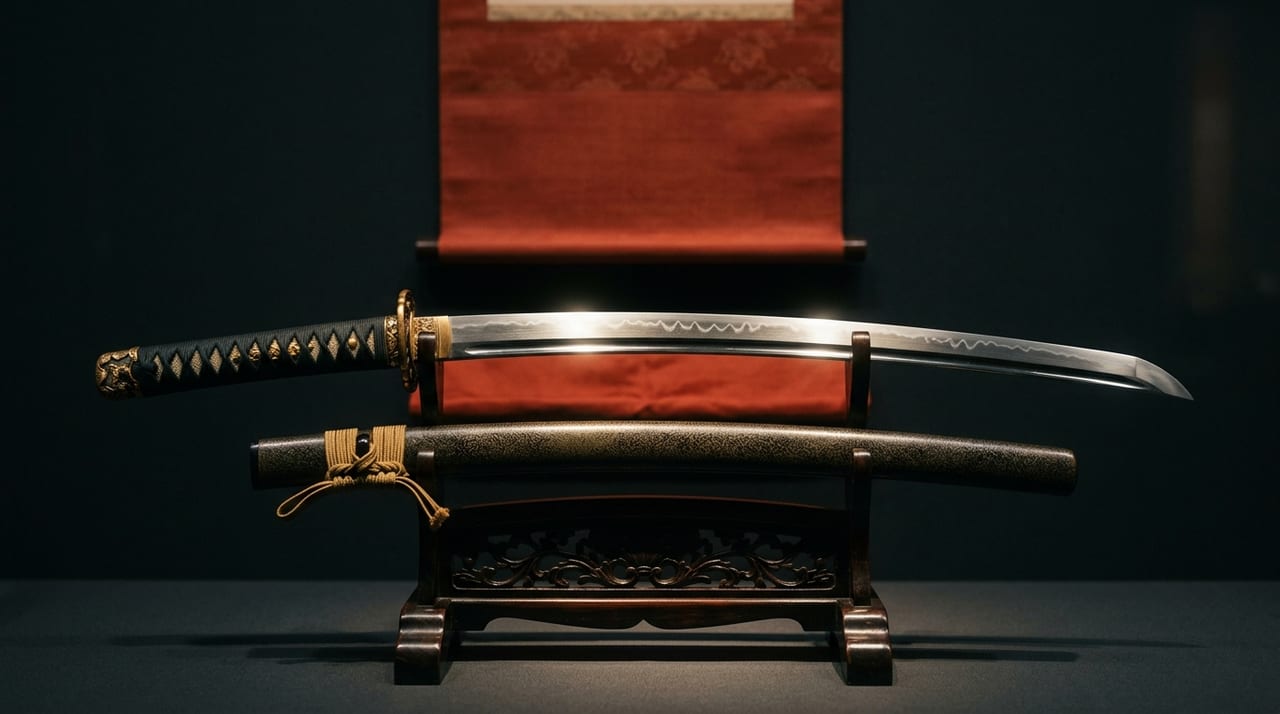
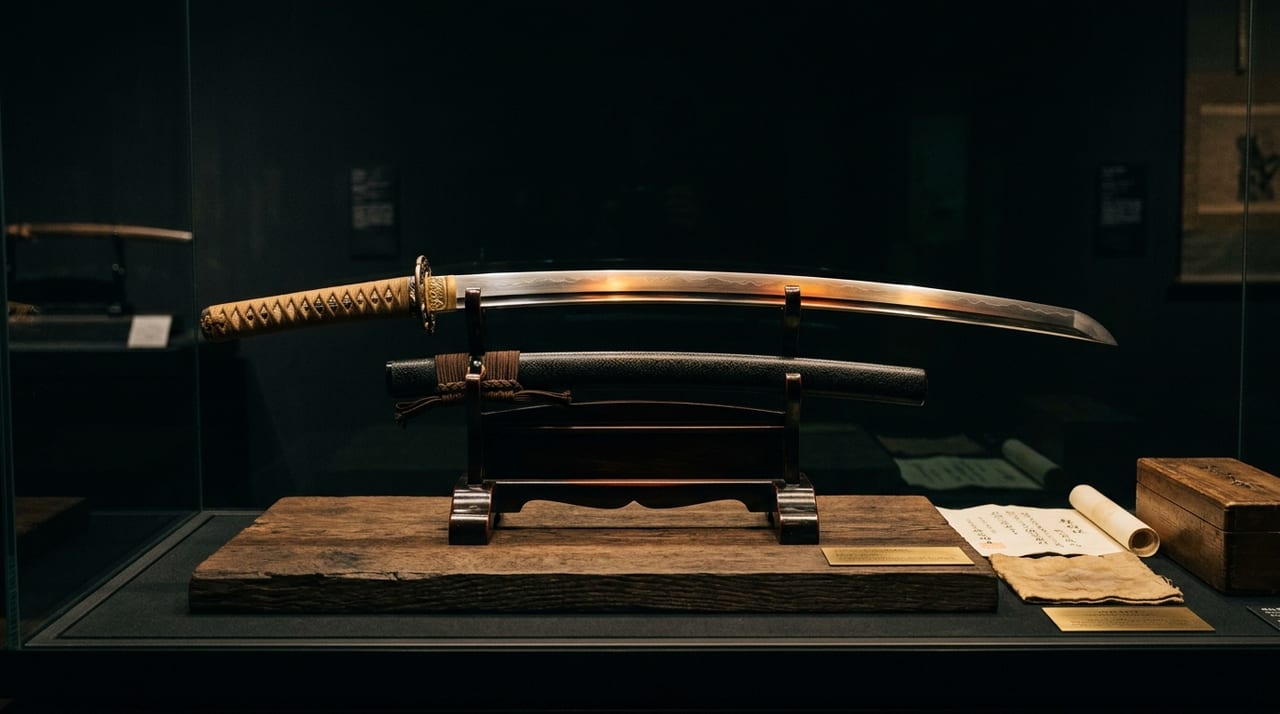
Japanese Sword Merchants and Distribution Networks
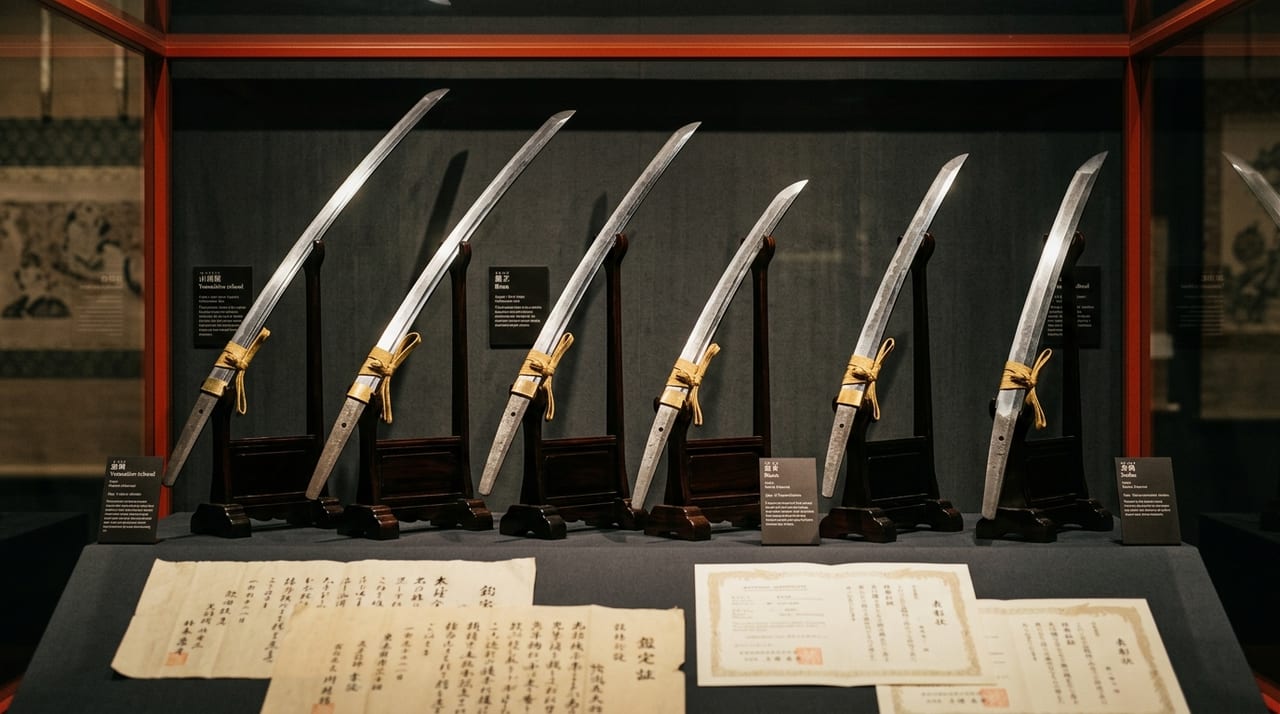 * Image is for illustrative purposes only.
Table of Contents
Historical Origins of Japanese Sword Merchants
As Japanese swords transcended their practical utility as weapons and established their position as works of art and spiritual symbols, sword merchants played an indispensable role as intermediaries. From the moment a sword maker forged a work until it reached its final owner, distribution systems evolved with each era, and merchants functioned as crucial nodes in these networks.
The systematic commercial trade of swords was established from the late medieval period through the early modern period, as samurai society matured. During the Sengoku period, feudal lords required large quantities of swords, and the practice of procuring them directly from blacksmiths or through intermediaries became established. Sword merchants of this era served a wholesale function, connecting regional sword-making centers with areas of demand, and also acted as information brokers, disseminating information about sword origins and the reputations of craftsmen across wide territories.
Production centers in regions associated with the Five Schools—Yamato, Yamashiro, Bizen, Soshu, and Mino—each possessed unique sword-forging techniques, and through local merchant networks, blades were distributed throughout the nation. Sword merchants, thoroughly familiar with conditions in these production centers, established their social standing as specialized professionals who managed everything from procurement to sales.
Systematization of Distribution During the Edo Period
The Edo shogunate's establishment of social order had a major impact on sword distribution. While the practical demand for swords declined during the prolonged period of peace, cultural demand increased among feudal lords, samurai retainers, and wealthy townspeople to own celebrated swords. This transformed the sword market from a place of weapons procurement to a venue for trading works of art and collectibles.
A crucial role during this period was played by the expertise of "connoisseurs" who mediated sword sales. Connoisseurs were experts with specialized knowledge to discern the authenticity, quality, and value of swords, and they also served as appraisal intermediaries between merchants and buyers. Their presence provided an institutional foundation that guaranteed the reliability of transactions.
In major cities such as Edo, Osaka, and Kyoto, specialized markets and shops dealing in swords accumulated, forming marketplaces where celebrated swords from various regions converged. When feudal lords traveled to Edo for the obligatory attendance system (sankin kotai), sword transactions also took place, and distribution routes naturally formed that connected local areas with the center. These commercial networks were based on relationships between master and apprentice and trust among fellow merchants, creating an organic market in which information, credit, and goods circulated as an integrated whole.
Transformation and the Establishment of Modern Distribution After the Meiji Restoration
The Meiji Restoration brought dramatic changes to sword distribution. With the enforcement of the Edict Prohibiting Swords, the demand for swords among the samurai class effectively disappeared, and Japanese swords rapidly lost their significance as practical objects. However, simultaneously, a movement to preserve and evaluate swords as heritage of traditional culture spread among intellectuals and former samurai families, maintaining demand for them as works of art.
During this period, the business model of sword merchants transformed significantly. Merchants who reinvented themselves from weapons dealers to art dealers opened transactions with museums, art galleries, and overseas collectors, pioneering new markets. During the wave of Westernization from the Meiji through Taisho periods, Japanese swords also attracted the attention of overseas enthusiasts of Japanese art, and this was a period when international distribution routes were formed.
During the Showa period, legal frameworks regarding the preservation and distribution of swords advanced, and the prototype of the current registration system was established. The establishment of the firearms and sword registration system enhanced the transparency of distribution and provided standards to distinguish between legitimate and illegitimate trade. The existence of registration certificates functioned as proof of trustworthiness and legality in sword transactions, and merchants began to structure their operations around this system.
Contemporary Japanese Sword Distribution Networks
Contemporary sword distribution can be classified broadly into several channels.
- Retail by specialized sword dealers (sword shops)
- Auctions and competitive bidding by auction houses
- Mediation of sales between individuals
- Sales through online marketplaces
Specialized sword dealers maintain long-established procurement routes and customer relationships, providing a function of stable supply of high-quality works. These merchants maintain ongoing relationships with sword makers in production centers and with historic families, temples, shrines, and museums in various regions, playing a central role in guaranteeing the quality of swords that circulate in the market.
Sword auctions and bidding events function as open markets in which sellers and buyers can participate broadly, bringing price transparency and competitive principles. At these venues, where renowned sword dealers and collectors participate, rare masterpieces are sometimes traded, playing an indicative role in price formation across the entire market.
In recent years, the spread of the Internet has rapidly expanded online sword transactions. The ability to connect buyers and sellers from across the nation and around the world, transcending geographic constraints, has greatly expanded the pool of market participants. Specialized online platforms such as this marketplace provide detailed explanations, images, and specification information, creating an environment that enables reliable transactions without the need to physically handle the actual blade.
Authentication and Quality Assurance—The Appraisal System Supporting Distribution
One of the most important issues in the sword market is ensuring the reliability of authentication and quality evaluation. Certificates of appraisal and registration certificates issued by appraisal institutions such as the Japan Sword and Art Preservation Society (NBTHK) function as objective quality assurance in distribution, supporting the trustworthiness of transactions.
Appraisal certificates contain basic information such as the maker's name, period, blade length, sori, and number of mekugi holes, and this information is passed on to subsequent owners during the distribution process. By properly managing and transmitting such documents, merchants play a role in maintaining the historical and cultural context of swords as part of their value.
Moreover, the connoisseurship of merchants themselves remains important. Regardless of whether an appraisal certificate exists, whether a merchant can evaluate a work based on their own knowledge and experience and provide it at an appropriate price directly affects that merchant's credibility. The accumulation and transmission of such specialized knowledge forms the foundation that supports the profession of sword merchant.
Collectors and Market Diversification
The contemporary sword market is composed of diverse collector segments. It encompasses historic families preserving samurai lineage traditions, veteran collectors with deep expertise in sword aesthetics, newcomers to the hobby motivated by interest in history and culture, and overseas collectors captivated by Japanese swords—its reach is broad.
To meet this diverse demand, distribution networks have become multi-layered. From high-quality important swords to relatively accessible introductory works, the market circulates a variety of products with different price ranges, quality levels, and rarity, and merchants play a role in procuring and providing works suited to each customer segment.
The increase in overseas demand also has a significant impact on contemporary distribution. The need for information dissemination in multiple languages such as English, Chinese, German, and French has emerged, and multilingual support for online platforms has become an essential element in expanding international distribution. As Japanese swords are increasingly recognized as artworks of global significance, the development of international distribution networks is expected to grow in importance in the future.
Sword merchants and distribution networks serve a role as social infrastructure transcending the framework of mere commercial activity, playing a role in the succession and development of Japanese sword culture. As intermediaries ensuring that swords are correctly passed from makers to enthusiasts and to the next generation, the role played by merchants will continue to remain important without change in the years to come.