The Kojiri: Design and Technique of the Scabbard's Protective Tip
 * Image is for illustrative purposes only.
Table of Contents
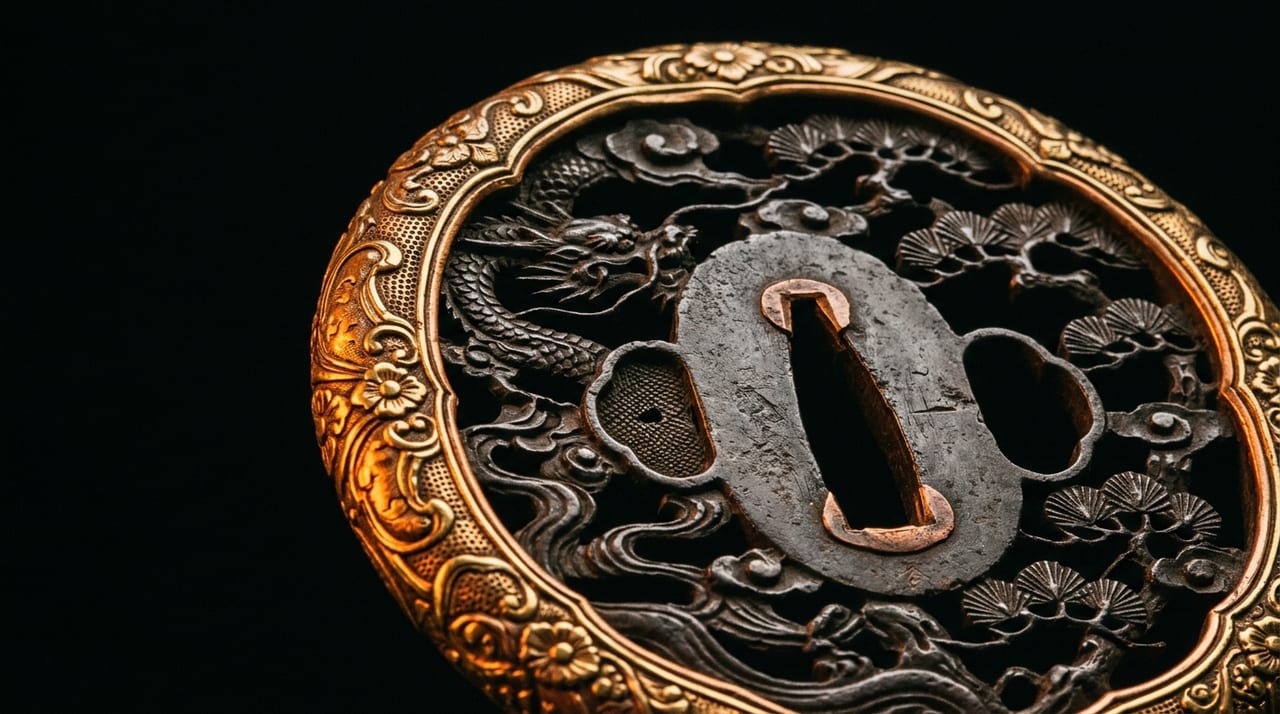
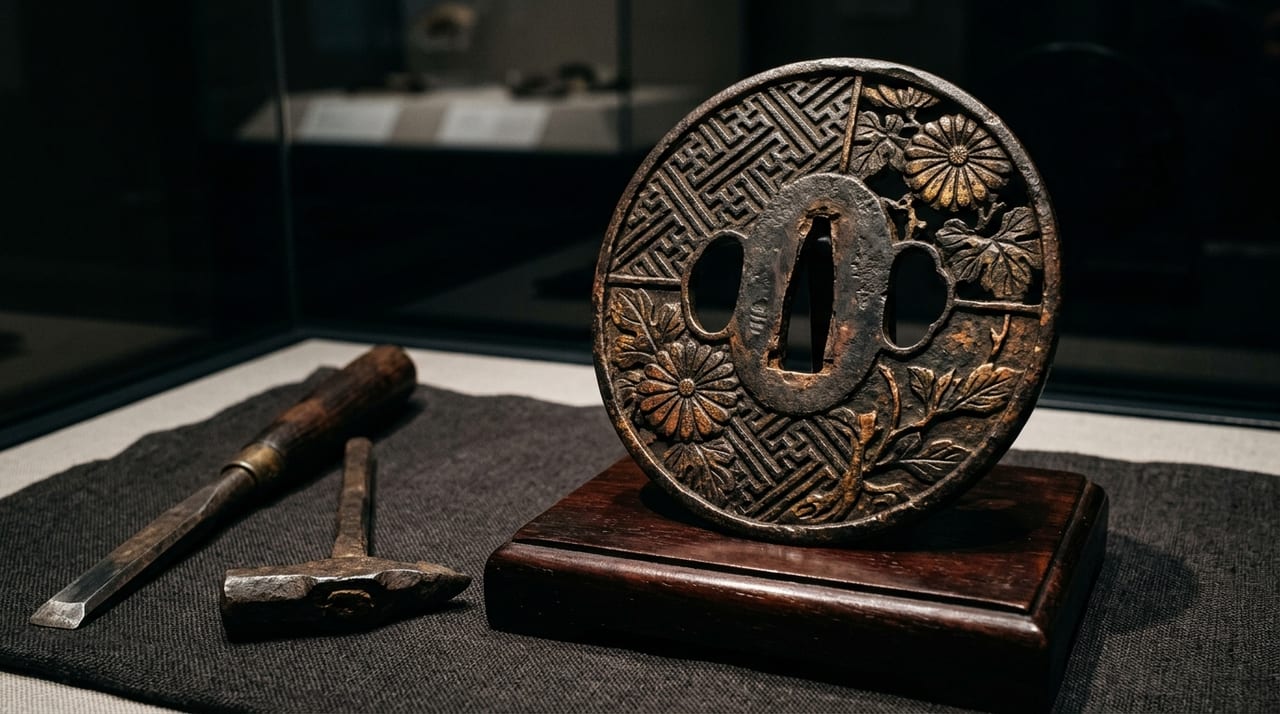
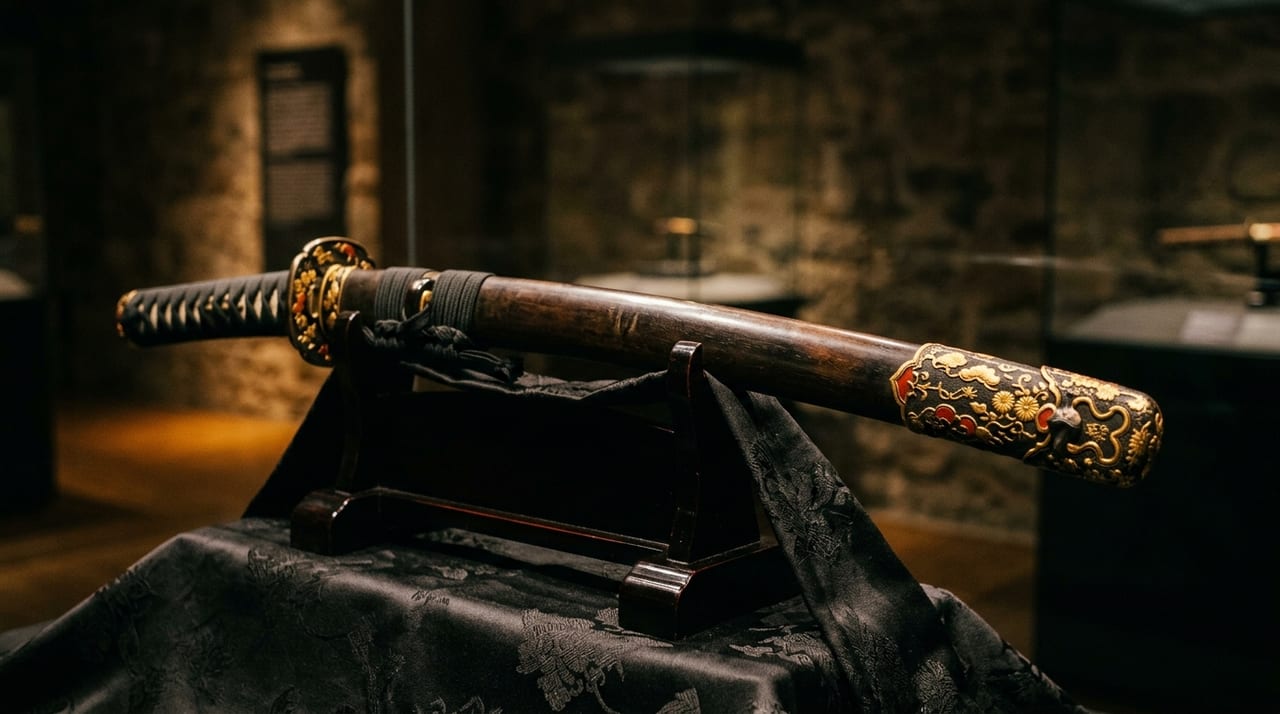
The koshirae (fittings and mounting) of a Japanese sword comprises the saya (scabbard) that holds the blade, the tsuka (handle) for gripping, and numerous metal fittings that embellish both. Among these, the component that protects the very tip of the saya—the end of the part that extends downward when the sword is worn at the waist—is the "koujiri". Though positioned in a conspicuous location, it is discussed far less frequently than the tsuba or fuchigashira, yet it is an important part that supports both the aesthetic design and practical functionality of the entire koshirae.
What is the Koujiri? — The Metal Fitting That Protects the Tip of the Scabbard
The basic method of finishing a saya involves layering lacquer over the wooden core. Without protection, the tip is most susceptible to damage. When worn at the waist and walking, the tip easily contacts objects; when sitting, it may touch the floor or ground. The koujiri is a metal fitting or wooden piece that is attached by being placed over or fitted into the end of the saya. Its role is to prevent the wooden core of the saya itself from suffering wear and damage.
Its role extends beyond mere protection. In bringing together the entire koshirae as a unified design, the koujiri occupies a position that corresponds with the tsukagashira (pommel cap), forming the beginning and end points of visual focus. While the tsukagashira determines the impression of the hand at the grip, the koujiri serves as the finishing touch when viewing the entire saya. By matching or deliberately contrasting the materials and color tones of both elements, the overall balance of the koshirae is determined.
Among sword fittings, there is a concept known as "mishokumono" (three-piece sets) in which the kozuka (utility handle), kogai (hair pin), and menuki (grip ornaments) are coordinated in a unified design. Additionally, fittings like the fuchigashira decorate both ends of the handle. While the koujiri is often commissioned with design harmony among such other fittings, it remains fundamentally a component that performs the role of protecting the end of the saya, and its function is independent.
Materials and Techniques — Horn, Wood, Lacquer, and Metal
A wide variety of materials are used for the koujiri.
| Material | Characteristics and Techniques |
|---|---|
| Tomogojiri (solid lacquer koujiri) | The simplest style of construction. The tip is finished by layering lacquer over the wooden core, just as with the saya itself, and it is completed as an integral extension of the saya lacquering. |
| Tsunogojiri (horn koujiri) | When greater decorative or durability qualities are desired, horn from animals such as water buffalo has been used since ancient times. Horn is hard and resistant to wear, and possesses a luster and texture distinct from lacquer, making it valued for both practical and aesthetic purposes. |
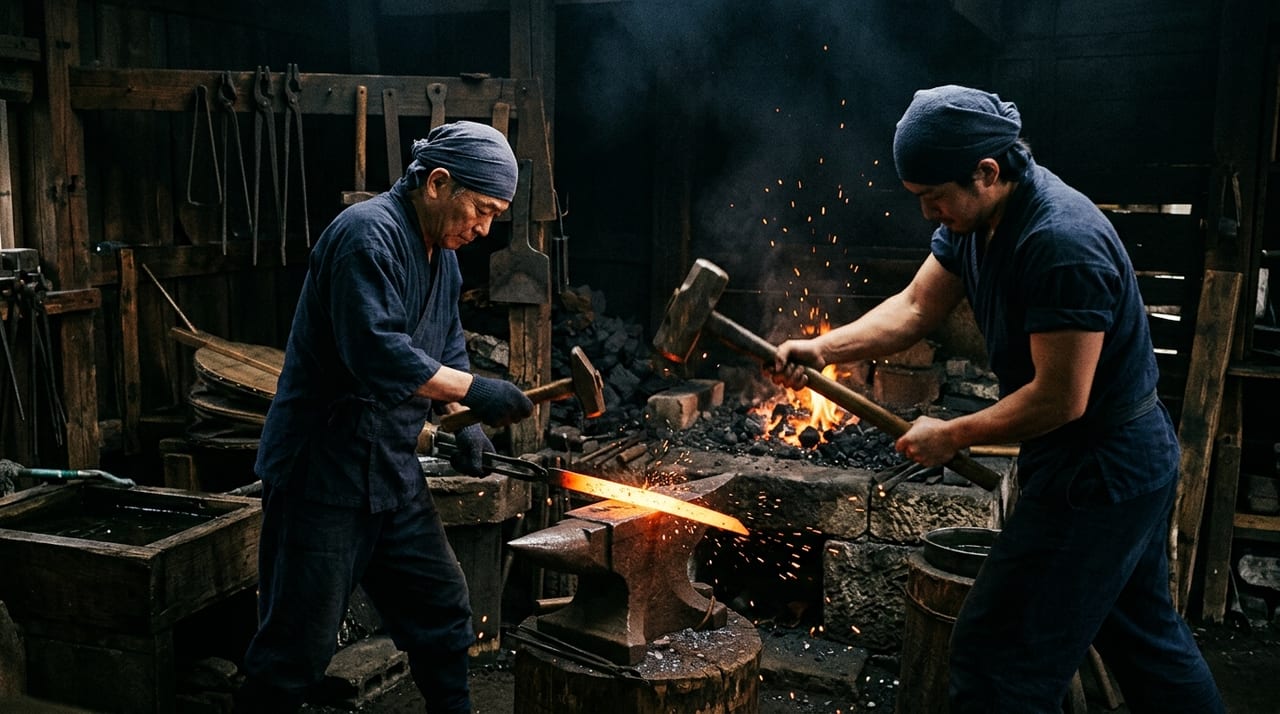
| Metal (shakudo, silver, copper, etc.) | Typical base metals include shakudo (an alloy of copper and gold that produces a dark-toned ground), silver, and suaka (unalloyed copper). Metal smiths often apply chasing and engraving work to these, employing techniques such as stamping out ground patterns or designs, or fine-line engraving to incise intricate imagery. When fitting into the end of the saya, it is securely fixed to the wooden scabbard through brazing or fitting, and constructed to prevent it from falling out or loosening. |
| Kinkara-kawa (decorative leather with gold leaf) | An example where decoratively embossed and colored leather is wrapped around the koujiri. This is characterized by a soft texture and unique pattern expression distinct from metal or horn. |
The choice of material has been determined through discussion between the craftsman and patron based on the overall formality and intended use of the koshirae, as well as personal preference. Great emphasis has been placed on harmonizing the koujiri with the color tone of the saya lacquering and the design of the handle.
Changes in Koujiri Form and Design According to Koshirae Style
The form of the koujiri varies in tendency according to the style of koshirae.
- Tachi koshirae: When wearing a tachi, the metal fitting configuration corresponds to the form of suspension-carrying the scabbard, and there is a tendency for heavier fittings to be used for the koujiri.
- Uchikatana koshirae: Used in the style of wearing at the waist, the entire saya is typically crafted to be slender and functionally organized. The koujiri is generally constructed in a restrained manner to harmonize with the saya's design.
- Gunto koshirae: During the later periods in which it was used, metal koujiri emphasizing practical utility and durability became widely adopted. This is thought to be because uses involving frequent carrying and handling required greater resistance to wear.
These changes represent only general trends for each style, and it is important to note that individual koshirae exhibited diverse construction methods depending on the era, region, and patron's preferences in which they were commissioned. It is difficult to speak definitively about specific periods or examples, and it is more appropriate to understand them as broad stylistic currents.
The Koujiri as a Sword Fitting: Points of Appreciation
While attention naturally falls on the blade's surface and hamon of the sword itself, when appreciating the koshirae, one should also pay attention to the koujiri.
- Material texture: By observing the luster of horn, the sheen of lacquer, the color tones of metal, and so on, one can gauge what formality and intended use the entire koshirae was commissioned for.
- Correspondence with the pommel cap: When materials and patterns are matched, one can discern a sense of unity; when deliberately contrasting materials are combined, one can read the design's ingenuity. For a metal koujiri with chasing work, one can sometimes infer the skill of the metal smith who executed it from the fineness of the ground pattern and the composition of the designs.
- Consistency or inconsistency of aging: Since the koujiri is positioned at the tip of the saya, a part that is easily worn, many existing koshirae have undergone repairs or later replacements. By comparing the consistency or inconsistency of aging between the entire saya's lacquering and the fittings, one gains clues for inferring whether the koshirae was originally a matched set or was assembled in later years.
Within the comprehensive art that is the koshirae, the koujiri has quietly supported both practical and aesthetic aspects, though it may go unnoticed. By carefully observing not only the quality of the blade itself but also the construction of such individual fittings, one can more deeply appreciate the depth that the koshirae of a Japanese sword possesses. In TOUKENZA's online catalog, one can find listings that include product information encompassing the condition of the koshirae alongside the swords themselves. If a particular sword catches your eye, please first browse our selection, and contact us through the inquiry form for further details.