The Twin Peaks of Osaka New Swords — The World of Sukehiro and Shinkai
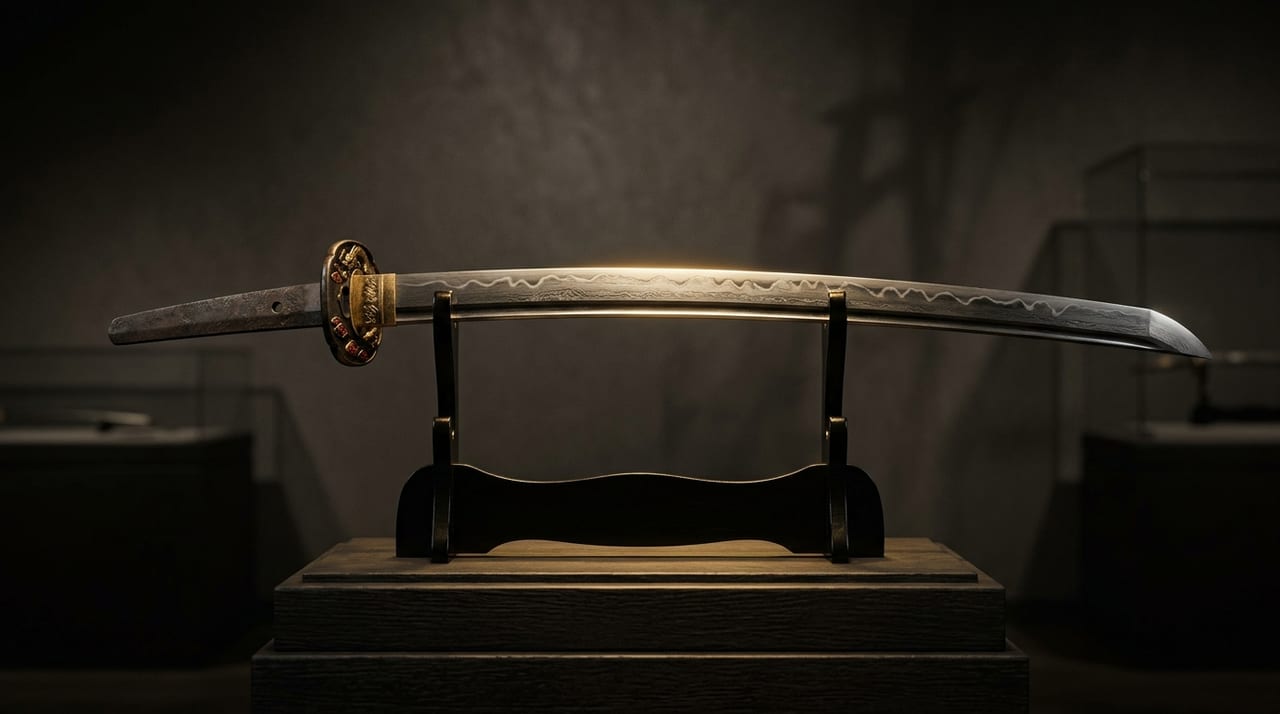 * Image is for illustrative purposes only.
Table of Contents
Osaka's Flourishing Sword Culture in the Early Edo Period
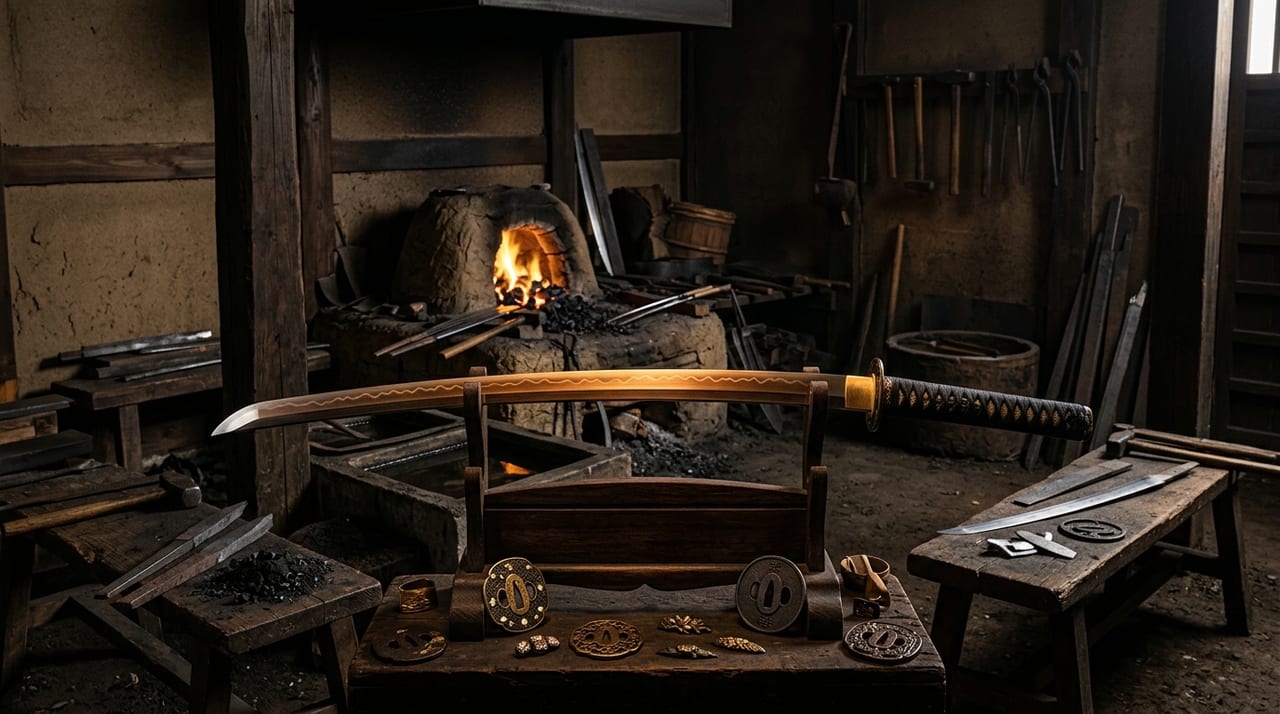
Early Edo Period (17th century) Osaka shone as both a commercial center and a major hub of Japanese sword culture. As the sankin-kotai system brought samurai from throughout the nation, and wealthy merchant classes rose as cultural and artistic patrons, Osaka attracted some of Japan's finest sword smiths. Against the backdrop of a peaceful era under the stable bakuhan system, the momentum to refine swords as pure artworks grew, and sword smiths shifted their focus decisively from utility toward the pursuit of artistry. Thus, the sword art that flourished in Osaka during the "shintō" (new sword) era is regarded even today as one of the most vibrant and creative chapters in the history of the Japanese sword. Called "the kitchen of the realm," Osaka was a gathering place for goods and capital from across the nation, making it a land rich in opportunities and discerning patrons for skilled sword smiths. It is believed that this economic foundation enabled sword smiths to continue their pursuit of perfecting their craft, even setting aside considerations of profit.
Tsuda Echizen-no-kami Sukehiro and the Revolutionary toranba
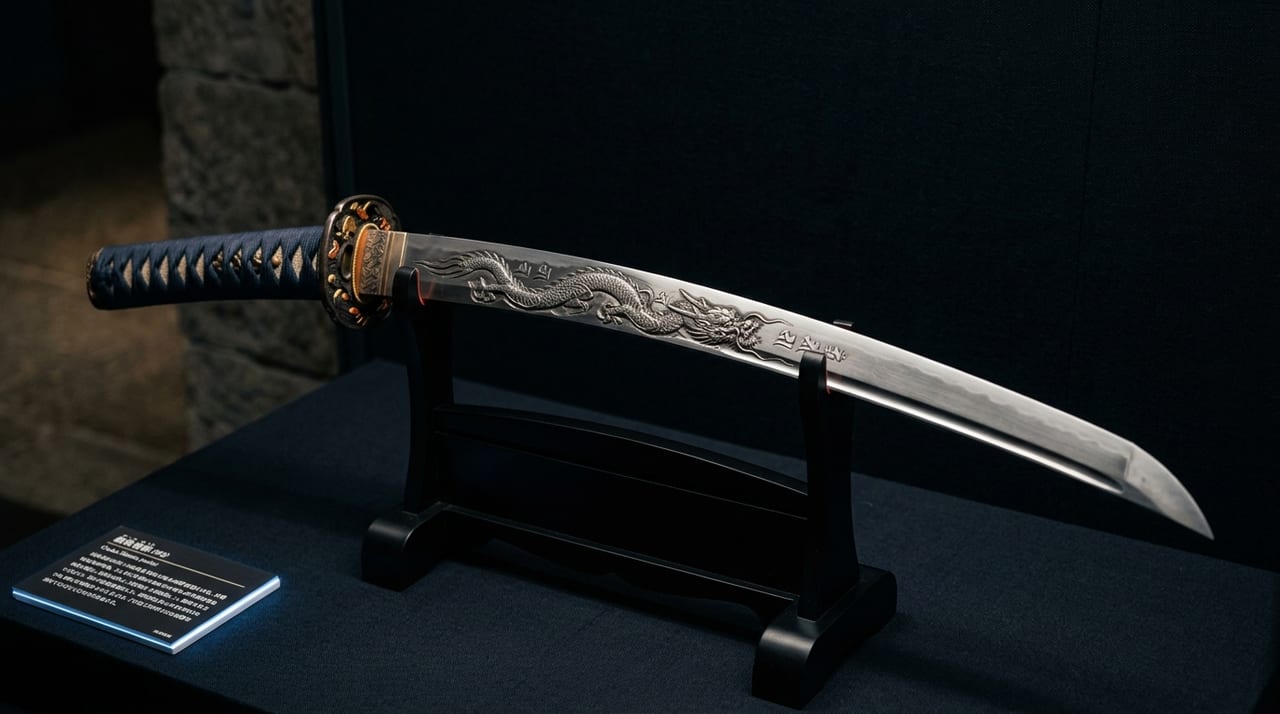
Tsuda Echizen-no-kami Sukehiro was a sword smith who literally brought revolution to the world of Osaka shintō. The toranba (wave-pattern blade) he created depicted undulating curves like great ocean waves crashing ashore, an expression that fundamentally overturned previous conceptions of blade patterns. Its beauty transcended mere technique, representing the crystallization of advanced steel control and tempering mastery. Within the broadly undulating hamon lie nie and nioi intricately interwoven, displaying entirely different expressions depending on viewing angle and light source. This dynamic beauty embodied the aesthetic sensibility nurtured by Osaka's rich merchant culture, representing a uniquely Western Japanese sensibility distinct from Edo's samurai culture. Sukehiro's works continue to receive top-tier market evaluation, with well-preserved examples positioned at the apex of sword collections. To fire a large, undulating hamon like the toranba without flaw requires maintaining consistent granule density of nie and nioi at the boundary between hamon and jihada, and is said to require detailed knowledge of tempering temperatures and steel properties throughout the blade. The flashy design appears orderly and without disorder precisely because of this underlying technical foundation.
Inoue Shinkai and the Refined Realm of the Suguha
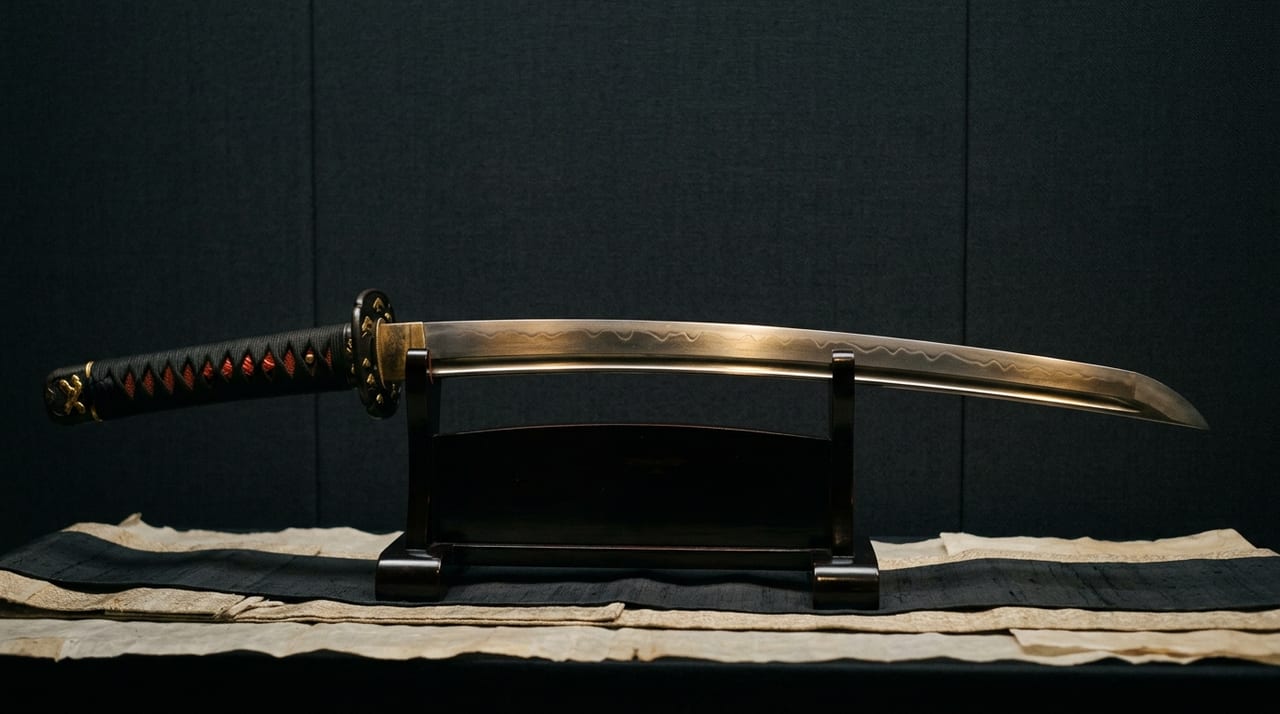
Inoue Shinkai was another master who flourished in Osaka during roughly the same era as Sukehiro. The shinkai signature was adopted from his earlier "Izumi-no-kami Kunisada" signature at the recommendation of the Confucian scholar Kumazawa Banzan, and the deep meaning of the name is rooted in respect for the teachings of his masters and predecessors. Shinkai's representative blade pattern is the "nie-deki suguha" (straight blade made with nie). Within the apparently simple linear hamon, fine nie particles display complex activity, with profound spirituality and refinement emanating throughout. This depth, where new allure emerges with each viewing, represents the very essence of first-rate artistic works. Shinkai's style, embodying an aesthetic that valued the order and formality of samurai society, stands in contrast to Sukehiro's brilliance, yet as art born from the same era and place, it demonstrates the depth and breadth of Osaka sword culture. The suguha, at first glance seemingly lacking in decoration, offers no "escape" from blade pattern disorder; it is a pattern where the sword smith's fundamental skill—the quality of jihada and the uniformity of nie—appears unfiltered, a field where one comes to understand its difficulty and charm the more one's appreciation develops.
The Artistic Richness Born from Dialogue between Two Masters
Sukehiro's toranba and Shinkai's suguha—the coexistence of these two entirely different approaches in contemporary Osaka was no coincidence. The competition and mutual refinement among sword smiths responding to diverse demands enriched Osaka sword culture. Sukehiro, pursuing innovation, and Shinkai, aiming for the pinnacle of classicism, continued to explore the beauty of swords from different directions as if in dialogue. This vivid contrast is the core that keeps Osaka shintō research exciting even today. By viewing the works of both masters side by side, one can more vividly experience the breadth and depth of expression that the Japanese sword possesses.
For Those Viewing and Collecting for the First Time
Many may wonder which master—Sukehiro or Shinkai—to start viewing first. Those drawn to dynamic blade patterns will find their preference direction clearer starting with Sukehiro's toranba, while those drawn to quiet, elegant bearing will find it clearer starting with Shinkai's suguha. In either case, understanding deepens by keeping the following points in mind:
- Focus not only on the hamon but also on the texture of the jihada
- Observe the differences in how nie and nioi shine by varying the light source angle
- Be aware of stylistic changes over the period when the blade was made, as suggested by the position and calligraphy of the signature on the nakago
- When a koshirae is included, also make the harmony between blade and mounting an object of appreciation
These fundamental viewing approaches form the foundation for appreciating shintō in general, not just works by Sukehiro and Shinkai.
The Influence Osaka shintō Exerted on Later Generations
The innovative work of Sukehiro and Shinkai extended far beyond contemporary acclaim, exerting tremendous influence on later sword smiths. Young sword smiths who came to Osaka from the provinces learned their styles and brought them back to their regions, spreading the Osaka style throughout the nation. Sword smiths of the shinshintō era also continued to regard the achievements of Osaka shintō as a high standard to surpass. Even today, Osaka shintō is deeply respected by both scholars and collectors as an important reference point in the aesthetic achievement of the Japanese sword.
The Value of Osaka shintō in Today's Market
In today's sword market, the works of both masters Sukehiro and Shinkai consistently command the highest levels of valuation. Particularly, signed works by Shinkai have become increasingly difficult to obtain in recent years, showing steady price appreciation. This is evidence that quality and rarity are being properly valued. Sukehiro's toranba is sought by a wide range of collectors, including those abroad, for its uniqueness and visual impact. From an investment perspective as well, Osaka shintō can be said to be one of the most noteworthy fields.
Points to Confirm When Purchasing and Holding
When seeking authentic Japanese swords, not limited to Osaka shintō, it is reassuring to confirm the following points:
- Is an authentication certificate from a specialized organization such as the Nihon Bijutsu Touken Hozon Kyokai (NBTHK) included?
- Are the calligraphy style and cutting method of the signature consistent with other known works by that smith?
- Does the preservation condition—such as the absence or presence of blade damage, rust, or wear from polishing—match the description?
- Is the provenance (which collectors have owned it) shown to the extent known?
- Can you grasp the overall condition, including the state of accessories such as koshirae and shirasaya?
Japanese swords can maintain their condition long-term by storing them away from humidity and dust and performing regular maintenance. If you are uncertain about specific maintenance methods, it is recommended to consult with a trusted expert or sword dealer rather than attempting maintenance on your own.
TOUKENZA provides detailed explanations regarding Osaka shintō. We are also able to assist from a professional perspective with authentication and condition assessment of works by Sukehiro and Shinkai. The world of Osaka shintō grows deeper the more one learns of it, worthy of lifelong pursuit. The field where Sukehiro's toranba displays dynamism and Shinkai's suguha embodies stillness—where these two extremes coexist—is where one can savor the quintessence of Japanese sword appreciation in its most concentrated form. Those who have had the opportunity to handle and compare masterpieces will surely come to feel that the world of swords is a living artistic experience transcending mere antiquarian interest.