What Is Sakutō Approval — The Procedures a Tōshō Needs to Make a Nihontō, and What Buyers Should Know
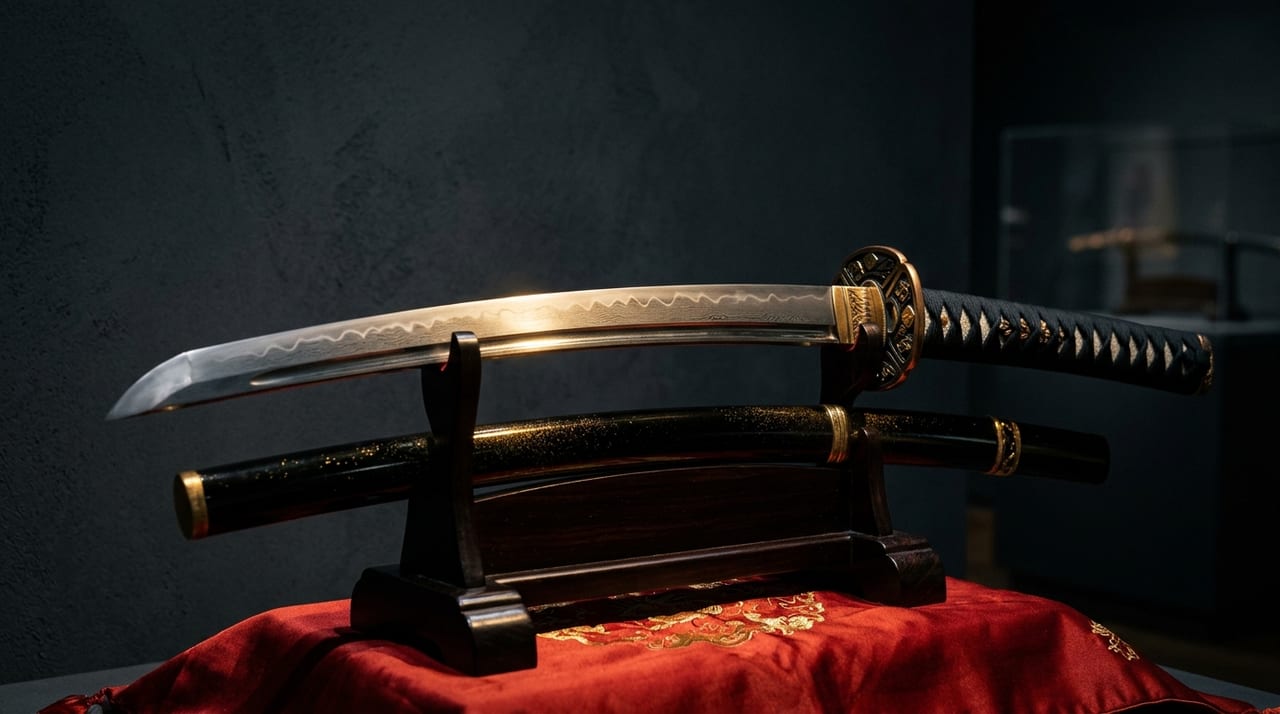 * Image is for illustrative purposes only.
Table of Contents
"Making" a nihontō from scratch is not, in fact, freely permitted to anyone. A modern tōshō can forge a nihontō as a work of art only after following the legally prescribed procedures. This system is known as sakutō approval. This article outlines the structure of the system and its meaning from the perspective of the buyer.
Why Does Making a Sword Require Approval?
In Japan, possession of swords and bladed weapons is prohibited in principle. Exceptions are made only for those recognized as having value as works of art. For possession, there is a system whereby a registration certificate is issued after review by the prefectural Board of Education.
The same principle extends to making swords. The Act for Controlling the Possession of Firearms or Swords and Other Such Weapons (Jūtōhō) contains a provision to the effect that anyone wishing to make swords or bladed weapons of artistic value must obtain approval from the prefectural Board of Education of their place of residence for each sword or bladed weapon they intend to make (with the Commissioner of the Agency for Cultural Affairs granting approval in cases specified by Cabinet Order). The text of the statute can be found through the e-Gov legislation search.
In other words, approval is granted not per person but per sword to be made. It is not a system where, once a license is obtained, one may forge as many swords as one wishes.
The Process from Approval to Registration
The general process by which a tōshō brings a single sword into the world is as follows.
- Prior to making the sword, apply to the prefectural Board of Education of one's place of residence for approval.
- After receiving approval, carry out the process from tanren through yaki-ire to finishing the nakago.
- The Board of Education that granted approval notifies the prefectural Public Safety Commission having jurisdiction over the place of residence.
- The completed sword receives registration as a work of art and is issued a registration certificate.
The important point here is that approval is a permit to "make swords or bladed weapons of artistic value." It is not a permit to mass-produce swords as industrial products or to make swords as weapons. The details of approval are set out in ministerial ordinances, which also prescribe the forms and standards for applications.
What This Means for the Buyer
When seeking a gendaitō (a newly made sword forged by a modern tōshō), this system carries two meanings.
- If a sword has been made through proper procedures, it comes with a registration certificate, and the path for possession and transfer is clearly established.
- Because the tōshō makes the sword in the capacity of an approved maker, the background of the maker and the record of the sword's creation are easy to trace.
Older swords are assessed in their own way, but for a newly made sword, "who made it, when, and through what procedures" is clear. This also provides peace of mind for managing the sword after purchase. For the registration certificate system itself, the article on the nihontō registration certificate system goes into greater detail.
The Relationship to the Path of Becoming a Tōshō
Making a sword under approval naturally requires the backing of skill. Most modern tōshō train under a master for several years, learning tanren, yaki-ire, and finishing the nakago before becoming independent. The reality of apprenticeship is discussed in modern tōshō apprenticeship.
After becoming independent, they continue making swords while presenting their work at exhibitions and similar events. Style varies by school, and clues as to which tradition a modern tōshō follows can be found in a comparison of Reiwa-era tōshō styles.
A System Supported on the Materials Side as Well
Alongside sakutō approval, tamahagane, the raw material, also occupies a special place. Tamahagane is steel made by tatara (traditional smelting), and it supports the tōshō's work on the materials side. It is only with both the material and the system in place that nihontō continue to be made in the modern era. For tamahagane, please refer to tamahagane and tatara ironmaking.
Common Misconceptions
There is no shortage of misconceptions about sakutō approval.
- It is not the case that once one obtains the qualification of a tōshō, they may thereafter make swords without limit. Approval is obtained for each sword or bladed weapon to be made.
- Approval does not guarantee the quality of the sword. It is a procedure that permits making the sword as a work of art; evaluation of the finished quality is a separate matter.
- Even a sword forged by an approved tōshō will not enter distribution channels premised on lawful possession unless it receives registration after completion.
Keeping these three points in mind makes it easier, when reading descriptions of newly made swords, to distinguish where the discussion of the system ends and where the discussion of the work itself begins.
Perspectives for Looking at Newly Made Swords
Unlike old swords, the appeal of newly made swords is that the quality of the jigane and hamon can be followed as the personal style of the maker. Comparing multiple works forged by the same tōshō reveals tendencies in their favored hamon and blade shape. Knowing the approval system also brings home the sense that each sword is "a work born through a single procedure."
Unlike when appreciating kotō or shintō, the clearly established period of creation is another strength unique to newly made swords.
Conclusion
Sakutō approval is a system for protecting nihontō as works of art while also reconciling that with public safety. Makers follow the procedures for each sword they forge, and as a result, buyers can obtain newly made swords of clearly traceable provenance.
At TOUKENZA, swords currently listed can be viewed and purchased through the online catalog. For any questions about individual swords, please contact us through the inquiry form.