Style and School-by-School Comparison of Gendaitō Smiths: the Kaji of the Reiwa Era Who Carry On Sōshū-den, Bizen-den, and Yamato-den
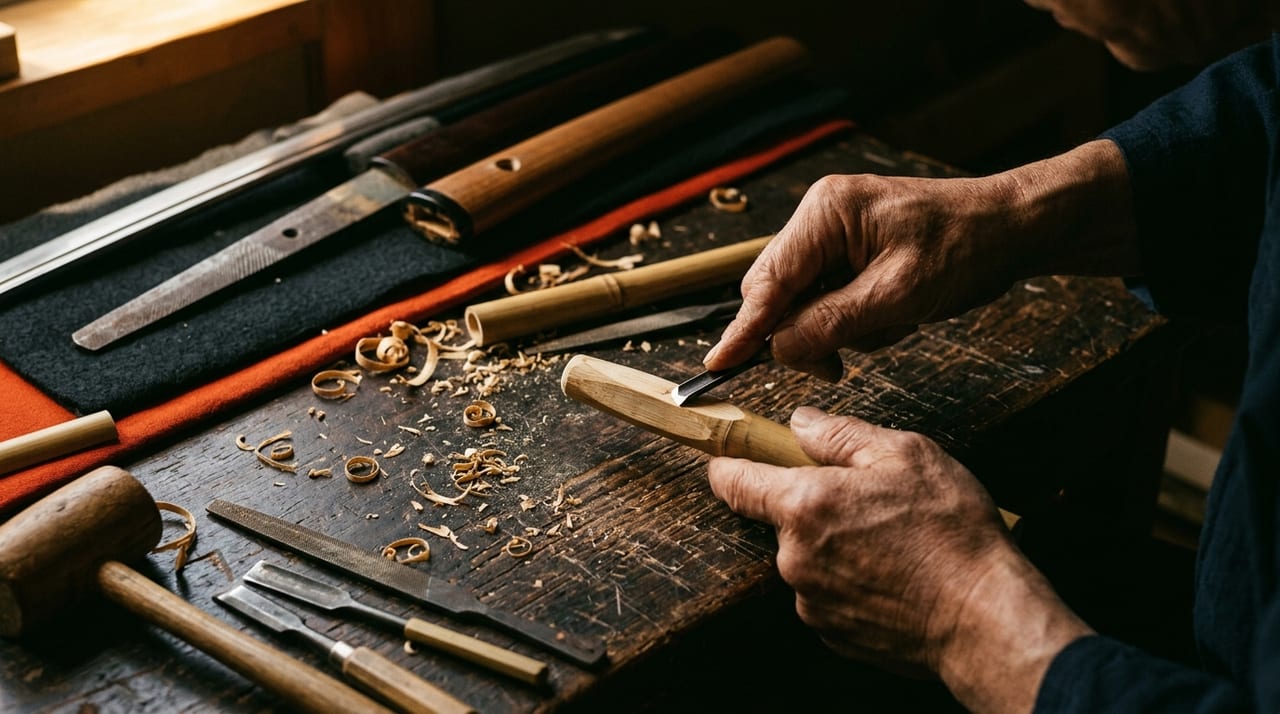 * Image is for illustrative purposes only.
Table of Contents
Tōshō of the Reiwa Era: Between Inherited Tradition and Individual Expression
After the war, the production of nihontō was temporarily suspended under occupation, but it was subsequently recognized that nihontō could be produced as works of art, and craftsmen have inherited the techniques down to the present day. Today, in the Reiwa era, those who continue to forge swords throughout the country are called gendaitō tōshō.
Contemporary tōshō share a common foundation of researching kotō and shintō and inheriting traditional techniques, while each seeks their own distinctive style. This article compares the styles and technical individuality of representative contemporary tōshō.
Basic Requirements for Contemporary Tōshō: Production Authorization and Forging Days
For a tōshō to make a nihontō, they must obtain authorization for each individual sword under the Act for Controlling the Possession of Firearms or Swords and Other Such Weapons (Jūtōhō). Under the Art Swords Production Authorization Rules, the requirements for authorization include that the applicant must have devoted themselves continuously to honing their skills for five or more years under a tōshō who has previously obtained authorization, and must have completed training conducted by the Commissioner of the Agency for Cultural Affairs. The Art Swords Production Authorization Rules set no annual limit on the number of swords that may be produced (Art Swords Production Authorization Rules (e-Gov Law Search)). However, prefectural assessment standards stipulate the minimum number of forging days per sword (tachi, katana, and naginata: 15 days or more; wakizashi, tantō, and the like: 10 days or more), which in practice limits the number that can be produced (Aomori Prefecture "Authorization to Produce Art Swords" Assessment Standards).
The following are used as evaluation criteria for contemporary tōshō.
- Gendai Tōshoku-ten (hosted by the NBTHK, a public interest incorporated foundation): award history (NBTHK "Gendai Tōshoku-ten (Sword-Forging Division)")
- NBTHK appraisal: certification ranging from Hozon (Preserved) to Jūyō Tōken
- Evaluation at individual exhibitions and sword events throughout the country
Contemporary Tōshō Inheriting Sōshū-den: The Power of Nie and the Appeal of Jigane
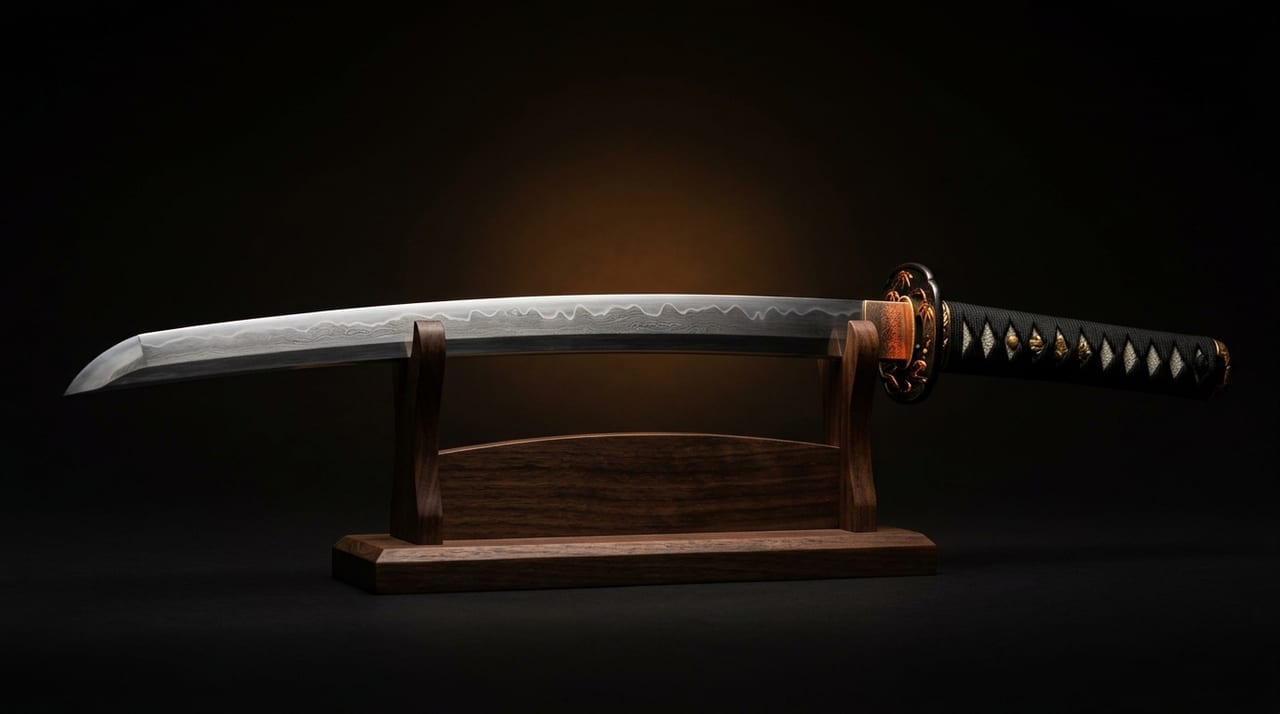
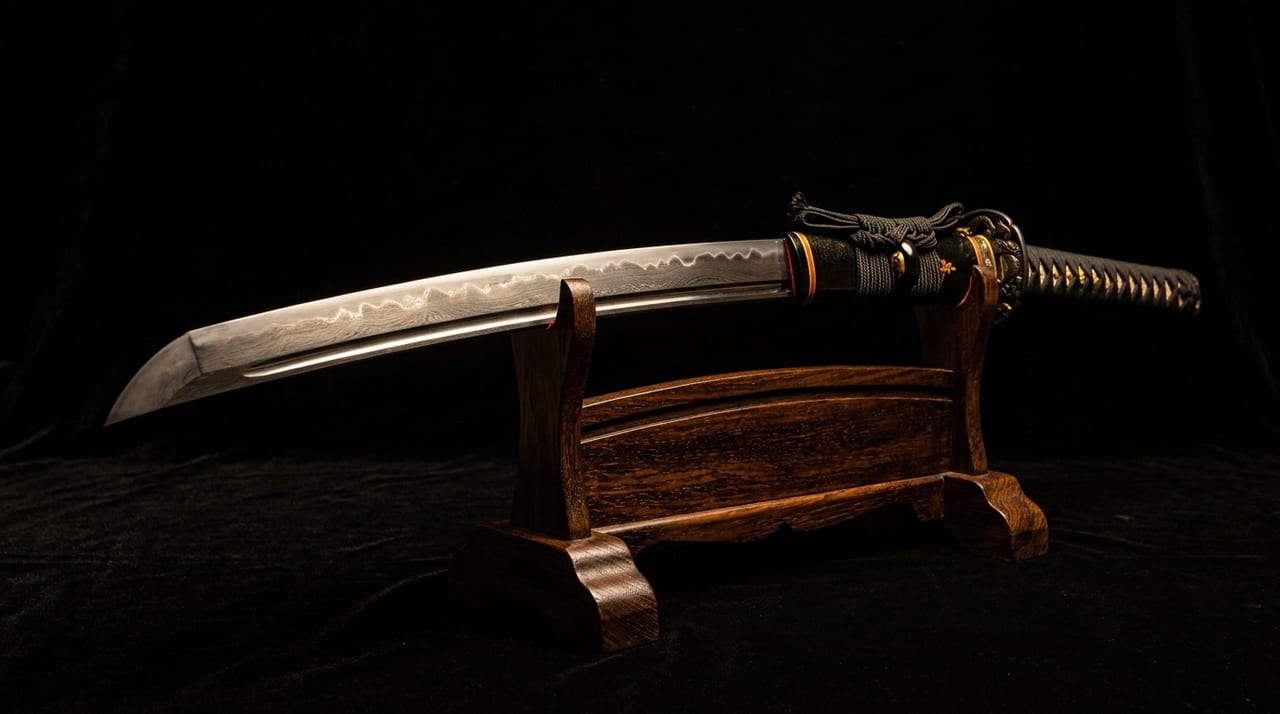
Tōshō who seek to carry on Sōshū-den (the techniques of Masamune and Sadamune) in the present day are characterized by a hamon with strong nie and jigane with active chikei and kinsuji.
Contemporary tōshō who aim for the Sōshū-den style devote themselves to researching famous old swords and to expressing jigane with active chikei and kinsuji, and a midare-ba with strong nie.
Contemporary Tōshō Inheriting Bizen-den: The Beauty of Chōji-midare and Nioi
Tōshō who inherit Bizen-den (Ko-Bizen and the Osafune school) are characterized by a hamon of chōji-midare, gunome, and nioi-deki. The jigane shows fine, closely-worked itame that is bright, and the overall impression is elegant.
Contemporary Bizen-den tōshō tend to devote particular effort to reproducing the chōji-midare of early works. Studying the characteristics of each school — Ko-Bizen, Ichimonji, Osafune, and others — and reproducing them using modern steel (tamahagane) is technically extremely difficult, and works by tōshō who succeed in this are highly regarded.
Characteristics of contemporary works in the Bizen-den style:
- Chōji-midare: a hamon in which clove-flower-like formations continue in succession
- Rich activity of ashi and yō in the hamon
- The jigane is bright and clear
- An overall elegant and feminine impression
Contemporary Tōshō Inheriting Yamato-den: The Refinement of Masame Jigane and Suguha
Contemporary tōshō who inherit Yamato (Nara)-den are in the minority, but they produce works with a distinctive refinement achieved by combining masame jigane and suguha. Yamato-den is considered the most unadorned and straightforward of the five traditions (go-den), and its hallmark is an "honest blade" stripped of superfluous ornament.
Characteristics of Yamato-den works:
- Jigane: strongly masame (a straight wood-grain pattern)
- Hamon: based on suguha, with small irregular elements and small gunome interspersed
- Overall form: somewhat slender and practical
- Bōshi: ko-maru with a deep kaeri
Contemporary Tōshō of the Echizen Tradition and Kaga Tradition: The Distinctiveness of Hokuriku
Contemporary tōshō of the Echizen and Kaga (Fukui and Ishikawa) lineages have a distinctive style characterized by fine, dense jigane and well-ordered hamon. While Hokuriku tōshō may not have nationwide recognition, they command solid demand centered on local enthusiasts.
Individual Approaches of Contemporary Tōshō: Restoration Research and Creative Work
Among contemporary tōshō of the Reiwa era, some take approaches that go beyond mere transmission of tradition.
Kotō restoration research type: Specializing in the thorough study of famous old swords and their reproduction using the same techniques and materials (use of tamahagane, carbon concentration adjustment, etc.). This is highly regarded academically.
Local-materials type: Sword-making using iron sand and charcoal from the tōshō's home region — a "locally sourced, locally consumed" approach. This also serves as a form of differentiation as a regional brand.
Contemporary art fusion type: Creating works that retain the form of the sword while incorporating a contemporary artistic sensibility. This is attracting attention as an approach to overseas art collectors.
Developing an Eye for Evaluating Tōshō: A Practical Method for Comparing Styles
The following organizes the practical points to consider when comparing the works of contemporary tōshō.
- Quality of the jigane: Reflects the use of tamahagane and the precision of orikaeshi tanren (folding). A fine, uniform jihada is proof of high skill.
- Stability of the hamon: Bilateral symmetry and consistency. Distinguishing whether irregularities are intentional or the result of insufficient skill.
- Balance of the overall form: The silhouette of the entire sword. Whether the balance of sori, motohaba, and sakihaba suits its purpose.
- Treatment of the bōshi (the kissaki section): The part that most demands skill. The shape and length of the kaeri reveal the tōshō's individual character.
- Finish of the nakago (tang): The manner of filing and the style of the mei reflect the tōshō's character.
Purchasing and Collecting Gendaitō: Where to Look
There are several channels through which works by contemporary tōshō can be obtained.
- Direct commission from a tōshō: Delivery time and price vary greatly by tōshō and work, so confirm before commissioning.
- Sword specialty shops and sword fairs: Choose from existing inventory.
- Gendai Tōshoku-ten: An opportunity to view submitted works.
- Gendaitō auctions: Contemporary works are also offered at auction houses both inside and outside Japan.
Conclusion: What the Tōshō of the Reiwa Era Preserve and Pass On
The gendaitō tōshō of the Reiwa era continue to ask what meaning swords hold in the present day, while inheriting the long tradition of nihontō craftsmanship. In an era when the nihontō has lost its function as a weapon, it is being redefined as "a crystallization of the Japanese aesthetic sense and spirituality."
While the style of each tōshō differs, they share the fundamental values of handwork with tamahagane, respect for traditional techniques, and a craftsman's spirit that strives for perfection. The finest swords of the Reiwa era will, for the people of 100 or 500 years from now, become cultural assets that convey what the Japanese people of today found beautiful.