Bishū Osafune Morimitsu Appraisal Guide — Techniques for Identifying Genuine Works by the Master Tōkō Who Defined Ōei Bizen, with a List of Representative Pieces
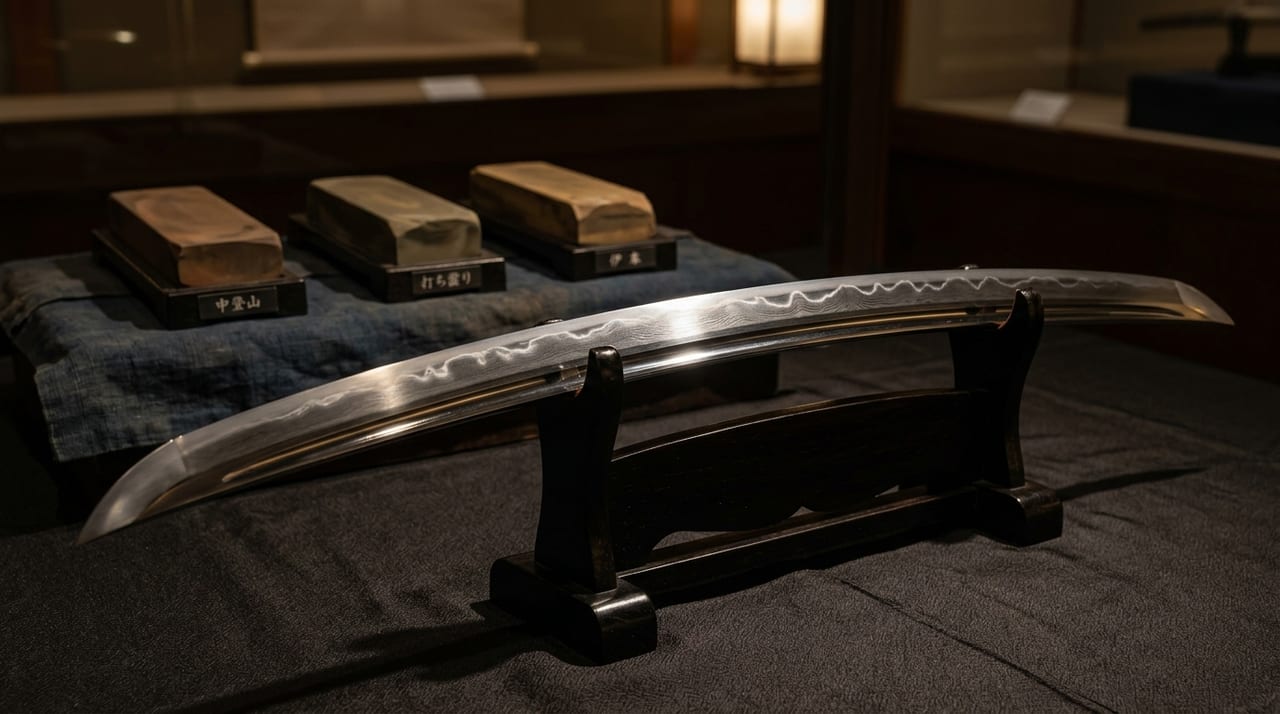 * Image is for illustrative purposes only.
Table of Contents
What Kind of Tōkō Was Bishū Osafune Morimitsu
Bishū Osafune Morimitsu was a tōkō active in Osafune, Bizen Province (present-day Osafune-chō, Setouchi City, Okayama Prefecture) during the early Muromachi period, in the Ōei era (ca. 1394–1427), and is esteemed as the pinnacle of Ōei Bizen.
Paired with his contemporary Yasumitsu as "the twin pillars of Ōei Bizen," Morimitsu sublimated the Bizen-den tradition of the Kamakura through Nanbokuchō periods — including the Ichimonji, Fukuoka Ichimonji, Osafune Nagamitsu, and Kanemitsu lineages — into the new aesthetic sensibility of the Muromachi era. His works continue to receive the highest acclaim today as kokuhō and jūyō bunkazai, and they form a core subject of scholarly research in Bizen-den appraisal.
This article focuses on the appraisal points for identifying genuine works by Bishū Osafune Morimitsu, and explains his representative pieces, methods for distinguishing him from Yasumitsu, and a list of surviving works.
Morimitsu's Jigane — The First Gate of Appraisal
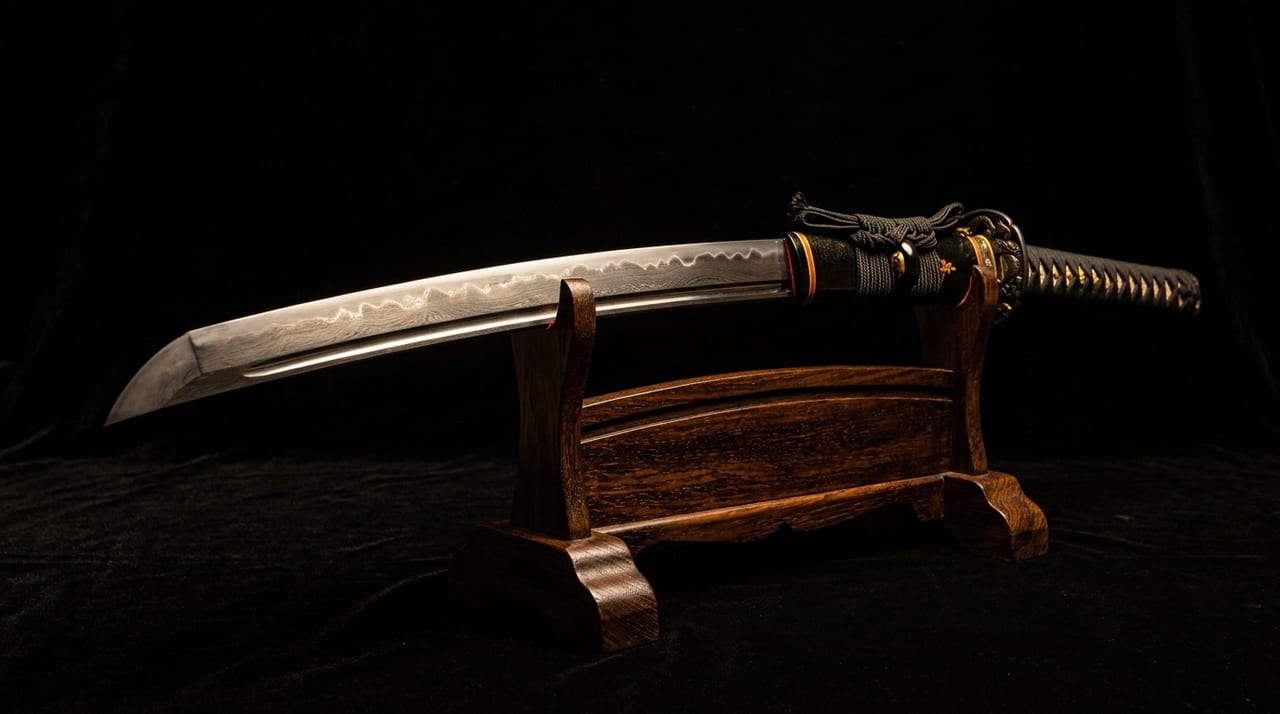
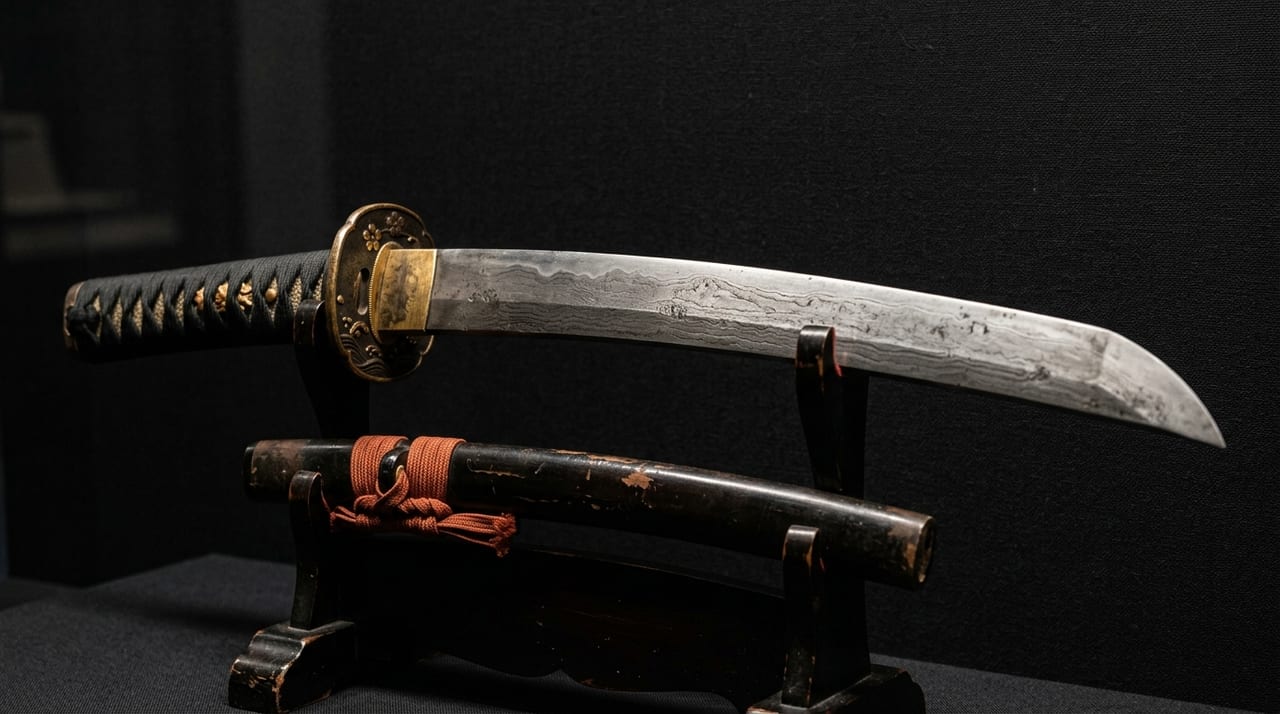
The jigane of Bishū Osafune Morimitsu is typical of Ōei Bizen, with a ground of itame mixed with mokume as its foundation. The rise of bō-utsuri is the defining characteristic of Ōei Bizen and Morimitsu. The following features are the primary points in authenticating genuine works.
Texture of the itame surface:
- The surface is a composite grain of predominantly itame mixed with mokume; ji-nie is distributed finely and evenly, giving a "cloudless, transparent quality"
- Bō-utsuri appears running parallel to the direction of the habaki along the blade, which is the hallmark of Ōei Bizen
- The flow of the itame is regular; "flowing itame (nagare-itame)" is a common sign of forgery
Presence or absence of utsuri: Utsuri — the cloud- or mist-like pattern that appears in the jigane — is a characteristic feature of Bizen-den. In genuine works by Morimitsu, "bō-utsuri" or "faint midare-utsuri" frequently appears. When utsuri is entirely absent, it is one factor that should prompt consideration of forgery (though the presence or absence of utsuri alone cannot determine authenticity).
Morimitsu's Hamon — The Heart of Ōei Bizen's Beauty
Morimitsu's hamon is principally chōji-midare, which encapsulates the aesthetic of Ōei Bizen.
Characteristics of the chōji-midare:
- Open-waisted gunome-chōji is representative, with the crests of the chōji developing in a gentle, rounded manner
- "Chōji-gunome," in which gunome is intermingled, is also frequently seen
- The nioiguchi is bright and vivid even while remaining crisp, conveying a "more luminous, flame-like quality" compared with the Ko-Ichimonji of the mid-Kamakura period
- The temper width is moderate, with a slight variation in width from base to tip
Characteristics of the hamon commonly seen in forgeries:
- When the chōji shapes are irregular and disordered
- When the nioiguchi is cloudy or indistinct
- When the temper width is excessively uniform throughout
Morimitsu's Mei — Key Points for Checking Script Style and Position
The mei is one of the most critical elements in authentication. The mei of Morimitsu has the following characteristics.
Script style of the mei: The inscription most commonly reads "Bishū Osafune Morimitsu" or "Osafune Morimitsu." The script style is powerful yet flowing, with individual character in the balance of the horizontal strokes of the character "Mori" and in the way the character "Mitsu" closes. The fine details of the script style can only be learned through comparative study of several genuine works, and direct examination of the actual swords improves appraisal accuracy far more than photographic materials.
Year inscription (nenki-mei): Many works bear the year inscribed within the Ōei era (1394–1427), and verifying that the year inscription is consistent is also important. Works inscribed "Ōei [year]" serve as reference benchmarks for dating.
Position and carving of the mei: The placement of the mei on the obverse (omote) and reverse (ura) of the nakago, as well as the manner and depth of the chisel cuts, are also reference points.
Methods for Distinguishing Morimitsu from Yasumitsu — Differences Between the Twin Pillars of Ōei Bizen
Yasumitsu, Morimitsu's contemporary, is constantly compared with him as "the twin pillars of Ōei Bizen." The main points of distinction are summarized below.
Characteristics of Morimitsu:
- The chōji-midare has a "sense of regularity," with an ordered, rhythmic quality
- Utsuri tends to appear abundantly in the jigane, and chikei also appears finely
- Many works have chōji with "rounded crests (atama-marumi)"
Characteristics of Yasumitsu:
- The chōji-midare has "variation in height," with large, dynamic changes that are striking
- The jigane is close to that of Morimitsu, but gives a slightly "rougher, more powerful" impression
- Compared with Morimitsu, smaller gunome-chōji is characteristic, developing in a compact, regular manner
Distinguishing between the two requires a specialized appraisal eye, and it is a frequently encountered and important subject in appraisals conducted at sword preservation societies and examination events.
List of Surviving Works and Cultural Property Designations
Numerous surviving works by Bishū Osafune Morimitsu are transmitted both within Japan and abroad, and those that have received cultural property designations as confirmed genuine works serve as the standard for reliability.
- Kokuhō-designated works: Multiple tachi that have received the highest evaluation surpassing jūyō bunkazai exist, and are held at major national museums and shrines and temples
- Jūyō bunkazai-designated works: Numerous jūyō bunkazai have been designated spanning tachi, uchigatana, and tantō, with opportunities for public exhibition occurring periodically
- Jūyō bijutsuhin-designated works: Multiple works designated as jūyō bijutsuhin before the war also exist, transmitted in collections both within Japan and abroad
Evaluation and Market for Morimitsu Swords in the Modern Era
Genuine works by Bishū Osafune Morimitsu are accorded the highest evaluation as the pinnacle of Ōei Bizen, and when they appear on the Japanese sword market, transactions at high prices have been reported. Because a considerable number of swords with forged mei and mumei swords also circulate, authentication via the NBTHK examination certificate is essential when purchasing or trading.
Learning about Morimitsu means deeply understanding Bizen-den — the royal road of Japanese swords — and it is a pursuit that sword enthusiasts around the world undertake as an approach to the highest peaks of Japanese sword appreciation.