Judging Whether to Re-polish a kotō and the Blade Restoration Process — The Craftsman's Skill in Assessing Togi Reduction and Preservation Condition
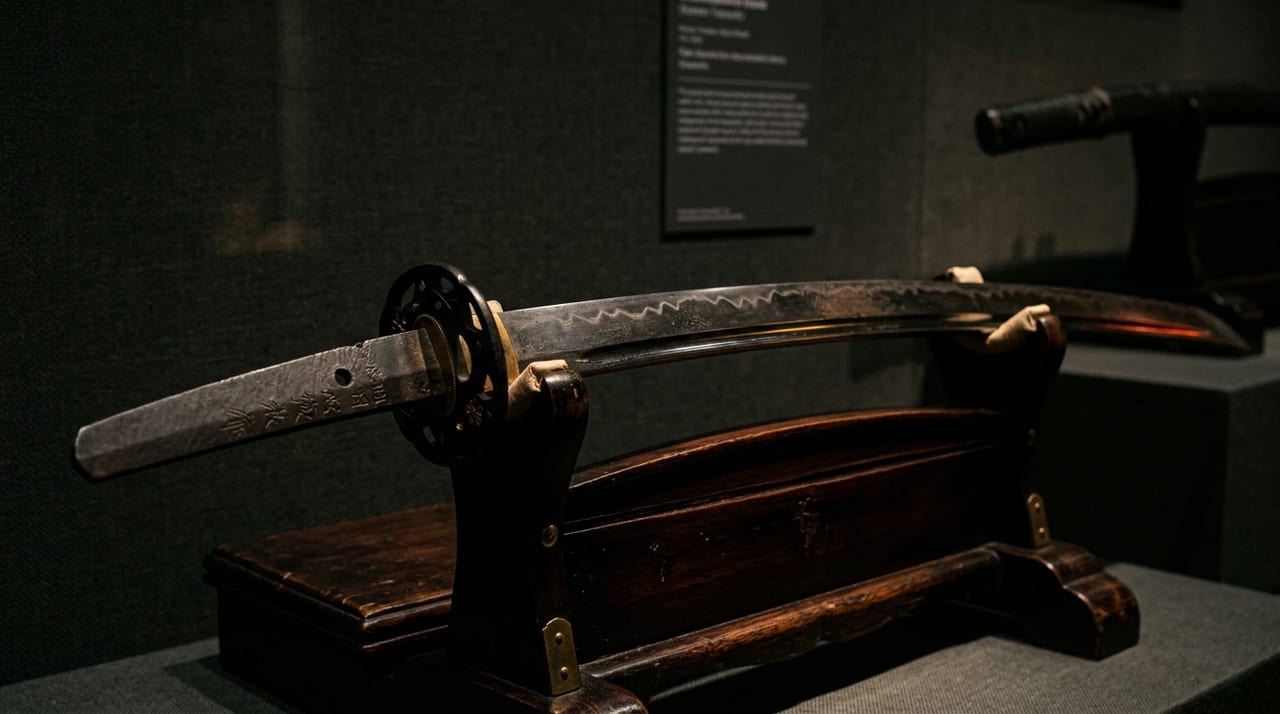 * Image is for illustrative purposes only.
Table of Contents
The Reality of Age-Related Changes in Old Blades
Japanese swords that have been owned and stored over long periods may show significant changes in the visibility of the hamon and the color and luster of the jigane, depending on storage conditions and the history of past maintenance. For blades that have aged over decades, or those passed down through multiple generations, the current condition varies from sword to sword based on when the last togi was performed and how the blade has been stored since then.
The following symptoms are commonly observed as age-related changes.
- Light surface rust and spot rust: Early-stage rust caused by humidity fluctuations or insufficient oil. If left unaddressed, corrosion will progress.
- Wiping scratches: An accumulation of fine abrasion marks caused during maintenance.
- Edge chipping: Chipping along the cutting edge due to past use or improper storage.
- Cloudiness in the jigane: Loss of transparency on the jigane surface due to oxidation or deterioration of the oil film.
- Loss of clarity in the hamon: A state in which contrast with the jigane is lost and the brilliance of the hamon has faded.
- Togi reduction: A condition in which the blade has become thinner as a result of repeated past polishing.
These changes may appear individually or in combination. Multiple factors — including humidity in the storage environment, prolonged storage left in the saya, and the type and degree of deterioration of the oil used — combine to shape the current condition of the blade.
Determining Whether Re-polishing Is Necessary
When assessing the condition of a blade, a craftsman begins with an overall observation. Because light surface rust and cloudiness in the jigane can sometimes be improved through proper maintenance and careful re-wiping, it is not immediately concluded that polishing is necessary. Distinguishing between surface soiling and problems that can only be resolved through polishing is the critical task at this stage.
Re-polishing becomes a consideration when the following conditions are confirmed.
- Spot rust has developed in multiple locations and improvement cannot be expected through wiping alone.
- Edge chipping extends to multiple points along the cutting edge.
- The utsuri is barely visible and the activity of the jigane is also difficult to discern.
- Scratches from past polishing are deep and cover the jihada.
At the same time, not all old blades require re-polishing. Because polishing is a process of abrading the steel with a whetstone, the blade becomes slightly thinner with each application. If additional polishing is applied to a blade that already shows pronounced togi reduction, not only will the shape balance at the hamachi and munemachi be disrupted, but in the worst case there is a risk of structural damage such as a crack along the cutting edge.
The alignment of the shinogi, the position of the hamachi and munemachi, and the balance of the blade's thickness all change gradually with repeated polishing, making it possible to estimate the number of past polishing sessions to some degree from the blade's current condition. An experienced craftsman judges what stage the blade is at by carefully observing these features.
Key Steps in the Blade Restoration Process
Re-polishing proceeds in stages, as with ordinary togi, beginning with shitaji-togi and advancing to shiage-togi. However, for old blades, a thorough observation of the current condition is indispensable before work begins. The specific course of action is determined only after examining the distribution of rust and scratches, confirming the thickness at each part of the blade, and assessing the condition of the hamon.
Shitaji-togi involves progressing gradually from arato (coarse whetstones) to finer ones, leveling the unevenness caused by edge chipping and rust. How much steel is removed in this stage varies depending on the condition of the blade and the desired result, so the work proceeds carefully under the principle of removing no more than the minimum necessary. With old blades, a balance is required: determining how far to abrade before the scratches disappear, while keeping togi reduction to an absolute minimum.
Shiage-togi involves cosmetic steps such as hadori and nugui, which bring out the surface texture of the jigane and the activity of the hamon. Features that appear in the jigane — such as mokume, itame, and suguha — can only be observed clearly for the first time through proper shiage-togi. With old blades, how far the fine scratches and uneven coloration accumulated over many years can be corrected depends on the quality of the steel and the remaining thickness, so each condition cannot be treated uniformly.
Deciding Whether Re-polishing Is Appropriate: A Cultural Property Perspective
Whether to re-polish an old blade is a matter that must be considered carefully not only from the perspective of improving its appearance but also from the standpoint of preserving its artistic and monetary value as a sword. If polishing causes the blade to become too thin, not only its structural integrity but also its very value as an object of appreciation and appraisal may be compromised. For this reason, the view of limiting polishing to the minimum necessary range is shared among craftsmen in the field.
Furthermore, re-polishing is an irreversible process that cannot be undone once performed. For minor cloudiness or small scratches, choosing not to force a re-polish and instead continuing careful maintenance while preserving the current condition can also be a rational decision for keeping the blade in good condition over the long term.
If the koshirae or saya does not match the condition of the blade, friction inside the saya can cause new scratches or rust. For this reason, when examining the condition of a blade, it is advisable to also check the compatibility of the fittings with the blade.
When considering re-polishing, it is important to make the decision not only with the immediate aim of "improving the current appearance" but also from the long-term perspective of "how to maintain the blade over the coming decades."
What to Convey When Consulting a Craftsman
When consulting a craftsman about re-polishing or placing an order, it is advisable to convey as much information as possible about the blade's provenance and the timing of past polishing sessions. Information such as approximately when it was last polished and under what conditions it was stored provides important clues for assessing the current condition of the blade.
Even when the provenance is unknown, organizing and conveying the following information will help the craftsman grasp the blade's condition.
- The specific location of any symptoms of concern (where rust, edge chipping, or cloudiness is found)
- The environment where the blade was stored (high-humidity location, prolonged neglect, condition of the saya, etc.)
- How much time has passed since the last maintenance
- The mei and shape of the nakago (tang) attached to the blade (which can serve as clues to the blade's provenance)
Because each old blade has a different history, the condition of the steel beneath what may appear to be identical scratches varies greatly from sword to sword. The most important exchange in a re-polishing consultation is the process of carefully aligning, in front of the actual blade, the approach to "how far to polish" and "how far to leave untouched."
Summary
Re-polishing an old Japanese sword is not merely a matter of restoring its appearance; it is a process that requires a comprehensive judgment weighing the blade's thickness and structural integrity as well as the preservation of its value as a cultural artifact. The approach of applying polishing only to the extent necessary, while carefully assessing the degree of togi reduction and the accumulated history of past maintenance, is valued as the fundamental attitude for passing a blade down to future generations in good condition over the long term.
Expert judgment based on examination of the actual blade is indispensable for assessing a blade's condition and the appropriateness of polishing. When searching for swords online, we recommend carefully reviewing the polishing history and preservation condition information listed on the product page, and using the inquiry form for any questions.