The Complete Guide to Japanese Sword Exhibition Facilities Across Japan — Visiting Museums and Art Museums by Region, with Practical Viewing Tips
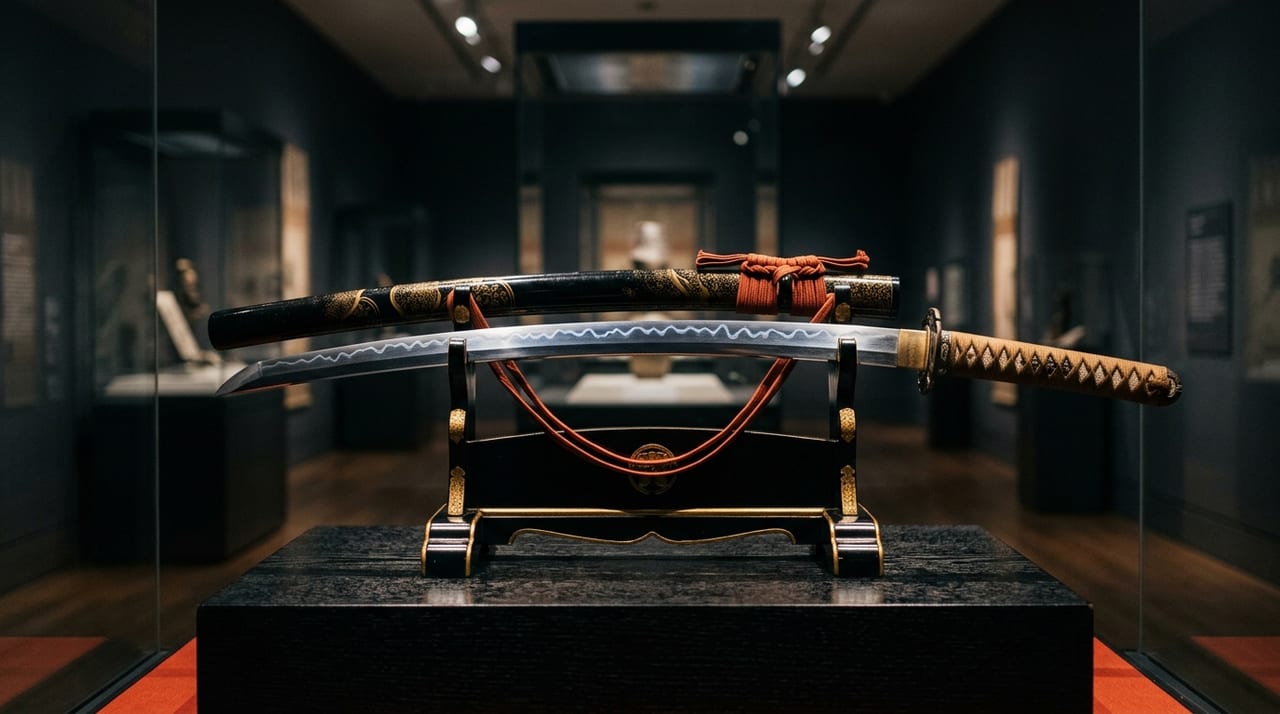 * Image is for illustrative purposes only.
Table of Contents
Facilities where you can view Japanese swords in person span the country, from national museums in Tokyo and Kyoto to specialized museums rooted in production regions and shrine treasure halls associated with famous warlords. The nature of each collection differs by region: Bizen Osafune for the workshop heritage of Bizen swords, Seki for the tradition of Mino kaji, Kamakura for the treasures of the warrior government — the local sword history is reflected directly in the exhibitions. This article organizes the exhibition facilities registered with TOUKENZA by region and also introduces practical viewing tips. Opening hours and admission fees are subject to change, so please verify with each facility's official information before visiting.
Kantō
The greater Tokyo area has a concentration of national museums and private art museums, making it the region where kokuhō (National Treasure) and jūyō bunkazai (Important Cultural Property) swords can be seen in the greatest numbers.
| Facility | Location | Features |
|---|---|---|
| Tokyo National Museum | Taitō, Tokyo (Ueno) | Permanent display of kokuhō (National Treasure) tachi and tantō. Open late on Fridays and Saturdays |
| Japanese Sword Museum | Sumida, Tokyo (Ryōgoku) | Specialized sword museum operated by NBTHK (Society for the Preservation of Japanese Art Swords) |
| Eisei Bunko | Bunkyō, Tokyo | Swords and armor passed down in the Hosokawa family |
| Gotoh Museum | Setagaya, Tokyo | Occasionally features swords in special exhibitions |
| Nezu Museum | Minato, Tokyo | An extensive collection of tōsōgu (sword fittings) |
| Seikado Bunko Art Museum | Chiyoda, Tokyo | Items collected by the Iwasaki family. Known for displays of fine swords |
| Mitsui Memorial Museum | Chūō, Tokyo | Swords and tōsōgu (sword fittings) passed down in the Mitsui family |
| Tokugawa Museum | Mito, Ibaraki | Swords of the Mito Tokugawa family |
| Kamakura Kokuhōkan | Kamakura, Kanagawa | A consolidated collection of cultural properties from Kamakura temples and shrines |
| Tsurugaoka Hachimangū Museum | Kamakura, Kanagawa | Treasures dedicated to the guardian deity of the warrior class |
| Nikkō Tōshōgū Treasure Museum | Nikkō, Tochigi | Swords associated with Tokugawa Ieyasu |
| Samurai Sword Museum | Moka, Tochigi | A private museum specializing in swords |
| Tsukamoto Art Museum | Sakura, Chiba | Free admission. Collection centered on swords |
| Yuki Kurabikan | Yuki, Ibaraki | Free admission |
The Tokyo National Museum charges 1,000 yen for general admission and is open until 9 p.m. on Fridays and Saturdays. The Japanese Sword Museum charges 1,000 yen for general admission and holds regular rotation exhibitions with swords themselves as the focus.
Chūbu
The region offers facilities of distinctly different characters: famous swords of the Owari Tokugawa family, the village of Mino sword kaji, and the treasures of Shinshū warrior houses.
| Facility | Location | Features |
|---|---|---|
| Tokugawa Art Museum | Nagoya, Aichi | Swords passed down by the Owari Tokugawa family. Holds kokuhō (National Treasure) swords |
| Nagoya Sword Museum Meihaku | Nagoya, Aichi | Large-scale specialized sword museum operated by the Sword World Foundation |
| Atsuta Shrine | Nagoya, Aichi | Shrine enshrining the Kusanagi-no-Tsurugi. Dedicated swords displayed in the treasure hall |
| Seki Traditional Swordsmith Museum | Seki, Gifu | Exhibits on the tradition of Mino kaji and the sword-making process. 300 yen for general admission |
| Sano Art Museum | Mishima, Shizuoka | Known for special exhibitions of swords |
| Mori Shūsui Museum | Toyama, Toyama | Private art museum centered on swords |
| Sanada Treasure Museum | Matsushiro, Nagano | Arms and armor passed down in the Sanada family |
| Gifu Sekigahara Battlefield Memorial Museum | Sekigahara, Gifu | Arms and armor related to the Battle of Sekigahara |
| Sakashiro Iron Museum | Sakashiro, Nagano | Exhibition of gendaitō works |
Seki remains a town where sword kaji are active today, and the Seki Traditional Swordsmith Museum holds days when tanren (forging) demonstrations are performed. It is well suited for those who wish to experience the atmosphere of a production region.
Kansai
In addition to the national museums in Kyoto and Nara, a notable characteristic of Kansai is its many shrines associated with swords.
| Facility | Location | Features |
|---|---|---|
| Kyoto National Museum | Kyoto, Kyoto | 700 yen for general admission. Regularly holds featured sword exhibitions |
| Nara National Museum | Nara, Nara | 700 yen for general admission. Holds swords alongside Buddhist art |
| Kasuga Taisha National Treasure Hall | Nara, Nara | Includes the kokuhō (National Treasure) gold-lacquered mother-of-pearl Kenuki-gata Tachi |
| Isonokami Jingū Treasure Hall | Tenri, Nara | Preserves ancient inscribed swords and the Nanatsusaya-no-Tachi |
| Daikaku-ji Reihokan | Kyoto, Kyoto | Known for the legend of Hizamaru (Usumidori) |
| Fujinomori Shrine | Kyoto, Kyoto | Treasure hall is free. Displays a replica of the Tsurumaru |
| Awata-jinja Shrine | Kyoto, Kyoto | Shrine associated with the Awataguchi kaji |
| Kenkun-jinja Shrine | Kyoto, Kyoto | Enshrines Oda Nobunaga |
| Kitano Tenmangu Treasure Hall | Kyoto, Kyoto | Dedicated swords displayed in the treasure hall |
| Hikone Castle Museum | Hikone, Shiga | Swords and arms passed down in the Ii family |
| Sen-oku Hakukokan | Kyoto, Kyoto | The Sumitomo collection |
| Kurokawa Institute of Ancient Cultures | Nishinomiya, Hyōgo | Research institution for swords and tōsōgu (sword fittings). Open only during exhibition periods |
| Fujita Art Museum | Osaka, Osaka | Items collected by the Fujita family |
For shrines within Kyoto, the grounds are free and many facilities charge only for the treasure hall or are entirely free, making it convenient to visit them in combination with a walk around the city.
Chūgoku and Shikoku
This is a region where you can experience both the raw material and the production region of the Japanese sword: Bizen Osafune and the tatara (traditional smelting) iron of Izumo.
| Facility | Location | Features |
|---|---|---|
| Bizen Osafune Japanese Sword Museum | Setouchi, Okayama | The home of Bizen swords. 500 yen for general admission. Has an attached tōshō (swordsmith) workshop |
| Hayashibara Museum of Art | Okayama, Okayama | Swords of the Ikeda family of the Okayama domain |
| Kurashiki Art Sword Museum | Kurashiki, Okayama | Private museum specializing in swords. Irregular closures |
| Wako Museum | Yasugi, Shimane | Museum of tatara (traditional smelting) and tamahagane |
| Okuizumo Tatara and Sword Museum | Okuizumo, Shimane | Exhibits on the relationship between tatara (traditional smelting) and swords |
| Izumo Taisha Treasure Hall | Izumo, Shimane | Dedicated swords |
| Itsukushima Shrine Treasure Museum | Hatsukaichi, Hiroshima | Arms associated with the Taira clan |
| Kashiwabara Museum | Iwakuni, Yamaguchi | Holds swords and armor |
| Oyamazumi Shrine Treasure Hall | Imabari, Ehime | A treasure house of kokuhō (National Treasure) and jūyō bunkazai (Important Cultural Property) arms |
| Kochi Castle History Museum | Kōchi, Kōchi | Swords of the Tosa Yamauchi family |
The Bizen Osafune Japanese Sword Museum has a tōshō (swordsmith) workshop on its grounds, and public demonstrations of traditional tanren (forging) are held approximately once a month (please check the official information for dates). Returning to the exhibition room after watching the sword-making process changes how you see the jigane (steel of the blade surface) and hamon (temper line).
Kyushu and Tōhoku
| Facility | Location | Features |
|---|---|---|
| Kyushu National Museum | Dazaifu, Fukuoka | 700 yen for general admission |
| Fukuoka City Museum | Fukuoka, Fukuoka | Holds famous swords passed down in the Kuroda family |
| Dazaifu Tenmangu Shrine Treasure Hall | Dazaifu, Fukuoka | Dedicated swords |
| Uesugi Shrine Keishoden | Yonezawa, Yamagata | Swords associated with Uesugi Kenshin and Kagekatsu |
| Yonezawa Uesugi Museum | Yonezawa, Yamagata | Cultural properties of the Uesugi family |
| Chido Museum | Tsuruoka, Yamagata | Swords of the Sakai family of the Shōnai domain |
| Sendai City Museum | Sendai, Miyagi | Arms of the Date family |
| Chubachi Museum | Ōsaki, Miyagi | Private art museum centered on swords |
In Yonezawa, Uesugi Shrine Keishoden and the Yonezawa Uesugi Museum are within walking distance of each other, allowing you to see the Uesugi family's swords all in one day.
Practical Viewing — How to Look in the Exhibition Room
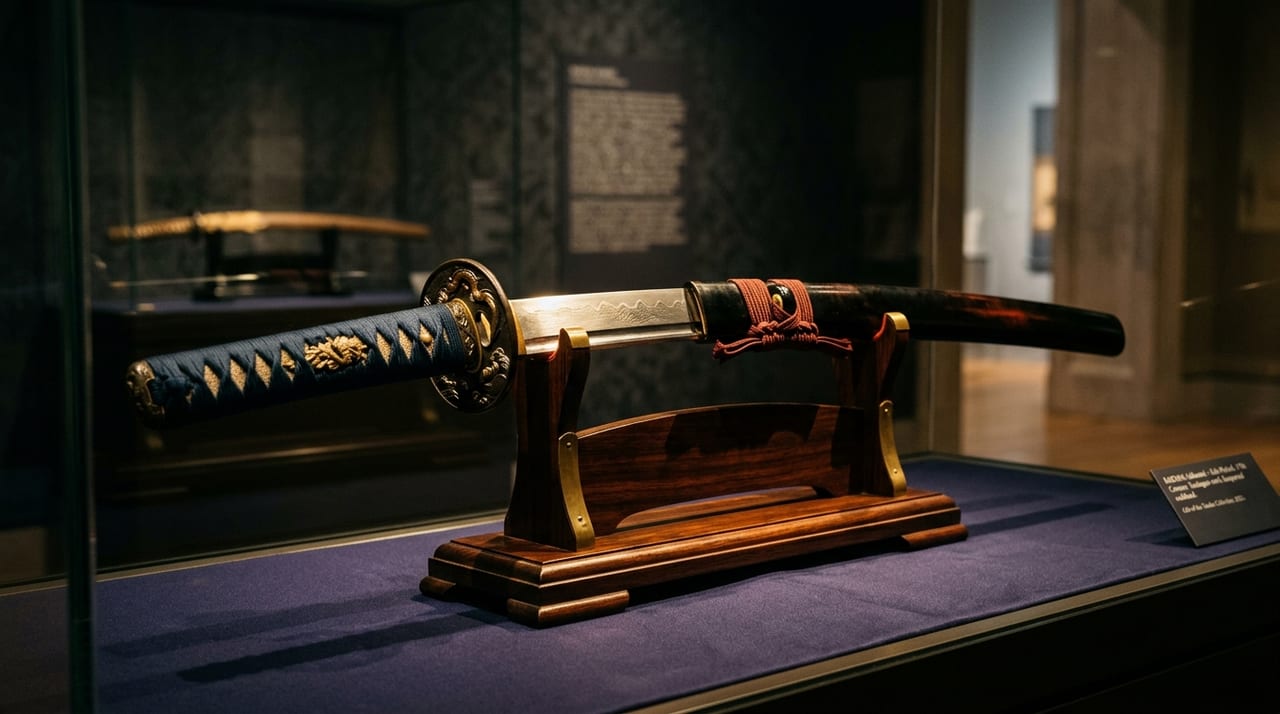
Unlike paintings, swords are greatly affected by "light" in how they appear. Following the steps below makes it easier to read the jigane (steel of the blade surface) and hamon (temper line).
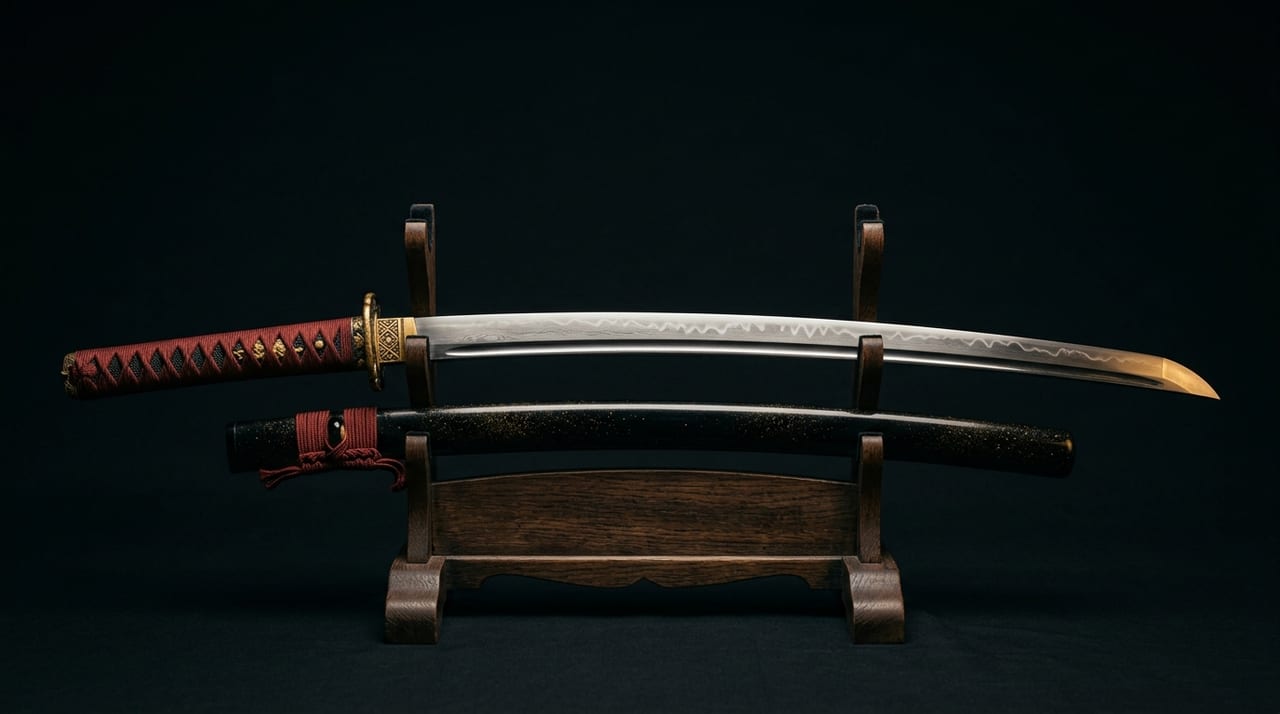
- View the overall shape: First stand back a little and check the position of the sori (curvature), the mihaba (blade width), and the size of the kissaki (point). The shape is the element that most clearly expresses the era
- View the hamon (temper line): Check how the exhibition case lighting falls on the blade, then crouch down or shift position to find the angle at which the hamon (temper line) appears white. Distinguish whether it is suguha or a irregular pattern, and whether it is nie (visible martensite crystals) or nioi (fine martensite mist)
- View the jigane (steel of the blade surface): Move your eyes to the flat of the blade above the hamon (temper line) and look for the grain patterns of itame, masame, or mokume. The jigane (steel of the blade surface) provides clues for identifying schools
- View the nakago (tang) and mei (signature): If the nakago (tang) is visible in the display, check whether there is a mei (signature), the yasurime (file marks), and the number of mekugi holes. Evidence of suriage (shortening) also appears in the nakago (tang)
- Cross-reference with the caption: Confirming whether the era, school, and tōkō (swordsmith) name in the caption align with the shape, hamon (temper line), and jigane (steel of the blade surface) you observed will develop your connoisseurship
How to view hamon (temper line) is covered in detail in the Practical Guide to Hamon Appreciation, distinguishing nie (visible martensite crystals) from nioi (fine martensite mist) in How to Distinguish Nie and Nioi, and types of jihada (grain pattern of the steel) in Types of Jihada and Methods of Forging.
Using Catalogues and Archives
Catalogues and past exhibition materials are useful for deepening your understanding of swords seen on display.
- Special exhibition catalogues contain oshigata (tracings of the hamon and nakago) and detailed commentary, allowing you to check parts you could not fully see in the exhibition room
- The websites of national museums and the Japanese Sword Museum publish images and commentary on their collections. Viewing these before your visit makes observation in the exhibition room more efficient
- Viewing works by the same tōkō (swordsmith) across multiple facilities reveals the range of that tōkō's style. Keeping catalogue oshigata on hand for comparison is recommended
How to Plan Your Visit
- One day in Tokyo: The Tokyo National Museum (Ueno) and the Japanese Sword Museum (Ryōgoku) are a manageable train ride apart. You can tour them by spending the morning in Ueno and the afternoon in Ryōgoku
- One day in Nagoya: Combining the Tokugawa Art Museum, the Nagoya Sword Museum, and Atsuta Shrine lets you see three types of swords in one visit: famous swords of a daimyo family, a specialized museum, and dedicated swords
- Two days in Okayama and Izumo: See Bizen swords and the sword-making process at the Bizen Osafune Japanese Sword Museum, then head the next day to the Wako Museum in Yasugi. This gives you an end-to-end understanding from raw material to finished sword
- Two days in Kyoto and Nara: In addition to the national museums, tour the treasure halls of shrines such as Fujinomori Shrine, Awata-jinja Shrine, and Kasuga Taisha on foot
Special sword exhibitions have limited runs and rotations are frequent. If you have a specific sword in mind, always confirm the display period in advance. The flow of tōkō and eras in each region is also summarized chronologically in The History of Japanese Swords.
Conclusion
Japanese sword exhibition facilities — from the kokuhō (National Treasure) swords of national museums to specialized museums in production regions and shrine treasure halls associated with famous warlords — each have a distinct character by region. Visiting a particular place is also a way to understand sword culture geographically. By developing the habit of viewing in the order of shape, hamon (temper line), jigane (steel of the blade surface), and nakago (tang), and supplementing with catalogues and archives, the forging techniques and historical background behind each sword you see in the exhibition room will come into vivid three-dimensional relief.