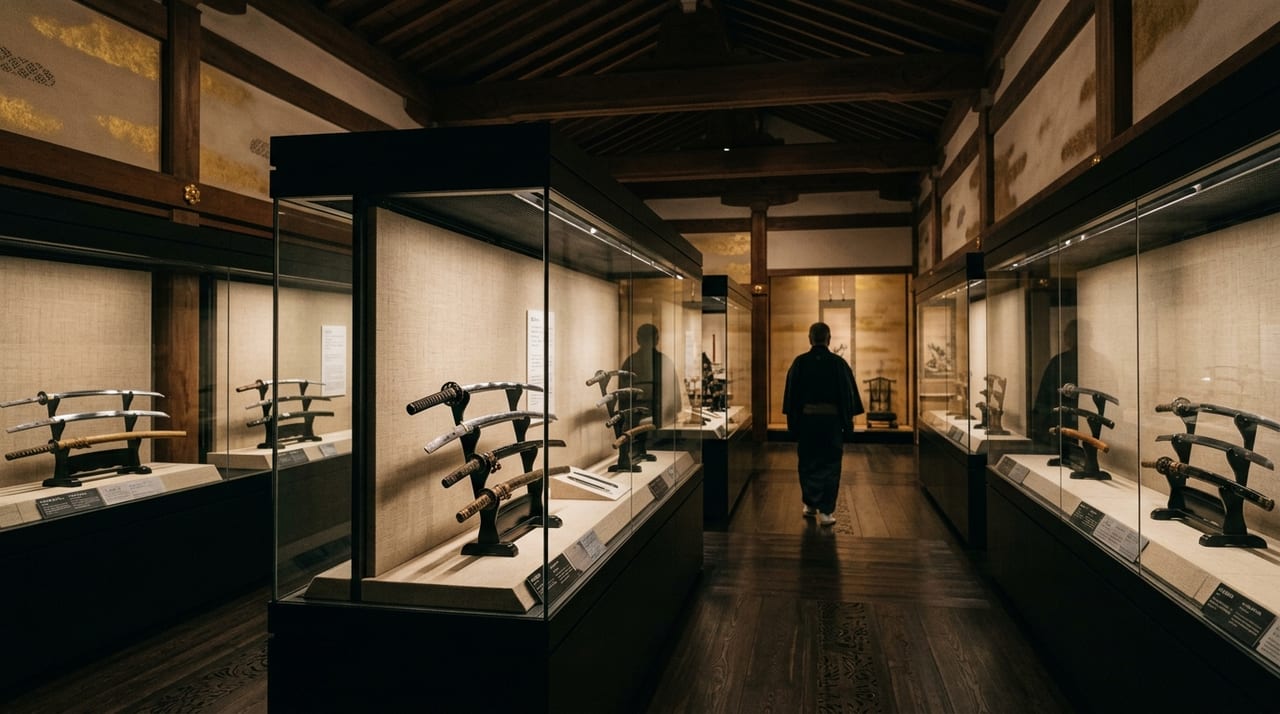
 * Image is for illustrative purposes only.
Awata-jinja Shrine
粟田神社
Overview
Awata-jinja Shrine, founded in 876 CE (Jōgan 18) and located in Awataguchikajicho, Higashiyama-ku, Kyoto, stands at the historic eastern gateway of Kyoto where the Tōkaidō and Nakasendō roads enter the city. It has long been venerated as a guardian shrine for travelers. The enshrined deities are Susanoo no Mikoto and Ōnamuchi no Mikoto. In the world of Japanese swords, the shrine's inner sub-shrine "Kaji-jinja" (Blacksmith Shrine) is one of Japan's most celebrated pilgrimage sites for nihonto culture, dedicated to the swordsmiths who created some of the most famous blades in history.
Kaji-jinja and Its Sword Deity Connections
The Kaji-jinja (Blacksmith Shrine) within the precinct enshrines three deities: - Ame-no-Mahitotsu no Kami — the Shinto deity of iron and metalworking - Sanjō Kokaji Munechika — the Heian-period master swordsmith who forged Mikazuki Munechika (三日月宗近), the leading blade of the "Tenka Goken" (Five Greatest Swords Under Heaven) and a designated National Treasure. Mikazuki Munechika is now held at the Tokyo National Museum - Awataguchi Yoshimitsu — the Kamakura-period master known as the greatest tantō maker in nihonto history, attributed with forging Yagen Tōshirō, Gotō Tōshirō, Atsushi Tōshirō, and other celebrated blades
The shrine is also associated with the legend of "Kogitsune-maru" (小狐丸), in which Munechika prayed at Inari Shrine for divine guidance and forged a supreme sword with the aid of a divine white fox — a story dramatized in the Noh play "Kokaji." Awata-jinja issues special votive seals (goshuin) dedicated to Mikazuki Munechika, Kogitsune-maru, and Ichigo Hitofuri.
Kyoto Sword Seal Circuit
Awata-jinja participates in the "Kyoto Tōken Goshuin Meguri" (Kyoto Sword Seal Circuit) alongside Kenkun-jinja, Fujinomori-jinja, and Toyokuni-jinja. The shrine is widely regarded as the primary pilgrimage site for fans of the game Touken Ranbu (Sword and Blossoms), with characters "Mikazuki Munechika," "Kogitsune-maru," "Ichigo Hitofuri," and the "Awataguchi brothers" all originating from swords closely associated with this shrine's tradition.
Grounds and Highlights
The first torii faces the Sanjō thoroughfare on the eastern edge of Higashiyama. The approach ascends past the Kaji-jinja sub-shrine, where votive plaques and offerings from nihonto and Touken Ranbu pilgrims are displayed. The Awata Matsuri festival in autumn features a procession of ceremonial sword-lances (ken-hoko).
Access
Approx. 5 min walk from "Jingūmichi" Kyoto City Bus stop. Approx. 7 min walk from Higashiyama Station (Kyoto Municipal Subway Tōzai Line). Votive counter open 8:30–17:00.
Highlights
- Kaji-jinja (Blacksmith Shrine) — sub-shrine dedicated to Munechika (forger of National Treasure Mikazuki Munechika) and Yoshimitsu (greatest tantō maker in nihonto history)
- Goshuin for Mikazuki Munechika, Kogitsune-maru, and Ichigo Hitofuri — votive seals dedicated to the most celebrated swords of the Awataguchi and Sanjō schools
- Premier pilgrimage site for Touken Ranbu — enshrining the lineage behind Mikazuki Munechika, Kogitsune-maru, and Awataguchi Yoshimitsu's tantō; draws visitors from across Japan and abroad
- Kyoto Sword Seal Circuit participant — one of four shrines in the Kyoto Tōken Goshuin Meguri
- Ancient shrine of 876 CE at Kyoto's eastern gateway — founded at the Tōkaidō entrance to Kyoto, guardian of travelers for over 1,100 years
* Opening hours and exhibitions are subject to change. Please check the official website before visiting.