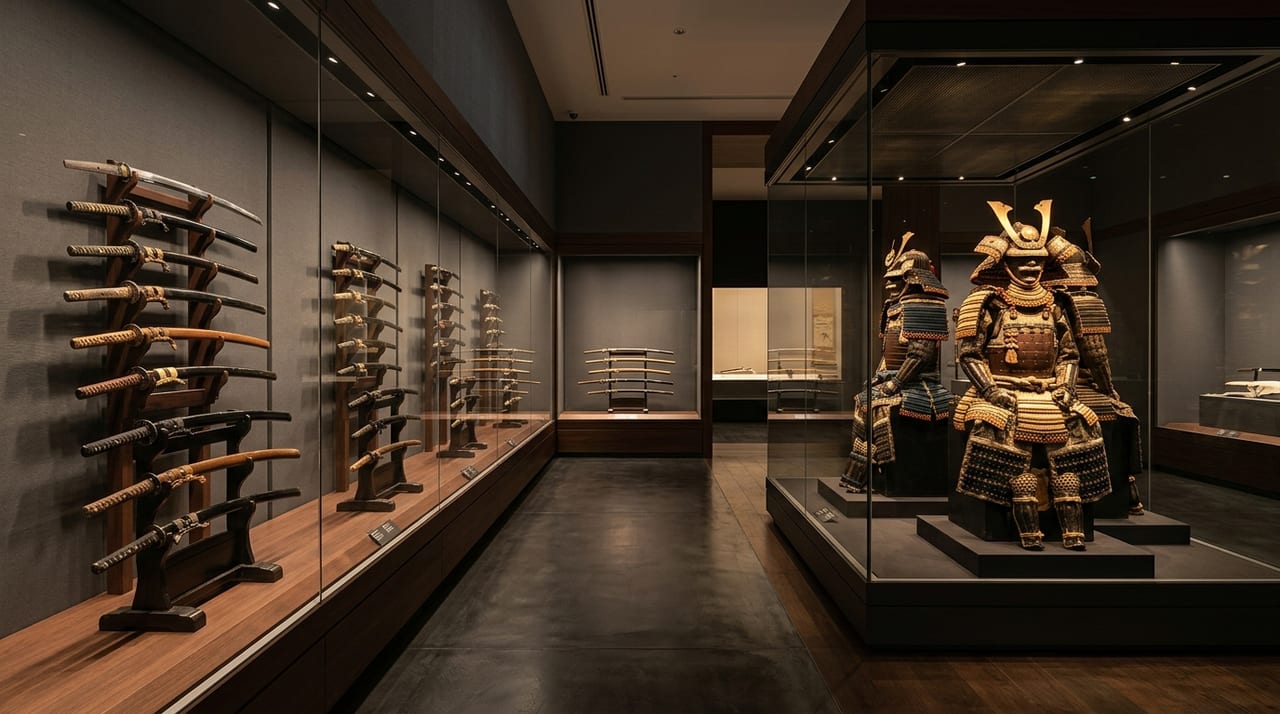
 * Image is for illustrative purposes only.
Kenkun-jinja Shrine
建勲神社
Overview
Kenkun-jinja is a shrine located on Funaokayama (elevation 111.7 m) in Kita-ku, Kyoto City, and enshrines Oda Nobunaga as its primary tutelary deity. It originated as Kenkun-sha, founded in 1869 (Meiji 2) by imperial command of Emperor Meiji, relocated to Funaokayama in 1880 (Meiji 13), and moved to its present hilltop site in 1910 (Meiji 43). It serves as the head shrine of all Kenkun-jinja shrines throughout Japan and stands as the central spiritual site for the martial culture and sword culture associated with Nobunaga.
Primary Sword Holdings
Yoshimoto Samonji / Sōzan Samonji — Designated an Important Cultural Property, this Nanbokuchō-period uchigatana (blade length: 67.0 cm) bears an inscription reading "Oda Owari no Kami Nobunaga—nineteenth day of fifth month, Eiroku 3, captured Yoshimoto—blade in his possession," embodying the history of the pursuit of unified rule. The blade passed through Miyoshi Masanaga, Imagawa Yoshimoto, Oda Nobunaga, Toyotomi Hideyoshi, and the Tokugawa house before being donated to Kenkun-jinja at the shrine's founding. It is currently on deposit at the Kyoto National Museum and appears in special exhibitions there; it is not on permanent public display.
Yagen Tōshirō Replica (写し) — A precision replica of the legendary tantō said to have been favored by Oda Nobunaga — "Yagen Tōshirō," attributed to the master swordsmith Awataguchi Tōshirō Yoshimitsu of the Kamakura period (blade length approx. 25 cm). The original is no longer extant, but a precision replica was dedicated to the shrine in 2018. It is displayed publicly on a limited basis at the shrine.
Connection to Touken Ranbu and the Kyoto Sword Goshuin Tour
Kenkun-jinja is one of four shrines participating in the "Kyoto Tōken Goshuin Meguri" (Kyoto Sword Seal Circuit), alongside Awata-jinja, Fujinomori-jinja, and Toyokuni-jinja. Sword-themed votive seals (goshuin) and seal books (goshuinchō) featuring Yoshimoto Samonji and Yagen Tōshirō are available at the shrine. The shrine is also known as a pilgrimage site for fans of the popular game Touken Ranbu (Sword and Blossoms), in which Yagen Tōshirō appears as a character.
Grounds and Setting
From the main hall situated on the summit of Funaokayama, panoramic views extend across Kyoto City. The austere architectural style of the shrine hall, based on Meiji-period standards, creates a distinctive atmosphere suited to the martial character of Nobunaga's legacy. Two approach routes lead to the precinct: the main torii route (approximately 120 stone steps) and the gentler north approach path.
Access
The shrine precinct is open at all times, free of charge. Shrine office and votive counter hours: 9:00–17:00. Take Kyoto City Bus to "Kenkun-jinja-mae" stop, then walk south approximately 3 minutes to the main torii, followed by approximately 120 stone steps. Alternatively, take Kyoto City Bus to "Funaokayama" stop, then climb approximately 50 stone steps via the north approach path to the precinct.
Highlights
- Important Cultural Property 'Yoshimoto Samonji' — the sword Nobunaga took from Imagawa Yoshimoto at Okehazama; currently on deposit at Kyoto National Museum
- Yagen Tōshirō replica offering — precision replica of Nobunaga's legendary tantō by Awataguchi Yoshimitsu, dedicated 2018; displayed on limited occasions
- Kyoto Sword Seal Circuit hub — one of four participating shrines; a primary pilgrimage site for Touken Ranbu fans
- Panoramic view from Funaokayama summit — the martial shrine of Nobunaga, commanding views across the Kyoto basin
- Head shrine of all Kenkun-jinja — founded 1869 by imperial command of Emperor Meiji, the primary monument to Nobunaga's cultural legacy
* Opening hours and exhibitions are subject to change. Please check the official website before visiting.