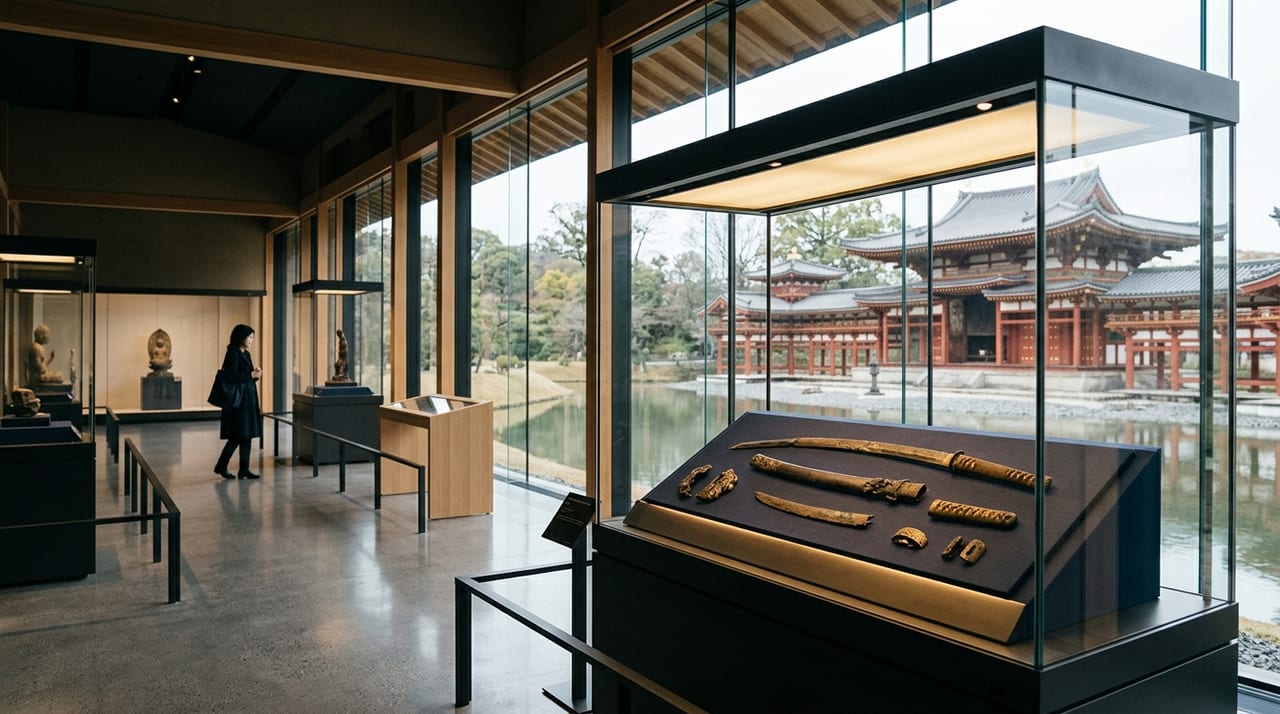
 * Image is for illustrative purposes only.
Byodoin Museum Hoshokan
平等院鳳翔館
- Location
- Uji, Kyoto
- Access
- About a 10-minute walk from Uji Station on the JR Nara Line. Also within walking distance of Uji Station on the Keihan Uji Line. About 17 minutes by JR Nara Line from Kyoto Station to Uji Station. There is no dedicated parking; visitors use nearby coin parking or the privately operated “Uji Parking” in front of Byodoin's South Gate. The town of Uji is lined with long-established Uji tea shops and souvenir stores, creating an atmospheric townscape. Sightseeing that combines matcha experiences at the various tea shops along Byodoin Omotesandō is popular. A one-day sightseeing route combining Ujigami Shrine (10-minute walk) and the Genji Monogatari Museum (15-minute walk) is recommended.
- Opening Hours
- 9:00–17:00 (Hoshokan, last admission 16:45)
- Admission
- Adults 700 yen / junior and senior high school students 400 yen / elementary school students 300 yen (Phoenix Hall interior: 300 yen, charged separately)
Overview
Overview of Byodoin and Hoshokan
Byodoin began when Fujiwara no Yorimichi converted the villa of his father, Fujiwara no Michinaga, into a temple in Eishō 7 (1052). The Amida Hall (Hōōdō, the Phoenix Hall) was built the following year, Eishō 8 (1053). The Phoenix Hall is a World Heritage-listed National Treasure whose form has survived almost completely intact since its founding. It is known worldwide as a historic landscape representative of Japan and also appears on the 10-yen coin. Hoshokan, opened in 2001 (Heisei 13), is a museum built to preserve and exhibit the Phoenix Hall's treasures, including its Buddhist statues, Buddhist paintings, phoenix ornaments and Unchū Kuyō Bosatsu statues, under state-of-the-art environmental controls.
Minamoto no Yorimasa and the Ōgi no Shiba
In the 5th month of Jishō 4 (1180), Minamoto no Yorimasa, who had joined the uprising of Prince Mochihito, was defeated in the “Bridge Battle” on the Uji River and withdrew to Byodoin. It is said that within the temple grounds, at the “Ōgi no Shiba” (Fan Lawn), he spread out his military fan, composed his death poem and took his own life.
National Treasure Buddhist Statues
The main exhibits at Hoshokan are National Treasure Buddhist statues. The 52 wooden Unchū Kuyō Bosatsu statues that attend the seated Amida Nyorai (by Jōchō) in the Phoenix Hall, 26 of which are displayed at Hoshokan, are highly regarded internationally as supreme masterpieces of Heian-period Buddhist sculpture. The instruments played by the bodhisattvas who descend on clouds (biwa, koto, flute, drums and others) give form to the musical world of the Pure Land, and their delicate expression deeply moves the viewer.
Uji's History and Culture
Uji is known worldwide as a producer of matcha and is also famous as the setting of the “Ten Chapters of Uji” in The Tale of Genji. Combined with Byodoin Hoshokan, a visit to Ujigami Shrine (a World Heritage Site and the oldest surviving shrine building in Japan) and the Uji City Genji Monogatari Museum makes possible a day trip that immerses you fully in the broader culture of the Heian period. The convenient access, just 20 minutes from Kyoto Station, is another attraction. Pair it with a matcha experience at an Uji tea house and feel the elegance of the Heian era with your whole body.
Highlights
- Twenty-six National Treasure wooden Bodhisattva statues of cloud-dwelling attendants—serving Amida Buddha in Phoenix Hall. Their delicate carvings depicting musicians in the clouds rank internationally as the highest masterpiece of Heian Buddhist sculpture.
- Integrated viewing of Phoenix Hall—a UNESCO World Heritage Site and National Treasure built in 1053, renowned for its design on Japan's 10-yen coin. Combined with Hoshokan Museum's treasures displayed in state-of-the-art conservation, providing a comprehensive panorama of Heian culture.
- Combined with Ujigami Shrine and the Tale of Genji Museum—deepen your encounter with Heian culture through a one-day Uji tour linking Japan's oldest existing shrine architecture (UNESCO World Heritage) with the setting of the "Uji Chapters" from The Tale of Genji.
- Twenty minutes from Kyoto Station, blending matcha heritage with Uji tea culture—birthplace of premium matcha. After your visit, savor matcha and Uji confections at a centuries-old teahouse for an unparalleled cultural indulgence.
* Opening hours and exhibitions are subject to change. Please check the official website before visiting.