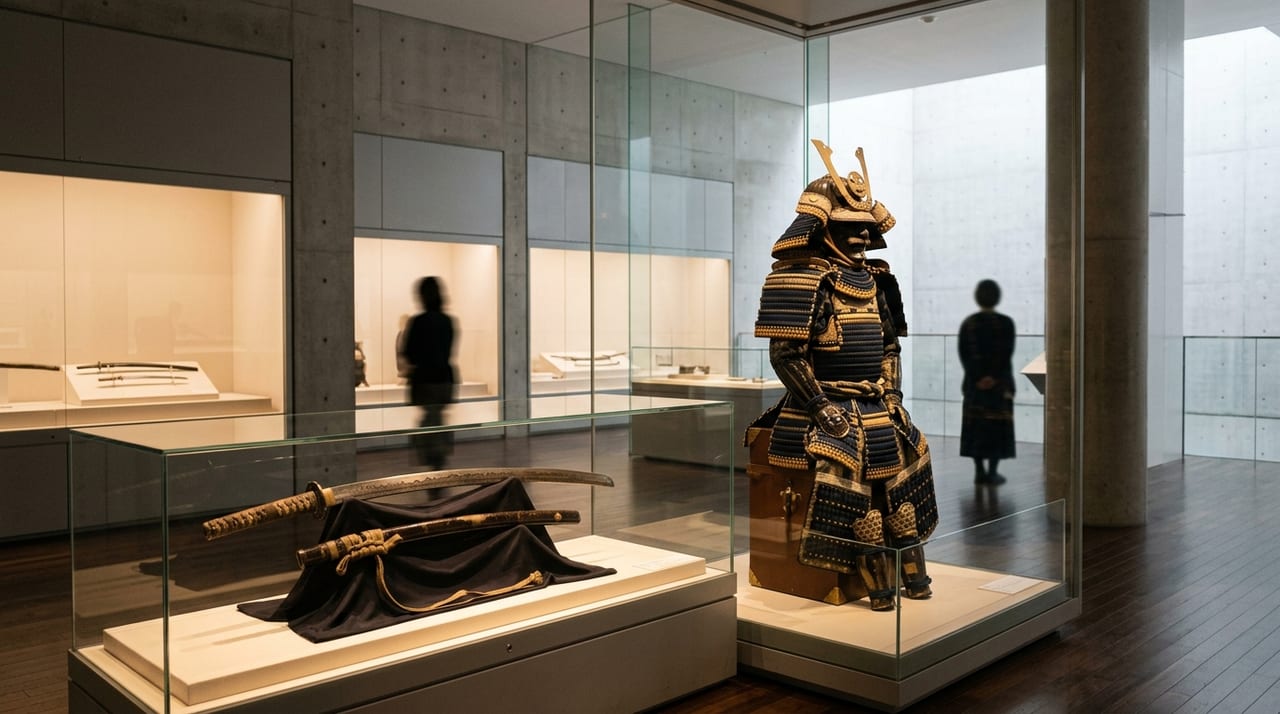
 * Image is for illustrative purposes only.
Hyogo Prefectural Museum of History
兵庫県立歴史博物館
- Location
- Himeji City, Hyogo Prefecture
- Access
- About a 25-minute walk from Himeji Station on the JR Sanyō Main Line and Sanyō Shinkansen. From Himeji Station, about 8 minutes by Shinki Bus to the “Himeyama Kōen Kita / Hakubutsukan-mae” stop, right after getting off; or about 8 minutes by the Castle Area Sightseeing Loop Bus to the “Hakubutsukan-mae” stop, right after getting off. The museum has no parking lot; use the nearby paid Himeji City-run parking lots (north of the castle, Himeyama, and Ōtemon).
- Opening Hours
- 10:00–17:00 (last admission 16:30). Closed Mondays (if a national holiday, closed the following weekday)
- Admission
- Permanent exhibition: adults 200 yen, university students 150 yen, high-school students and under free
Overview
The Hyogo Prefectural Museum of History is a prefectural museum located in the northeast of the Himeji Castle Ruins, a Special Historic Site where the World Heritage Himeji Castle (also known as “Hakuro-jō,” the White Heron Castle) stands. It opened in April 1983 (Shōwa 58). It presents the history from ancient times to the early modern period of the five former provinces of Settsu, Harima, Tajima, Tanba, and Awaji, which form the basis of Hyōgo Prefecture, as well as the history of the modern and contemporary eras. The building was designed on the basic design by Tange Kenzō, with its walls representing stone walls and its air-conditioning ventilation openings representing loopholes (sama). The design takes Himeji Castle as its motif.
The collections include materials formerly owned by castle researcher Toba Masao (early modern military treatises, maps, and modern castle survey materials), Himeji domain materials collected by a local Himeji historian, the approximately 160,000-item Takahashi Collection, which conveys the living culture centered on Himeji, and the approximately 110,000-item Irie Collection, a body of materials on the history of children's culture. As a museum within the Special Historic Site Himeji Castle Ruins, it also works to collect and disseminate materials and information on castles across the prefecture, centered on Himeji Castle.
Himeji Castle is known as the largest castle with an extant main keep (tenshu). On the first floor, in the free zone “Himeji Castle Dissected” (Himeji-jō Daikaibō), the museum displays the east central pillar of the Ōtenshu and a shachihoko (ornamental roof-ridge fish) that served as the basis for restoration during the Shōwa Great Repair. On the second floor, “Encyclopedia of Japanese Castles” reproduces the twelve extant keeps and the Kan'ei-era keep of Edo Castle in 1/50 scale models.
In addition to special exhibitions and planned exhibitions, the first-floor Collection Gallery introduces the collection, with display changes roughly four times a year. It is easy to visit in combination with a visit to Himeji Castle.
Highlights
- Located within the Special Historic Site Himeji Castle Ruins — northeast of the World Heritage Himeji Castle, easy to visit together with a castle tour
- “Himeji Castle Dissected” (Himeji-jō Daikaibō) — displays the east central pillar of the Ōtenshu and the shachihoko that served as the basis for restoration in the Shōwa Great Repair (first-floor free zone)
- “Encyclopedia of Japanese Castles” — reproduces the twelve extant keeps and the Kan'ei-era keep of Edo Castle in 1/50 scale models
- Architecture based on Tange Kenzō's basic design — walls representing stone walls and ventilation openings representing loopholes (sama), a design motif drawn from Himeji Castle
- “History of the Five Provinces of Hyōgo” — introduces the history of Settsu, Harima, Tajima, Tanba, and Awaji from ancient to early modern times, plus modern and contemporary history
- Castle materials and diverse collections — holds castle-related materials by Toba Masao and the Irie Collection (children's cultural history materials), among others
* Opening hours and exhibitions are subject to change. Please check the official website before visiting.