 * Image is for illustrative purposes only.
Hikone Castle Museum
彦根城博物館
Overview
Museum Overview
The Hikone Castle Museum is a history museum located immediately south of the National Treasure–designated Hikone Castle Keep, and opened in 1987 (Showa 62). It houses and exhibits primarily daimyo furnishings, armor, and decorative arts transmitted through the Ii clan, who ruled Hikone Domain's 300,000 koku throughout the Edo period, and is highly regarded as a first-rate institution transmitting the samurai culture of Ōmi to the present day. The Ii clan traces its origins to Ii Naomasa, one of the Four Heavenly Kings under the Tokugawa, and produced Ii Naosuke, the great elder (tairō) in the late Edo period; among hereditary daimyo houses, the Ii clan held the foremost position. Their collection, befitting their status and financial power, is distinguished by both quality and quantity, and includes numerous objects designated as National Important Cultural Properties as part of the "cultural heritage of Hikone Domain."
Sword Collection
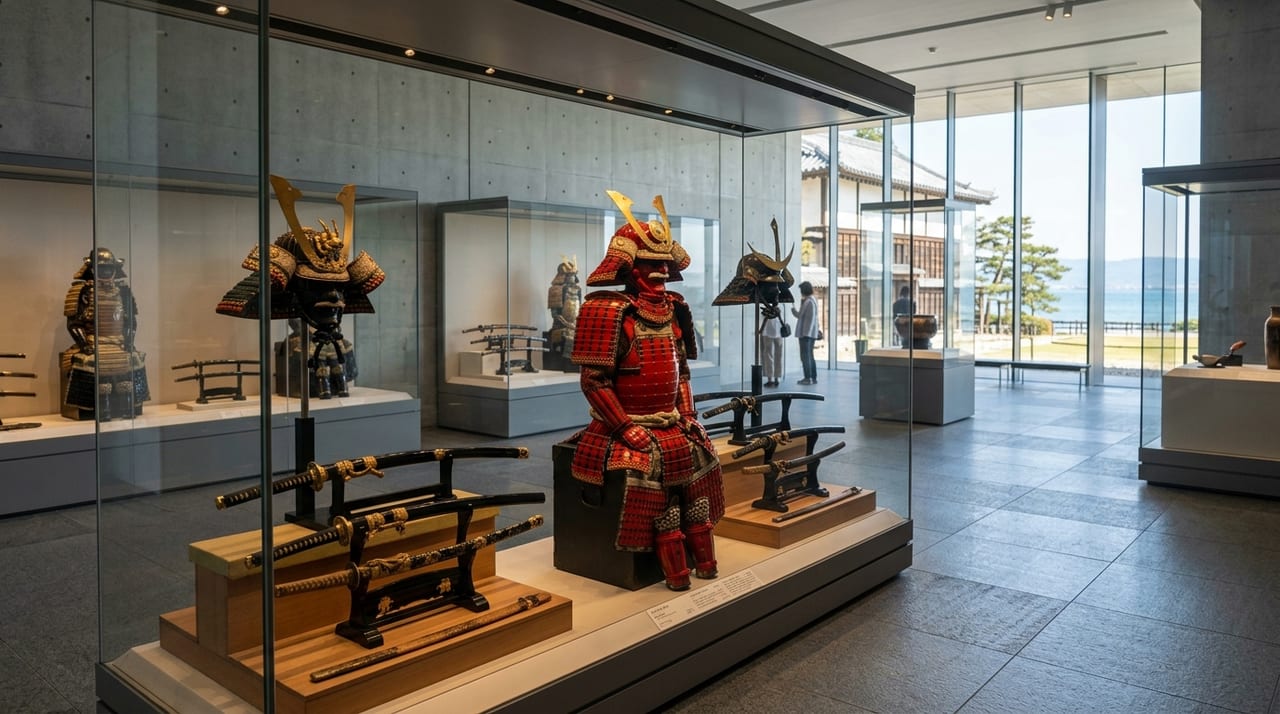
The museum's sword collection consists of masterpieces of old blades (koto) and new blades (shinto) that successive daimyo collected and inherited. The swords treasured by successive daimyo, beginning with Ii Naosuke, speak to the spirit of warriors who lived through the turbulent late Edo period. The collection includes blades designated as National Important Cultural Properties, with outstanding examples of the Bizen, Soshu, and Yamashiro traditions and other schools represented. Of particular note are the refined koshirae (sword fittings and scabbard components) transmitted through the Ii clan—the elaborate and resplendent metalwork decoration and gold-dusted (makie) scabbards, reflecting the daimyo's status, hold artistic value comparable to the blades themselves.
Red-Lacquered Armor
One of the museum's greatest attractions is the collection of red-lacquered armor (akabi), the symbol of the Ii clan. The striking red armor, entirely coated in crimson lacquer, is widely known as embodying the Ii clan's reputation as fierce warriors during the Sengoku period. The tradition that Ii Naomasa recruited former retainers of Takeda Shingen and established the red-armor tradition continues to captivate many people today. The museum houses multiple examples of both National Treasures and Important Cultural Properties, and the quality and depth of its armor collection ranks among the finest in Japan.
Noh Theater and Daimyo Culture
The museum's collection of noh theater artifacts is also exceptional; the quality of its noh masks and costumes is widely recognized among noh practitioners. As befits a daimyo household's refined taste, the museum also houses a rich collection of tea implements, paintings and calligraphy, and historical documents, demonstrating the high cultural level of Hikone Domain. Together with the National Treasure Hikone Castle Keep, this facility allows visitors to comprehensively experience both Japanese castle culture and samurai culture, attracting numerous domestic and international tourists. Set within a majestic natural landscape overlooking Lake Biwa, the museum offers a deep immersion in Hikone's history and artistic heritage.
Highlights
- Ii Clan's inherited sword collection—masterpieces of old and new swords including Important Cultural Properties. Fine pieces representing each of the Bizen, Soshu, and Yamashiro traditions, with sumptuous mountings exemplifying the daimyo's status
- "Akabe" (Red Armor) collection—vermillion-lacquered armor symbolizing the Ii Clan. An outstanding collection of military equipment including Important Cultural Properties, among the nation's finest. An overwhelming display where visitors can experience the spirit of Sengoku warlords
- Fine Noh masks and costumes—exquisitely crafted pieces that illustrate Noh performance as a cultural pursuit of the daimyo. A high-quality collection highly valued by Noh practitioners
- Integrated viewing with National Treasure Hikone Castle—a comprehensive half-day course combining the National Treasure keep (built in the early Edo period) with the museum. The castle landscape of Hikone overlooking Lake Biwa is also a highlight
- Comprehensive display of daimyo culture—a diverse collection including tea ceremony implements, calligraphy and paintings, old documents, sword fittings, and horse equipment, allowing visitors to experience the status and cultural level of the 300,000-koku Ii Clan
* Opening hours and exhibitions are subject to change. Please check the official website before visiting.