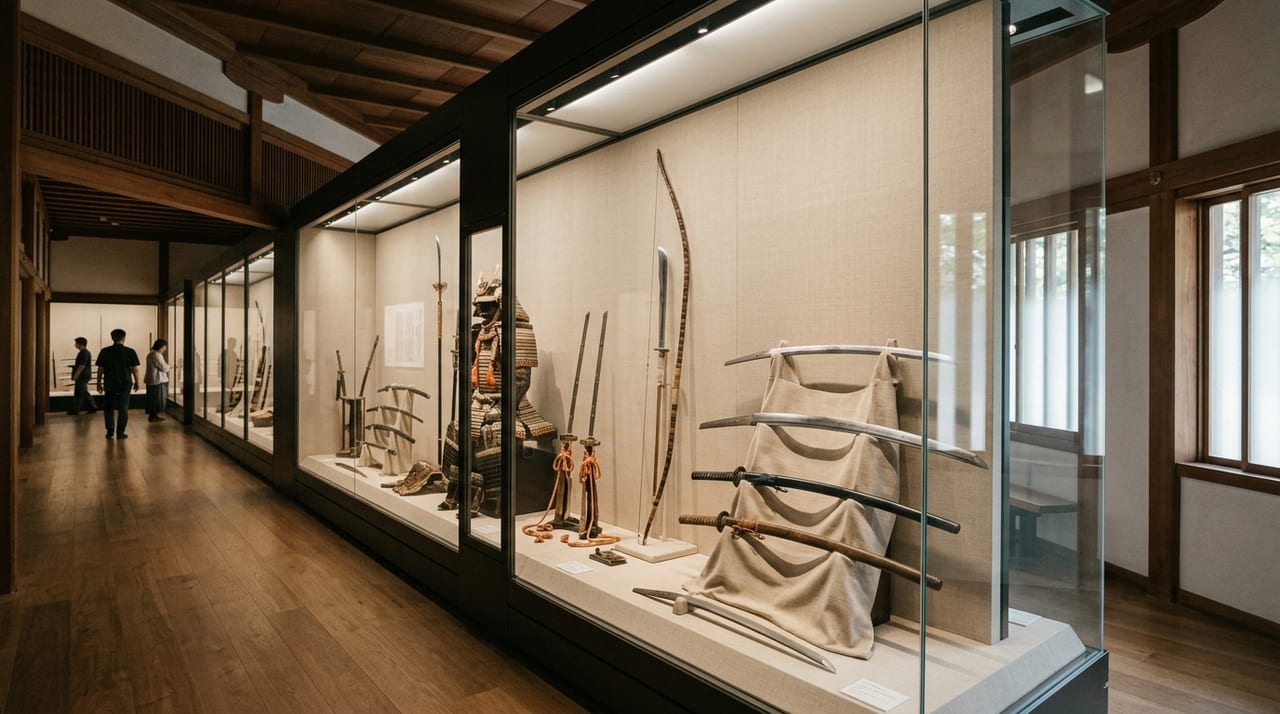
 * Image is for illustrative purposes only.
Shitennoji Temple Treasure Hall
四天王寺宝物館
Overview
Shitennoji is one of Japan's oldest official temples, traditionally said to have been founded in 593 by Prince Shōtoku in present-day Tennoji Ward, Osaka. Its treasure hall preserves two of the most important sword artifacts in Japanese history, both designated National Treasures.
The "Heishi Shoryoken" (blade 65.8 cm) is an Asuka-period sword with a seven-star inlay on the blade, traditionally described as Prince Shōtoku's personal sword; its hilt and scabbard are adorned with gilded bronze fittings of extraordinary craftsmanship. The "Shichiseiken" (blade 62.4 cm) features seven star-shaped inlays in the pattern of the Big Dipper (Ursa Major), a unique decorative motif that has made it one of the most recognizable ancient swords in Japan.
Both National Treasure swords are not on permanent display; they are shown only during the temple's periodic "Meiho-ten" (Treasures Exhibition), held a few times per year. The Shichiseiken is currently on deposit at the Tokyo National Museum, making display opportunities at Shitennoji particularly rare. Visitors are strongly advised to check the official website for exhibition schedules before visiting.
The treasure hall stands within the temple precincts south of the Western Gate. Combining a visit to the hall with the pagoda complex (Five-Storied Tower, Main Hall, and Lecture Hall) offers a comprehensive view of Shitennoji's 1,400 years of Buddhist art and culture.
Highlights
- National Treasure 'Heishi Shoryoken' — Asuka-period sword with seven-star inlay, traditionally Prince Shōtoku's personal blade
- National Treasure 'Shichiseiken' — Big Dipper star inlay sword (currently on deposit at Tokyo National Museum)
- Displayed only during periodic 'Meiho-ten' exhibitions — no permanent display; check schedule before visiting
- Japan's oldest official temple — founded 593 CE by Prince Shōtoku, 1,400 years of Buddhist heritage
- Pair with the pagoda complex — Five-Storied Tower, Main Hall, and Lecture Hall for Asuka-period architecture
* Opening hours and exhibitions are subject to change. Please check the official website before visiting.